Artwork
Robert Shurlock (1772–1847)
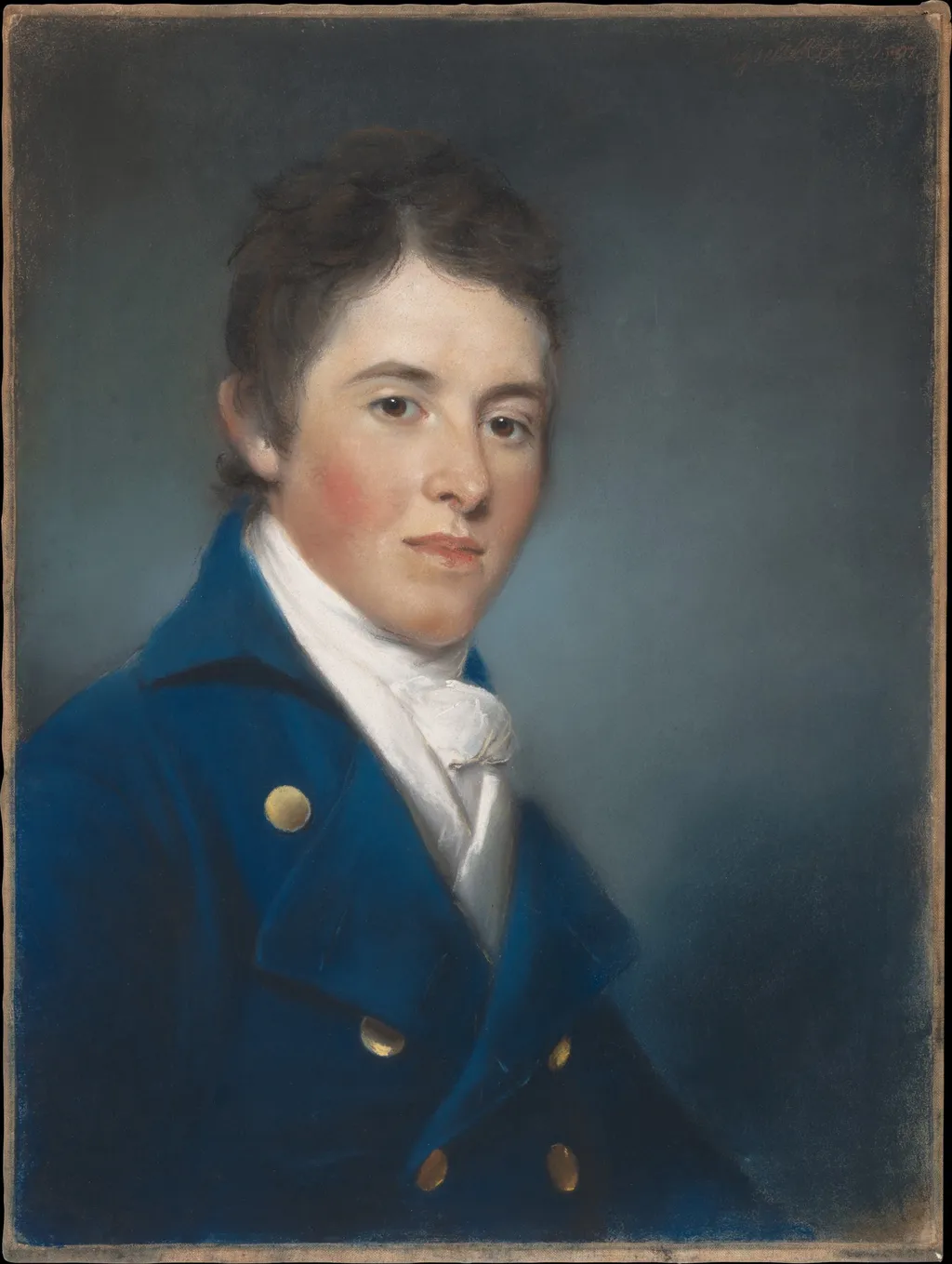
Robert Shurlock (1772–1847) is an unspecified painting by John Russell. It dates from 1801 and is held in the collection of the Metropolitan Museum of Art.
About this work
Overview
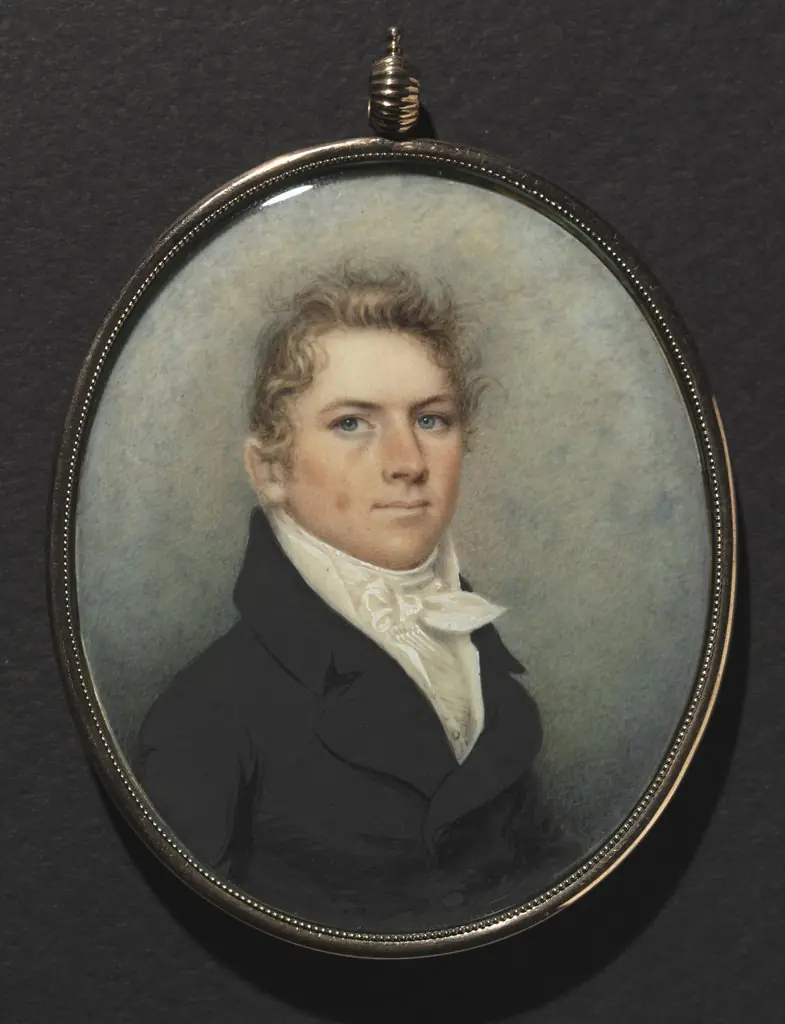
John Russell’s 1801 oil portrait presents Robert Shurlock, a gentleman of the early nineteenth century, rendered in a restrained composition that centers on his face and shoulders. The work is part of the Metropolitan Museum of Art’s collection, where it is displayed among other British portraiture of the period.
Subject & Meaning
The sitter, identified as Robert Shurlock (1772–1847), is shown in a dark blue coat trimmed with gold buttons and a crisp white cravat. His hair is neatly styled, and his expression combines seriousness with a calm demeanor, suggesting a self‑presentation of respectable modesty typical of the era’s professional class.
Technique & Style
Russell employs subtle gradations of tone to model Shurlock’s skin, using soft shading that merges highlights and shadows in a manner reminiscent of the sfumato technique. The background is a uniform dark gray, eliminating distractions and directing the viewer’s attention to the sitter’s features and attire.
History & Provenance
Created in 1801, the portrait entered the Metropolitan Museum of Art’s holdings through acquisition in the early twentieth century. Its documented provenance traces back to private collections in England before crossing the Atlantic, where it was eventually purchased by the museum.
Context
The painting reflects the conventions of British portraiture at the turn of the nineteenth century, when artists like Russell emphasized realistic likenesses and modest settings. Such works served both as personal commemorations and as visual affirmations of social status within the emerging middle class.
Artist & collection
Artist
John Russell painted pastel portraits in late-1700s England, capturing sitters with soft strokes and delicate hues.