Artwork
Architectural Antiquities of Normandy (Vol. II), Pl. 66: Tower of the Church of Tréport, near Eu
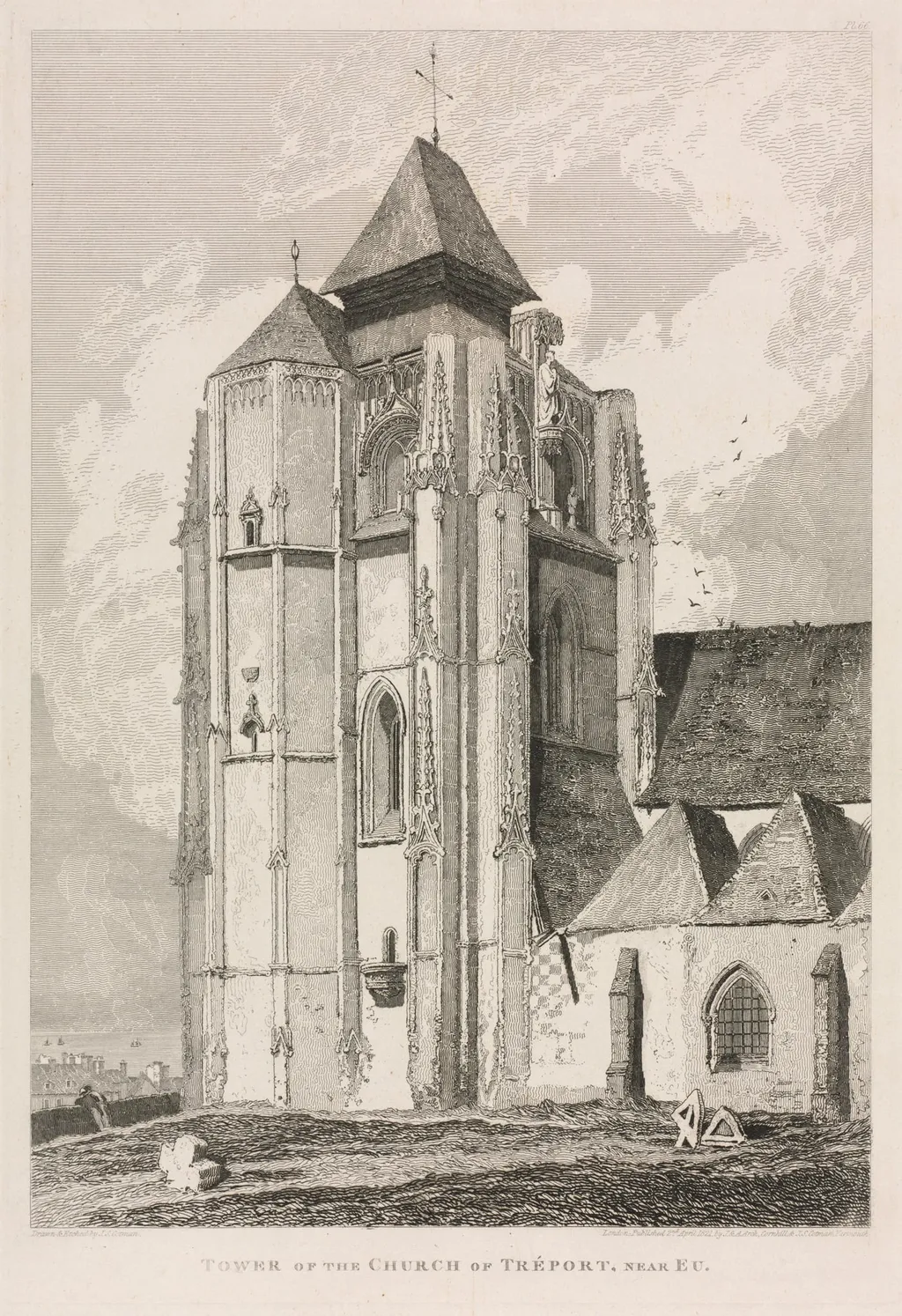
Architectural Antiquities of Normandy (Vol. II), Pl. 66: Tower of the Church of Tréport, near Eu is a print by the Romanticist artist John Sell Cotman. It dates from 1821 and is held in the collection of the Cleveland Museum of Art.
About this work
Overview
Created in 1821, this print is the sixty-sixth plate in the second volume of John Sell Cotman’s series documenting Norman ecclesiastical architecture.
Created in 1821, this print is the sixty-sixth plate in the second volume of John Sell Cotman’s series documenting Norman ecclesiastical architecture. A British artist rooted in the Norwich School, Cotman traveled to Normandy to record medieval structures with precision and quiet reverence. The work belongs to a broader project of architectural documentation, undertaken during a period when interest in historic building forms was growing among British artists and antiquarians.
Subject & Meaning
The subject is the tower of the church at Tréport, near Eu, a modest yet enduring structure from the medieval period. Cotman’s focus on its weathered stonework and vertical form reflects an interest in the passage of time and the resilience of sacred architecture. Rather than dramatizing the scene, he presents it as a quiet testament to local craftsmanship and the rhythms of rural religious life in northern France.
Technique & Style
Cotman employed watercolor and pen-and-ink to achieve fine tonal gradations and crisp linear detail. His use of light and shadow emphasizes the texture of the stonework without relying on overt chiaroscuro. The composition is restrained, with attention to architectural accuracy and the subtle interplay between structure and surrounding landscape, characteristic of his methodical, observational approach to topographical drawing.
History & Provenance
The print was produced as part of a privately funded publication series, financed by Cotman and his patrons, to disseminate his studies of Norman buildings. It was issued in installments between 1818 and 1822. Original impressions were distributed to libraries, collectors, and architectural societies in England, where they served as both artistic records and references for the study of Gothic forms.
Context
In the early 19th century, British artists increasingly turned to continental Europe to study medieval architecture, inspired by Romantic ideals and antiquarian scholarship. Cotman’s work aligned with this trend, offering a sober alternative to the picturesque excesses of his contemporaries. His focus on structural integrity and material authenticity distinguished his approach from more decorative or sentimental renderings of ruins.
Legacy
Cotman’s series on Norman architecture influenced later generations of architectural draftsmen and preservationists. His methodical documentation helped preserve visual records of structures later altered or lost. Though not widely celebrated in his lifetime, his prints are now recognized for their clarity, restraint, and contribution to the scholarly understanding of medieval ecclesiastical design.
Artist & collection
Artist
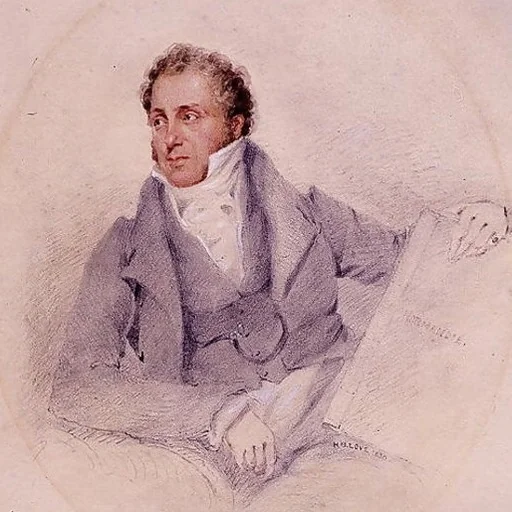
John Sell Cotman (16 May 1782 – 24 July 1842) was an English marine and landscape painter, etcher, illustrator, and a leading member of the Norwich School of painters.

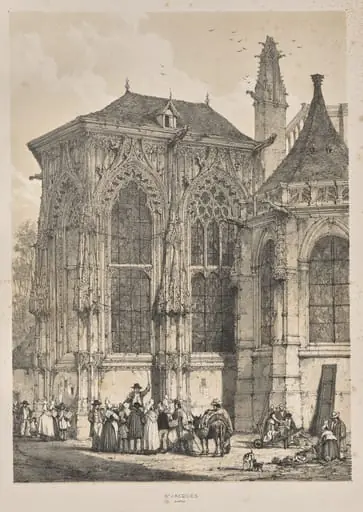 Architecture of the Middle Ages: St. Jacques, Dieppe, East End, Exterior
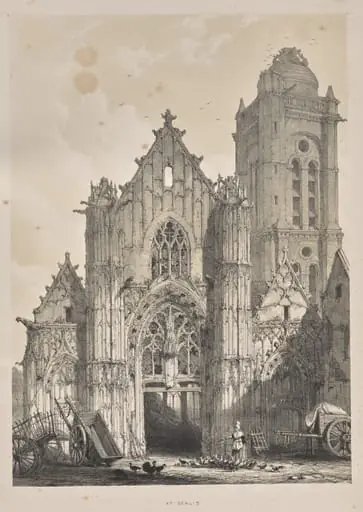 Architecture of the Middle Ages: At Senlis
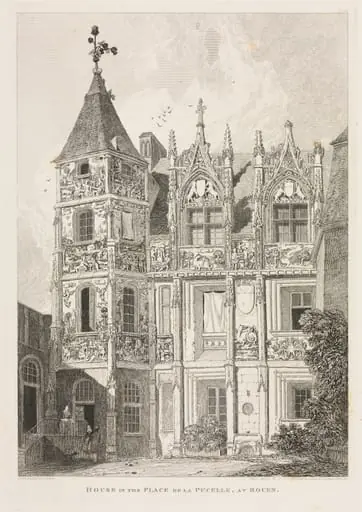 Architectural Antiquities of Normandy (Vol. II), Pl. 64: House in the Place de la Pucelle, at Rouen
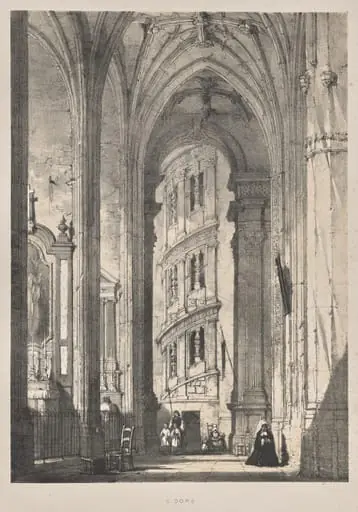 Architecture of the Middle Ages: Church of St. Gisors, Interior
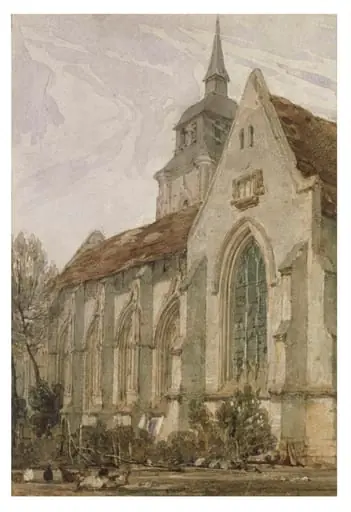 Church in Normandy
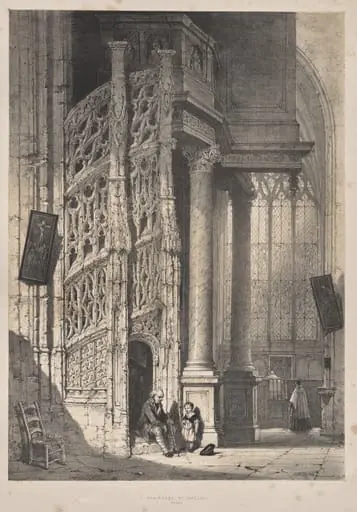 Architecture of the Middle Ages: Staircase, St. Maclou, Rouen
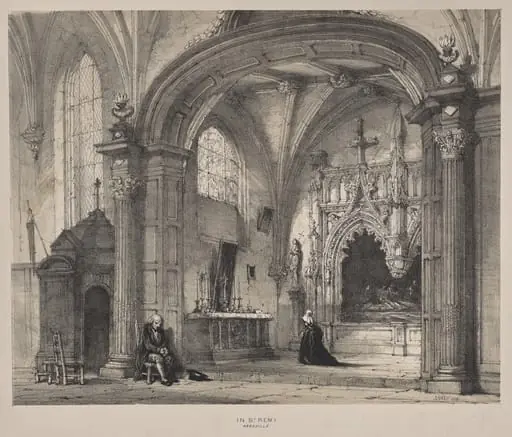 Architecture of the Middle Ages: In St. Remi, Abbeville