Artwork
Neapolitan Children Bathing
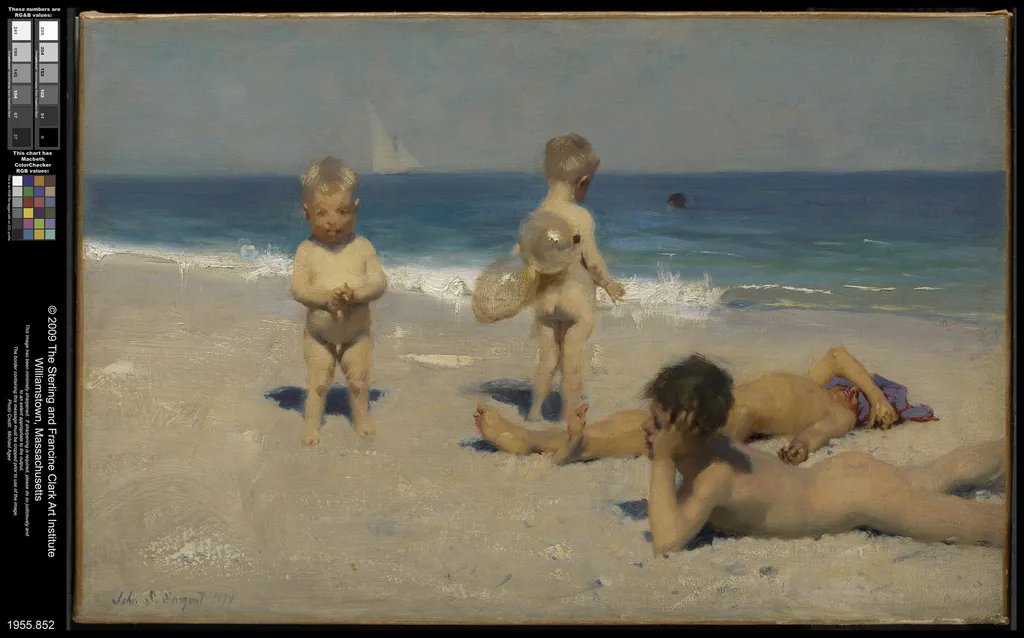
Neapolitan Children Bathing is an oil painting by the Impressionist artist John Singer Sargent. It dates from 1890 and is held in the collection of the Nationalmuseum.
About this work
Overview
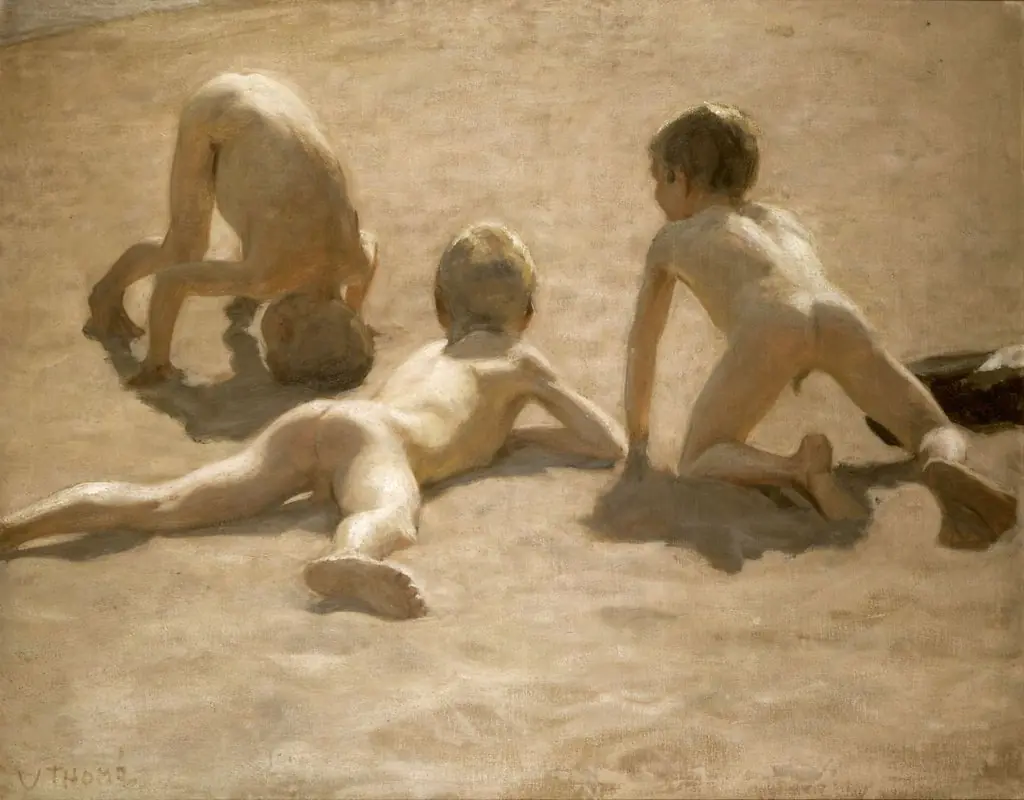
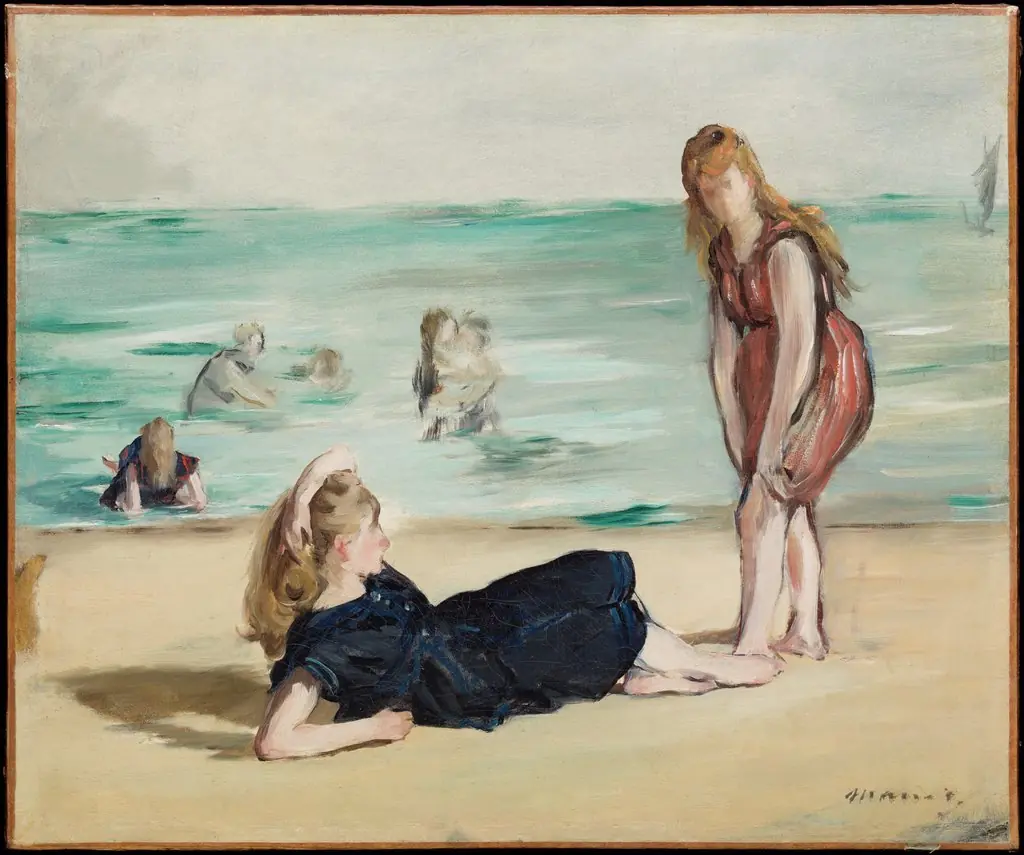
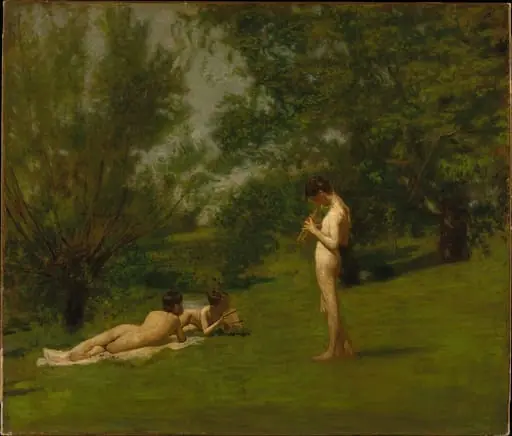
John Singer Sargent’s 1890 oil canvas entitled *Neapolitan Children Bathing* presents a quiet coastal tableau. Three youths—two upright and one reclined—occupy the sandy foreground while the sea extends behind them, punctuated by a distant sailboat. The composition captures a fleeting moment of leisure, rendered with a restrained palette of blues and grays that emphasizes atmosphere over detail.
Subject & Meaning
The work belongs to the genre tradition of depicting everyday life, focusing on youthful innocence in a natural setting. By portraying the children nude, Sargent evokes a timeless, unguarded state, suggesting themes of freedom and the simple pleasures of seaside play, while the calm sea hints at broader notions of openness and possibility.
Technique & Style
The handling of surface suggests fleeting impressions rather than meticulous detail, aligning the piece with late‑19th‑century plein‑air practices.
Executed with loose, expressive brushwork, the painting reflects Impressionist concerns for light and movement. Sargent employs chiaroscuro, contrasting illuminated flesh with shadowed sand to model form, while the soft, muted tones create a sense of depth. The handling of surface suggests fleeting impressions rather than meticulous detail, aligning the piece with late‑19th‑century plein‑air practices.
History & Provenance
Created during Sargent’s extensive travels, the canvas was later acquired by Sweden’s Nationalmuseum, where it remains in the permanent collection. The painting emerged from a period when the American expatriate was documenting his journeys across Europe, integrating his portraiture skill with broader observational studies of local life.
Artist & collection

Artist
John Singer Sargent (; January 12, 1856 – April 15, 1925) was an American expatriate artist, considered the "leading portrait painter of his generation" for his evocations of Belle Époque and Edwardian-era luxury.