Artwork
Prometheus
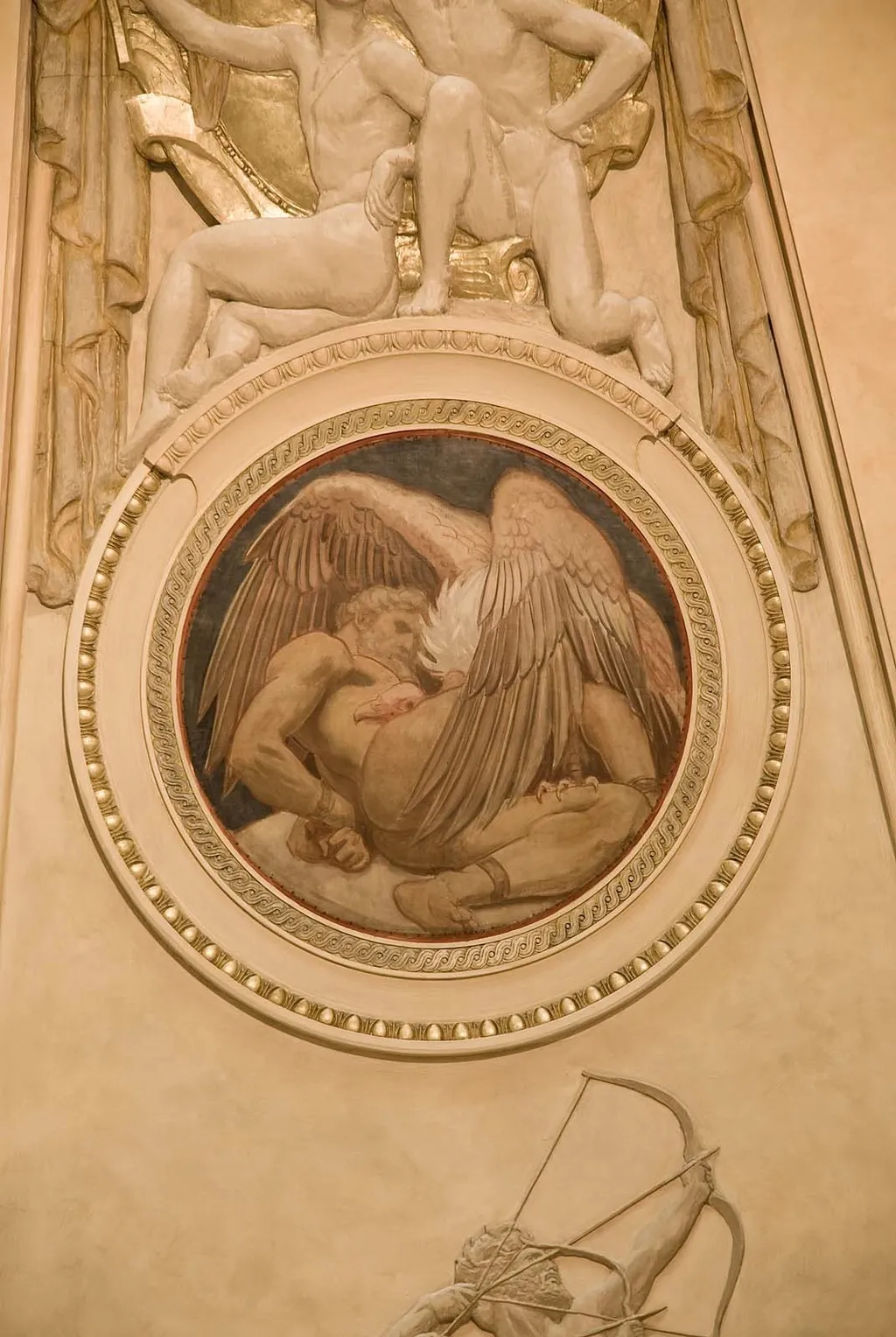
Prometheus is an oil painting by the American Impressionist artist John Singer Sargent. It dates from 1921 and is held in the collection of the Museum of Fine Arts Boston.
About this work
Overview
Though based in Europe for much of his career, Sargent remained an American artist, and this piece reflects his late-period interest in allegorical subjects.
Painted in 1921 by John Singer Sargent, *Prometheus* is an oil-on-canvas work that departs from his renowned portraits to engage with classical mythology. Though based in Europe for much of his career, Sargent remained an American artist, and this piece reflects his late-period interest in allegorical subjects. The painting is part of the Museum of Fine Arts, Boston’s permanent collection, where it stands as one of his few mythological compositions.
Subject & Meaning
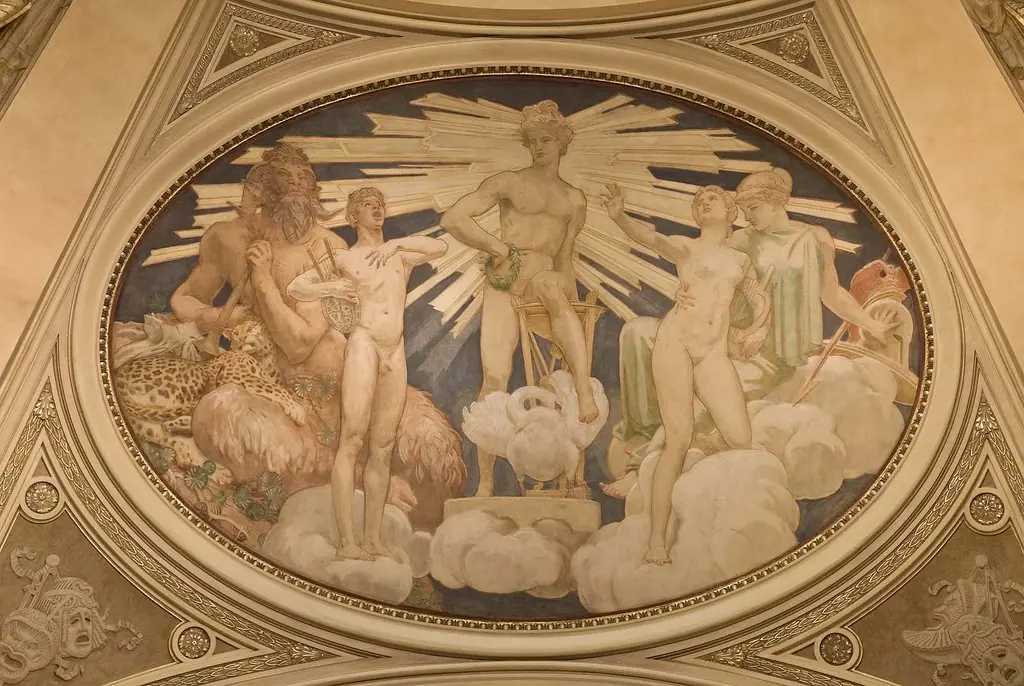
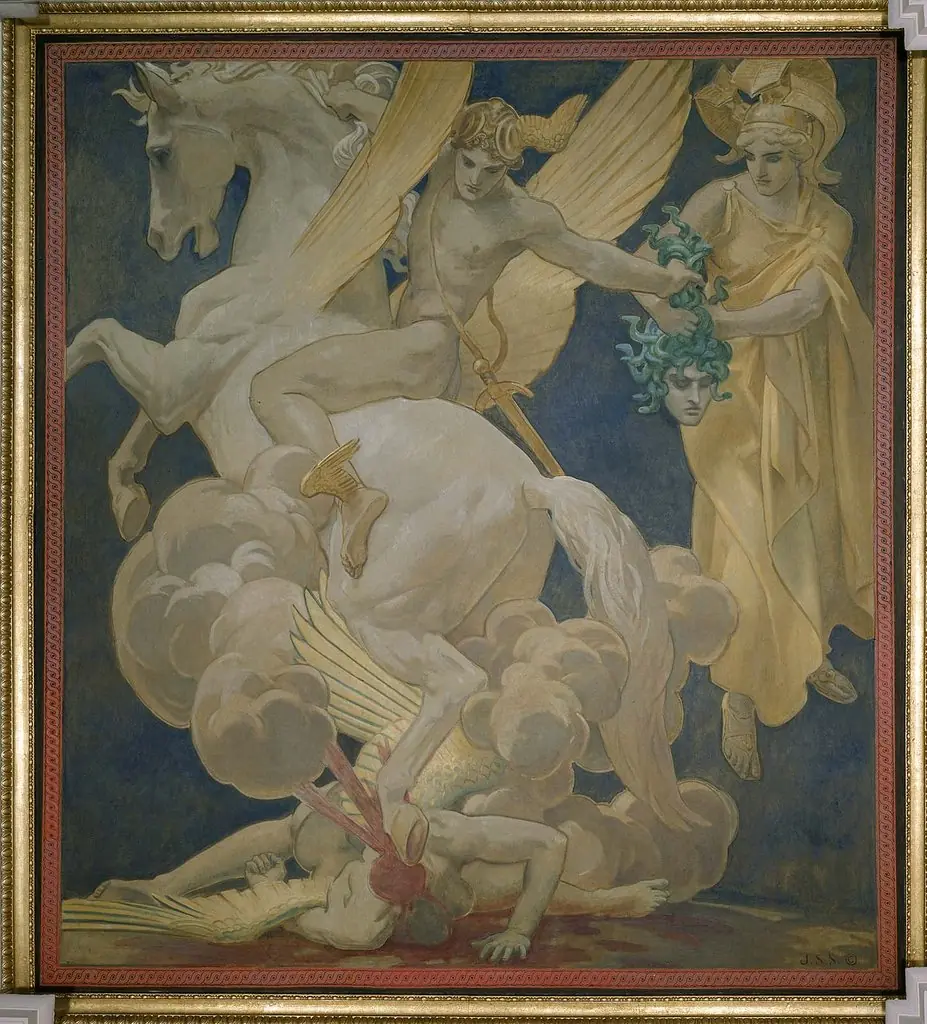
The painting depicts the Titan Prometheus, bound and kneeling, his wings folded and arms crossed in exhaustion. Above him, a chariot drawn by two horses—each with a rider—suggests the divine punishment inflicted by Zeus. The imagery alludes to the myth of Prometheus stealing fire for humanity and enduring eternal torment. The figure’s posture conveys resignation rather than defiance, emphasizing the weight of suffering over heroic resistance.
Technique & Style
Sargent employed chiaroscuro to model the figure’s muscular form with subtle gradations of light and shadow, lending volume without harsh contrast. The soft, diffused illumination enhances the figure’s fatigue, while the gold circular frame contrasts sharply against the muted background. Feathers are rendered with delicate brushwork, and the horses above are suggested rather than fully detailed, creating a sense of distance and mythic scale.
History & Provenance
Commissioned as a decorative panel for a private residence, *Prometheus* was completed near the end of Sargent’s career. It entered the Museum of Fine Arts, Boston’s collection in 1922, shortly after its creation. The painting remained relatively obscure compared to his portraits, but its presence in the museum’s holdings reflects institutional recognition of his broader artistic range beyond portraiture.
Context
In the early 20th century, many Western artists revisited classical myths as a means of exploring psychological and moral themes. Sargent, though primarily known for society portraiture, was influenced by Renaissance and academic traditions. *Prometheus* aligns with this trend, yet its restrained composition and emotional ambiguity distinguish it from more dramatic contemporaneous treatments of the subject.
Legacy
Though not widely exhibited or studied, *Prometheus* remains a significant example of Sargent’s late experimentation with allegory. It reveals his technical mastery extended beyond likeness into symbolic expression. The work contributes to understanding his artistic evolution and the quieter, more introspective phase of his career, offering insight into how traditional themes were reimagined by modern painters.
Artist & collection

Artist
John Singer Sargent (; January 12, 1856 – April 15, 1925) was an American expatriate artist, considered the "leading portrait painter of his generation" for his evocations of Belle Époque and Edwardian-era luxury.