Artwork
Ezekiel Goldthwait
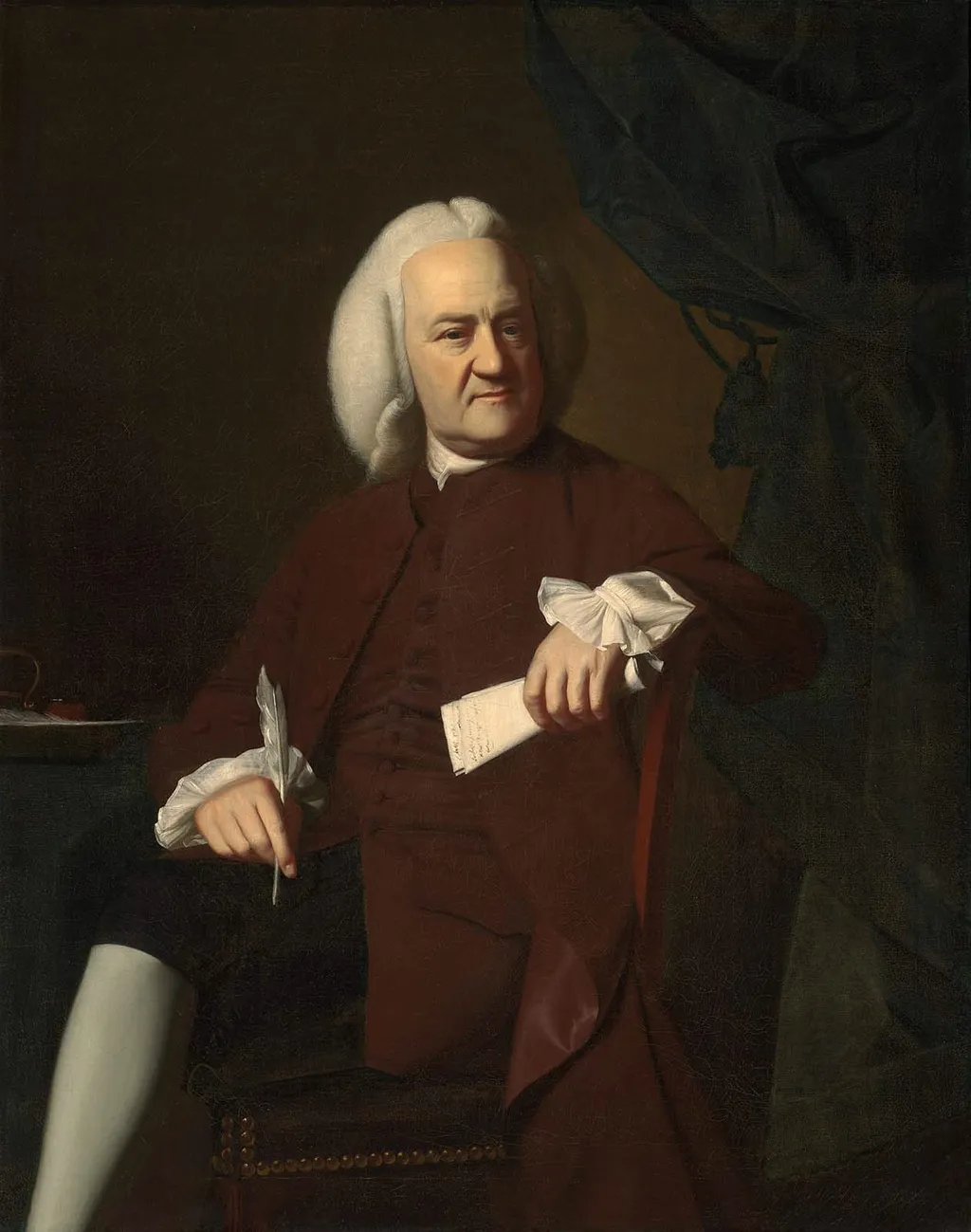
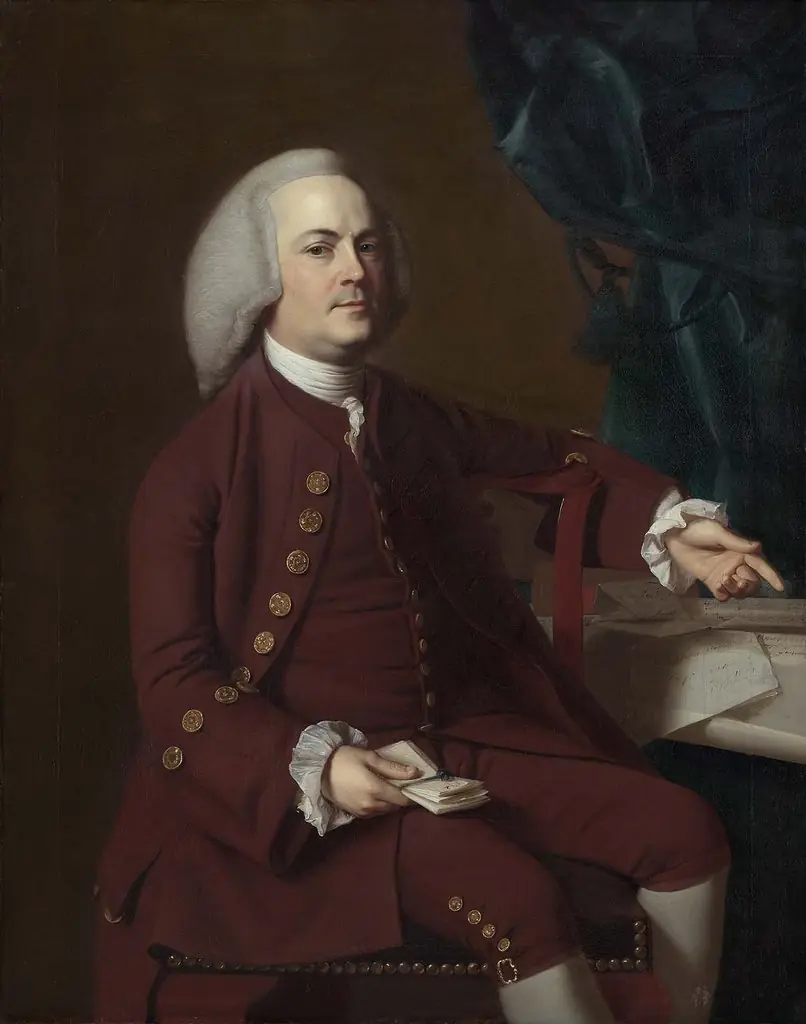
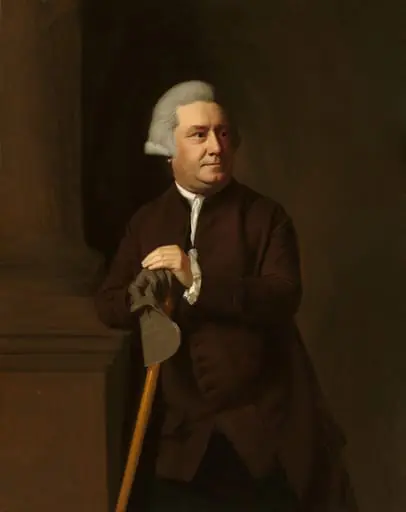
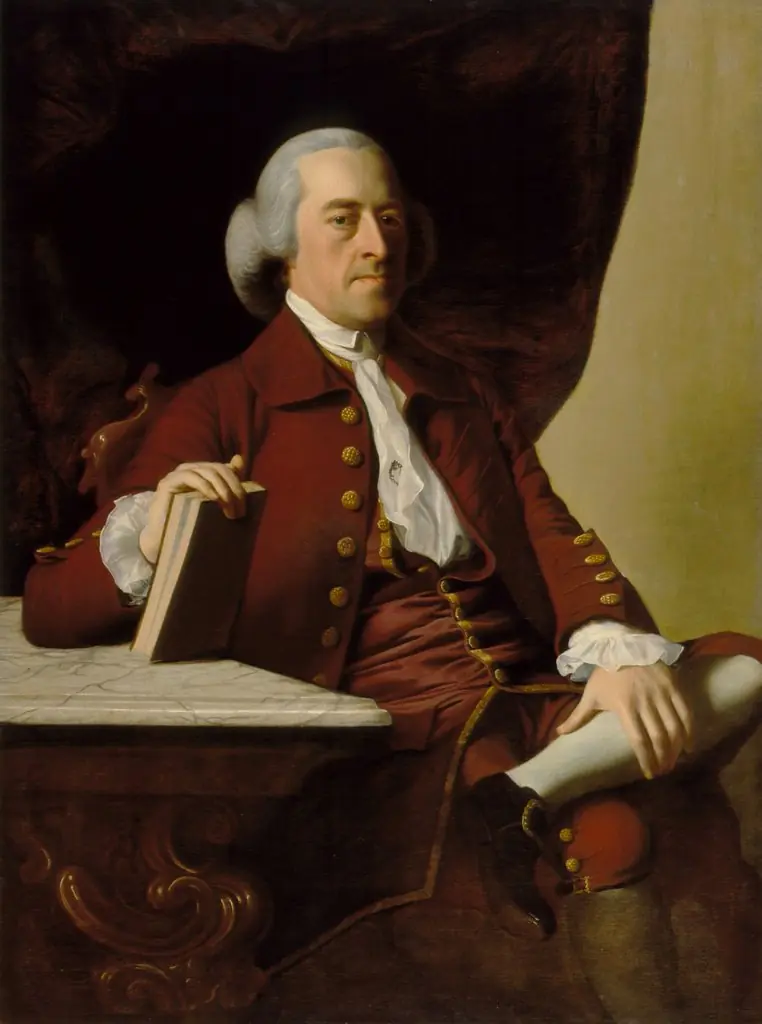
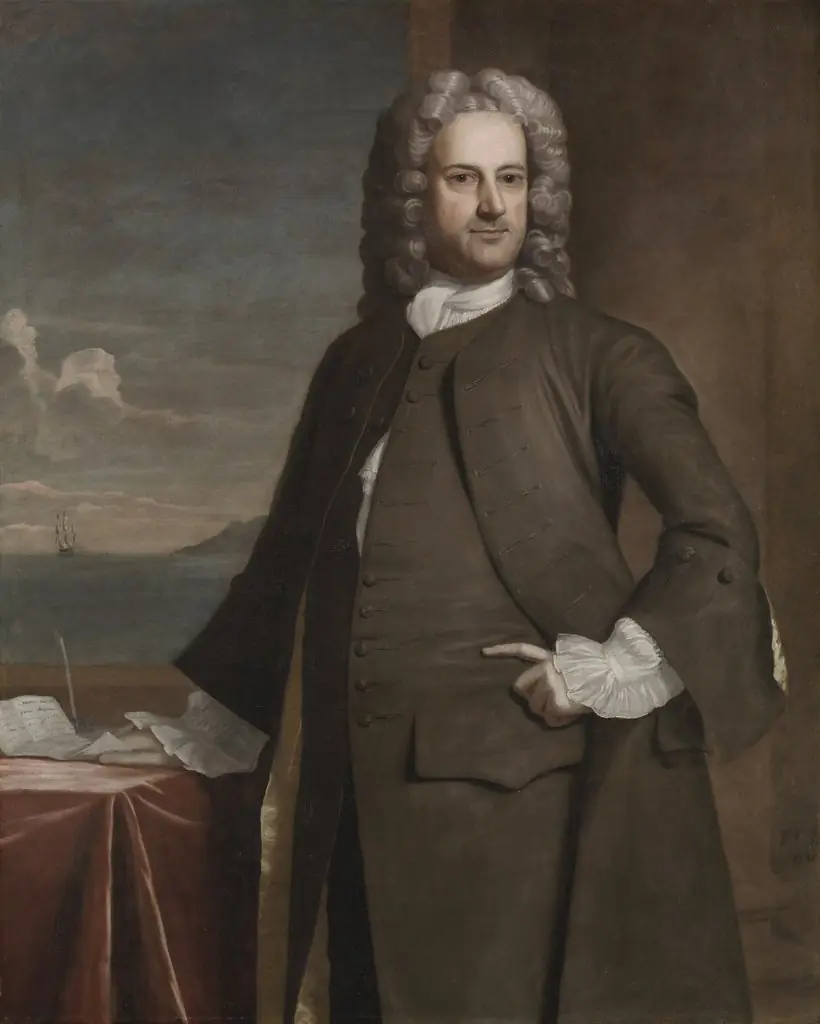
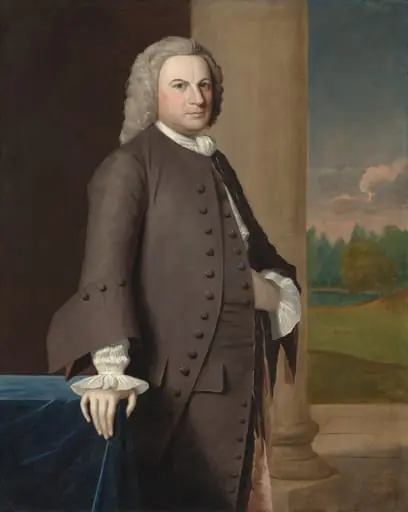
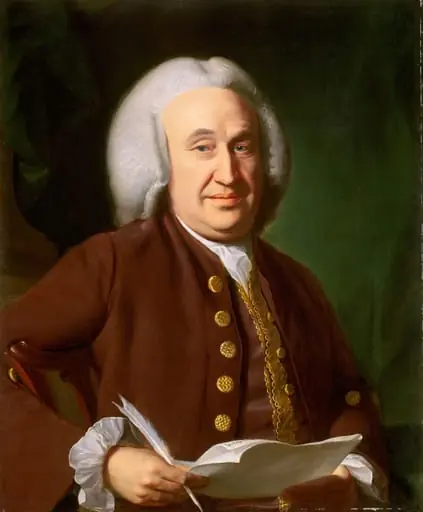
Ezekiel Goldthwait is an oil painting by the Rococo painting artist John Singleton Copley. It dates from 1771 and is held in the collection of the Museum of Fine Arts Boston.
About this work
The level of detail and realism in the painting suggests that it is a portrait of a specific individual.
This painting depicts a man seated in a chair, wearing a red coat with white cuffs and a white wig. He holds a quill pen in his right hand and a piece of paper in his left. The background is dark, with a curtain on the right side.
The man's attire and hairstyle suggest that he is a gentleman from the 18th century. The artist has used chiaroscuro to create a sense of depth and volume in the painting.
The level of detail and realism in the painting suggests that it is a portrait of a specific individual. To learn more about the artist's use of chiaroscuro, look up the technique.
Overview
Ezekiel Goldthwait is an oil painting created by John Singleton Copley in 1771, exemplifying his early work as a portraitist in colonial New England.
Subject & Meaning
The portrait depicts Ezekiel Goldthwait, a member of the merchant class in pre-Revolutionary Boston, seated with a quill pen and paper, signifying his professional or literary pursuits.
Technique & Style
Copley employed chiaroscuro to achieve a sense of depth and volume, characteristic of his refined and detailed style, which was influenced by the rococo aesthetic.
History & Provenance
Copley, born in Boston in 1738 to Anglo-Irish parents, painted this work before relocating to London in 1774, having established himself as a prominent portraitist of the colonial elite.
Own this work as a print
Artist & collection

Artist
John Singleton Copley (July 3, 1738 – September 9, 1815) was an American-born British painter active in both the Thirteen Colonies and England.