Artwork
Galatea
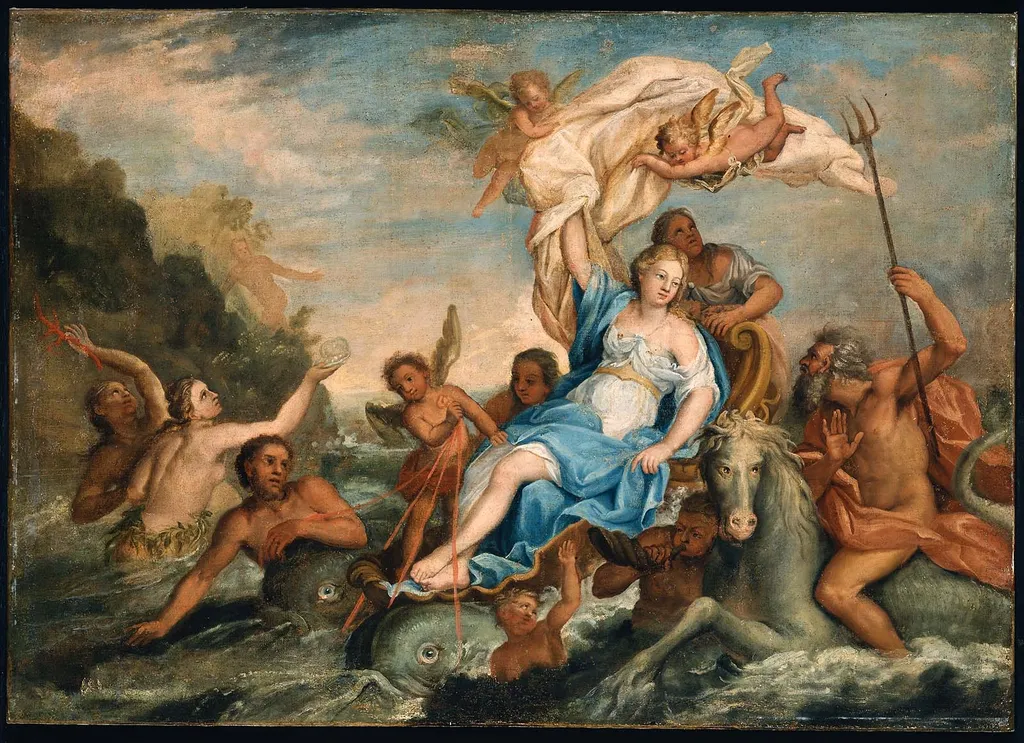
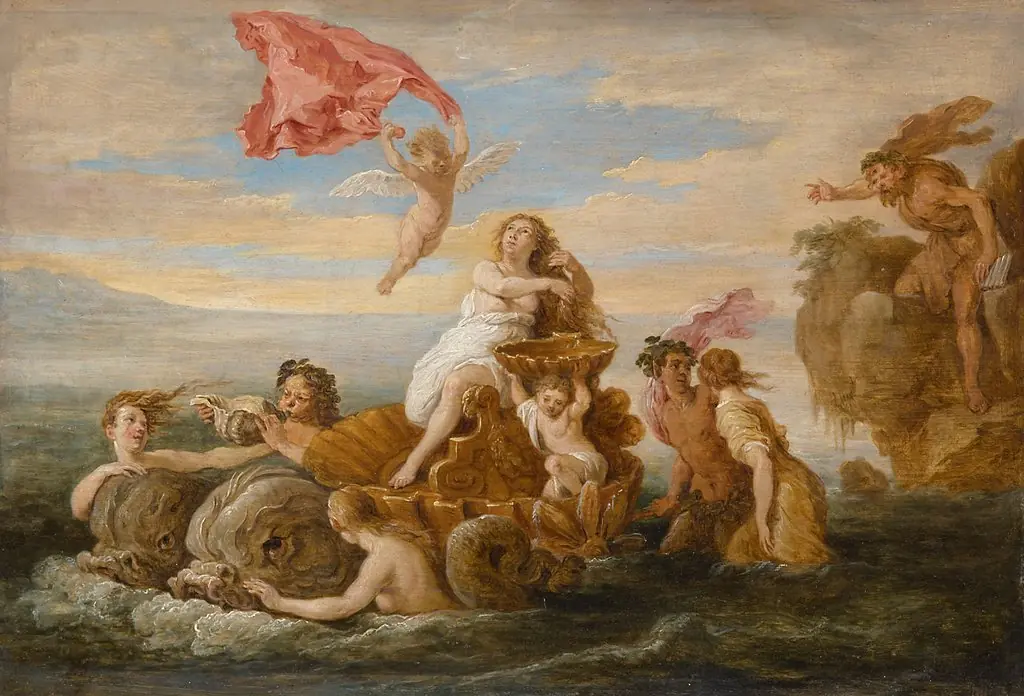
Galatea is an oil painting by the Rococo painting artist John Singleton Copley. It dates from 1754 and is held in the collection of the Museum of Fine Arts Boston.
About this work
Overview
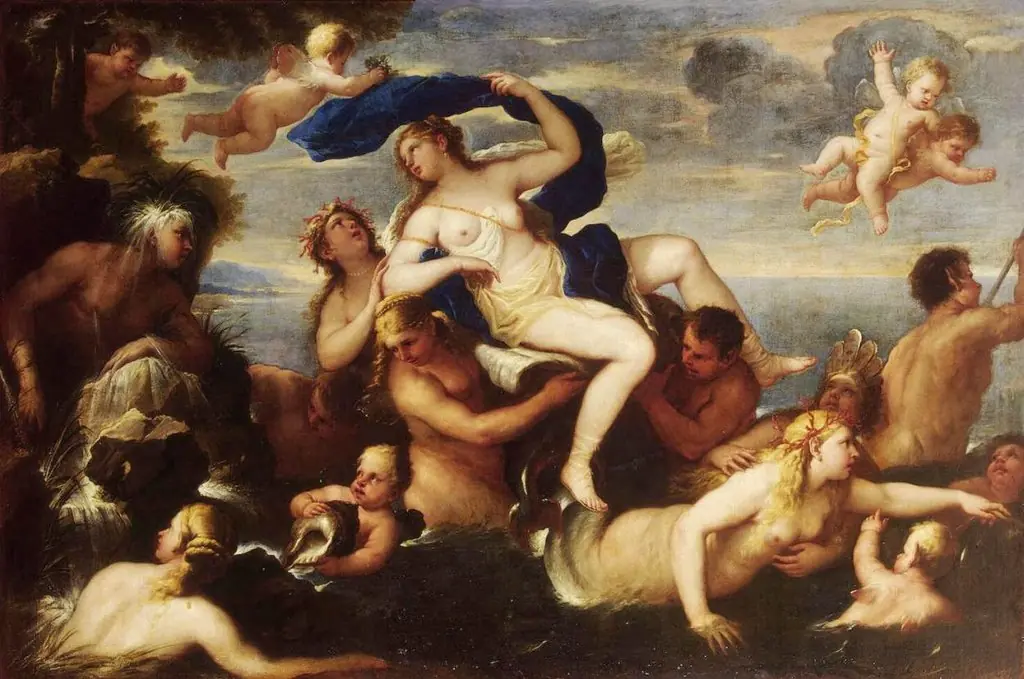
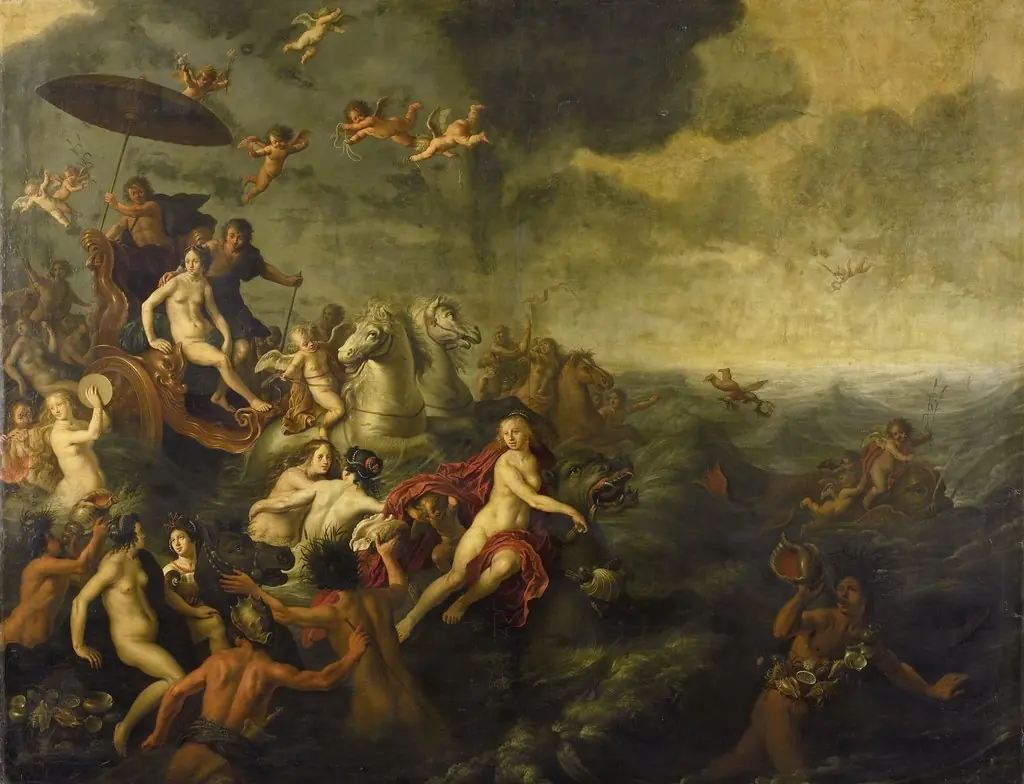
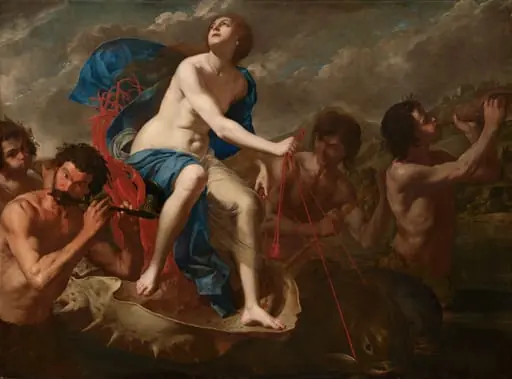
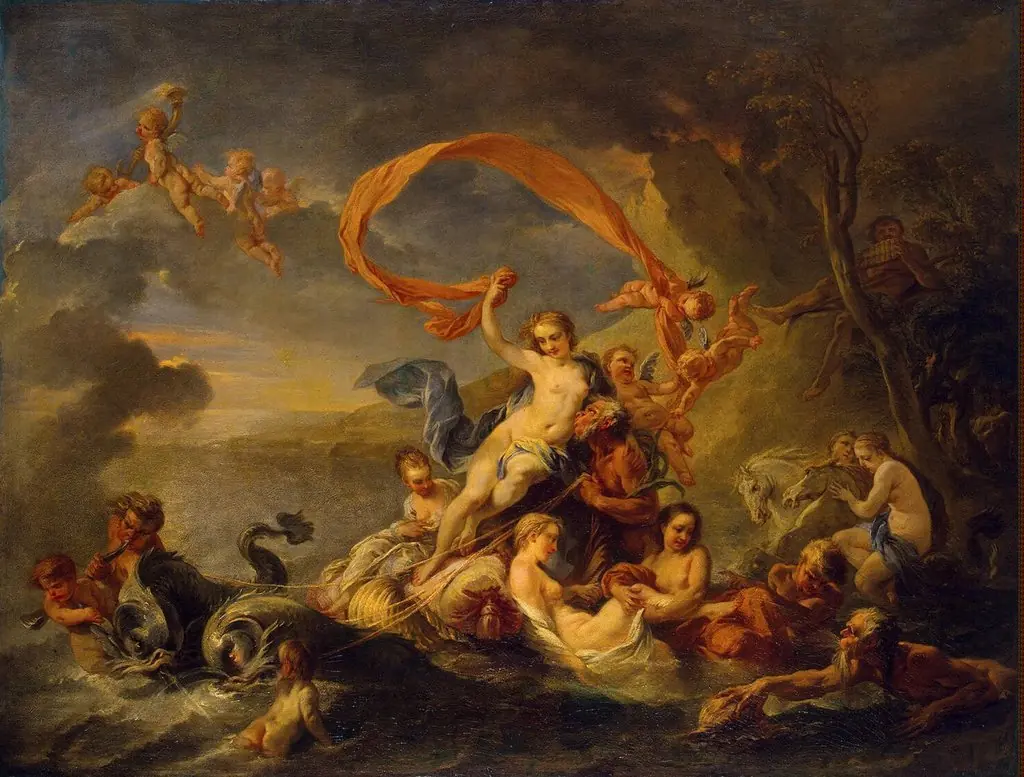
John Singleton Copley’s 1754 oil painting titled *Galatea* presents a mythological tableau rendered in the light, decorative manner typical of the Rococo. Executed on canvas, the work shows a serene female figure amid a bustling marine setting, illuminated by a contrast of bright sky and shadowed forms that draw the eye to the central narrative.
Subject & Meaning
The composition depicts the sea‑nymph Galatea, clothed in blue, riding a sea creature while two fish‑like beasts pull her forward. Surrounding her are winged infants, a bearded trident‑bearing figure, and attendants bearing shells and staffs, suggesting a celebration of divine rescue or transformation drawn from classical mythology.
Technique & Style
Copley employs a Rococo palette of pastel blues and soft golds, combined with chiaroscuro to model the figures against a storm‑lit sky. The interplay of light and shadow creates depth, isolating the central characters from the turbulent background while preserving a graceful, ornamental quality.
History & Provenance
Born in colonial Boston, Copley began his career with portraiture before expanding into history paintings such as *Galatea*. Though created before his relocation, the work anticipates his later success in London, where he moved in 1774 and gained international recognition.
Context
*Galatea* belongs to a series of narrative works Copley produced alongside his more profitable portrait commissions. The painting reflects the mid‑18th‑century American artists’ engagement with European artistic trends, particularly the Rococo’s fascination with mythological subjects and decorative elegance.
Artist & collection

Artist
John Singleton Copley (July 3, 1738 – September 9, 1815) was an American-born British painter active in both the Thirteen Colonies and England.