Artwork
Tiumph of Galatea
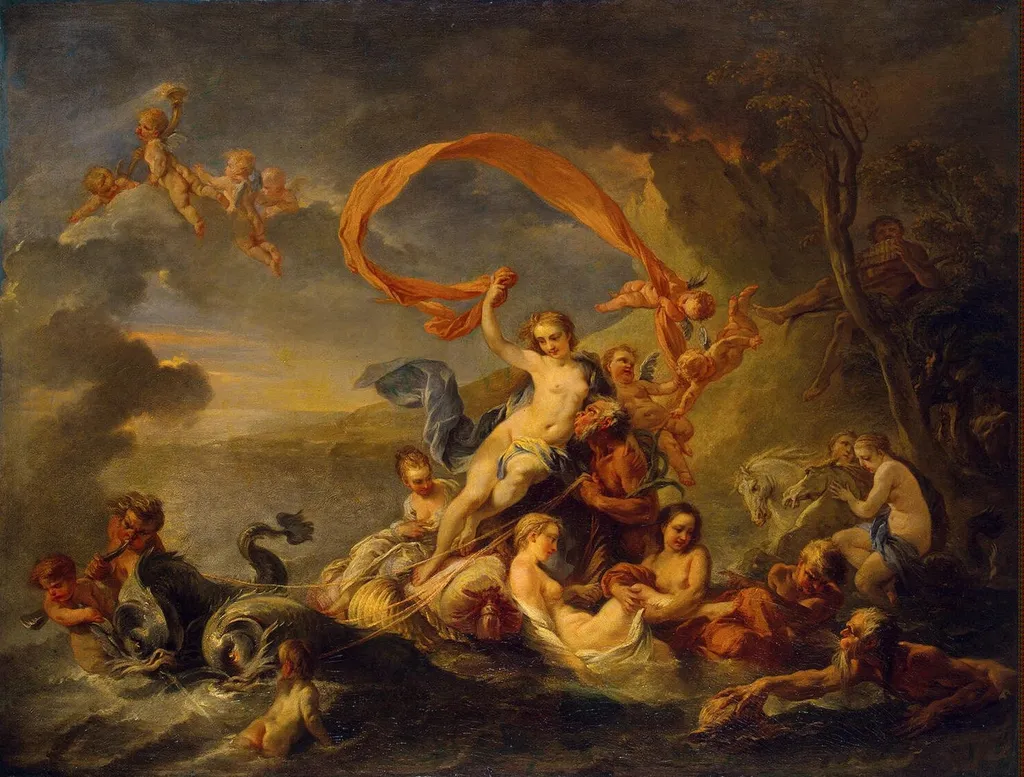
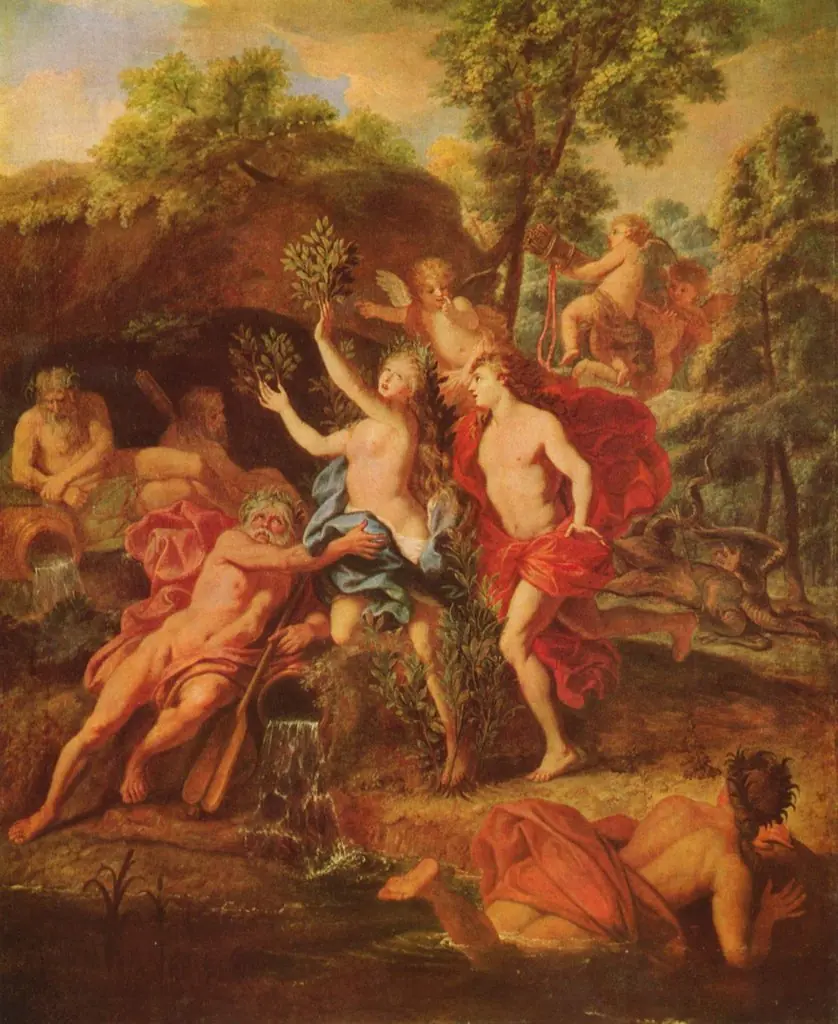
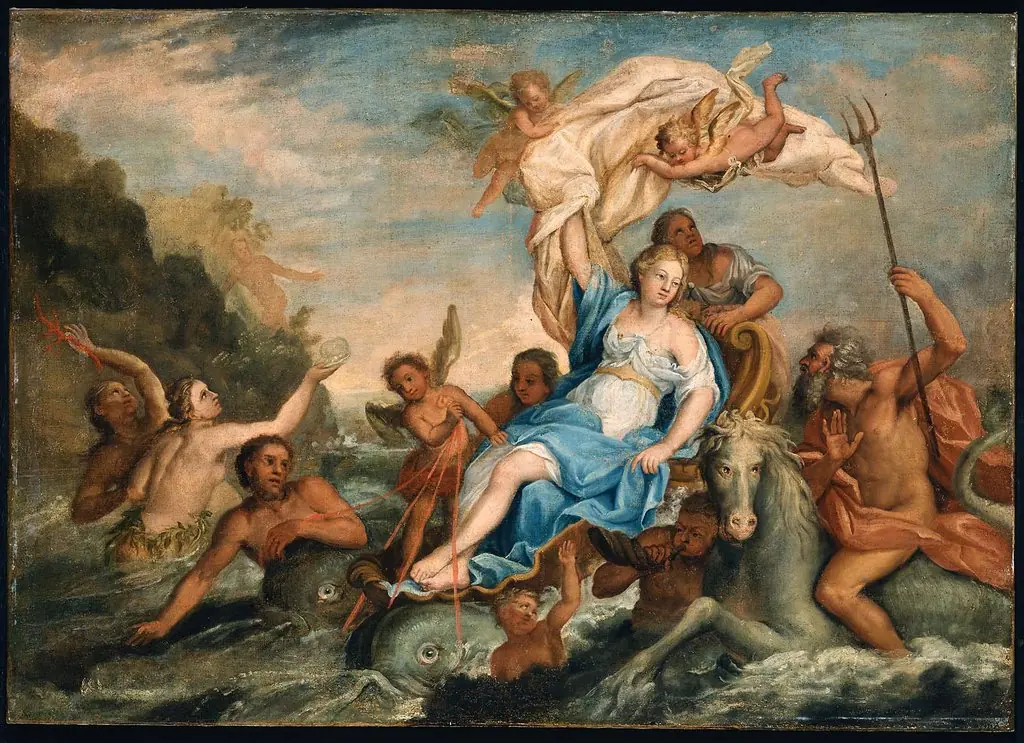
Tiumph of Galatea is an oil painting by the Rococo painting artist Jean-Baptiste van Loo. It dates from 1720 and is held in the collection of the Hermitage Museum.
About this work
Overview
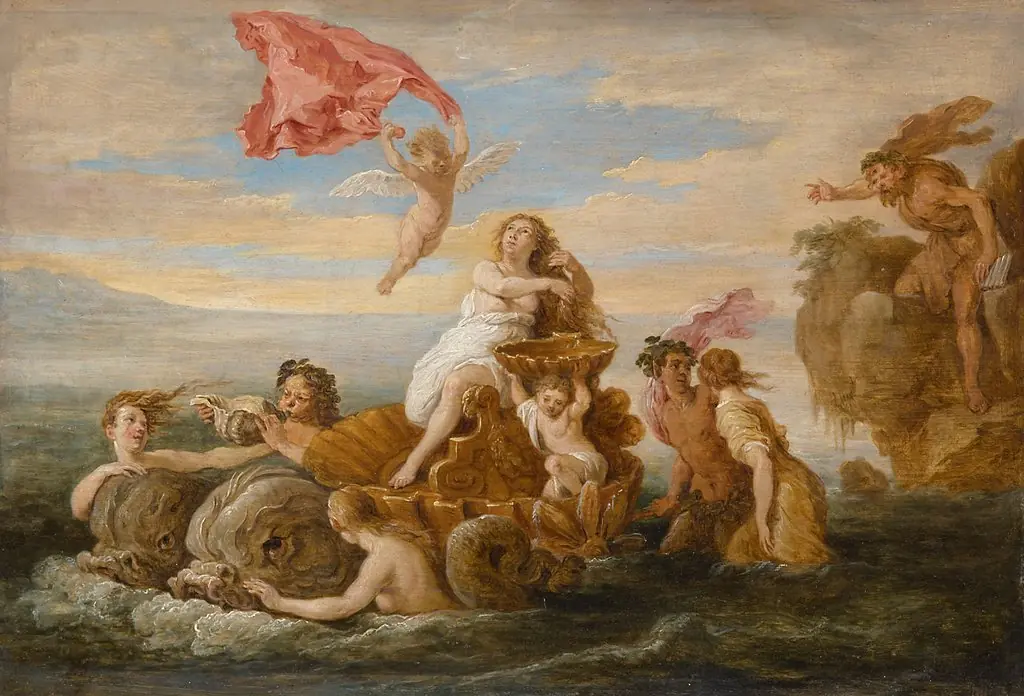
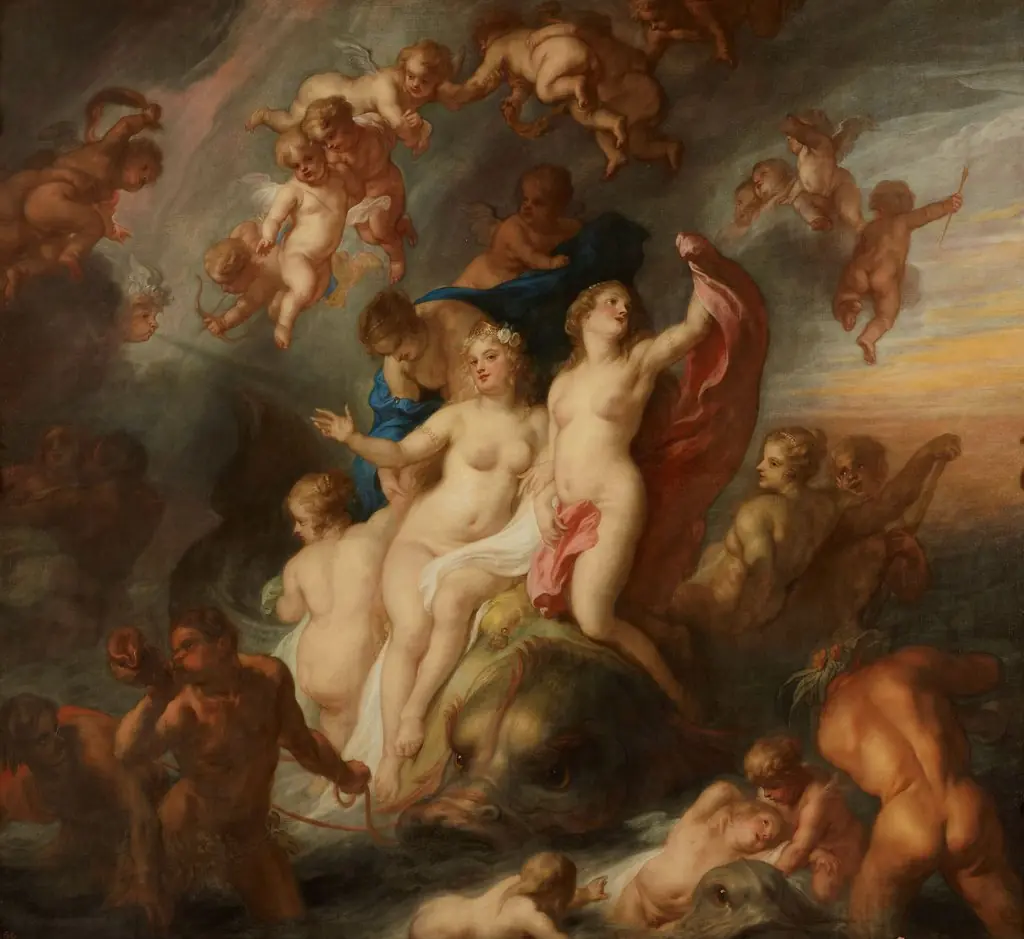
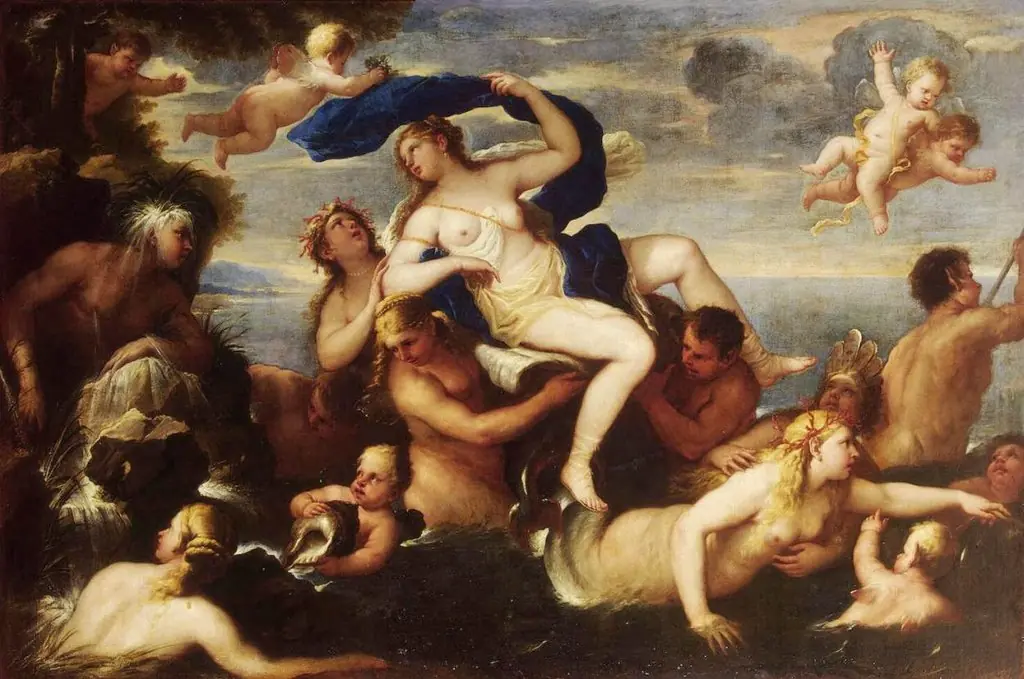
Jean-Baptiste van Loo’s oil painting Triumph of Galatea, completed in 1720, depicts a dramatic maritime scene drawn from classical mythology. The canvas is part of the State Hermitage Museum’s collection in St. Petersburg. Central to the composition is the figure of Galatea, shown hovering above a tempestuous sea, surrounded by struggling shipwreck survivors and celestial figures.
Subject & Meaning
The work illustrates the myth of Galatea, the sea nymph rescued by divine forces after a shipwreck. Van Loo emphasizes her role as a savior: she hovers above the chaos, clutching a luminous orange scarf that serves as a visual beacon. The surrounding figures—men reaching upward, mothers shielding children—convey human vulnerability contrasted with the nymph’s protective presence.
Technique & Style
Van Loo employs a pronounced chiaroscuro, using deep greys and blues for the stormy sky and sea while the orange scarf and the radiant flesh of Galatea stand out in stark relief. Soft modeling of the woman’s face and arms creates a three‑dimensional effect, and the swirling clouds and foaming waves are rendered with swift, energetic brushwork that heightens the scene’s turbulence.
History & Provenance
Painted in the early eighteenth century, the Triumph of Galatea entered the State Hermitage Museum’s holdings during the imperial collection’s expansion in the 19th century. The museum’s acquisition records list the work as part of a broader effort to acquire French Baroque paintings, reflecting the period’s interest in mythological subjects and the reputation of van Loo’s workshop.
Artist & collection
Artist
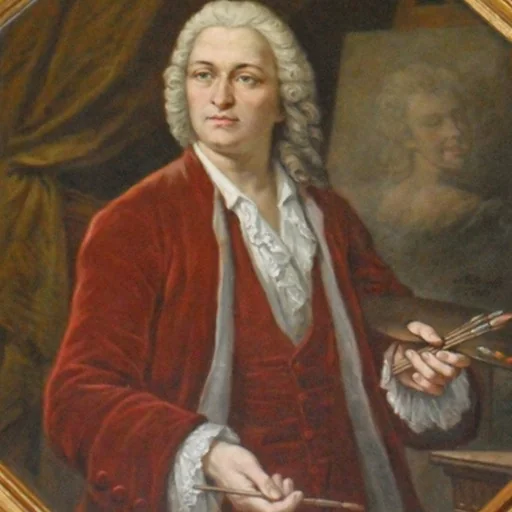
Jean-Baptiste van Loo (1684–1745) was a French artist, born in Aix-en-Provence.