Artwork
The Surrender of the Dutch Admiral de Winter to Admiral Duncan at the Battle of Camperdown (The Victory of Lord Duncan)
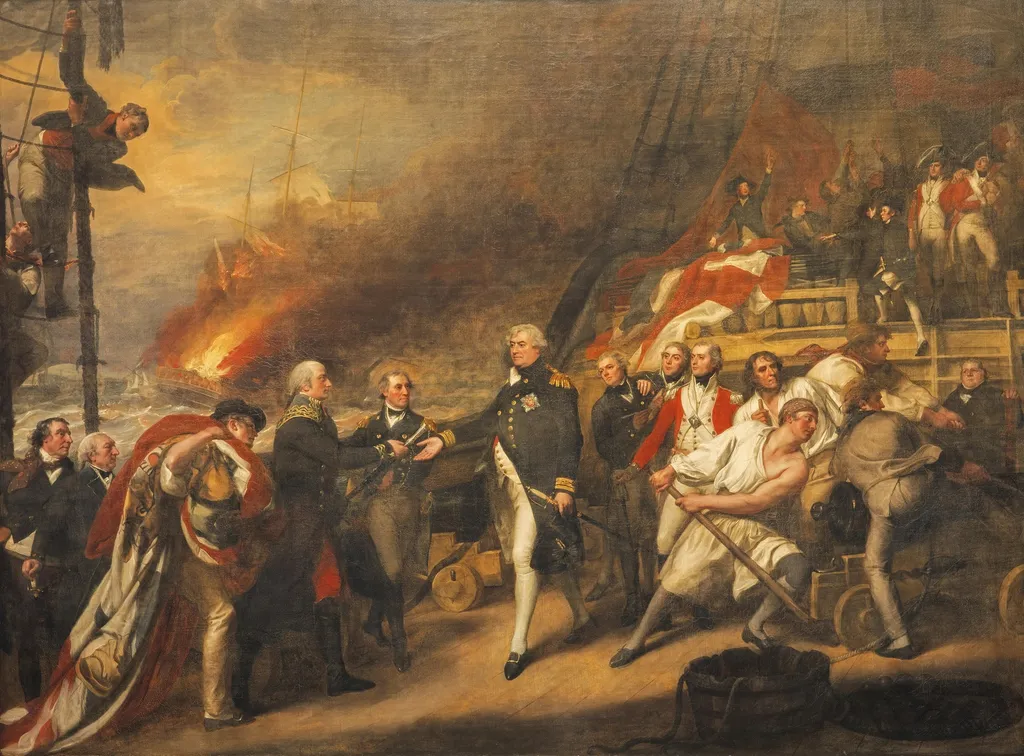
The Surrender of the Dutch Admiral de Winter to Admiral Duncan at the Battle of Camperdown (The Victory of Lord Duncan) is an oil painting by the American Impressionist artist John Singleton Copley. It dates from 1800 and is held in the collection of the National Galleries Scotland.
About this work
The Surrender of the Dutch Admiral de Winter to Admiral Duncan at the Battle of Camperdown is a large oil painting by John Singleton Copley.
The Surrender of the Dutch Admiral de Winter to Admiral Duncan at the Battle of Camperdown is a large oil painting by John Singleton Copley. It was finished in 1799 and shows the moment the British fleet wins over the Batavian fleet.
The work records the end of the 1797 battle in the North Sea. Copley chose to focus on Admiral Adam Duncan accepting the surrender of Admiral Jan Willem de Winter.
You can see more of Copley's work at the Scottish National Gallery.
Overview
Painted in 1799 by John Singleton Copley, this large oil work commemorates the naval engagement off the coast of Camperdown in the North Sea on October 11, 1797. It captures the formal surrender of Batavian Admiral Jan Willem de Winter to British Admiral Adam Duncan, marking a decisive British victory during the War of the First Coalition. The painting serves as a documented record of a pivotal moment in naval history, rendered with attention to ceremonial detail and naval hierarchy.
Subject & Meaning
The scene centers on the moment of surrender, emphasizing protocol over chaos. De Winter, in full uniform, offers his sword to Duncan, who receives it with composure. Surrounding officers and sailors from both fleets frame the encounter, underscoring the gravity of defeat and victory. The composition avoids glorifying violence, instead highlighting the ritualized transfer of authority, reflecting contemporary ideals of military honor and discipline.
Technique & Style
Copley employs a controlled, almost theatrical lighting to distinguish the central figures against the muted tones of the sea and ships. His brushwork is precise, particularly in rendering uniforms, flags, and naval architecture. The figures are arranged in a stable, pyramidal group, reinforcing the formality of the occasion. The background suggests a battle’s aftermath—smoke, damaged masts—without overwhelming the foreground’s ceremonial focus.
History & Provenance
Commissioned shortly after the battle, the painting was completed in London in 1799. It was acquired by the British Admiralty and later transferred to the Scottish National Gallery, where it remains today. Copley, then based in England, was chosen for his reputation in portraiture and historical scenes. The work was intended as official commemoration, not private patronage, reflecting the state’s interest in visualizing naval triumphs.
Context
The Battle of Camperdown occurred during a period of intense naval rivalry between Britain and the Batavian Republic, a French satellite state. Britain’s victory secured control of the North Sea and disrupted French naval ambitions. Copley’s painting emerged amid a broader British effort to consolidate national identity through imagery of military success, aligning with the propaganda needs of a nation at war with revolutionary France.
Legacy
Though less widely known than other naval battle paintings, Copley’s work remains a significant example of late 18th-century British historical painting. It preserves the visual language of naval surrender and offers insight into how military authority was represented in art. Its preservation in the Scottish National Gallery ensures continued access for scholars and the public interested in the intersection of art, politics, and naval history.
Own this work as a print
Artist & collection

Artist
John Singleton Copley (July 3, 1738 – September 9, 1815) was an American-born British painter active in both the Thirteen Colonies and England.

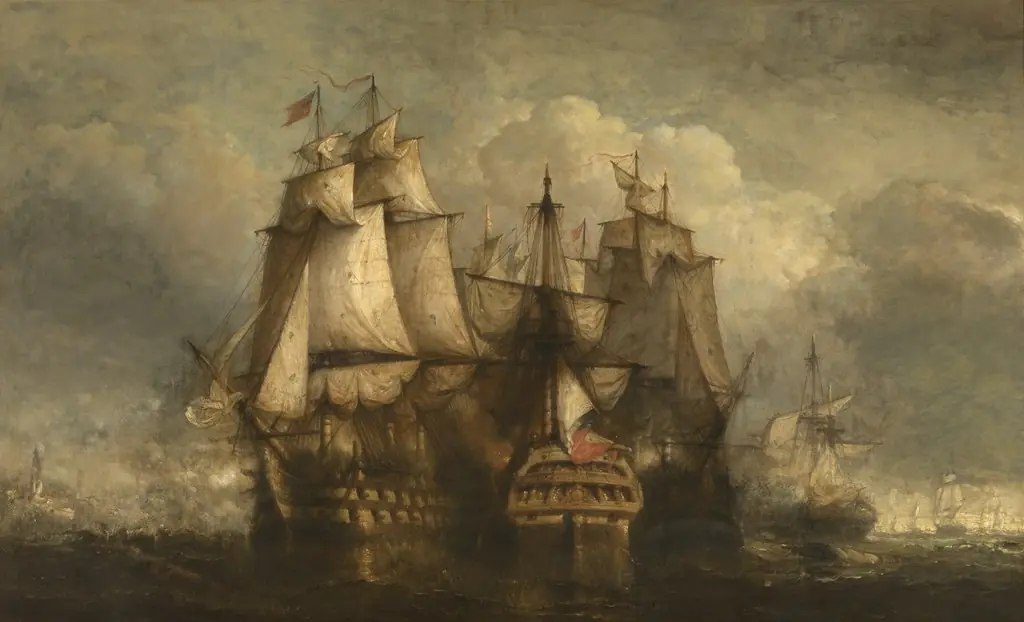 Siege of Vlissingen by an English Squadron
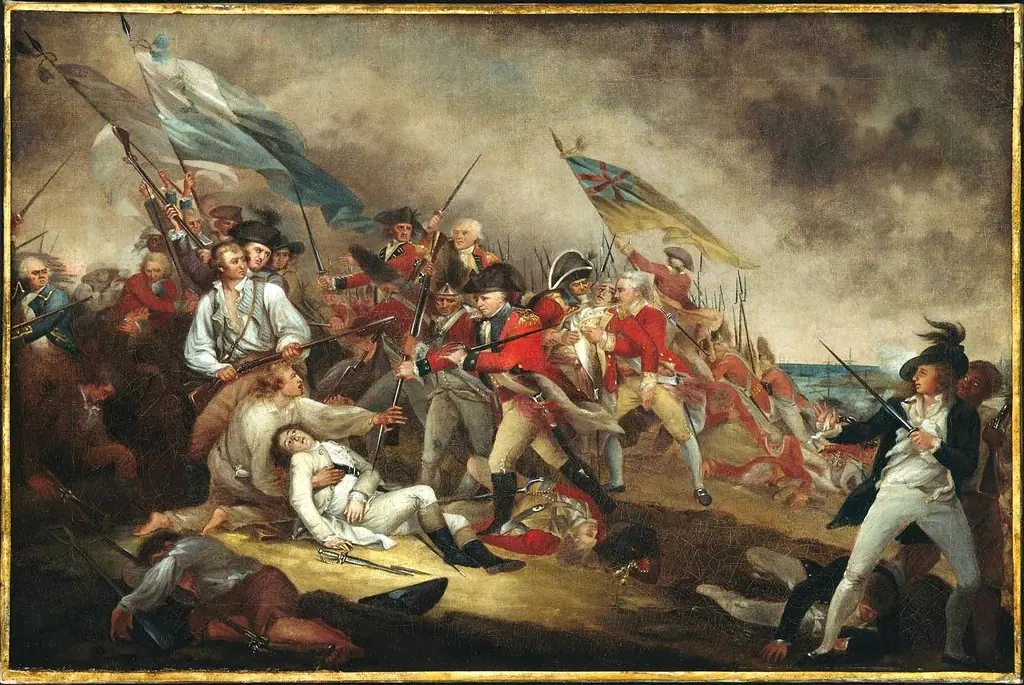 The Death of General Warren at the Battle of Bunker's Hill, 17 June, 1775
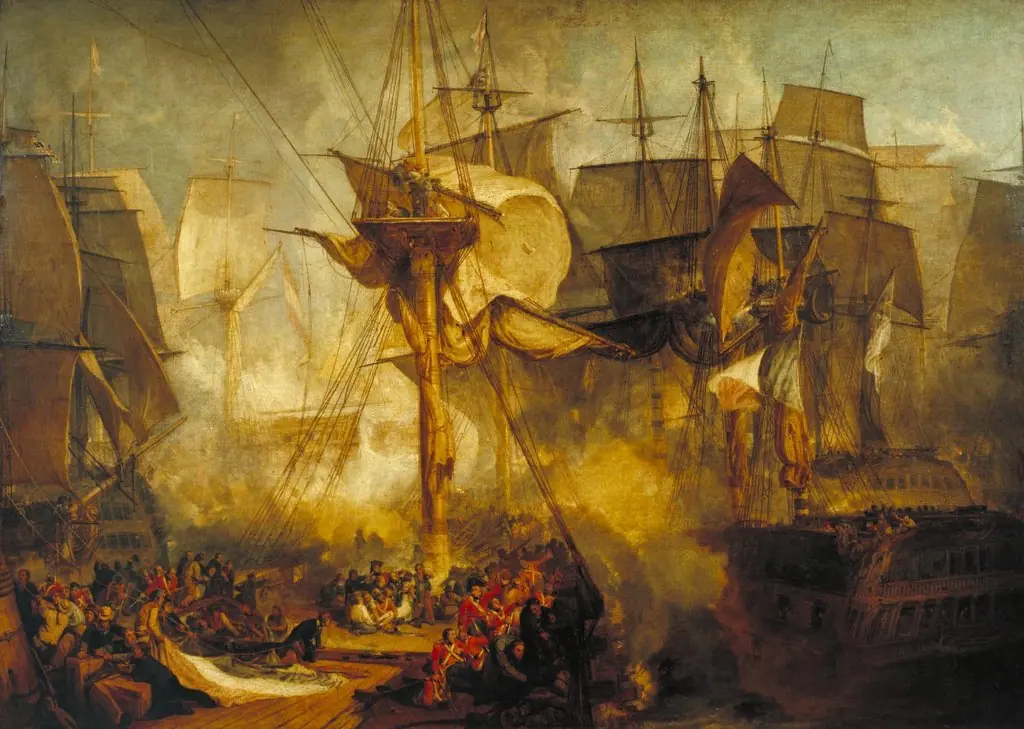 The Battle of Trafalgar (1806)
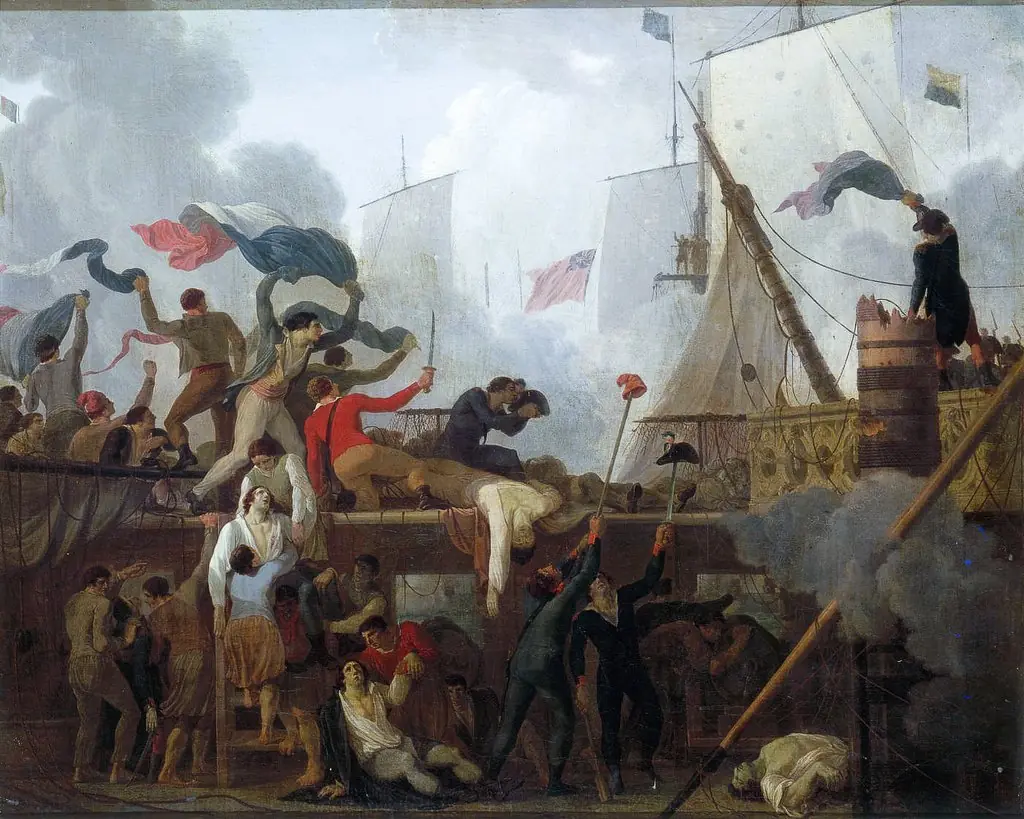 Héroïsme des marins du vaisseau Le Vengeur commandés par le capitaine Renaudin
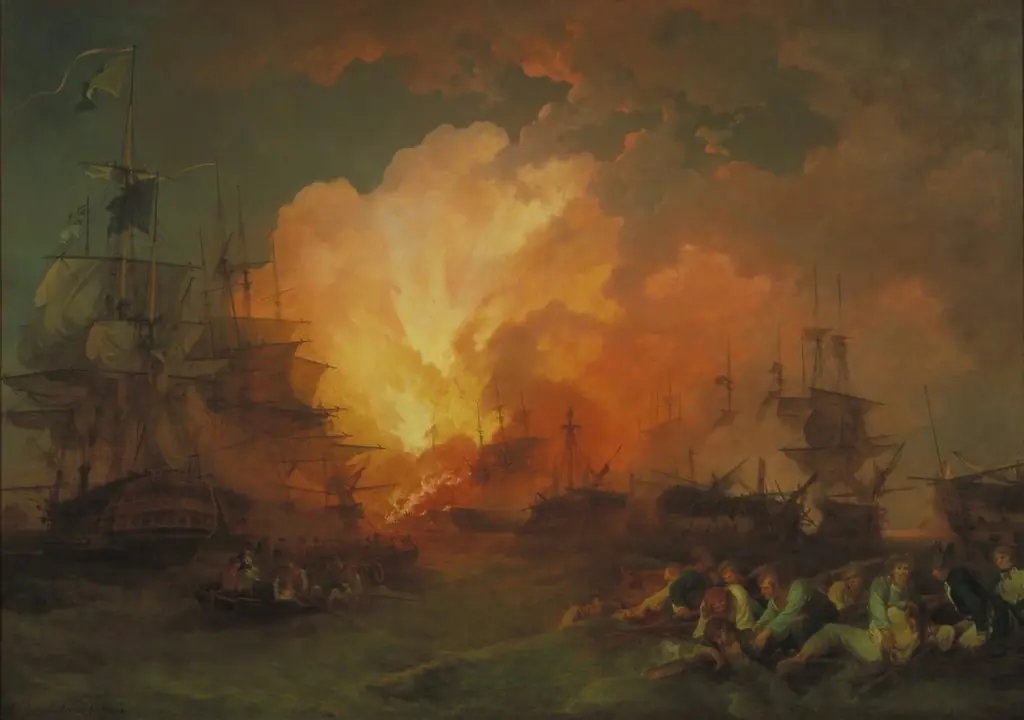 The Battle of the Nile
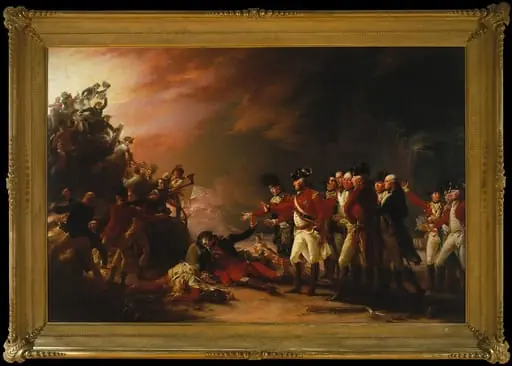 The Sortie Made by the Garrison of Gibraltar
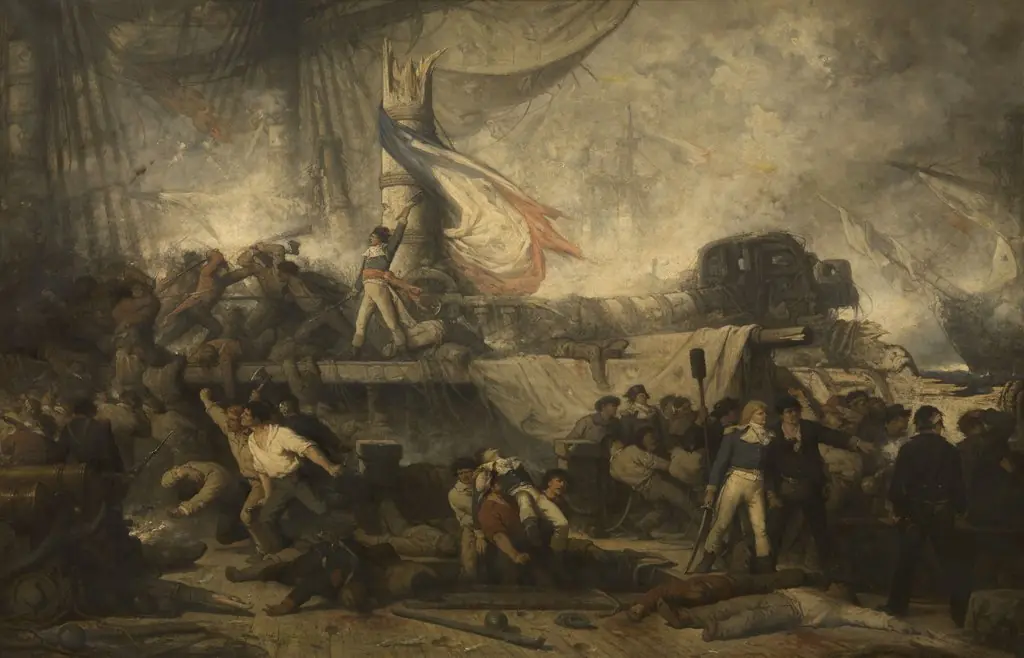 The Algeciras at the Battle of Trafalgar