Artwork
Portrait of Grinling Gibbons
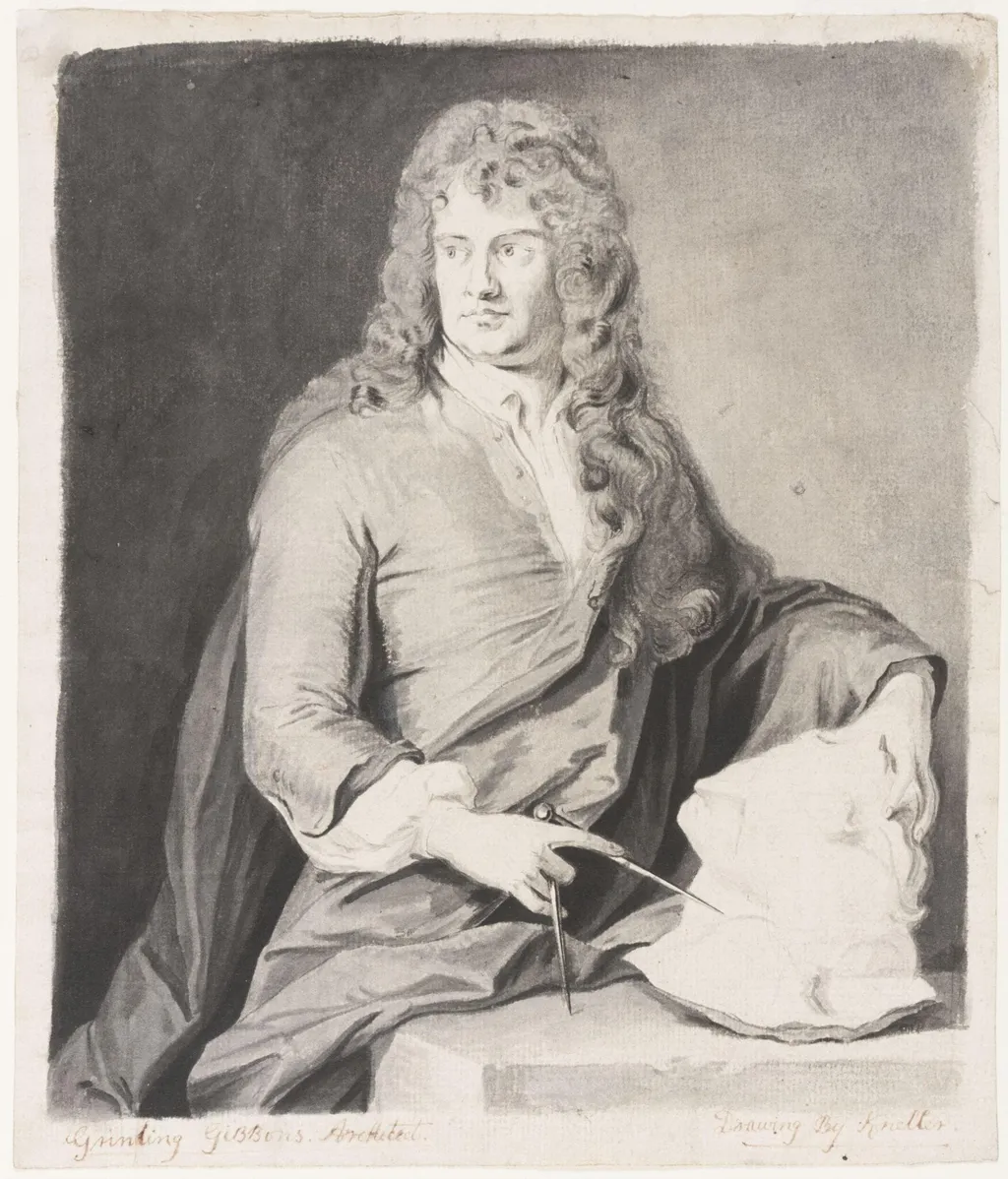
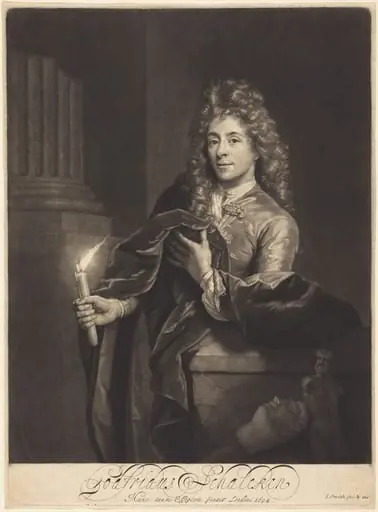
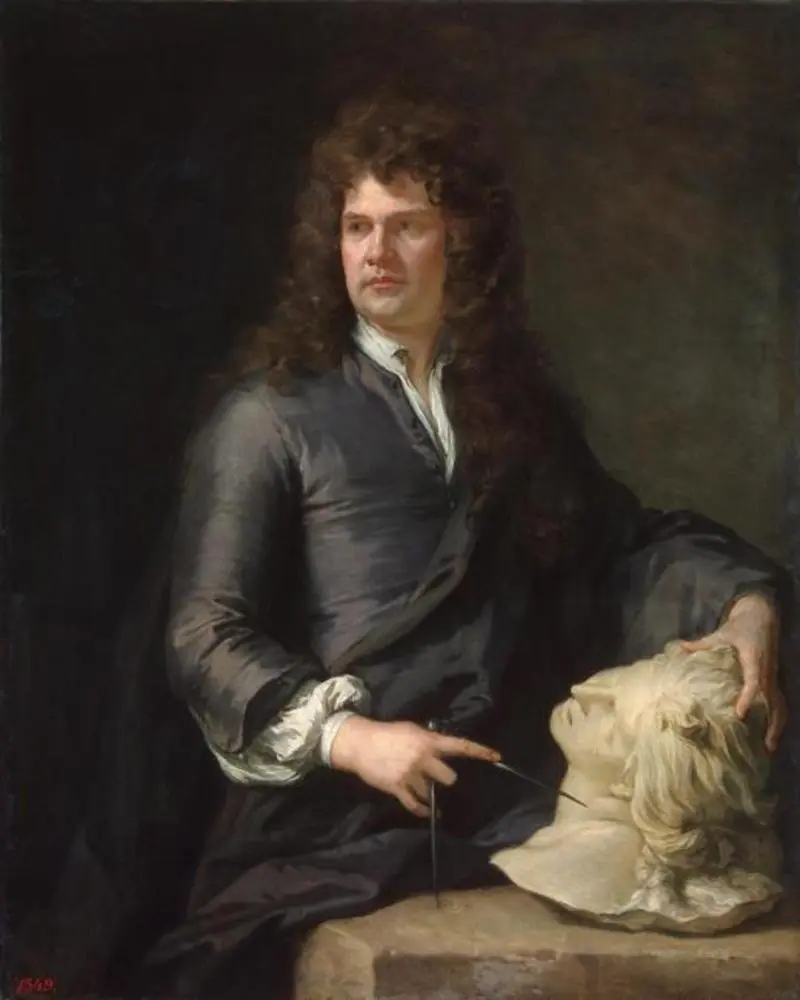
Portrait of Grinling Gibbons is a drawing by the Baroque artist John Smith. It dates from 1690 and is held in the collection of the Victoria and Albert Museum.
About this work
Overview
Created as a preparatory study for a mezzotint engraving, the work was later misattributed to Sir Godfrey Kneller on its inscription.
A 1690 Indian ink drawing by John Smith depicts the English sculptor and wood-carver Grinling Gibbons in a seated pose. Created as a preparatory study for a mezzotint engraving, the work was later misattributed to Sir Godfrey Kneller on its inscription. The drawing’s precision and tonal control reflect Smith’s skill in translating three-dimensional form into linear notation, emphasizing Gibbons’ likeness without embellishment.
Subject & Meaning
Grinling Gibbons is portrayed as a refined artisan, seated with one leg crossed and holding a sheet of paper or small object in his right hand. His attire—long coat, ruffled cuffs, and high collar—signals professional status, while the neat curl of his wig conveys conformity to contemporary gentlemanly norms. The pose suggests contemplation, aligning his identity with intellectual craft rather than mere manual labor.
Technique & Style
Smith employed fine, controlled ink lines to model form through cross-hatching and stippling, creating subtle gradations of light and shadow. The texture of fabric, hair, and skin is rendered with meticulous attention, giving the figure a sculpted presence despite the two-dimensional medium. The dark, unadorned background isolates the subject, enhancing the focus on his facial expression and the delicate handling of surface detail.
History & Provenance
The drawing was made as a study for a mezzotint portrait, a common practice in the late 17th century for reproducing likenesses. An inscription erroneously credited Kneller as the artist, a misattribution that persisted in some records. Its survival as a standalone work suggests it was valued independently, possibly retained by Smith or a collector interested in the craft of portraiture.
Context
In late 17th-century England, portraiture of artisans was uncommon; most commissioned likenesses depicted nobility or clergy. Gibbons’ depiction reflects a growing recognition of skilled craftsmen as cultural figures. Smith’s choice to render him with such care aligns with broader shifts in valuing artistic labor, even as the misattribution reveals lingering hierarchies between painters and other makers.
Legacy
Though not widely exhibited, the drawing remains a rare visual record of Gibbons, whose sculptural legacy far outlasted his portrait. Its technical finesse offers insight into the preparatory methods of printmakers of the era. The misattribution also serves as a historical marker of how artisanal identity was sometimes obscured by institutional biases in art documentation.
Artist & collection
Artist
John Smith drew the person who carved the limewood cherubs above London’s Whitehall Banqueting House doors.