Artwork
Charles-Rene d'Hozier
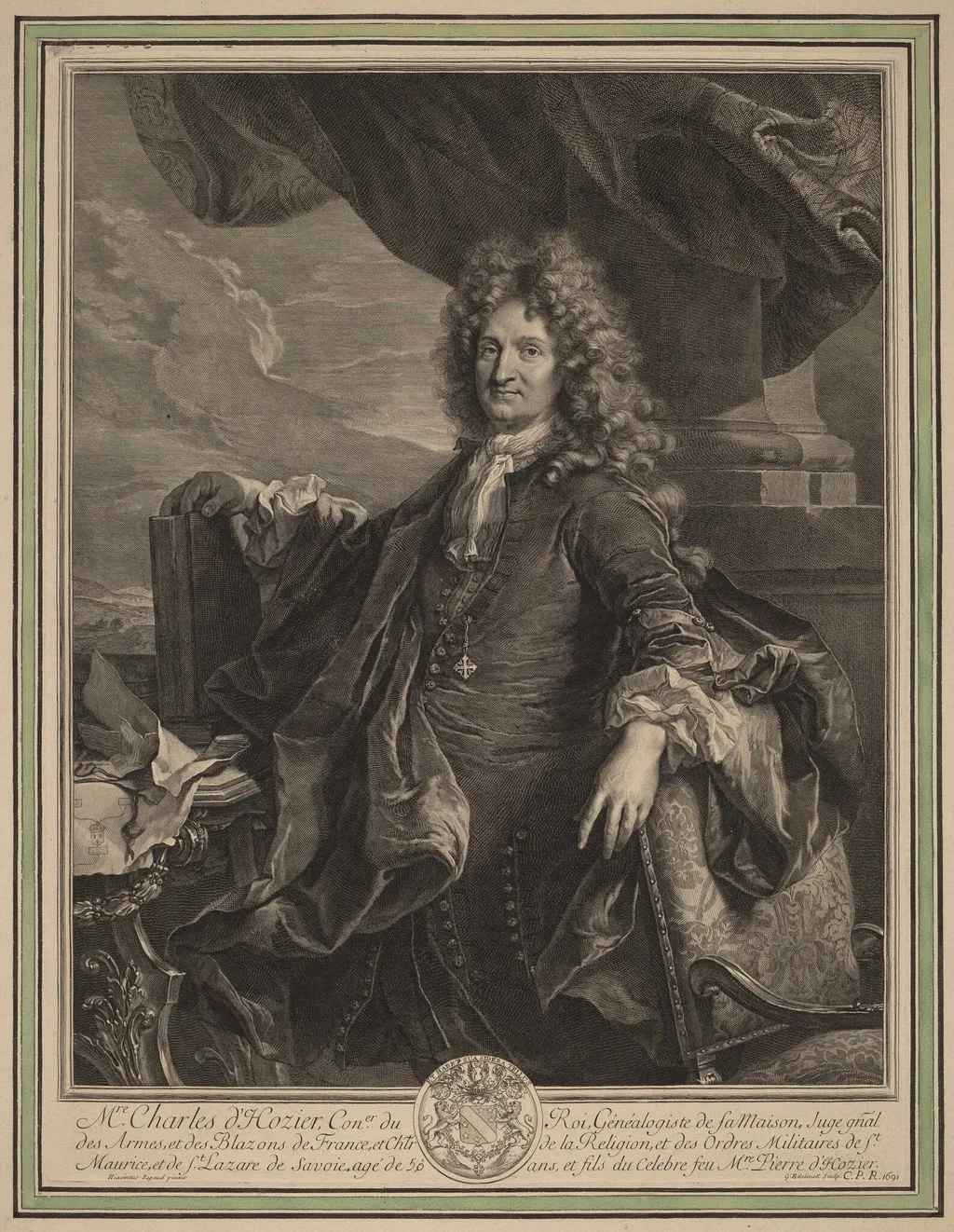
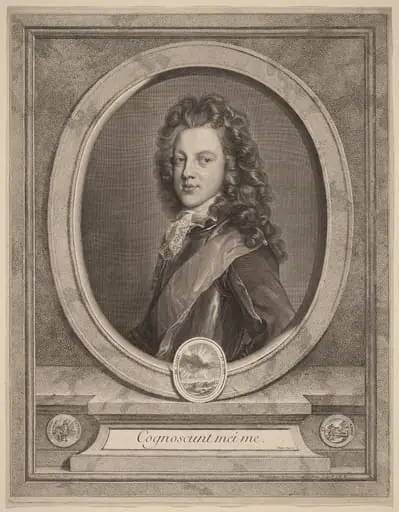
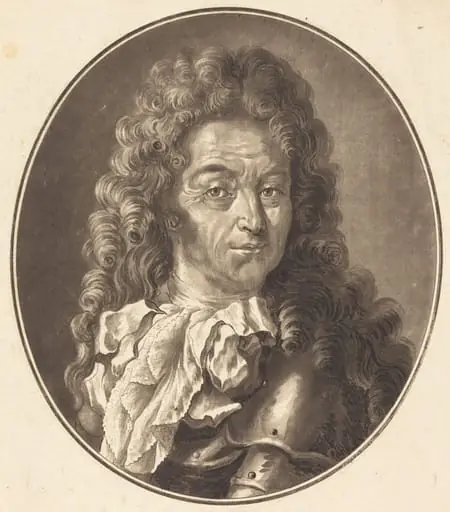
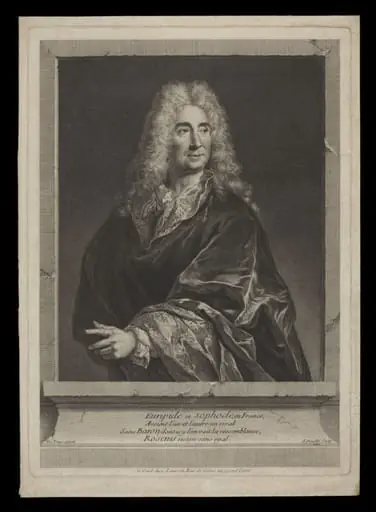
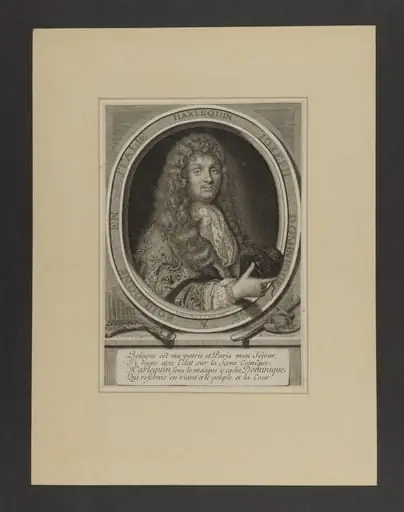
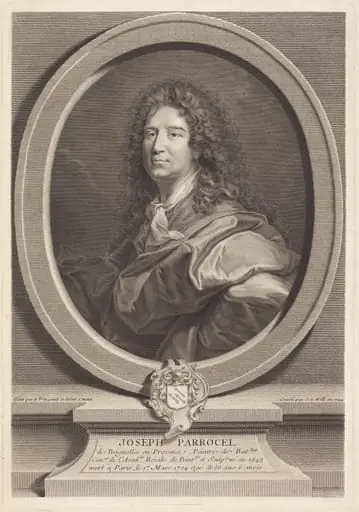
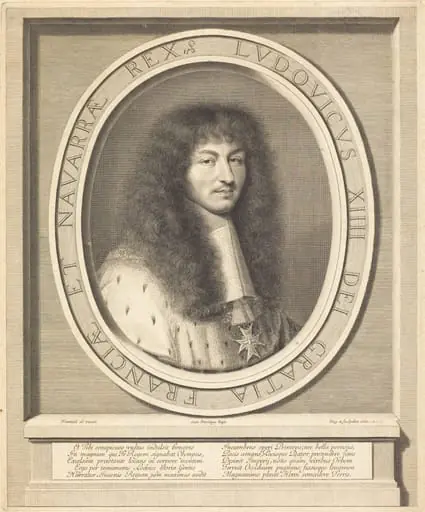
Charles-Rene d'Hozier is an ink print by the Baroque artist Gerard Edelinck. It dates from 1691 and is held in the collection of the National Gallery of Art. This 1691 copperplate engraving portrays Charles-René d'Hozier, a French heraldist and genealogist.
About this work
Overview
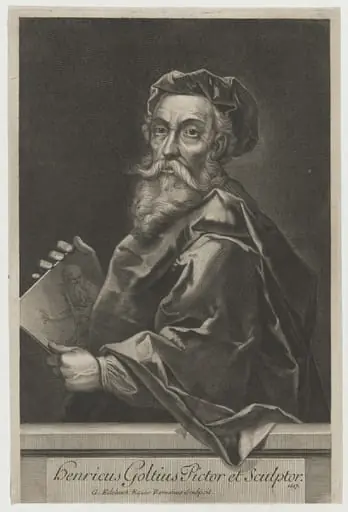
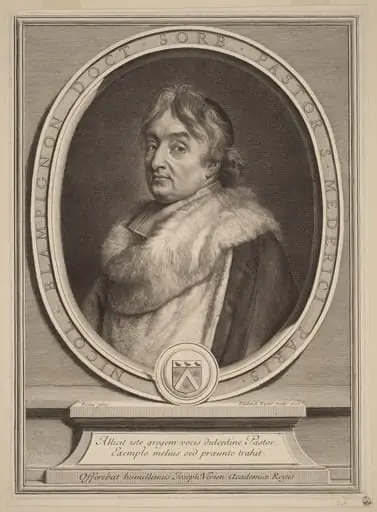
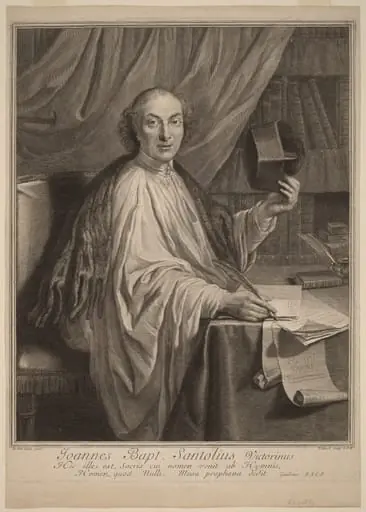
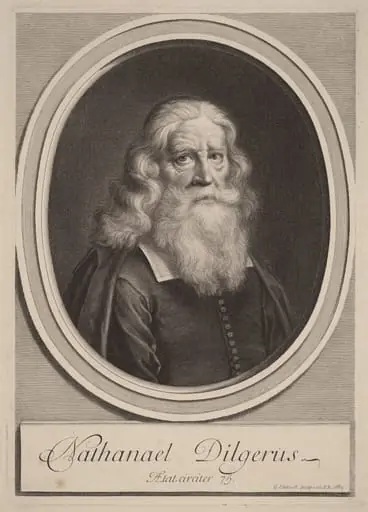
This 1691 copperplate engraving portrays Charles-René d'Hozier, a French heraldist and genealogist. Created by Gérard Edelinck, a Flemish artist active in Paris, the work is part of a broader tradition of portrait prints documenting scholarly and noble figures. Edelinck, naturalized as French, was renowned for his technical precision and contributions to print culture in late 17th-century France.
Subject & Meaning
The subject, Charles-René d'Hozier, was a key figure in the administration of French heraldry, responsible for compiling noble lineages. His depiction in armor, holding a baton of office, signals his institutional authority. The portrait functions not as a likeness for personal commemoration but as a formal representation of his role within the state’s genealogical bureaucracy.
Technique & Style
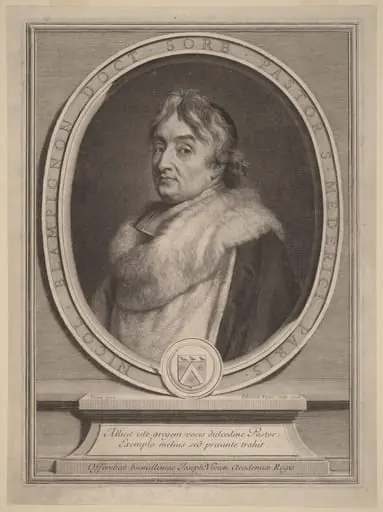
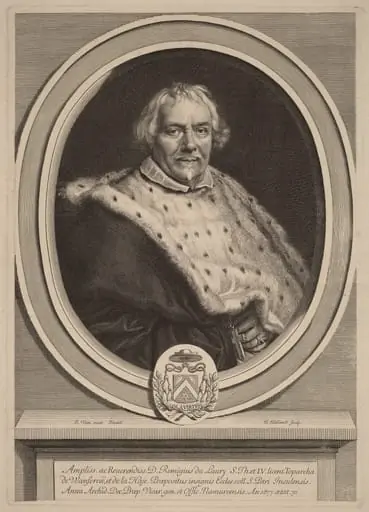
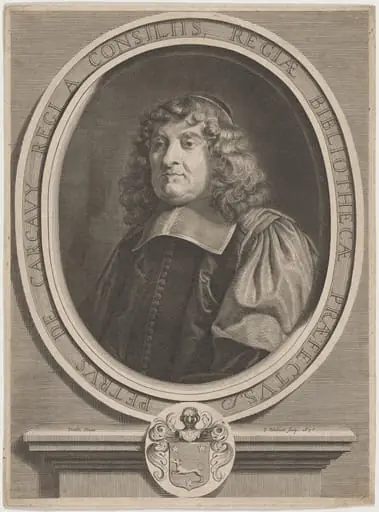
Edelinck employed fine-line engraving with meticulous cross-hatching to model form and texture. The sharp contours of the armor, the folds of fabric, and the subtle gradations of the face are achieved through controlled incisions in copper. The technique emphasizes clarity and realism, reflecting the academic ideals of the period, where precision served both aesthetic and documentary purposes.
History & Provenance
The engraving was produced during Edelinck’s tenure as a leading printmaker in Paris, where he collaborated with publishers and scholars. It likely circulated among aristocratic and academic circles as part of a series documenting French officials. Its survival in museum collections attests to its status as a representative example of scholarly portraiture in the Ancien Régime.
Context
In late 17th-century France, heraldic records were vital to maintaining social hierarchy and royal legitimacy. D'Hozier’s work supported the monarchy’s efforts to regulate nobility. Edelinck’s prints, including this one, served as visual records for institutions like the Académie des Inscriptions et Belles-Lettres, linking art with state-sponsored scholarship.
Legacy
Edelinck’s engravings, including this portrait, influenced the standardization of portrait prints in France. His technical rigor set a benchmark for subsequent engravers. While d'Hozier’s name is now primarily of historical interest, the engraving endures as a testament to the intersection of art, bureaucracy, and genealogical science in early modern Europe.
Artist & collection
Artist
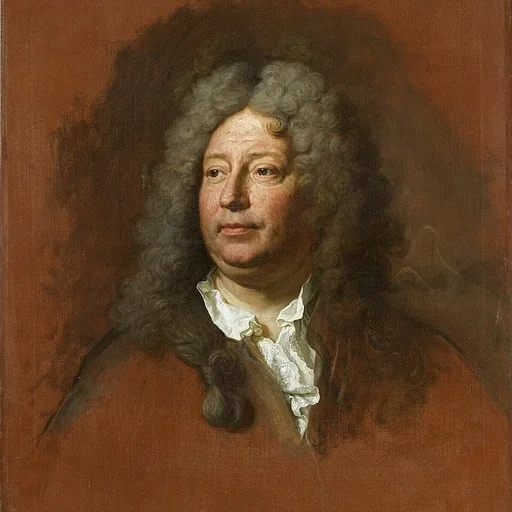
Gérard Edelinck (20 October 1640 (baptized) – 2 April 1707) was a copper-plate engraver and print publisher of Flemish origin, who worked in Paris from 1666 and became a naturalized French citizen in 1675.