Artwork
A Welsh Waterfall
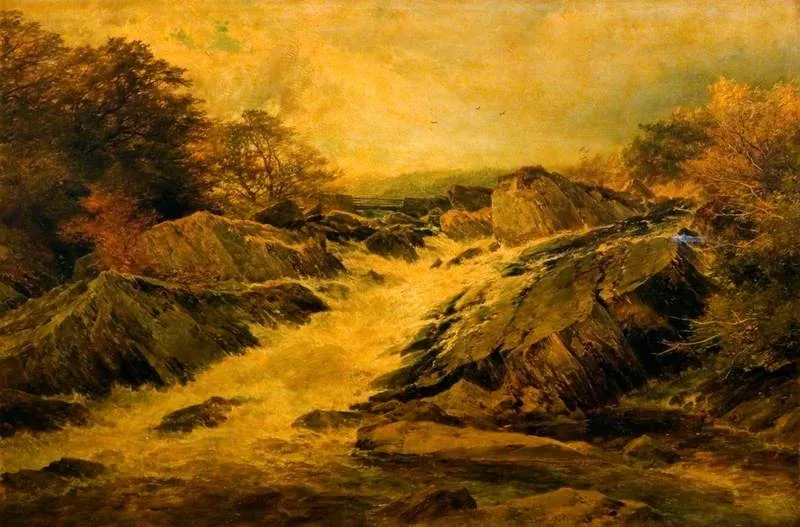
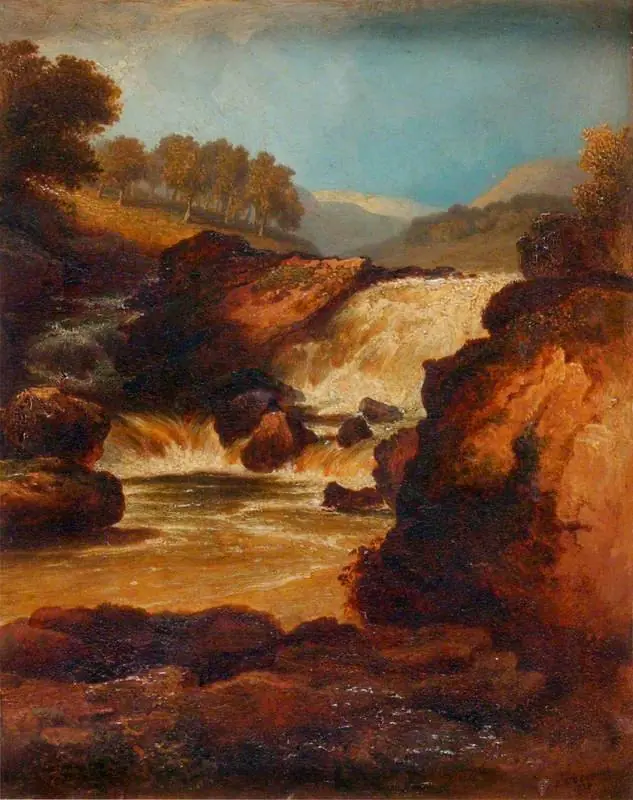
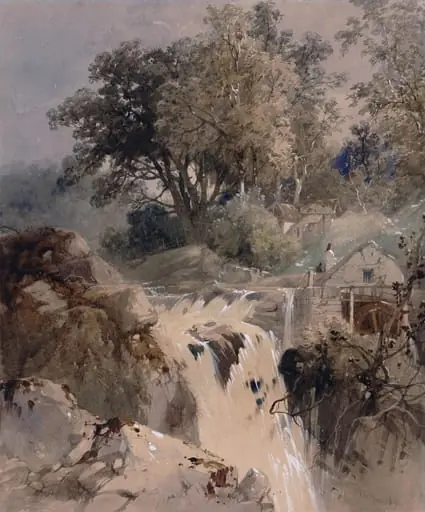
A Welsh Waterfall is an oil painting by the Impressionist artist John Syer. It dates from 1875 and is held in the collection of the Victoria and Albert Museum.
About this work
Overview
A Welsh Waterfall, painted in 1875 by English artist John Syer, is an oil-on-canvas landscape depicting a cascade in a wooded Welsh valley. Syer, active throughout the 19th century, focused on natural scenery and exhibited widely in British institutions. The work is part of the Victoria and Albert Museum’s collection, reflecting its significance within the period’s landscape tradition.
Subject & Meaning
The composition invites contemplation of nature’s quiet rhythms, aligning with 19th-century British sensibilities toward the sublime in everyday landscapes.
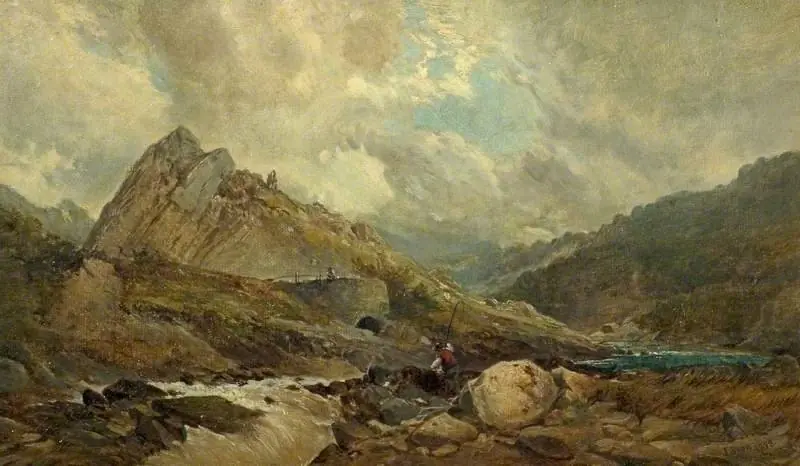
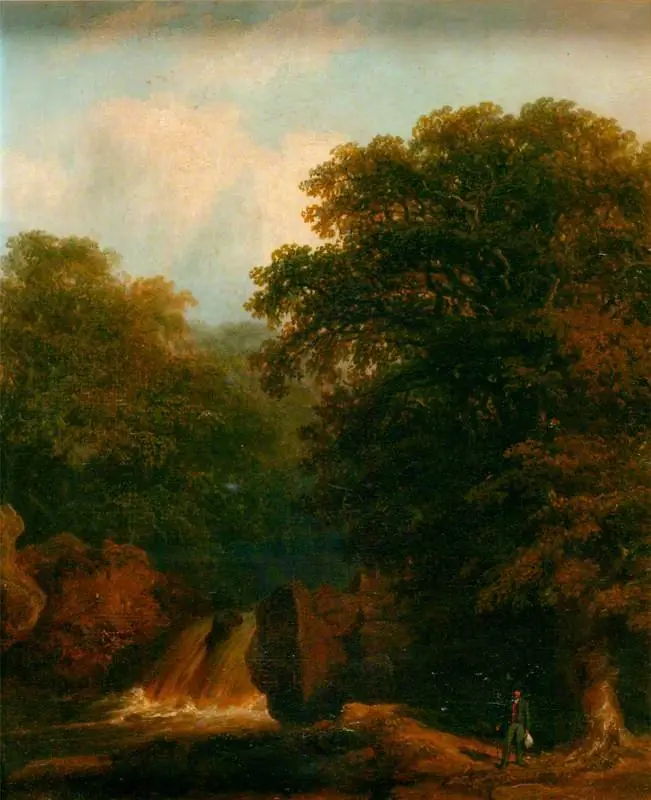
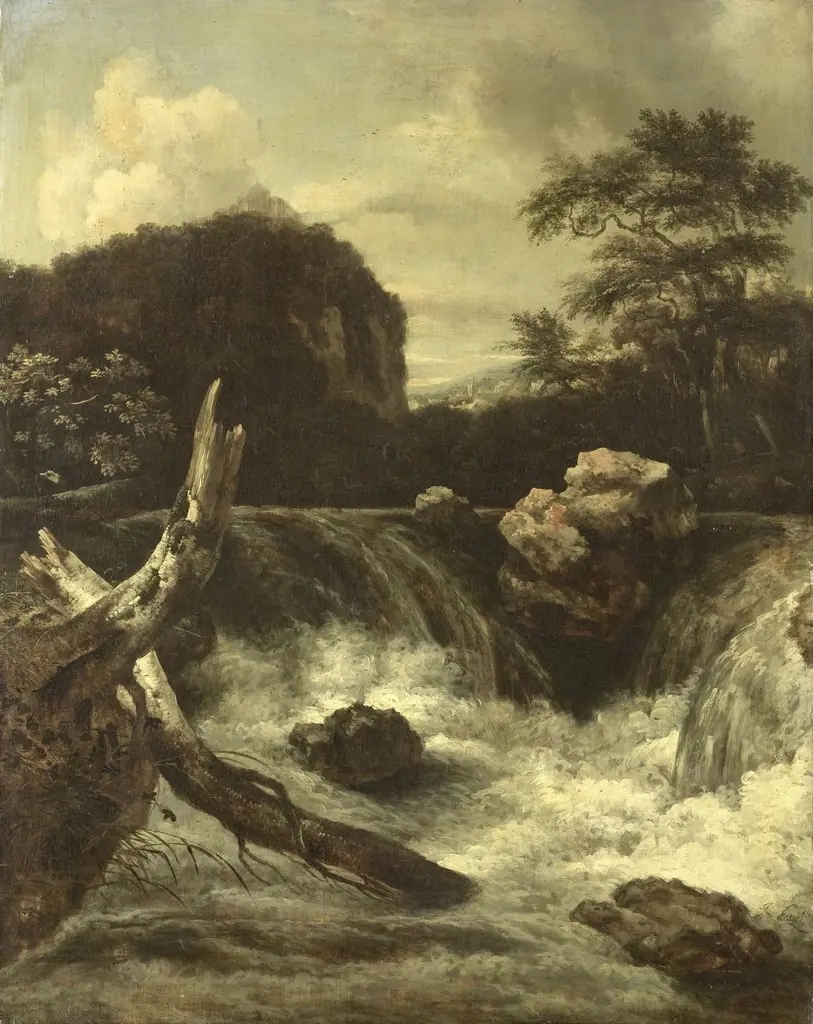
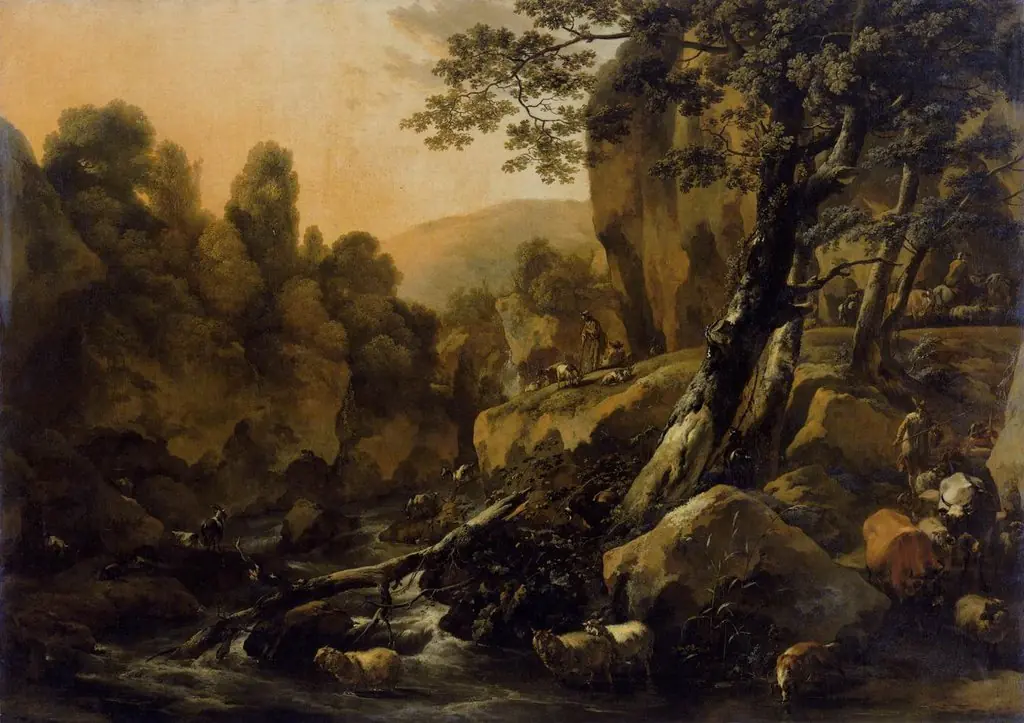
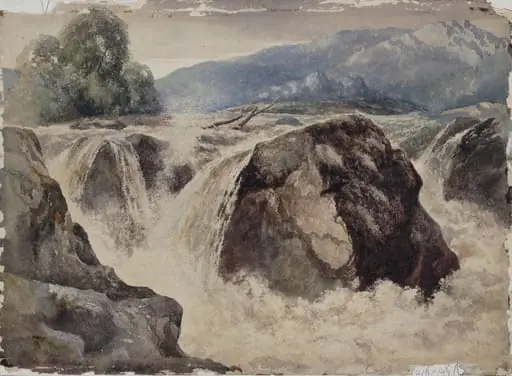
The painting captures a waterfall descending over moss-covered rocks, framed by dense trees and a soft, open sky. Rather than dramatizing the scene, Syer presents it with quiet observation, emphasizing the harmony between water, stone, and vegetation. The composition invites contemplation of nature’s quiet rhythms, aligning with 19th-century British sensibilities toward the sublime in everyday landscapes.
Technique & Style
Syer employed oil paint to render fine textures in foliage, rock surfaces, and flowing water, using layered brushwork to suggest depth and movement. His approach shows influence from William Muller’s atmospheric realism, with subtle tonal shifts and careful attention to light filtering through trees. The palette—dominated by greens and browns with pale sky tones—enhances the scene’s naturalism without overt romanticism.
History & Provenance
Created during Syer’s mature period, the painting was likely produced for exhibition or private commission, consistent with his pattern of regular display at major British venues. It entered the Victoria and Albert Museum’s collection in the late 19th or early 20th century, possibly through acquisition or donation, and has remained in public care since, preserving its historical context within British art.
Context
In the 1870s, British landscape painting was shaped by both academic traditions and emerging interest in direct observation of nature. Syer’s work reflects this shift, avoiding idealized compositions in favor of localized, topographically plausible scenes. His focus on Welsh scenery aligns with broader Victorian fascination with regional landscapes as expressions of national identity and natural heritage.
Legacy
Though not widely known today, Syer’s body of work contributes to the understanding of 19th-century British landscape practice beyond the most famous names. A Welsh Waterfall exemplifies the quiet, detailed realism favored by many contemporaries, offering insight into how artists engaged with nature without theatricality. Its presence in a major museum ensures continued access for study and appreciation.
Artist & collection
Artist
John Syer (1815–1885) was an English painter. He painted landscape in a style formed chiefly upon that of William Muller, but failed as a colourist. He exhibited at the Royal Academy, the British Institution, and with…