Artwork
Covent Garden Flower Women
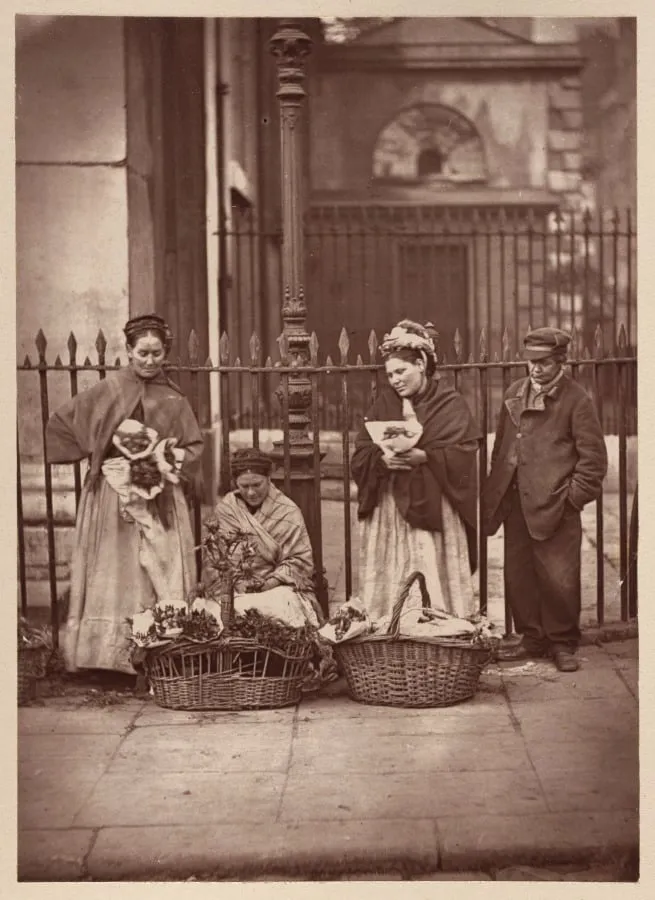
Covent Garden Flower Women is a photography by the Impressionist artist John Thomson. It dates from 1877 and is held in the collection of the Cleveland Museum of Art. This photograph captures two women in late 19th-century London, engaged in street flower-selling—a common yet precarious livelihood.
About this work
You see two women in a London street, one holding a baby, the other clutching a basket of violets.
These women sold flowers for pennies, often passing the job down through families. The painting shows the quiet dignity in their tired faces and patched clothes. It’s not staged—it’s how they actually stood, day after day.
To see more scenes like this, look up england, 19th century.
Overview
This photograph captures two women in late 19th-century London, engaged in street flower-selling—a common yet precarious livelihood. One woman holds an infant while the other carries a basket of violets, their presence evoking the daily realities of urban poverty. The image avoids overt dramatization, presenting instead an unposed moment of quiet endurance amid economic hardship.
Subject & Meaning
Their worn clothing and fatigued expressions underscore the physical toll of such work, yet the composition also conveys resilience.
The scene depicts women whose labor sustained families through generations, selling flowers for minimal returns. Their worn clothing and fatigued expressions underscore the physical toll of such work, yet the composition also conveys resilience. The presence of the child suggests the cyclical nature of their trade, while the violets—ordinary yet delicate—hint at fleeting beauty within harsh circumstances.
Technique & Style
The photograph employs a straightforward, documentary approach, prioritizing authenticity over artistic embellishment. The framing centers on the women without idealization, allowing their postures and surroundings to communicate their lived experience. The muted tones and natural light emphasize the unvarnished truth of their situation, aligning with the period’s growing interest in social realism.
History & Provenance
Created as part of a broader project documenting London’s working poor, this image reflects the collaboration between photographer John Thomson and journalist Adolphe Smith. Their work aimed to expose the conditions of marginalized communities, using photography as a tool for social observation. The photograph’s origins lie in this late 19th-century effort to record urban life with unflinching accuracy.
Context
In Victorian London, street vending provided one of the few income sources for impoverished women, though earnings were meager. Flower-selling, often inherited within families, required long hours in all weather. Such labor was a visible yet overlooked aspect of urban life, reflecting broader inequalities. This image situates the women within a system where survival depended on informal, exploitative economies.
Legacy
The photograph contributes to the visual record of 19th-century social history, offering insight into the lives of working-class women. Its unadorned depiction aligns with documentary traditions that sought to inform public discourse on poverty. Today, it serves as a reminder of the enduring struggles of marginalized laborers, while also highlighting the role of photography in shaping historical narratives.
Artist & collection
Artist
John Thomson painted Scottish landscapes in oil, focusing on the rugged terrain around the Trossachs and Selkirkshire.


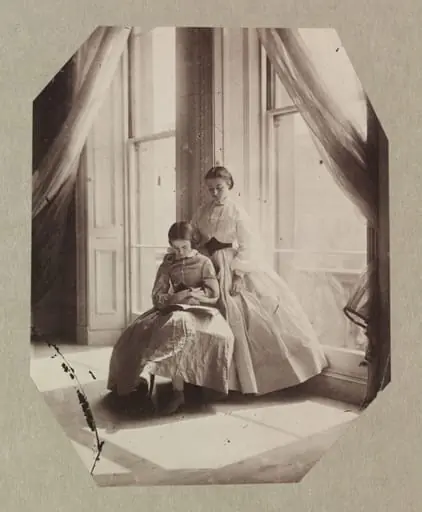 Clementina and Isabella Grace Maude, 5 Princes Gardens
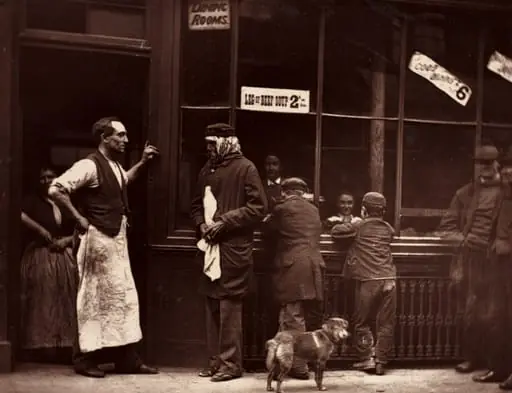 A Convict's Home
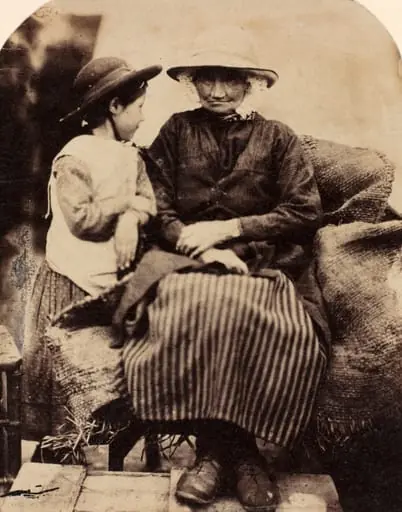 Servants at Rhagatt, Corwen, North Wales
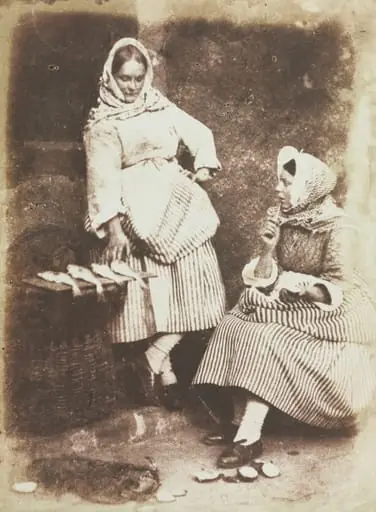 Newhaven Fishwives, Jeanie Wilson and Annie Linton
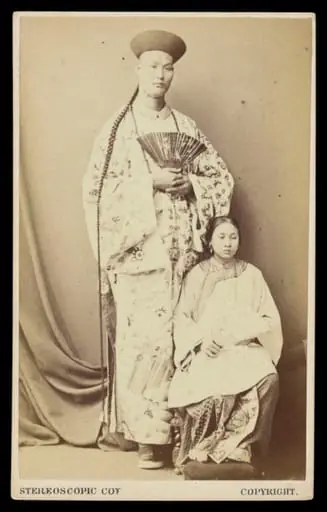 A portrait of Chang Woo Gow and Kin Foo
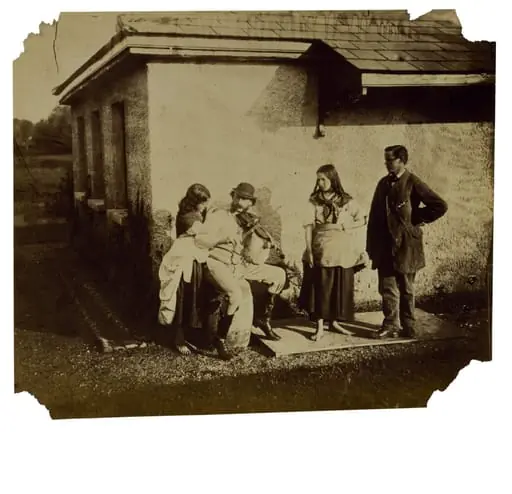 Florence Elizabeth Maude, Cornwallis Hawarden, Clementina Maude and unidentified man, Togge House, Dundrum
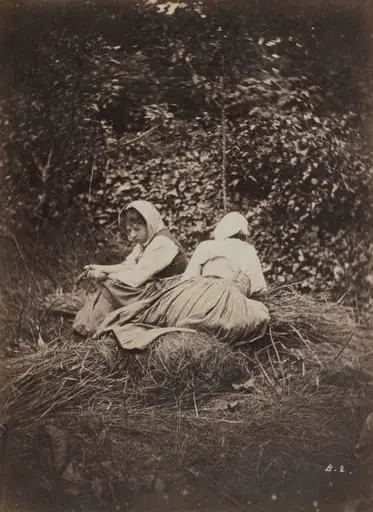 Two Peasant Girls Seated