Artwork
Newhaven Fishwives, Jeanie Wilson and Annie Linton
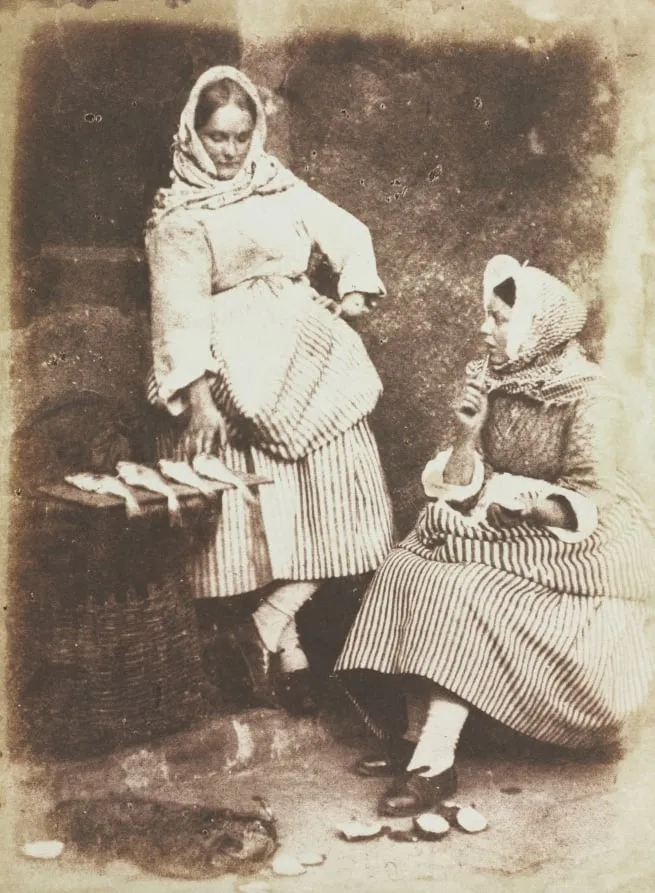
Newhaven Fishwives, Jeanie Wilson and Annie Linton is a photography by the Romanticist artist David Octavius Hill. It dates from 1845 and is held in the collection of the Cleveland Museum of Art.
About this work
This photo shows two women in striped skirts cleaning fish on a dock. The women wear aprons and carry wicker baskets. Sunlight catches the scales of the fish.
Hill and Adamson focused on everyday life. This was rare in the 1840s. They used a new way to make pictures with light.
Their work started a trend. Look up David Octavius Hill (British, 1802–1870).
Overview
Taken in the early 1840s, this photograph by David Octavius Hill and Robert Adamson captures two fishwives of Newhaven, a fishing village near Edinburgh.
Taken in the early 1840s, this photograph by David Octavius Hill and Robert Adamson captures two fishwives of Newhaven, a fishing village near Edinburgh. It is part of a broader series documenting local laborers, an unusual focus for photography at the time. Their collaboration produced nearly 3,000 images using the calotype process, one of the earliest methods to create paper negatives and multiple prints from a single exposure.
Subject & Meaning
The two women, identified by name, are engaged in the daily task of cleaning herring. Their striped skirts and aprons reflect regional dress, while the wicker baskets beside them signal their role as vendors who transported fish to Edinburgh markets. The image conveys dignity in labor, resisting romanticization. By naming the subjects, Hill and Adamson acknowledged their individuality, a rare practice in mid-19th-century portraiture.
Technique & Style
Using the calotype process, Hill and Adamson achieved subtle tonal gradations and soft focus, enhancing the texture of fabric, fish scales, and wooden docks. The composition is unposed, capturing natural light and spontaneous gesture. Unlike formal studio portraits common then, their work embraced environmental context, using available light and real settings to ground the subjects in their lived reality.
History & Provenance
Created between 1843 and 1847, the photograph emerged from Hill and Adamson’s partnership, initiated after Hill sought to document the founding of the Free Church of Scotland. Their project expanded to include scenes of everyday life in coastal communities. The image remained in private collections until acquired by institutions focused on early photographic history, preserving its significance as a pioneering social record.
Context
In the 1840s, photography was largely reserved for portraits of the elite or scientific documentation. Hill and Adamson’s focus on working-class women challenged these norms. Their images coincided with growing interest in social conditions during industrialization, offering a quiet but deliberate counterpoint to idealized depictions of rural life in painting and print.
Legacy
This photograph and others like it laid groundwork for documentary photography as a genre. By treating laborers with visual seriousness and recording their identities, Hill and Adamson shifted photography’s potential from mere representation to social testimony. Their approach influenced later photographers who sought to capture ordinary life with empathy and precision.
Artist & collection
Artist
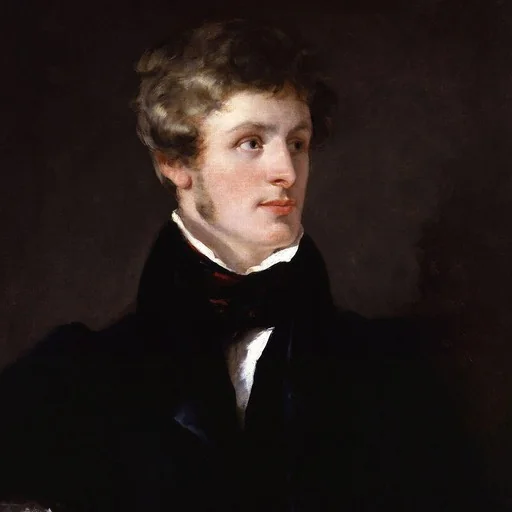
David Octavius Hill (20 May 1802 – 17 May 1870) was a Scottish painter, photographer and arts activist.

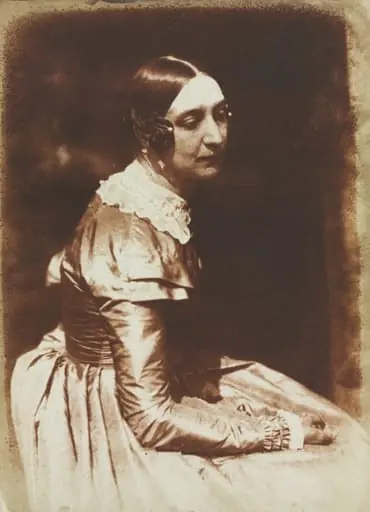
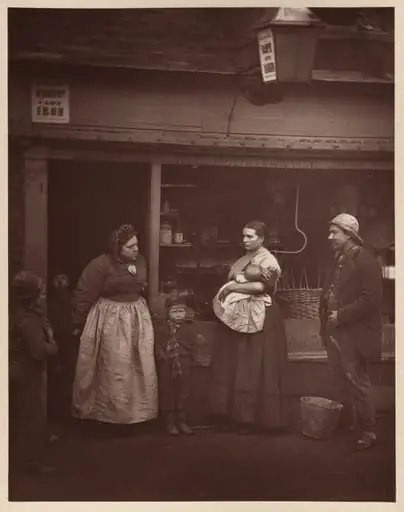 Sufferers from the Floods
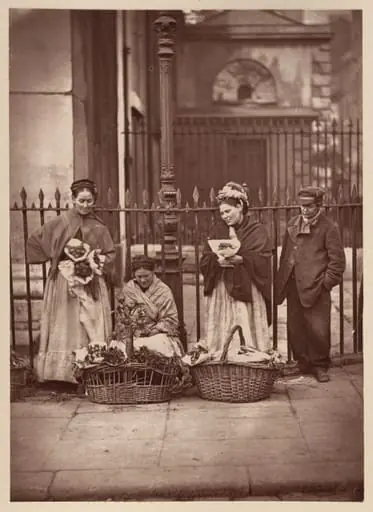 Covent Garden Flower Women
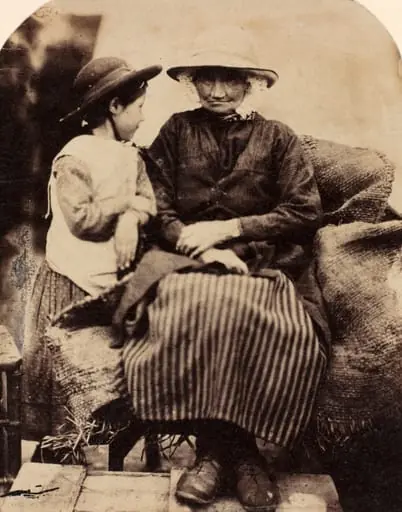 Servants at Rhagatt, Corwen, North Wales
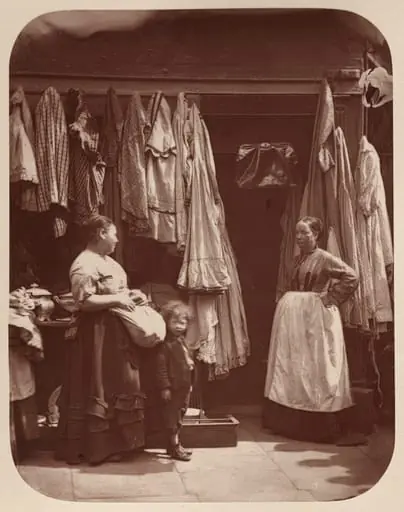 An Old Clothes Shop, Seven Dials
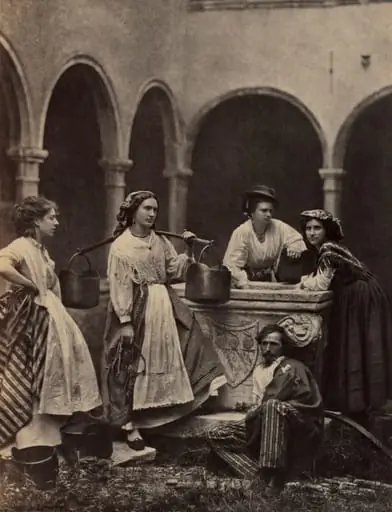 Untitled (Genre scene with four women and a man)
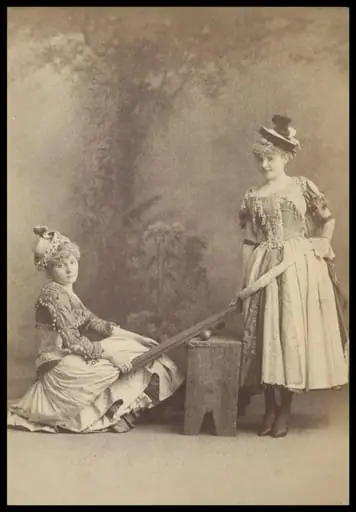 Guy Little Theatrical Photograph
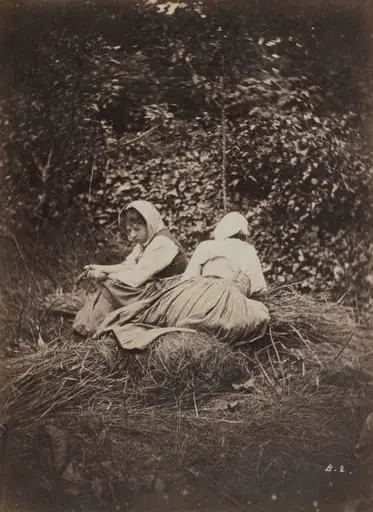 Two Peasant Girls Seated
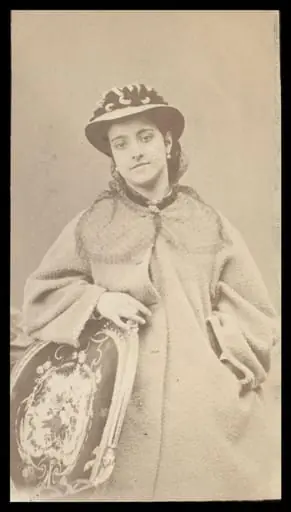 Guy Little Theatrical Photograph
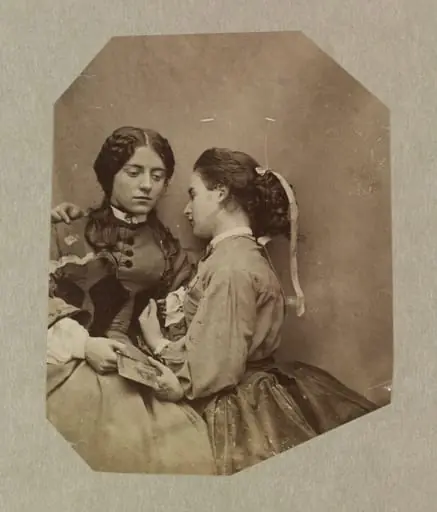 Isabella Grace and Clementina Maude, 5 Princes Gardens