Artwork
Bray Church Yard
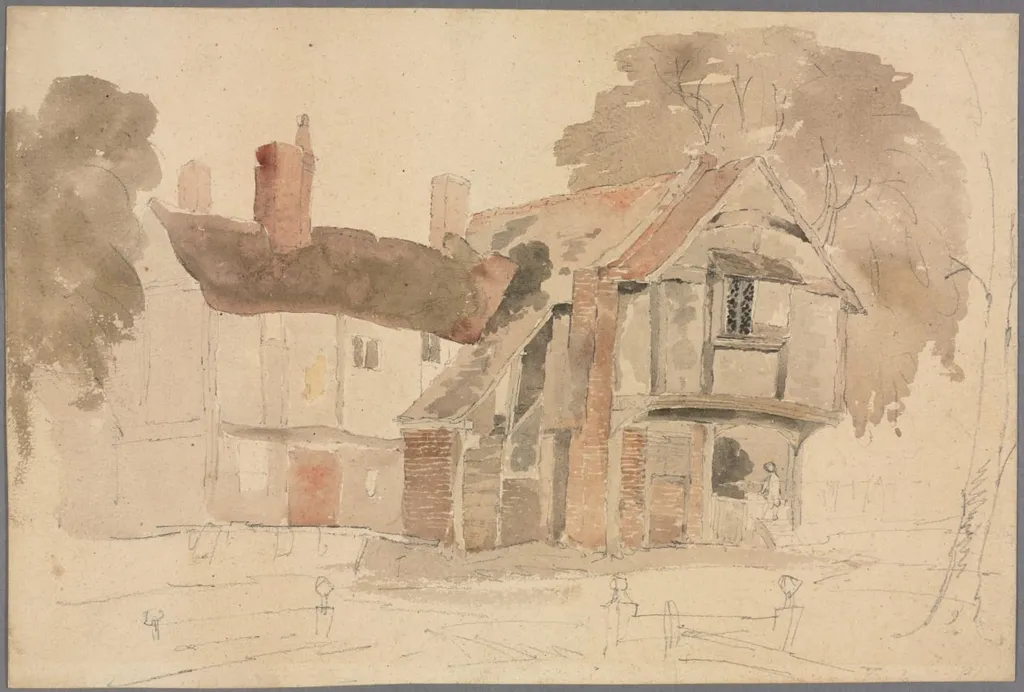
Bray Church Yard is a drawing by the Romanticist artist John Varley. It dates from 1807 and is held in the collection of the Cleveland Museum of Art. This ink drawing, dated 1807, depicts the churchyard of St.
About this work
You see a quiet churchyard in Bray, England—trees, gravestones, and a small church under a soft sky.
You see a quiet churchyard in Bray, England—trees, gravestones, and a small church under a soft sky.
Varley painted this in 1807, when artists often left cities to find beauty in the countryside. He focused on simple scenes like this one, avoiding the noise of London. The churchyard feels still, almost untouched by time.
If you like this, look up *England, 19th century* for more scenes of rural life.
Overview
This ink drawing, dated 1807, depicts the churchyard of St. Michael’s in Bray, Berkshire, situated along the River Thames. Executed by John Varley, it belongs to a series of works from his early career that reflect a deliberate shift away from urban subjects toward quiet, rural landscapes. The inscription on the reverse confirms the location and date, anchoring the piece in a specific time and place within the Thames Valley.
Subject & Meaning
The scene presents a modest churchyard framed by trees and weathered gravestones beneath a muted sky. There is no human activity, no signs of industry—only stillness. Varley’s choice of subject reflects a broader artistic interest in solitude and the passage of time, values associated with the picturesque tradition. The churchyard becomes a quiet monument to memory, removed from the bustle of contemporary urban life.
Technique & Style
Varley employed fine ink lines to define the contours of trees, stones, and the church’s modest architecture, with subtle washes suggesting atmospheric depth. The composition is restrained, avoiding dramatic contrasts in favor of tonal harmony. His approach is observational rather than idealized, capturing the unadorned character of the site with a sensitivity to light and texture that anticipates later topographical drawing practices.
History & Provenance
The drawing was made during a period when Varley was actively exploring the Thames Valley, a region favored by artists seeking rural tranquility. Its inscription, written by the artist’s hand, suggests it was kept as a personal record rather than a commissioned work. The piece remained in private hands until its acquisition by the current institution, with no documented exhibition history prior to the 20th century.
Context
In early 19th-century England, many artists retreated from London’s expanding industrial landscape to document the countryside. Varley was part of this movement, influenced by Romantic ideals that valued nature and antiquity. His focus on modest ecclesiastical sites like Bray Church Yard aligned with a wider cultural fascination with rural heritage and the contemplative qualities of the English landscape.
Legacy
Though not widely exhibited in his lifetime, Varley’s churchyard drawings contributed to a growing body of work that redefined British landscape art. His emphasis on quiet, unembellished scenes helped shift attention from grand vistas to intimate, everyday environments. These works remain valuable for their understated documentation of rural England during a time of rapid social and economic change.
Artist & collection
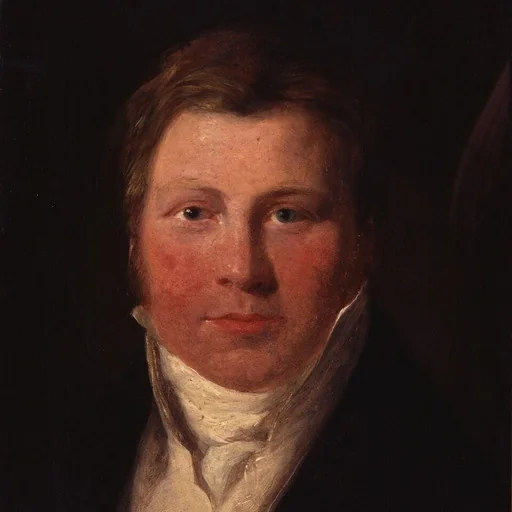
Artist
John Varley (17 August 1778 – 17 November 1842) was an English watercolour painter and astrologer, and a close friend of William Blake.

![Study of a Head in Profile [verso], by John Varley](https://artifactworldgallery.com/img/john-varley--study-of-a-head-in-profile-verso--3e16e84b6ceccae1-w320.webp)
![Two Studies of a Figure Holding a Basket [verso], by John Varley](https://artifactworldgallery.com/img/john-varley--two-studies-of-a-figure-holding-a-basket-verso--7e8aaeb3f643e9b3-w320.webp)
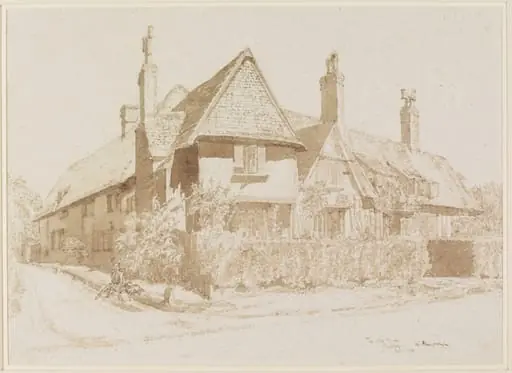 The Old Manor, Childrey
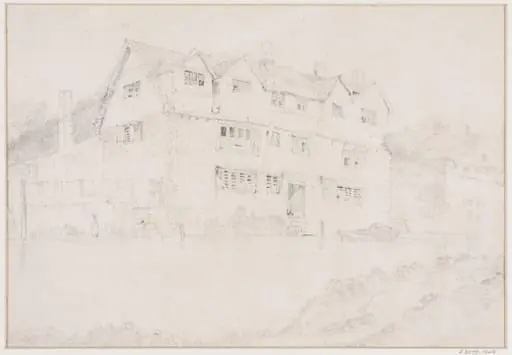 The river Wensum, with the backs of old hosues in King Street, Norwich
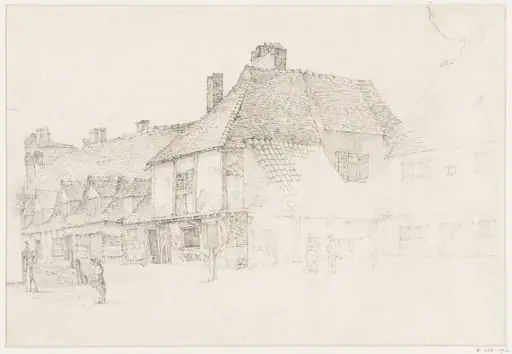 Houses in a village street
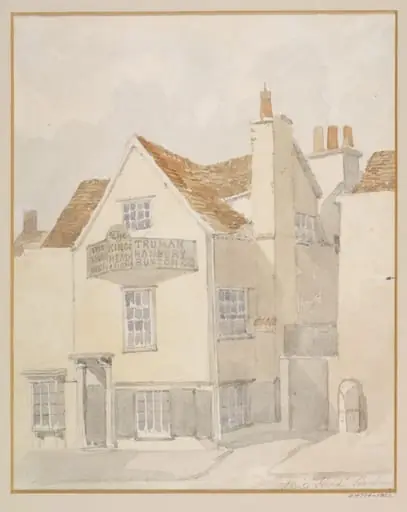 The King's Head, Hackney
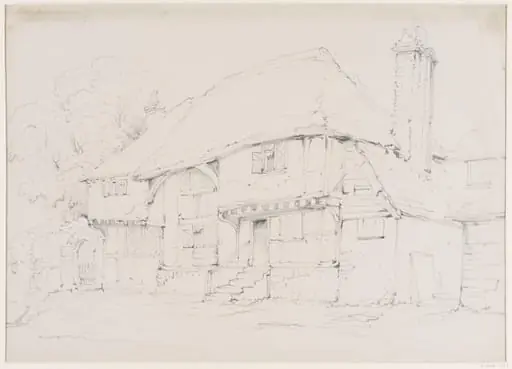 Steyning
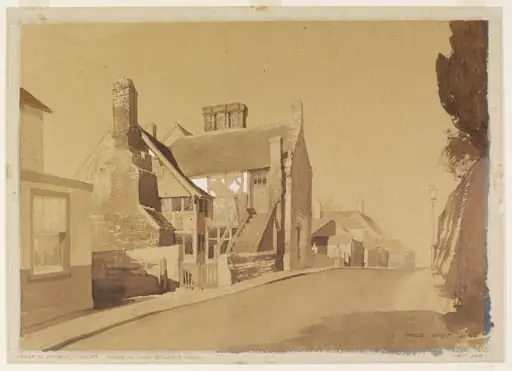 Anne of Cleves House, Ditchling
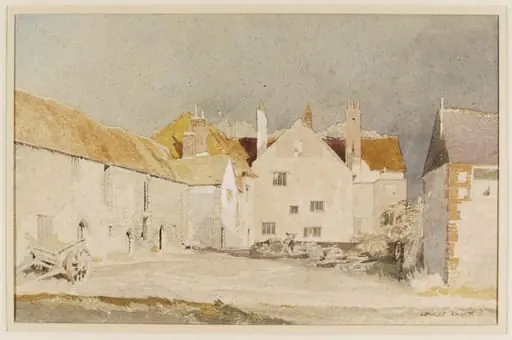 Hangleton Manor, near Brighton
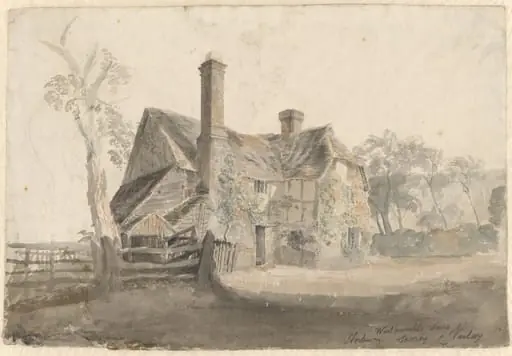 A House, West Humble Lane, Norbury, Surrey
 A Cottage at Dorking in Surrey
 The Old Sun Inn, Saffron Walden