Artwork
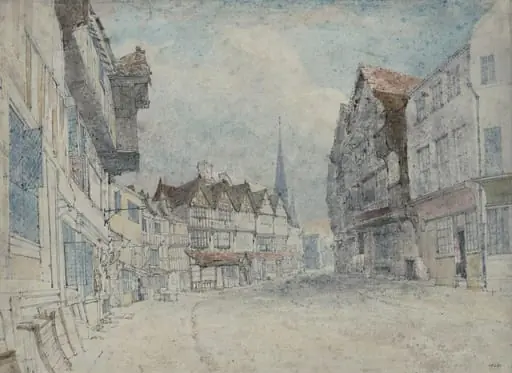
The Old Sun Inn, Saffron Walden
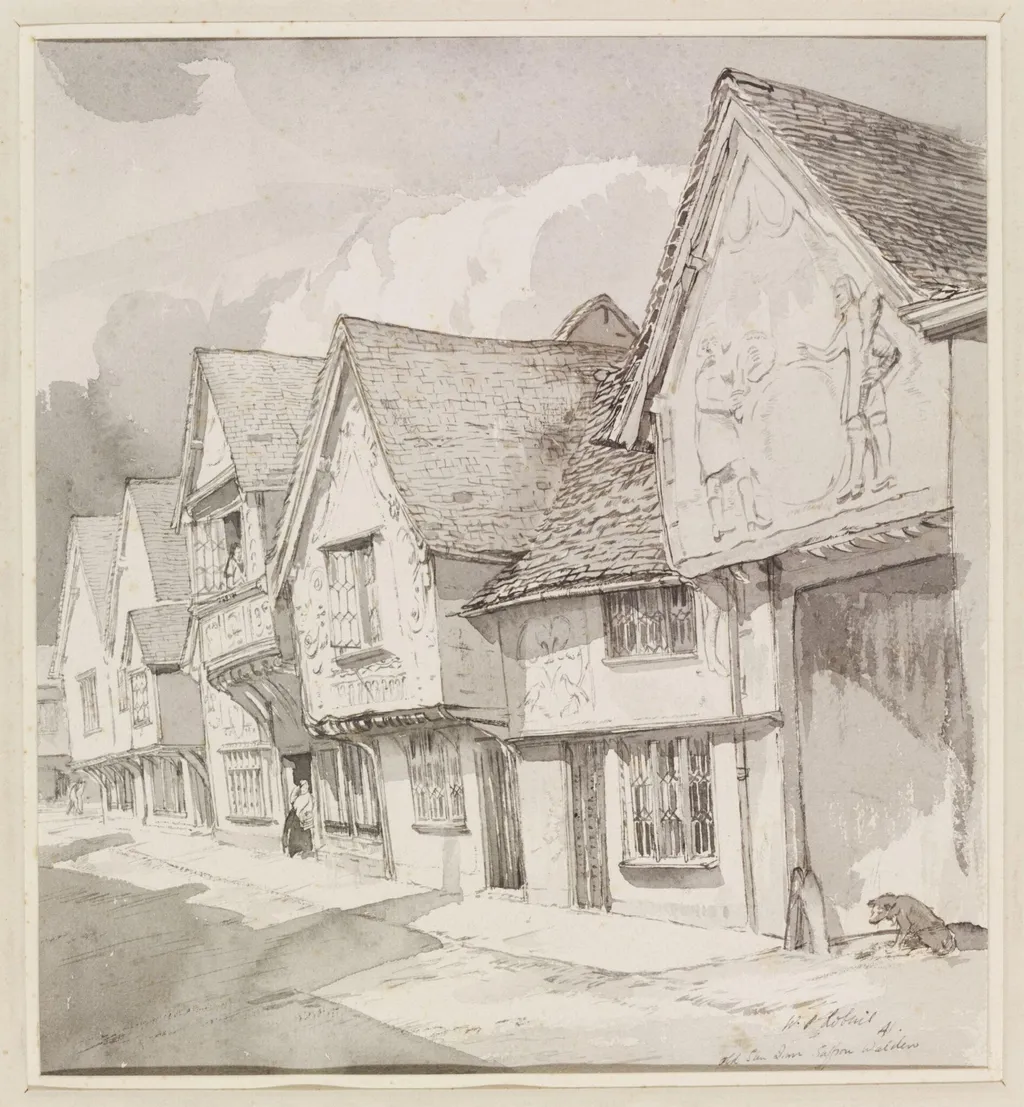
The Old Sun Inn, Saffron Walden is a watercolor work on paper by William Palmer Robins. It dates from 1941 and is held in the collection of the Victoria and Albert Museum.
About this work
The Old Sun Inn has stood since the 1300s, and famous visitors like Samuel Pepys left notes about it.
This watercolour shows a famous old inn painted in 1941. The Old Sun Inn has stood since the 1300s, and famous visitors like Samuel Pepys left notes about it.
Built for travelers long ago, the inn also has wild stories. People say Oliver Cromwell slept there during a war. Carved figures of Tom Hickathrift and the Wisbech Giant decorate its walls.
Next time you’re near London, check out pieces by the same artist at the Victoria and Albert Museum.
Overview
The Old Sun Inn, Saffron Walden, a watercolour from 1941, depicts a historic English inn established in the 14th century. The painting captures the building's enduring presence, despite its transition from a bustling inn to a contemporary antique shop.
Subject & Meaning
The subject, The Old Sun Inn, holds historical significance due to its illustrious past, marked by visits from notable figures such as Samuel Pepys and John Evelyn, and a reputed stay by Oliver Cromwell during the Civil War.
Technique & Style
Executed in watercolour, the work's technique and style are not elaborated upon in available information, focusing instead on the subject's historical and architectural aspects, notably its distinctive pargetting.
History & Provenance
The inn itself has survived since the 1300s, initially catering to travelers. By the time of the painting (1941), it had ceased to function as an inn, later becoming an antique shop. The artwork's own provenance and exhibition history are highlighted by its connection to the Victoria and Albert Museum.
Context
Created in 1941, the watercolour reflects an interest in documenting England's historic architecture during a time of war, preserving memories of the nation's past.
Legacy
The painting's legacy is tied to its artist's broader body of work, with related pieces accessible at the Victoria and Albert Museum, contributing to a record of England's architectural heritage.
Artist & collection
Artist
William Palmer Robins painted quiet English streets and buildings in watercolor during the 1940s.

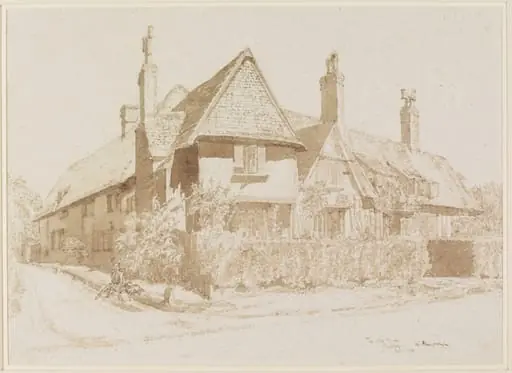 The Old Manor, Childrey
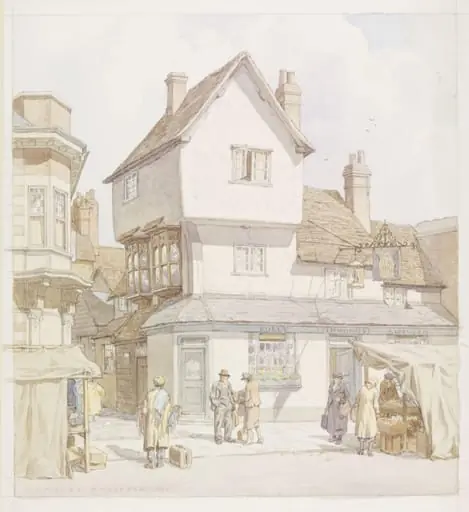 The Birdcage Inn, Thame
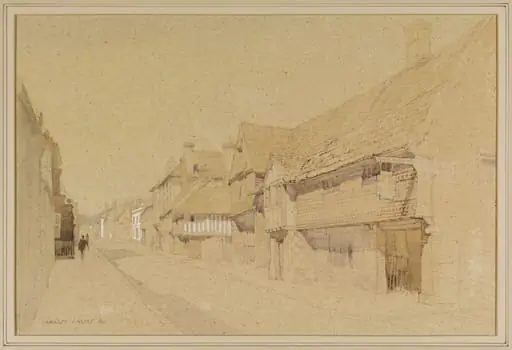 High Street, Southover, looking West
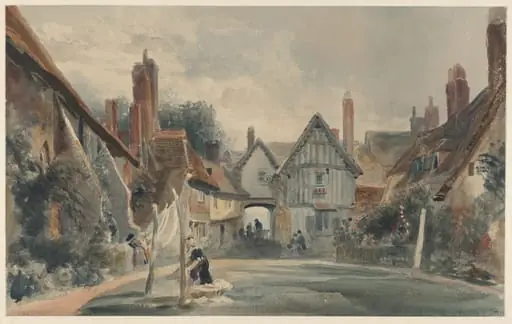 Saint John's Hospital, Canterbury
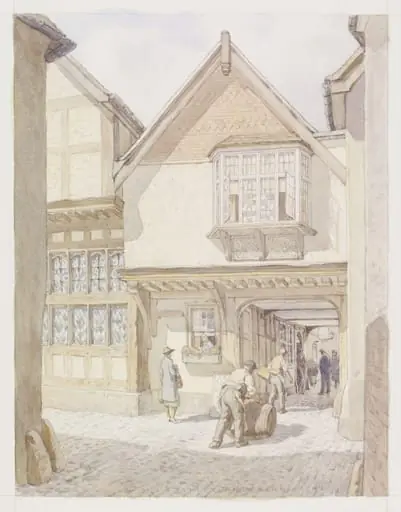 "Ye Old King's Head", Aylesbury
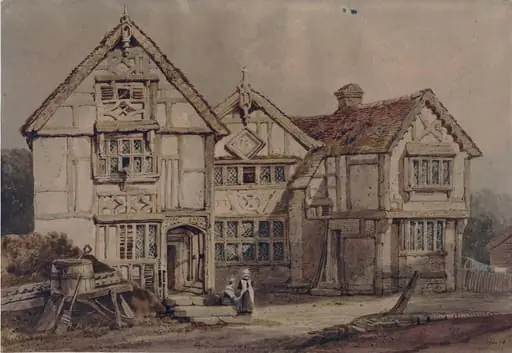 Old House at Pound's Bridge, near Tonbridge
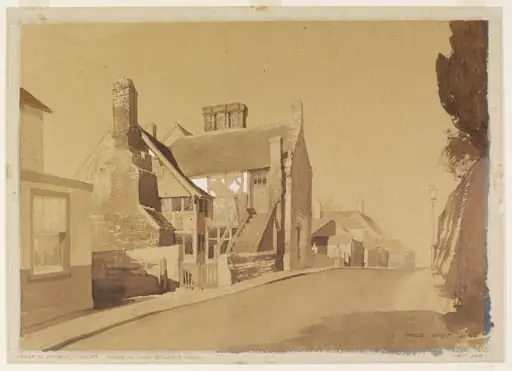 Anne of Cleves House, Ditchling
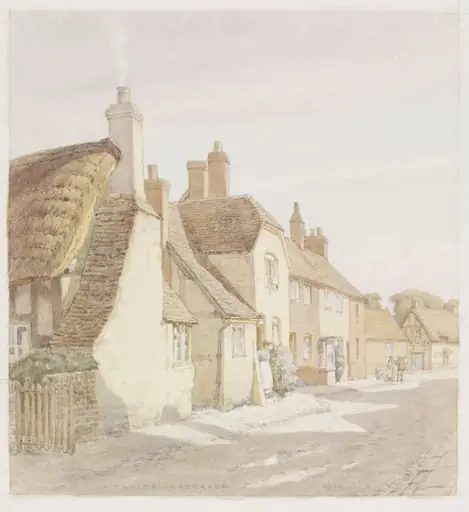 Old Cottages, Long Crendon
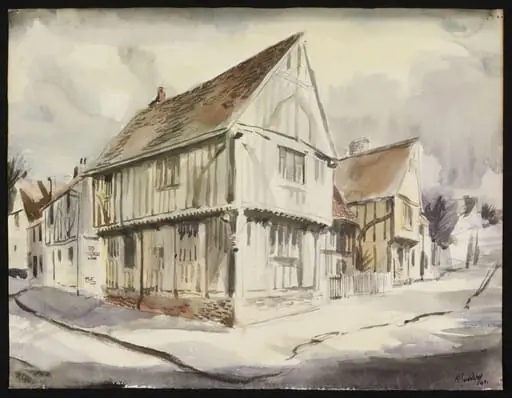 The Wool Hall, Lavenham
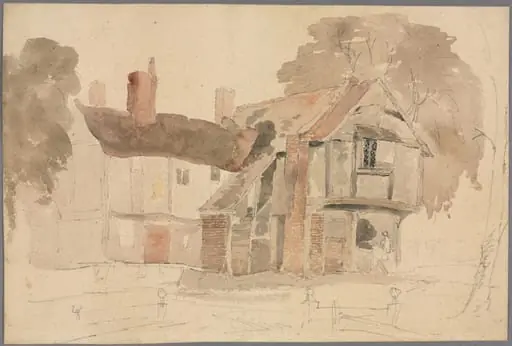 Bray Church Yard
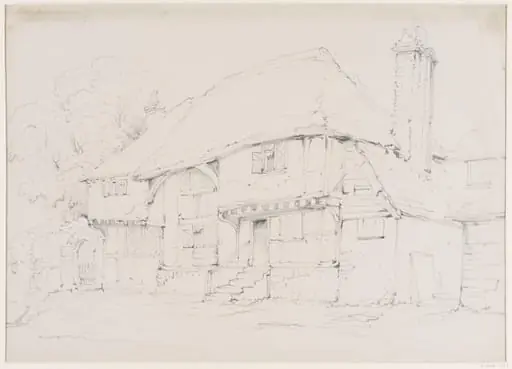 Steyning
 Street view in Hereford