Artwork
Three Flags
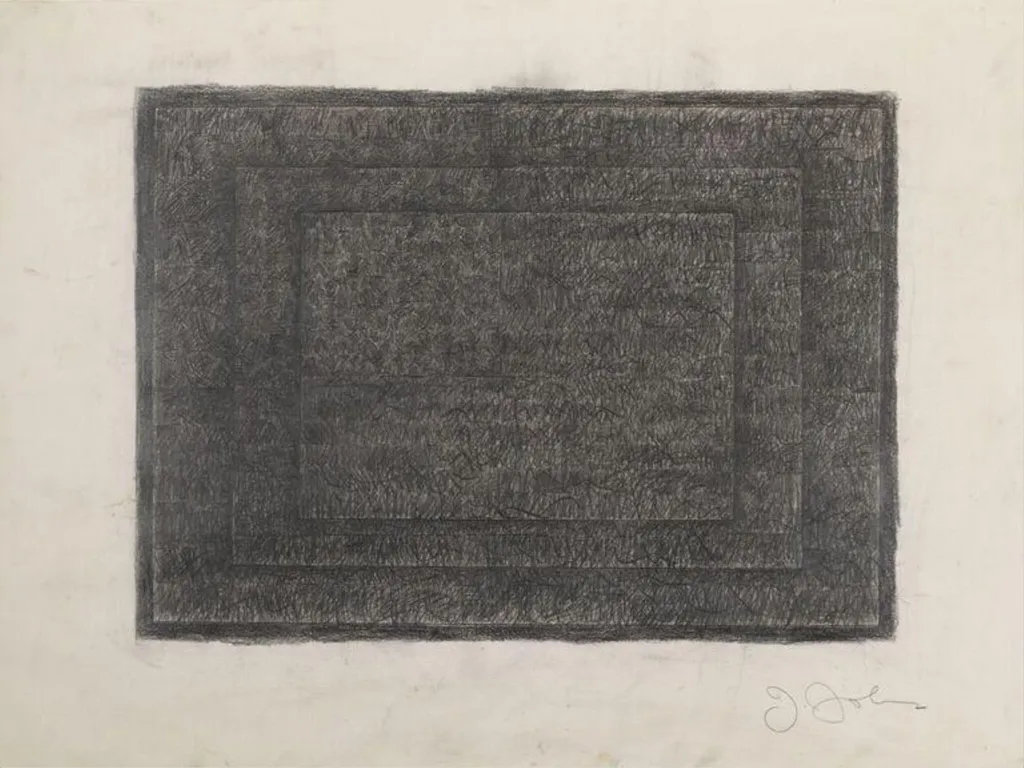
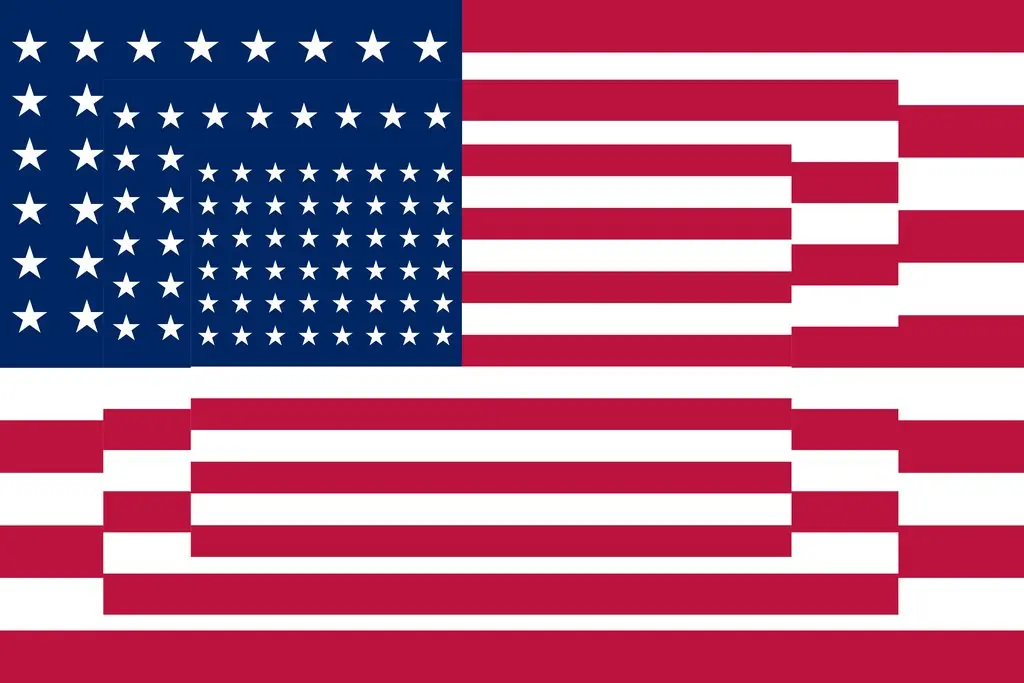
Three Flags is a drawing by Jasper Johns. It dates from 1959 and is held in the collection of the Victoria and Albert Museum.
About this work
This drawing is called Three Flags. It's by Jasper Johns, from 1959.
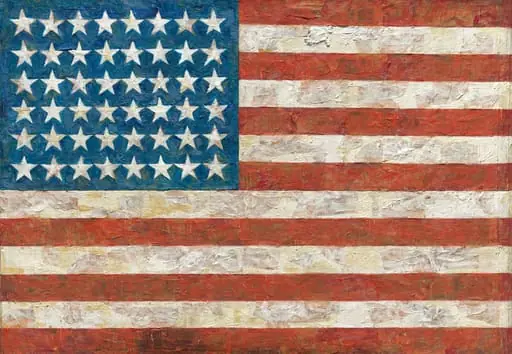
Jasper Johns chose the flag as his primary motif early in his career. He used the image of a flag in many different media because it's a familiar object and a symbol, making it a kind of abstract picture.
You can learn more about the artist's techniques by looking up the artist: Johns, Jasper.
Overview
Unlike his painted versions, this work achieves visual depth without color, relying solely on gradations of gray to suggest form and dimension.
Created in 1959, Three Flags is a graphite drawing by Jasper Johns that reimagines the American flag through layered, tonal precision. Unlike his painted versions, this work achieves visual depth without color, relying solely on gradations of gray to suggest form and dimension. The flag’s familiar structure becomes a vehicle for examining how representation and abstraction intersect in visual language.
Subject & Meaning
The American flag, as a widely recognized national emblem, functions here not as patriotic symbol but as a neutral visual object. Johns isolates it from political context to investigate how meaning is constructed through repetition and scale. By stacking three flags in diminishing size, he draws attention to the act of seeing itself—how familiarity can obscure perception.
Technique & Style
Johns employs meticulous graphite shading to simulate the chromatic contrasts of the flag’s red, white, and blue, despite using only monochrome. Each layer is rendered with careful hatching and pressure variation, creating a sense of spatial recession. The technique blurs the boundary between drawing and painting, challenging traditional hierarchies of medium and material.
History & Provenance
This work emerged during Johns’s early period, shortly after his first flag paintings gained critical attention. It reflects his ongoing exploration of the motif across media, from encaustic to sculpture. Three Flags was produced in 1959 and has remained within private and institutional collections, consistently cited in discussions of postwar American drawing.
Context
In the late 1950s, Johns responded to the dominance of Abstract Expressionism by turning to everyday imagery. The flag, as an object both personal and public, allowed him to question the assumptions of modernist abstraction. His approach aligned with emerging conceptual interests in perception, repetition, and the materiality of art.
Legacy
Three Flags exemplifies Johns’s influence on the shift from expression to objecthood in postwar art. By treating a symbol as a formal problem, he paved the way for Minimalism and Conceptual Art. The work remains a touchstone for artists examining how meaning is embedded in visual forms, and how drawing can rival painting in conceptual rigor.
Artist & collection

Artist
Jasper Johns (born May 15, 1930) is an American painter, sculptor, draftsman, and printmaker.