Artwork
H Beard Print Collection
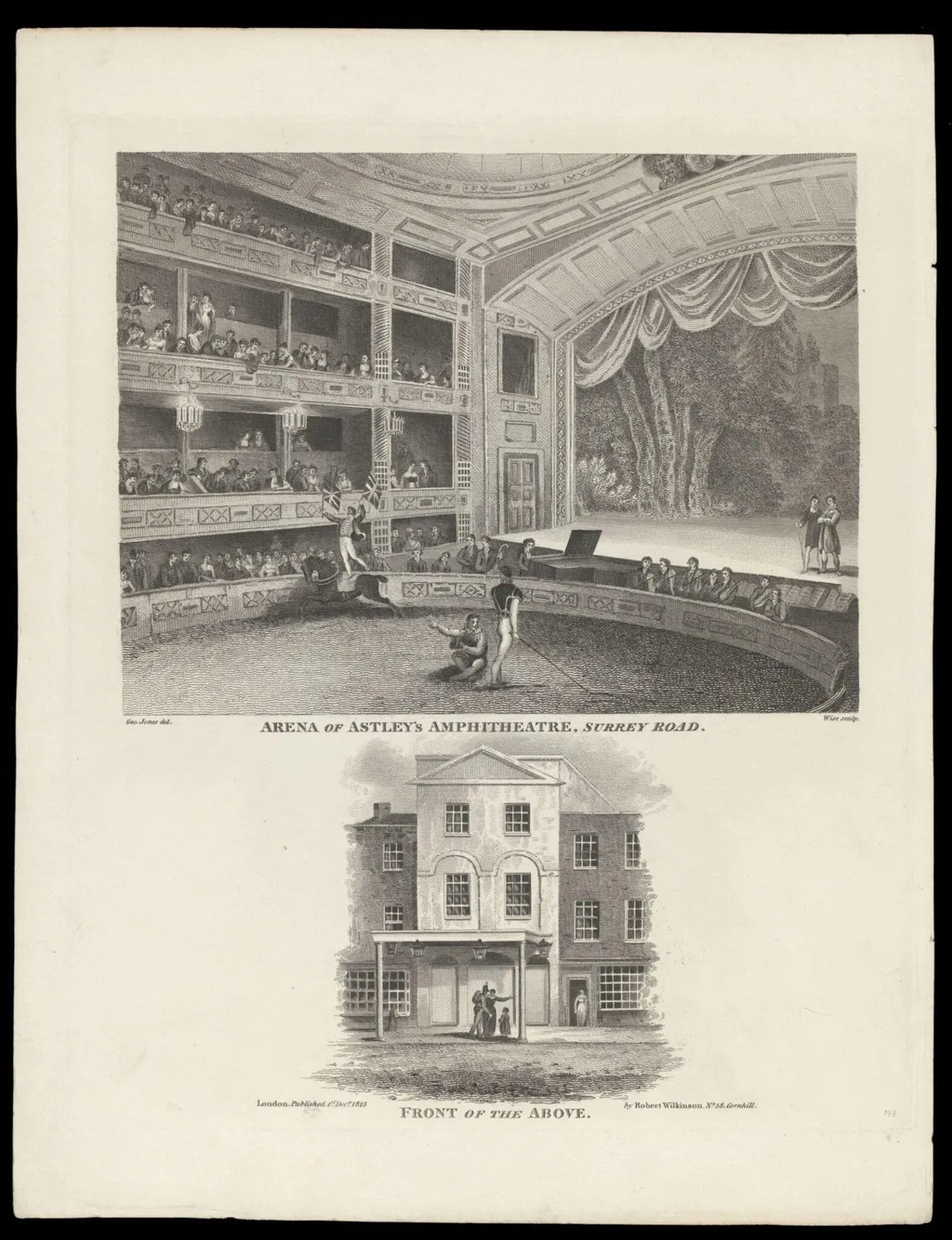
H Beard Print Collection is a print by the Romanticist artist George Jones. It dates from 1 and is held in the collection of the Victoria and Albert Museum.
About this work
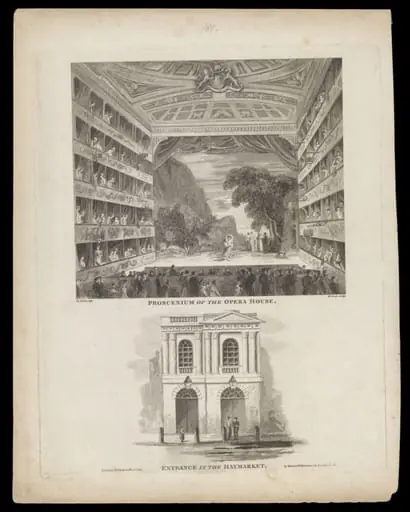
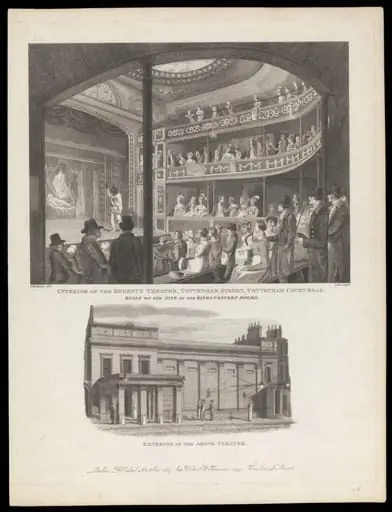
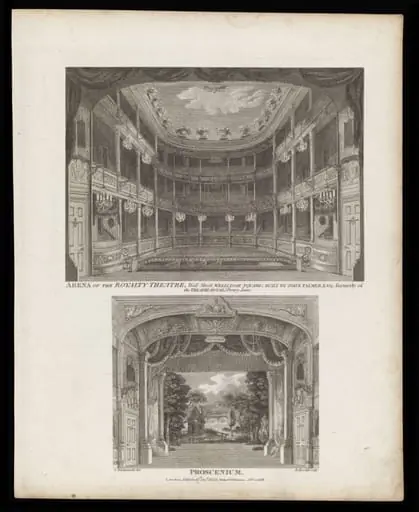
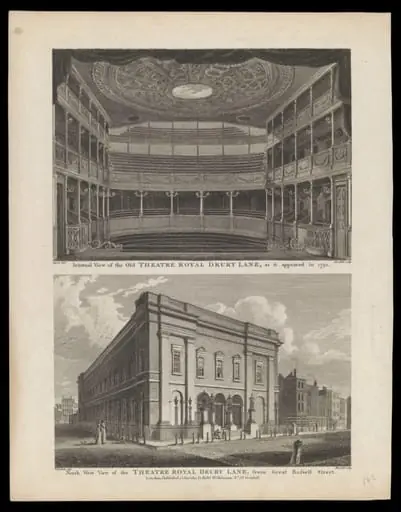
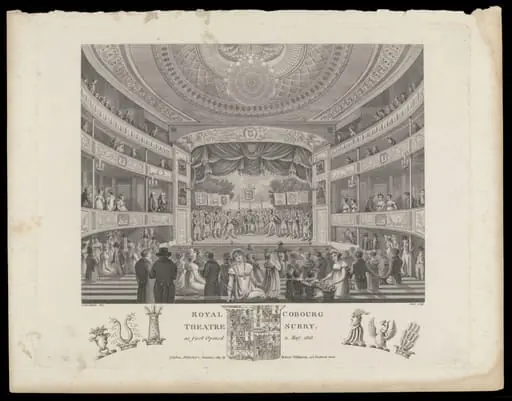
This print shows two views of Astley's Amphitheatre, one from the inside and one from the outside.
The interior view gives us a glimpse of what the theater looked like. It's interesting that the print was published by Robert Wilkinson in 1815, which suggests it was meant to be a popular image.
You can learn more about similar prints by looking at the work of artist: Jones, George.
Overview
The dual-view format was intended for public consumption, offering viewers a comprehensive look at the structure’s architecture and atmosphere.
This 1815 print by Robert Wilkinson presents two distinct perspectives of Astley's Amphitheatre: one capturing its exterior façade and the other its interior performance space. Designed as a reproductive print, it served to disseminate a visual record of a prominent London entertainment venue. The dual-view format was intended for public consumption, offering viewers a comprehensive look at the structure’s architecture and atmosphere.
Subject & Meaning
The print documents Astley's Amphitheatre, a pioneering equestrian theater known for circus performances and dramatic spectacles. By showing both exterior and interior views, it emphasizes the building’s dual role as architectural landmark and cultural hub. The interior scene suggests lively audience engagement, reinforcing the venue’s significance in early 19th-century popular entertainment beyond traditional theater.
Technique & Style
Executed as a line engraving, the print employs fine, controlled strokes to render architectural details and crowd activity. The exterior view uses perspective to convey scale and symmetry, while the interior relies on layered composition to suggest depth and movement. The style is documentary rather than ornamental, prioritizing clarity and spatial accuracy over decorative flourish.
History & Provenance
Published by Robert Wilkinson in 1815, the print emerged during a period of growing interest in urban entertainment venues. Wilkinson was known for producing topographical prints that catered to a middle-class audience seeking visual records of public spaces. The print likely circulated as a keepsake or educational image, reflecting contemporary fascination with the mechanics and spectacle of performance architecture.
Context
Astley's Amphitheatre, founded in 1773, was among the first venues to combine horsemanship, drama, and acrobatics under one roof, influencing later circus traditions. Its popularity in the early 1800s coincided with the rise of mass entertainment in London. Prints like this one helped solidify its public image, making it a recognizable symbol of urban leisure during the Regency era.
Legacy
Though the original amphitheatre was destroyed by fire in 1841, prints such as this one preserve its visual identity. They serve as historical references for scholars studying the evolution of performance spaces and popular culture. The work also aligns with the broader tradition of British topographical printmaking, exemplified by contemporaries like George Jones, who similarly documented architectural and social life.
Artist & collection