Artwork
Religious Procession in Landeck
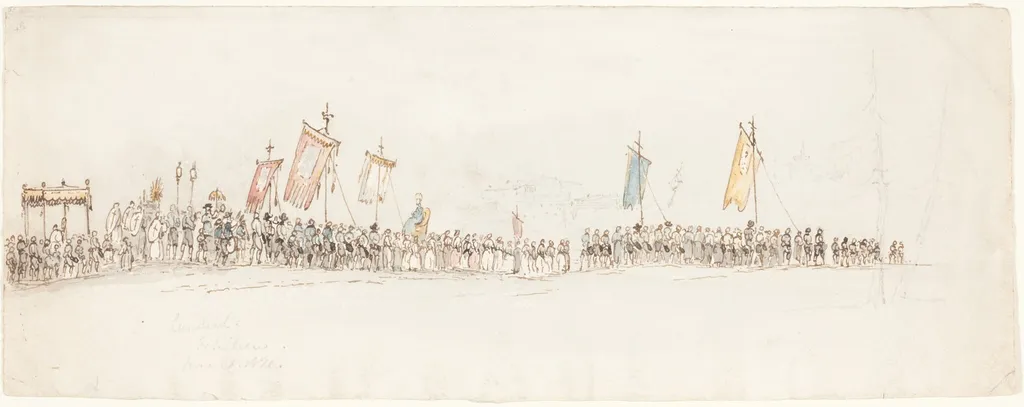
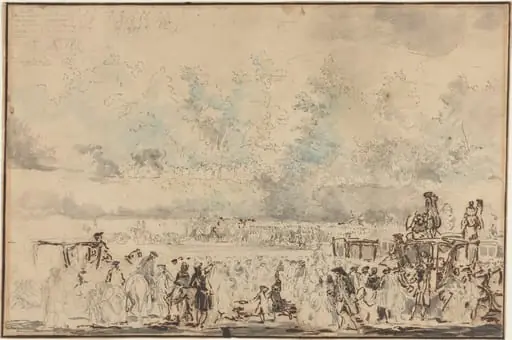
Religious Procession in Landeck is an ink drawing by the Romanticist artist George Jones. It dates from 1820 and is held in the collection of the National Gallery of Art.
About this work
Overview
George Jones’s drawing titled Religious Procession in Landeck, executed in 1820, records a communal religious march. Executed with pen, ink, graphite and watercolor, the work captures a procession moving along a rural lane, flanked by modest architecture and trees. The composition stretches horizontally, emphasizing the length of the crowd and the rhythmic flow of participants.
Subject & Meaning
The scene depicts a local religious ceremony in the Alpine town of Landeff, where villagers advance with banners bearing crosses, lanterns and other devotional objects. The collective movement suggests communal piety and shared identity, while the inclusion of everyday surroundings grounds the event in a specific place and time, reflecting the social role of public worship in early‑19th‑century rural life.
Technique & Style
The palette is restrained, dominated by earth tones and muted blues, allowing the figures to emerge through suggestion rather than precise rendering.
Jones employed a rapid, sketch‑like approach, combining fine pen lines with loose graphite shading and translucent watercolor washes. The palette is restrained, dominated by earth tones and muted blues, allowing the figures to emerge through suggestion rather than precise rendering. This economy of detail conveys motion and atmosphere, aligning the work with the spontaneous, emotive qualities associated with Romantic drawing.
History & Provenance
Created in 1820, the drawing entered the collection of the Landeck municipal archive shortly after its completion, where it remained in local custody for over a century. It was later transferred to the regional museum of Tyrol in the 1970s, where it has been displayed as part of exhibitions on Alpine folk traditions and early Romantic art.
Context
The early nineteenth century saw a revival of interest in regional customs and religious festivals, especially in the Alpine regions of Austria. Artists like Jones documented these events as part of a broader Romantic fascination with folk culture, landscape and the emotional intensity of communal rites, positioning the work within a movement that valued authenticity over academic idealization.
Artist & collection


 H Beard Print Collection
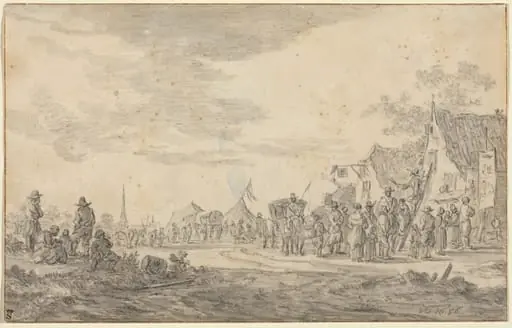 Village Fair
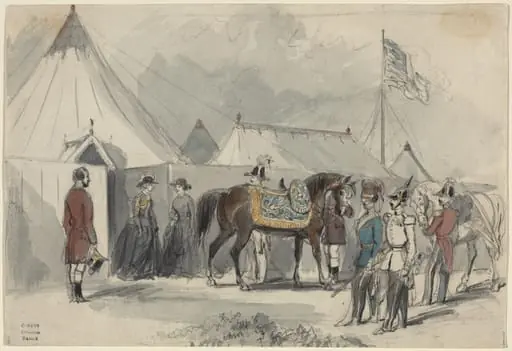 The Queen
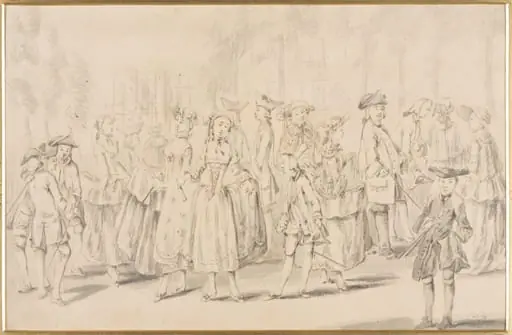 Promenaders in St. James' Park
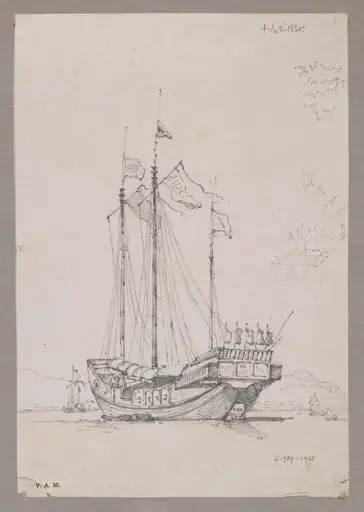 Untitled
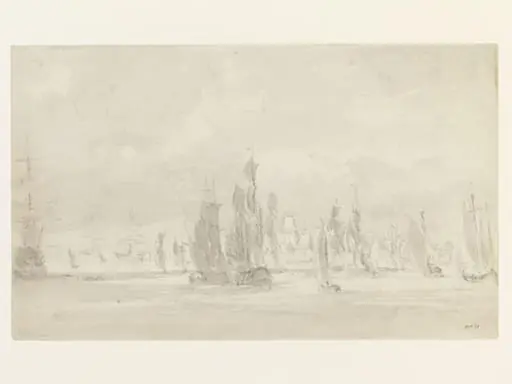 Shipping under a cloudy sky in the Thames
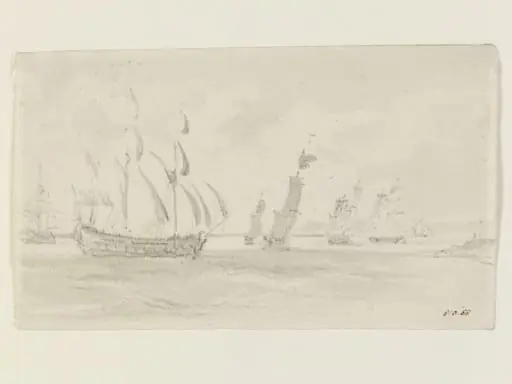 Shipping in a breeze in the Thames or the Medway
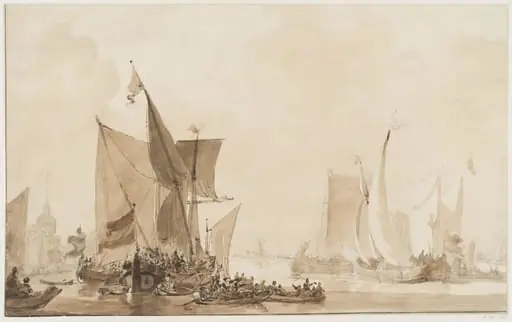 Seapiece with shipping
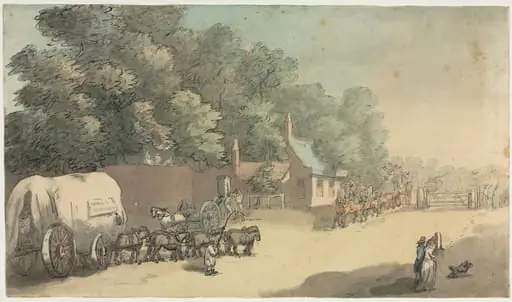 The Turnpike Gate
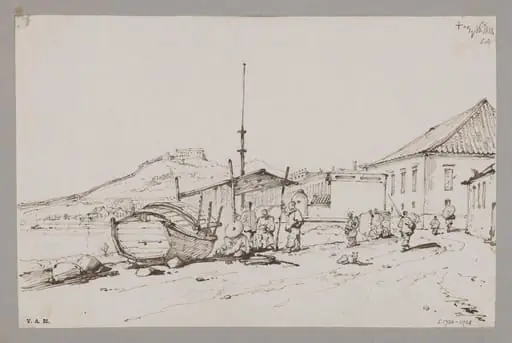 Governor's House, and part of the Praya Grande and Penha Hill
 Chinese men surrounding a basket
 Royal Review of the Troops