Artwork
Landschaft mit Schloss (Art des)
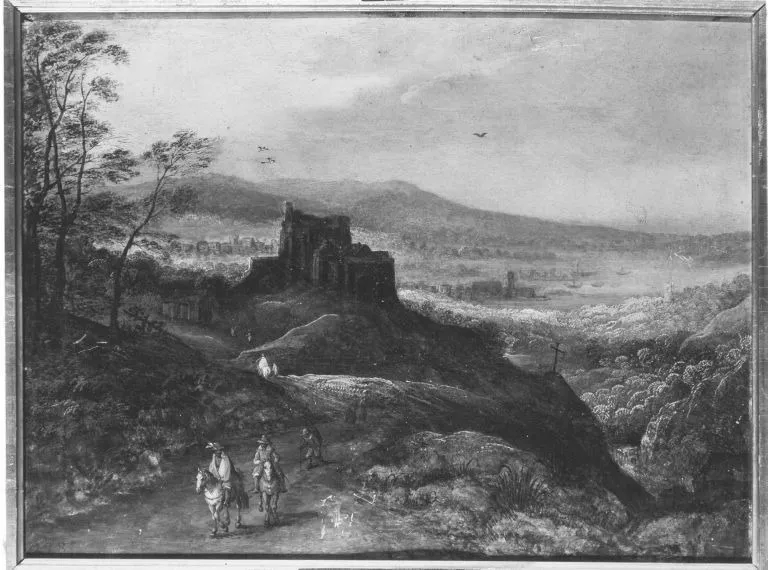
Landschaft mit Schloss (Art des) is an unspecified painting by the Early Baroque Italian artist Joos de Momper the Younger. It dates from 1600 and is held in the collection of the Bavarian State Painting Collections.
About this work
Overview
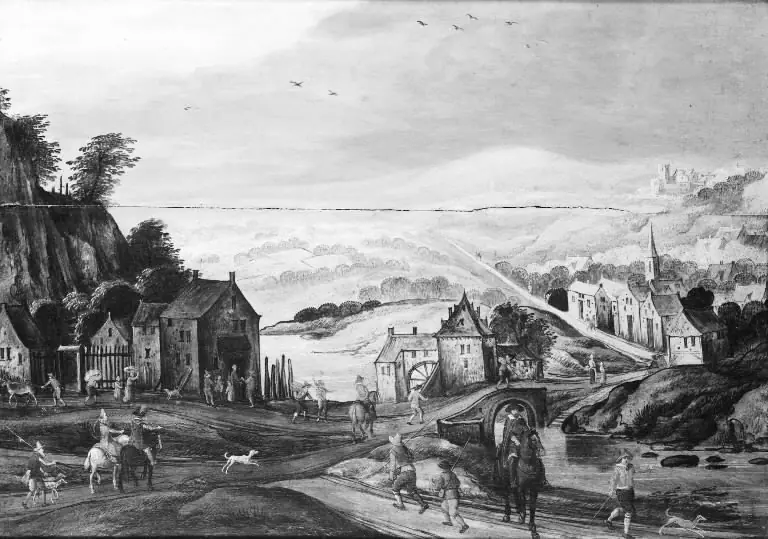
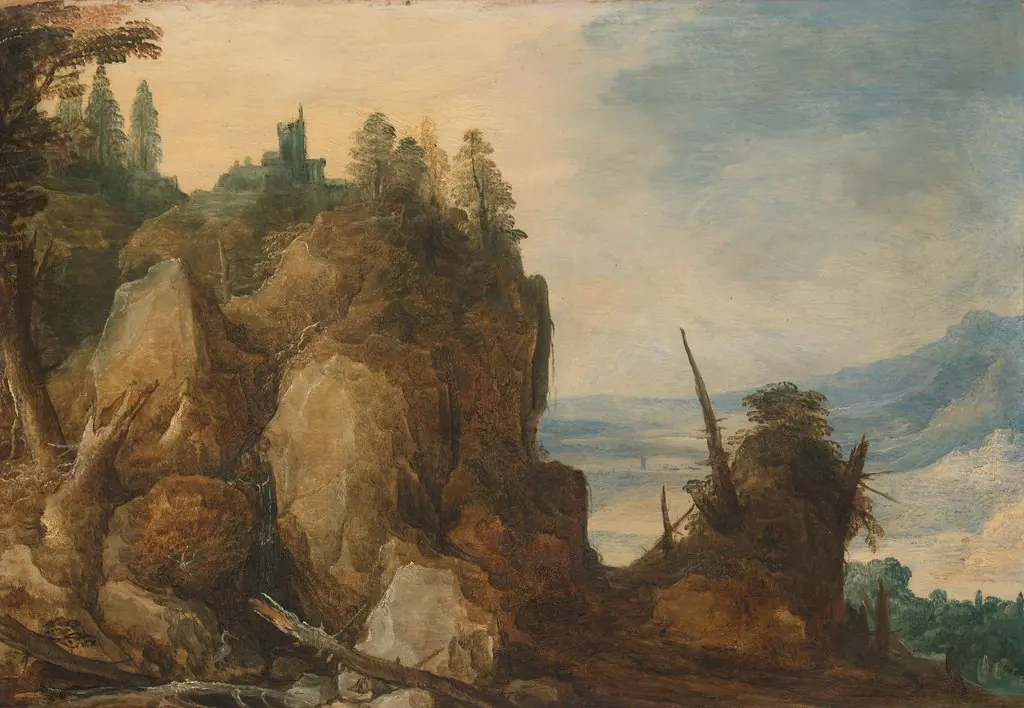
Painted around 1600 by Joos de Momper the Younger, this landscape depicts a tranquil rural scene with a distant castle perched on a rocky outcrop.
Painted around 1600 by Joos de Momper the Younger, this landscape depicts a tranquil rural scene with a distant castle perched on a rocky outcrop. Executed in oil, the work bridges late Mannerist traditions and emerging Baroque naturalism. It reflects the Flemish painter’s engagement with expansive, detailed environments, characteristic of his Antwerp workshop during a period of evolving landscape aesthetics in Northern Europe.
Subject & Meaning
The scene presents a quiet, unpopulated countryside, centered on a weathered castle rising above rolling terrain. Two riders on a winding path and a solitary figure introduce subtle human presence without narrative urgency. The crumbling architecture suggests decay or abandonment, while the vast horizon and distant water evoke a sense of timelessness. The composition invites contemplation rather than storytelling, emphasizing atmosphere over event.
Technique & Style
De Momper employed delicate chiaroscuro to model forms and create spatial depth, particularly in the castle’s stonework and the layered hills. Brushwork is precise yet unobtrusive, allowing natural elements to dominate. The foreground path leads the eye into the distance, while muted tones and soft atmospheric perspective unify the composition. Influences from Pieter Brueghel are evident in the meticulous rendering of terrain and architecture.
History & Provenance
The painting entered the collection of the Alte Pinakothek in Munich, where it remains today. While its early ownership is undocumented, its style aligns with works produced in Antwerp during the turn of the 17th century. It was likely acquired by Bavarian collectors in the 18th or 19th century as part of a broader interest in Flemish landscape traditions.
Context
During the early 1600s, Flemish painters moved away from the artificiality of Mannerism toward more observed naturalism. De Momper’s landscapes responded to growing interest in topographical accuracy and atmospheric effects, even as they retained compositional complexity. Unlike Italian contemporaries, he avoided dramatic lighting or mythological themes, focusing instead on quiet, lived-in environments.
Legacy
De Momper’s work contributed to the development of landscape painting as an independent genre in Northern Europe. His synthesis of detailed observation with poetic composition influenced later Dutch and Flemish artists. Though less celebrated than some peers, his paintings helped establish the visual language of serene, expansive scenery that became central to 17th-century European art.
Artist & collection
Artist
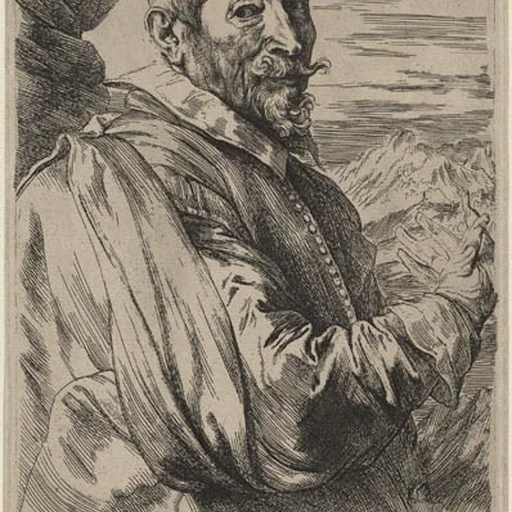
Joos de Momper the Younger or Joost de Momper the Younger (c. 1564 – 5 February 1635) was a Flemish landscape painter active in Antwerp between the late 16th century and the early 17th century. Brueghel's influence is…

 Landscape with the River Main
 Mainlandschaft
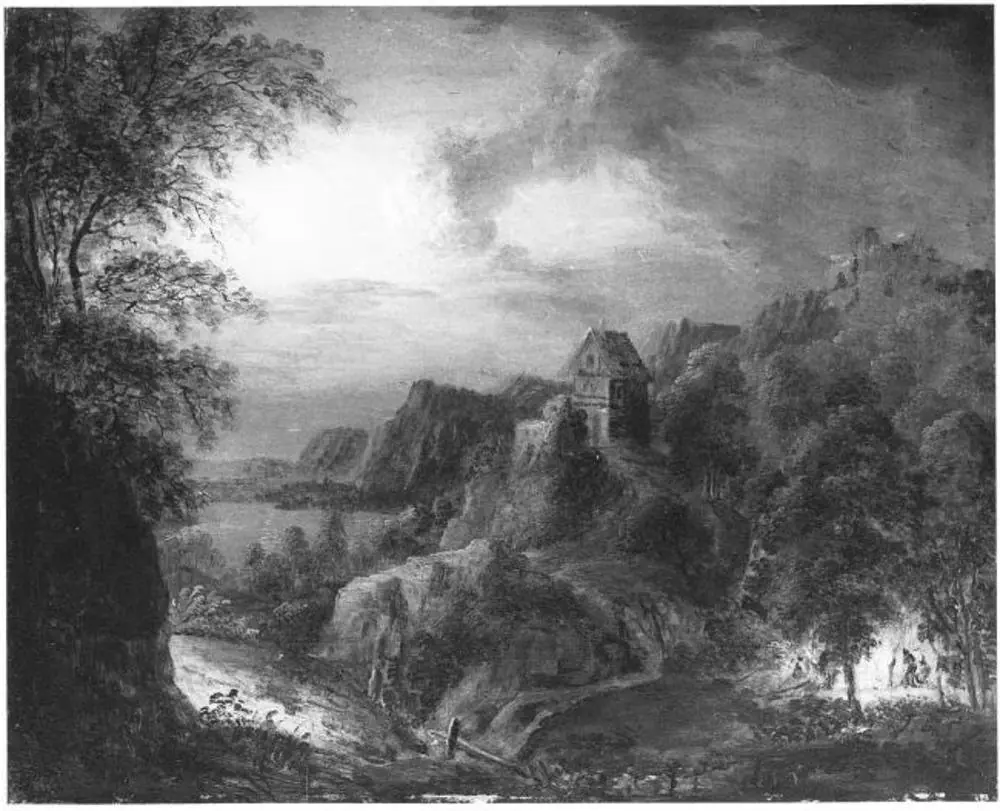 Landscape with Full Moon
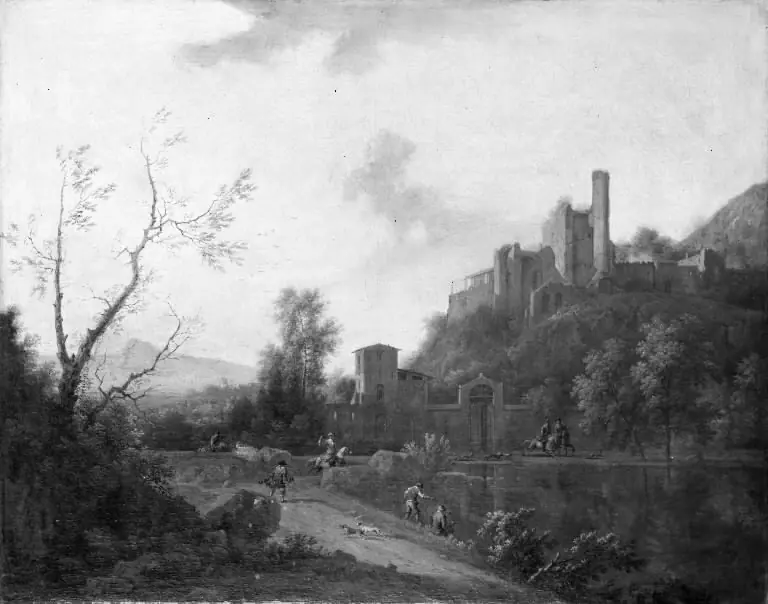 Mountain Scenery with a Castle
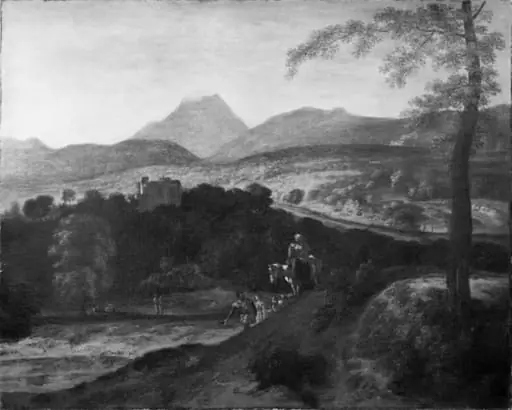 Southern Landscape with Figures
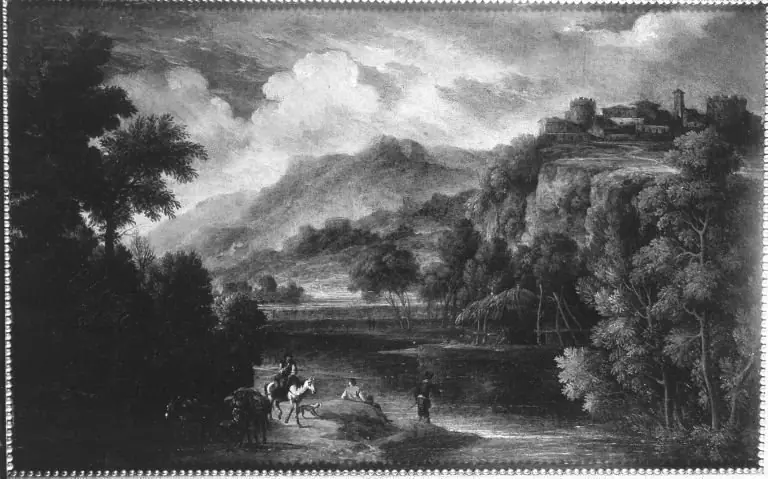 Landschaft (Umkreis)
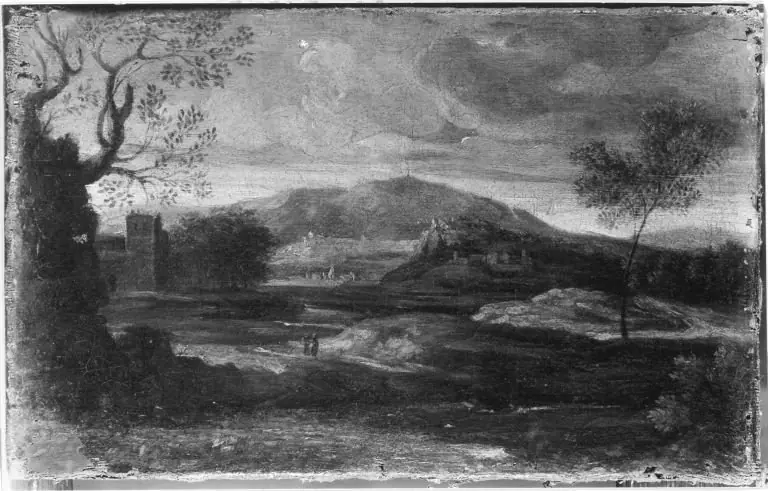 Italienische Landschaft (Umkreis)
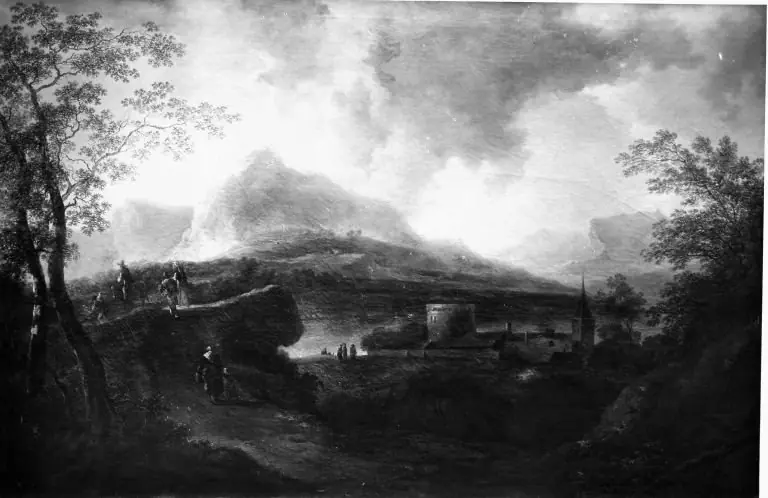 Landscape with lake
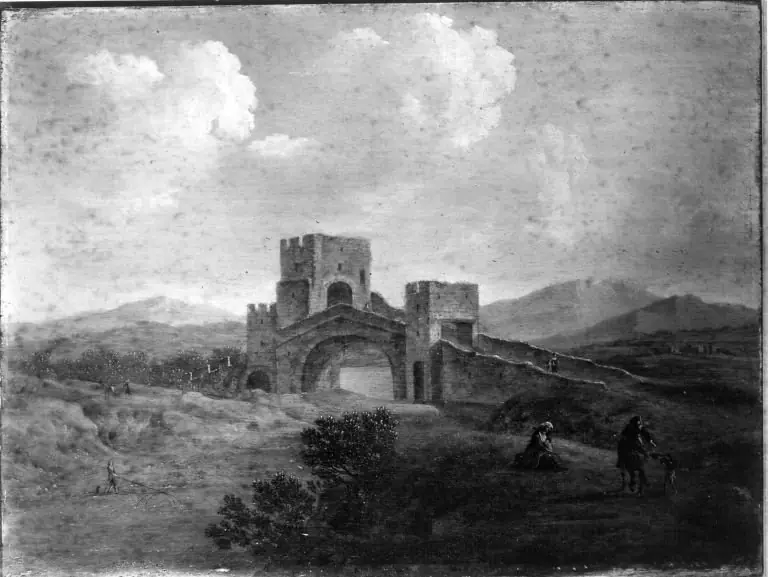 Der Ponte Salario über den Aniene bei Rom
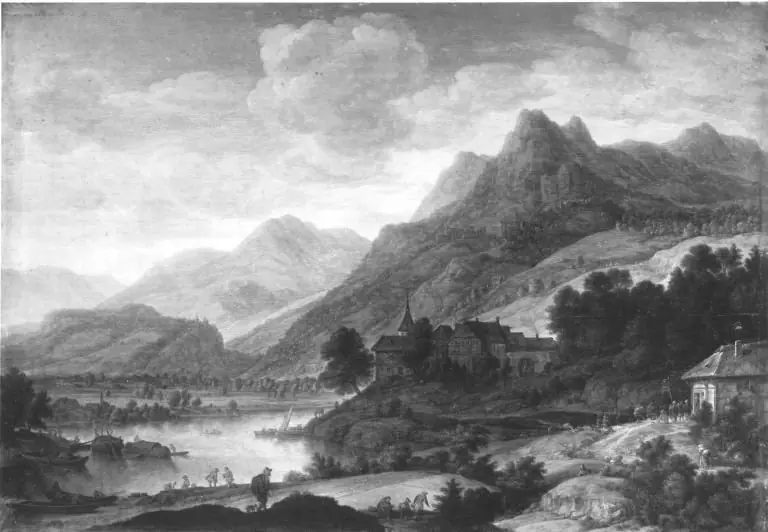 River landscape
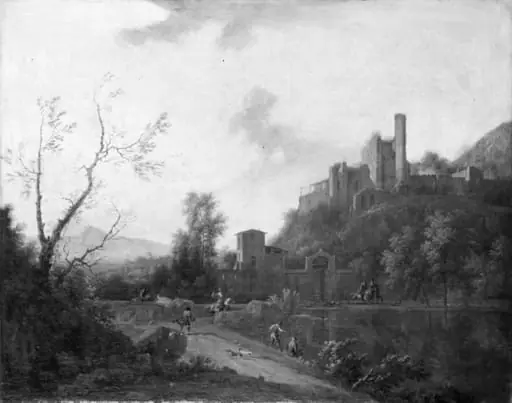 Mountain Scenery with a Castle
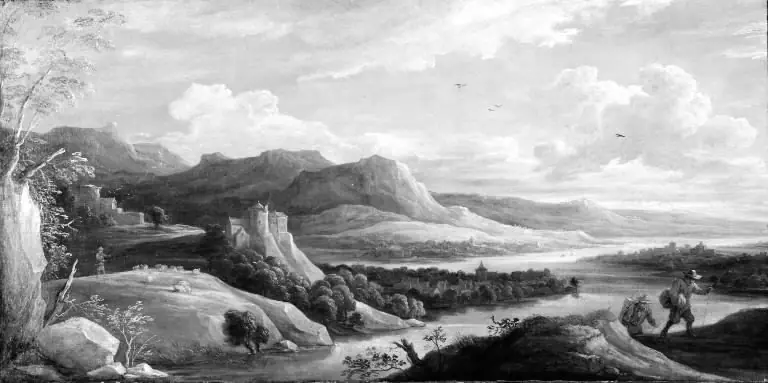 Mountain Scene with a River