Artwork
Christ on the Cross
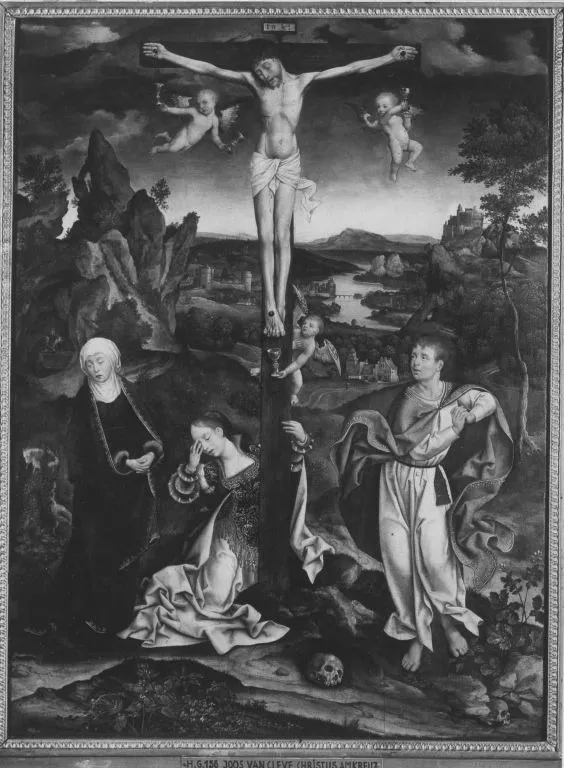
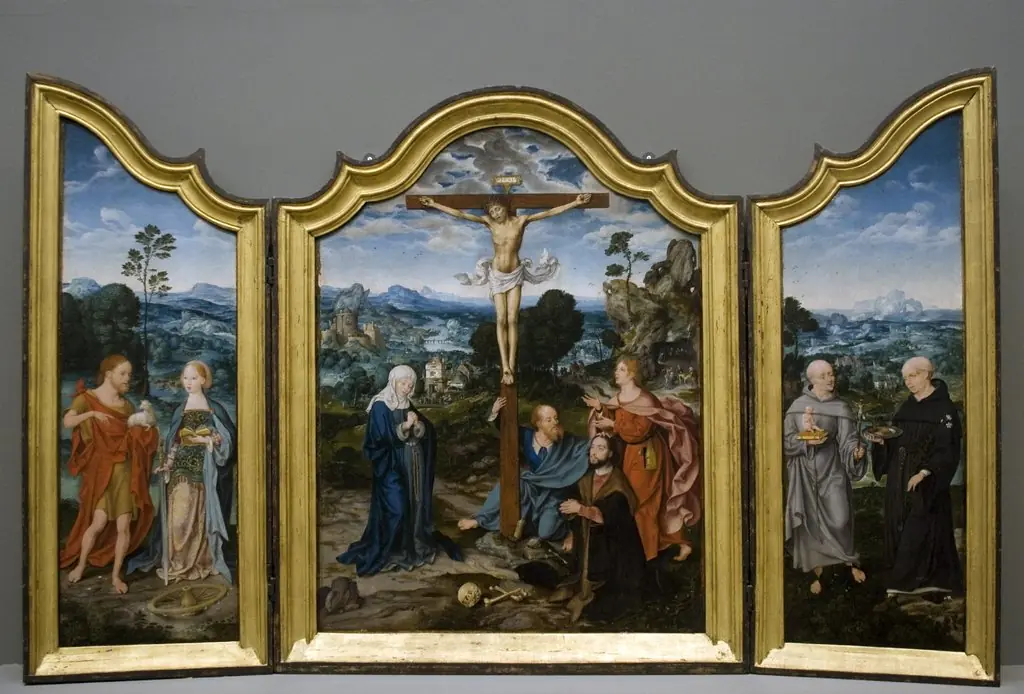
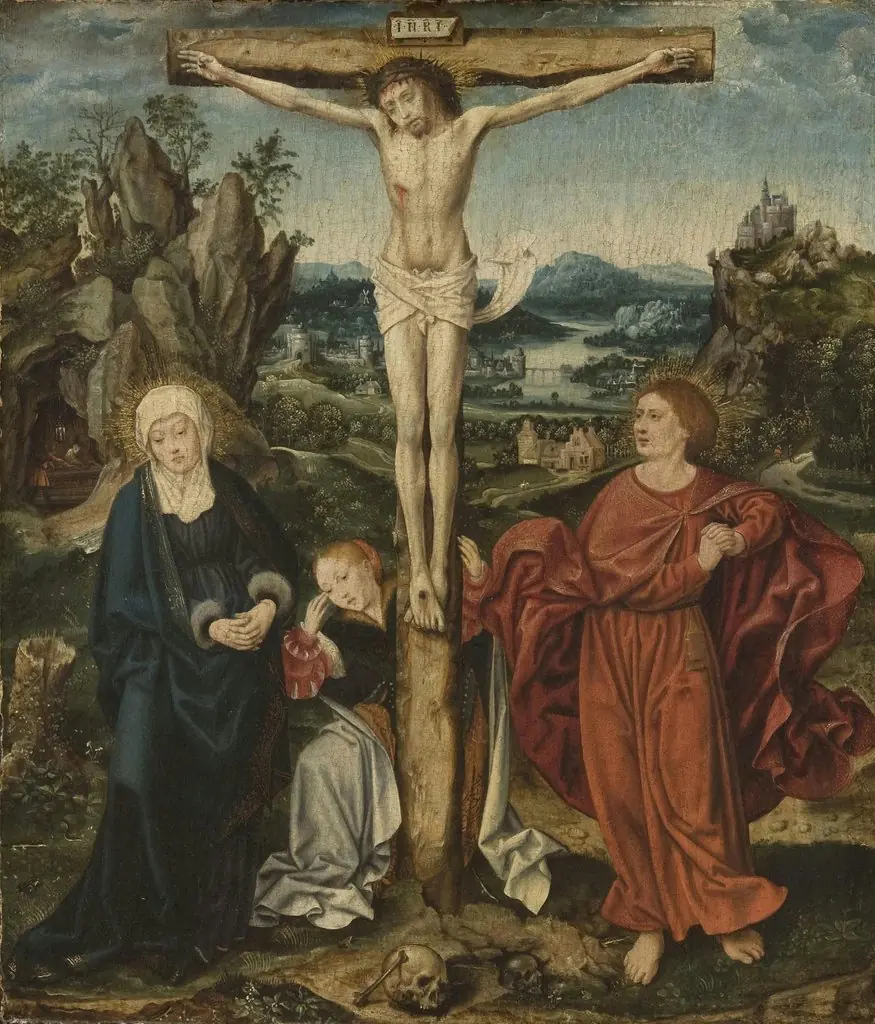
Christ on the Cross is an oil painting by the Early Baroque Italian artist Joos van Cleve. It dates from 1529 and is held in the collection of the Bavarian State Painting Collections.
About this work
Overview
Painted in 1529 by Joos van Cleve, this oil-on-panel work presents the crucifixion of Christ with quiet solemnity. Though created in Antwerp, it reflects a synthesis of Northern European detail and emerging Italian compositional harmony. The painting is part of the Alte Pinakothek’s collection, where it remains as a testament to the transitional religious art of the early 16th century.
Subject & Meaning
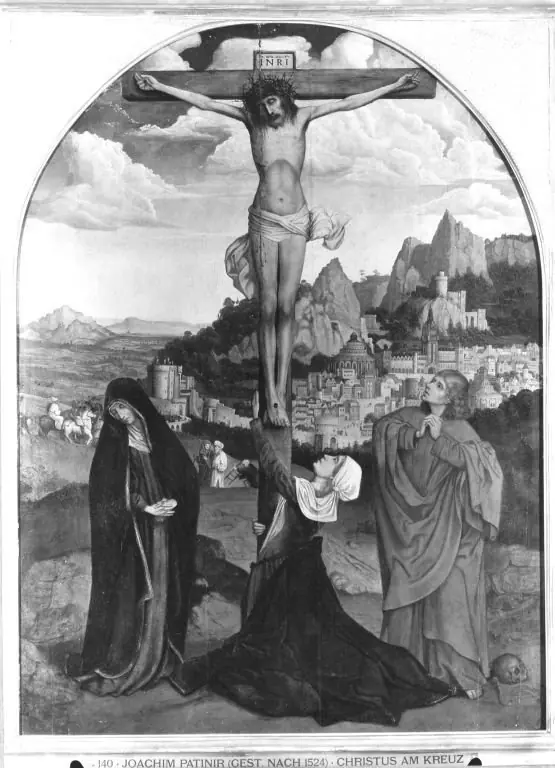
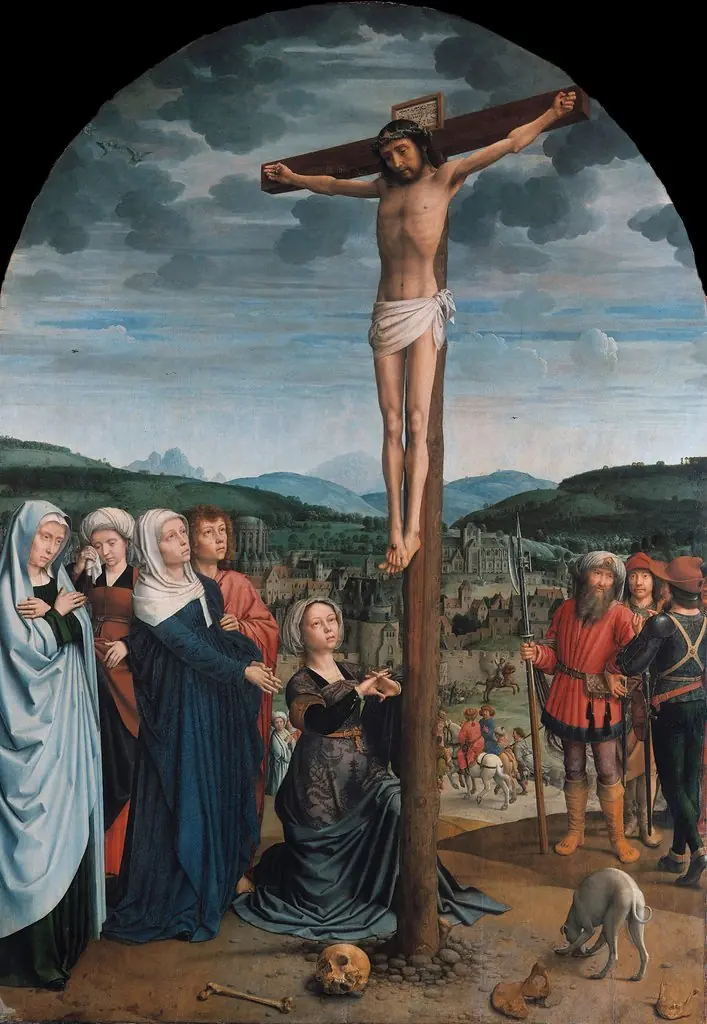
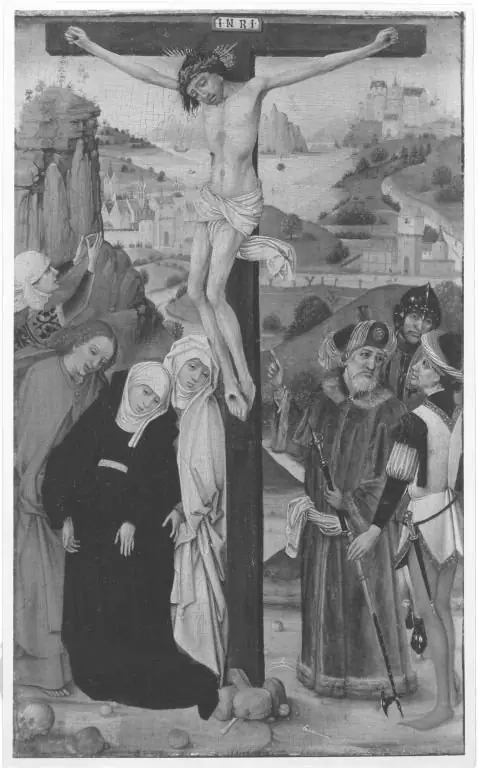
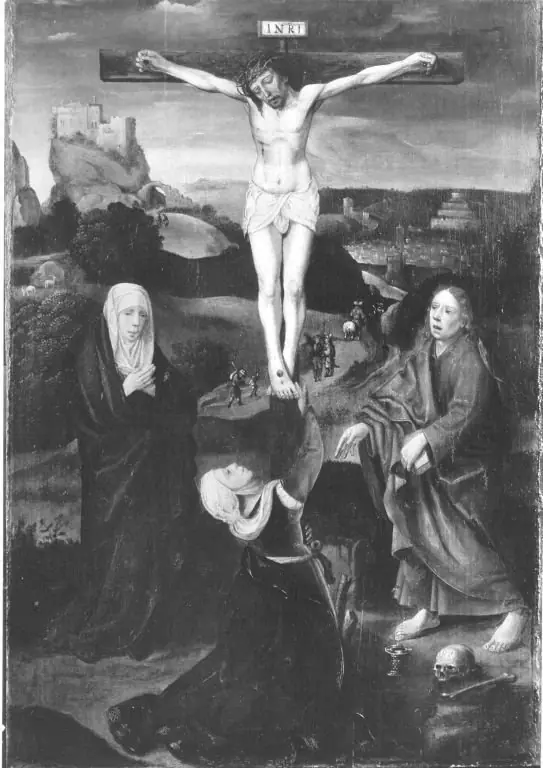
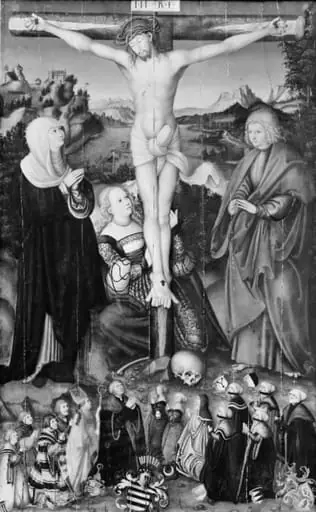
To the left, a woman in mourning holds a vessel, likely representing Mary Magdalene; to the right, a figure in white, possibly John the Apostle, gazes upward.
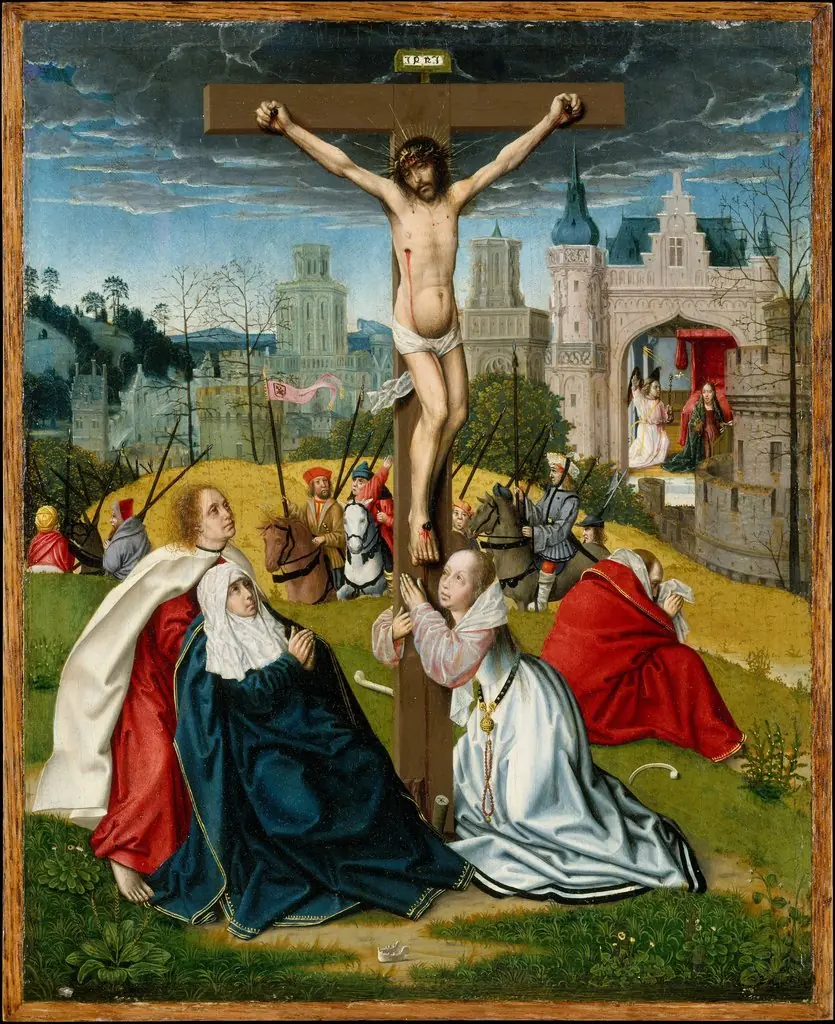
The scene centers on Christ’s crucified body, draped in a loincloth, his posture conveying both suffering and resignation. Two cherubs hover near his head, gathering his blood in chalices—a symbolic reference to the Eucharist. To the left, a woman in mourning holds a vessel, likely representing Mary Magdalene; to the right, a figure in white, possibly John the Apostle, gazes upward. The composition invites contemplation of sacrifice and divine grace.
Technique & Style
Van Cleve employed fine brushwork typical of Early Netherlandish painting, rendering textures with precision—from the weave of Christ’s cloth to the softness of clouds. The landscape background, rendered in atmospheric perspective, shows Flemish influence, while the balanced, pyramidal grouping of figures suggests Renaissance ideals. The palette is restrained, dominated by earth tones and muted blues, enhancing the scene’s gravity.
History & Provenance
Commissioned during the height of Antwerp’s artistic prominence, the painting entered the Bavarian royal collection in the 18th century before being transferred to the Alte Pinakothek in Munich. Its documented history is consistent with other works by van Cleve, known for devotional panels favored by both private patrons and religious institutions in the Low Countries.
Context
Created during the Reformation, the painting reflects a Catholic devotional tradition that emphasized Christ’s physical suffering as a means of spiritual connection. While Protestant regions moved away from such imagery, Antwerp remained a center for religious art. Van Cleve’s work bridges the meticulous detail of the Northern tradition with the emerging humanist sensibility of the Italian Renaissance.
Legacy
Though less widely known than contemporaries like Dürer or Titian, van Cleve’s *Christ on the Cross* exemplifies the quiet intensity of Northern Renaissance religious painting. Its enduring presence in a major European museum underscores its role as a representative work of its time—neither revolutionary nor ornate, but deeply resonant in its restraint and clarity.
Artist & collection
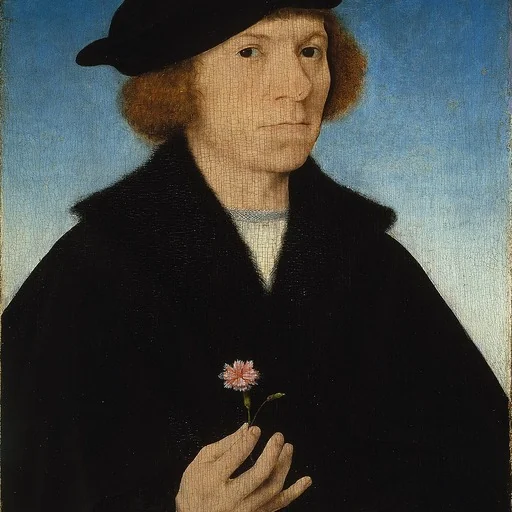
Artist
Joos van Cleve (; also Joos van der Beke; c. 1485–1490 – 1540/1541) was a leading painter active in Antwerp from his arrival there around 1511 until his death in 1540 or 1541. Within Dutch and Flemish Renaissance…