Artwork
Christ the Saviour
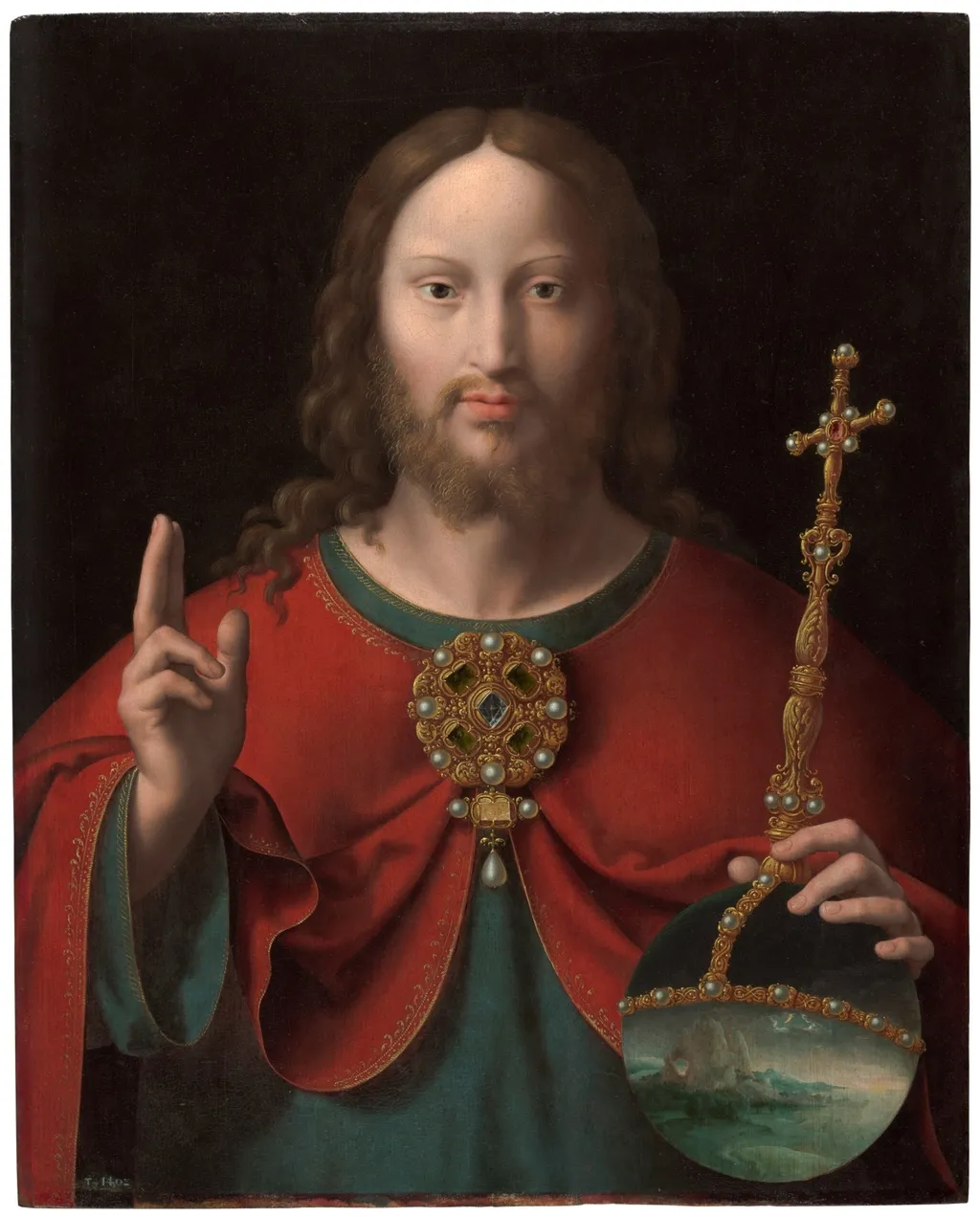
Christ the Saviour is an unspecified painting by the Mannerist artist Joos van Cleve. It dates from 1530 and is held in the collection of the Museo del Prado.
About this work
Overview
Created circa 1530 by Joos van Cleve, a prominent Antwerp painter, *Christ the Saviour* is an oil work now held in the Museo del Prado, Madrid.
Created circa 1530 by Joos van Cleve, a prominent Antwerp painter, *Christ the Saviour* is an oil work now held in the Museo del Prado, Madrid. The composition shows a bearded figure in a red robe and teal shirt, grasping an elaborately jeweled cross in his right hand while raising his left index finger. A reflective circular object in his left hand mirrors a kneeling supplicant, reinforcing the devotional tone.
Subject & Meaning
The central figure is presented as a Christ-like presence, his gesture of pointing and the presence of a cross indicating a salvific role. The mirrored surface that reflects a kneeling devotee suggests a dialogue between the divine and the faithful, emphasizing intercession and personal piety within a Christian framework.
Technique & Style
Van Cleve combines the precise detailing of Early Netherlandish painting with the emerging Mannerist sensibility of the early 16th century. Fine brushwork renders the textures of hair, fabric, and gemstones, while the elongated pose and exaggerated hand gestures reflect the period’s stylistic shift toward elegance and artificiality.
History & Provenance
Executed during van Cleve’s active period in Antwerp, where he was a member of the Guild of Saint Luke, the painting likely originated from his workshop, which employed several assistants. After changing hands over the centuries, it entered the Spanish royal collection before being transferred to the Prado, where it remains on display.
Context
*Christ the Saviour* exemplifies the type of devotional imagery commissioned by both ecclesiastical and secular patrons in the Low Countries. Its luxurious iconography—particularly the gem‑encrusted cross—reflects the period’s taste for opulent religious objects, while the work contributes to our understanding of van Cleve’s role in bridging Northern realism and Italianate Mannerism.
Own this work as a print
Artist & collection
Artist
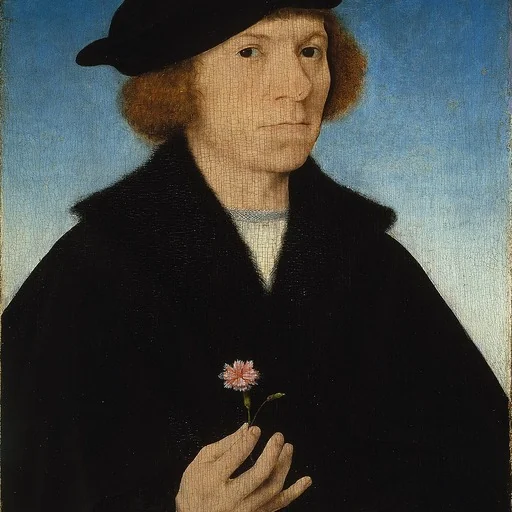
Joos van Cleve (; also Joos van der Beke; c. 1485–1490 – 1540/1541) was a leading painter active in Antwerp from his arrival there around 1511 until his death in 1540 or 1541. Within Dutch and Flemish Renaissance…