Artwork
The Christ-Child
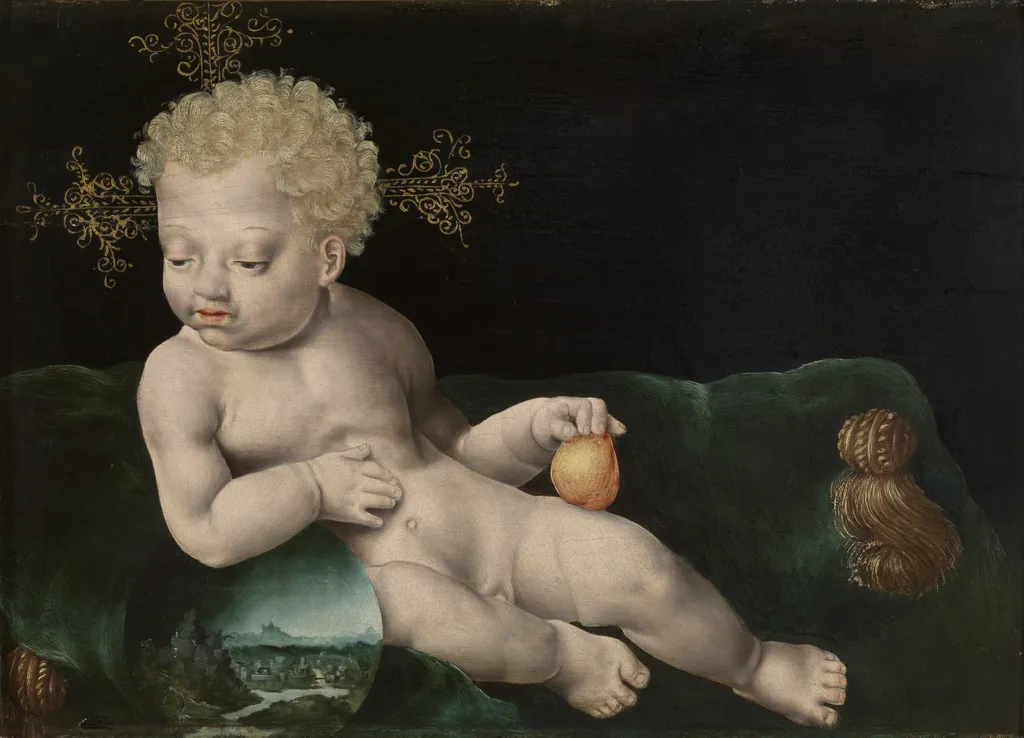
The Christ-Child is an oil painting by the Early Baroque Italian artist Joos van Cleve. It dates from 1524 and is held in the collection of the Royal Museum of Fine Arts Antwerp.
About this work
Overview
Van Cleve, a prominent Antwerp artist active from 1511 until his death around 1540–1541, produced religious imagery through a large, efficient workshop.
Painted in 1524 by Joos van Cleve, this small oil-on-panel work depicts the Christ-Child as a naturalistic infant, seated on a dark green cushion against a black background. Van Cleve, a prominent Antwerp artist active from 1511 until his death around 1540–1541, produced religious imagery through a large, efficient workshop. The painting reflects the transitional phase between late medieval Netherlandish traditions and emerging Renaissance naturalism.
Subject & Meaning
The Christ-Child is shown naked, holding a pear—a symbol often associated with redemption and the promise of eternal life in Christian iconography. His downward gaze suggests contemplation or awareness beyond his years, evoking theological themes of divine knowledge and human vulnerability. The absence of traditional halos or regal attributes emphasizes a quiet, intimate humanity rather than overt divinity.
Technique & Style
Van Cleve rendered the infant’s skin with meticulous attention to texture and subtle gradations of light, showcasing the influence of Early Netherlandish realism. The gold decorative elements at the top of the composition hint at earlier devotional panel traditions, while the deep black background isolates the figure, heightening focus on form and expression. The brushwork remains precise, yet the overall approach leans toward intimate observation over grandeur.
History & Provenance
The painting entered the collection of the Royal Museum of Fine Arts Antwerp, where it remains today. Though its early ownership is undocumented, its style and date align with van Cleve’s known workshop output during the 1520s. It was likely commissioned for private devotion, consistent with the demand for small-scale religious images among Antwerp’s merchant class during the early Reformation period.
Context
Created during a time of religious upheaval in the Low Countries, the painting reflects a shift toward personal, emotionally resonant depictions of sacred figures. While Antwerp was becoming a hub for commercial art production, van Cleve maintained a balance between devotional tradition and emerging humanist ideals. The work avoids overtly Protestant or Catholic polemics, focusing instead on quiet reverence.
Legacy
Van Cleve’s Christ-Child exemplifies how Northern artists adapted religious imagery for private contemplation amid changing spiritual landscapes. Though not widely copied, its emphasis on naturalism influenced later devotional portraits in the region. The painting endures as a quiet testament to the workshop’s skill in conveying spiritual presence through unadorned, lifelike detail.
Own this work as a print
Artist & collection
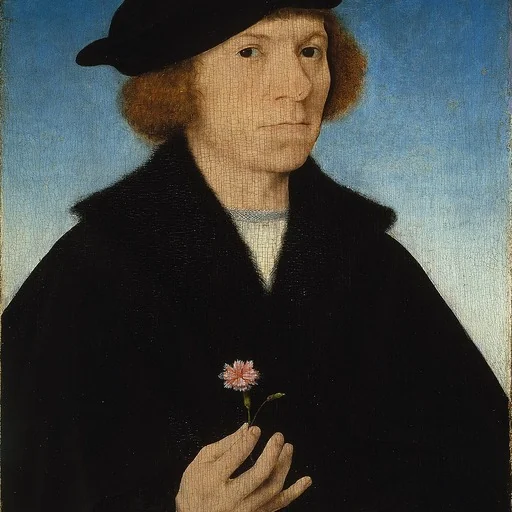
Artist
Joos van Cleve (; also Joos van der Beke; c. 1485–1490 – 1540/1541) was a leading painter active in Antwerp from his arrival there around 1511 until his death in 1540 or 1541. Within Dutch and Flemish Renaissance…