Artwork
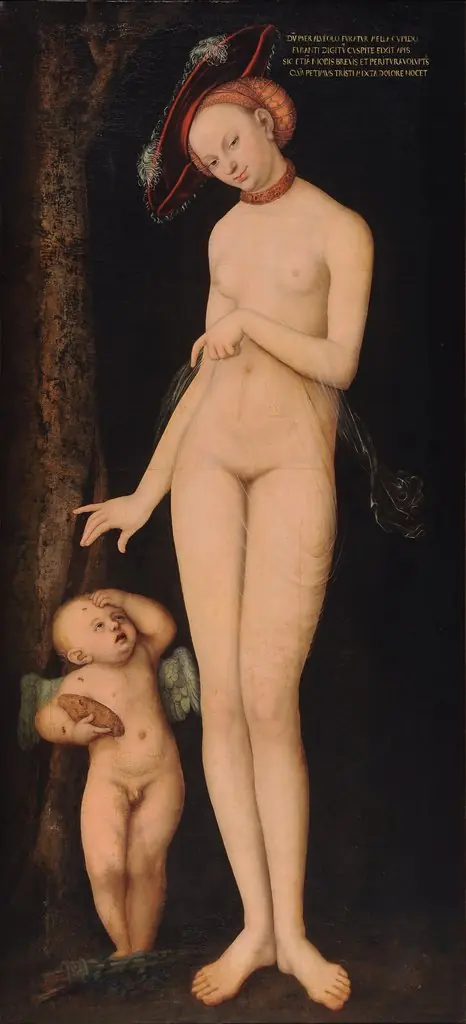
Venus with Cupid stealing honey
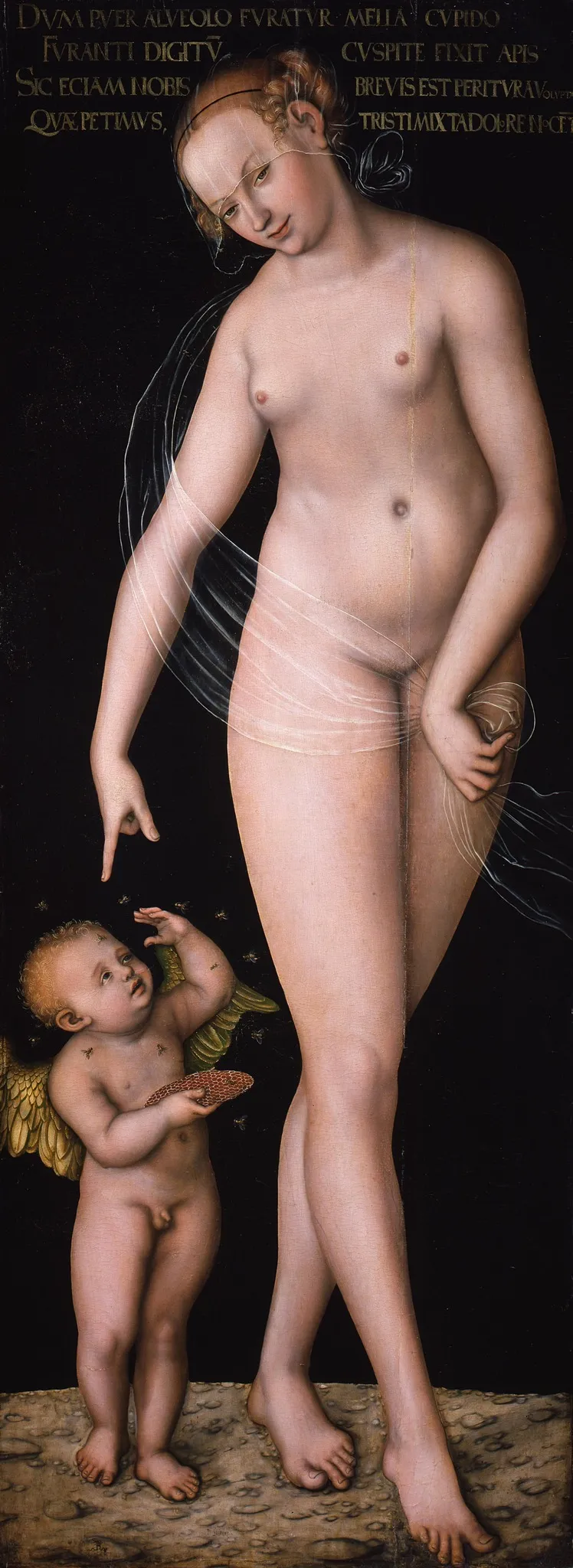
Venus with Cupid stealing honey is a paint painting by the Northern Renaissance artist Lucas Cranach the Elder. It dates from 1537 and is held in the collection of the Gemäldegalerie Berlin.
About this work
Overview
Executed in oil on panel, the work displays Cranach's characteristic style: elongated figures, smooth, pale skin tones, and a distinct lack of heavy modeling.
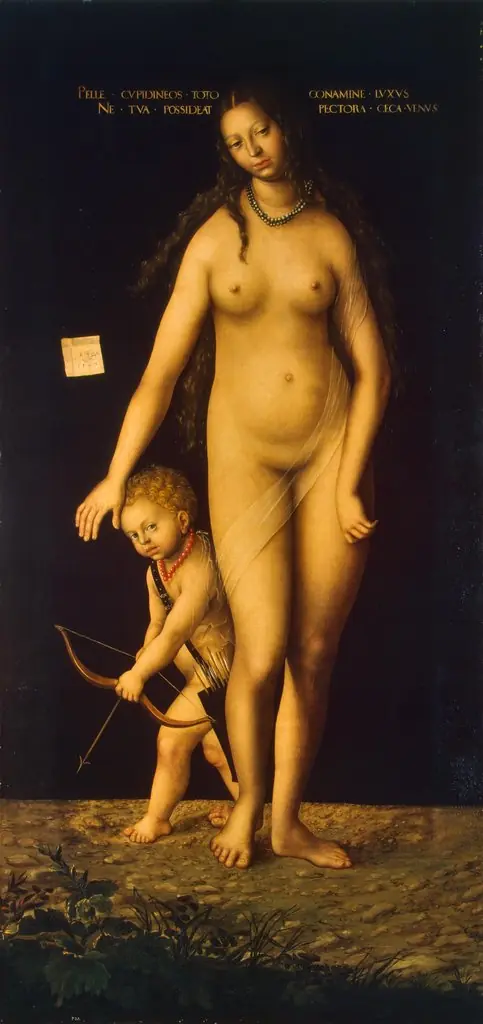
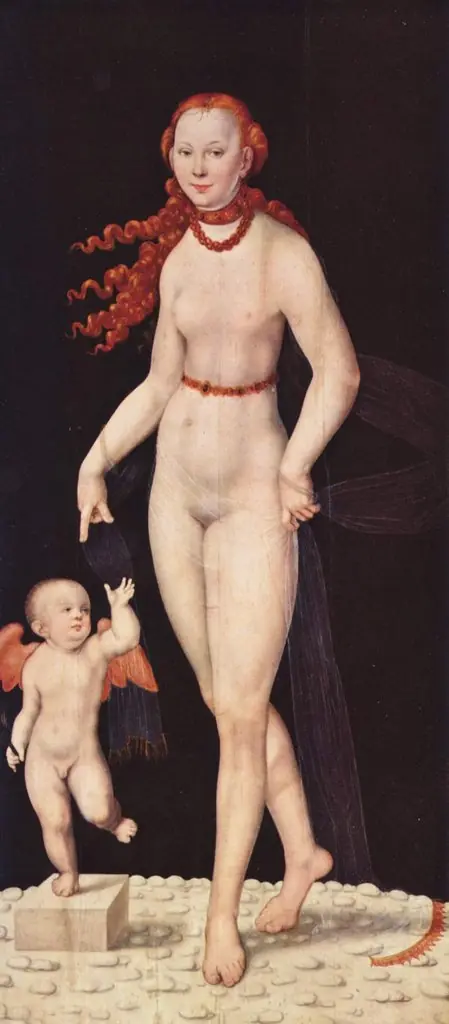
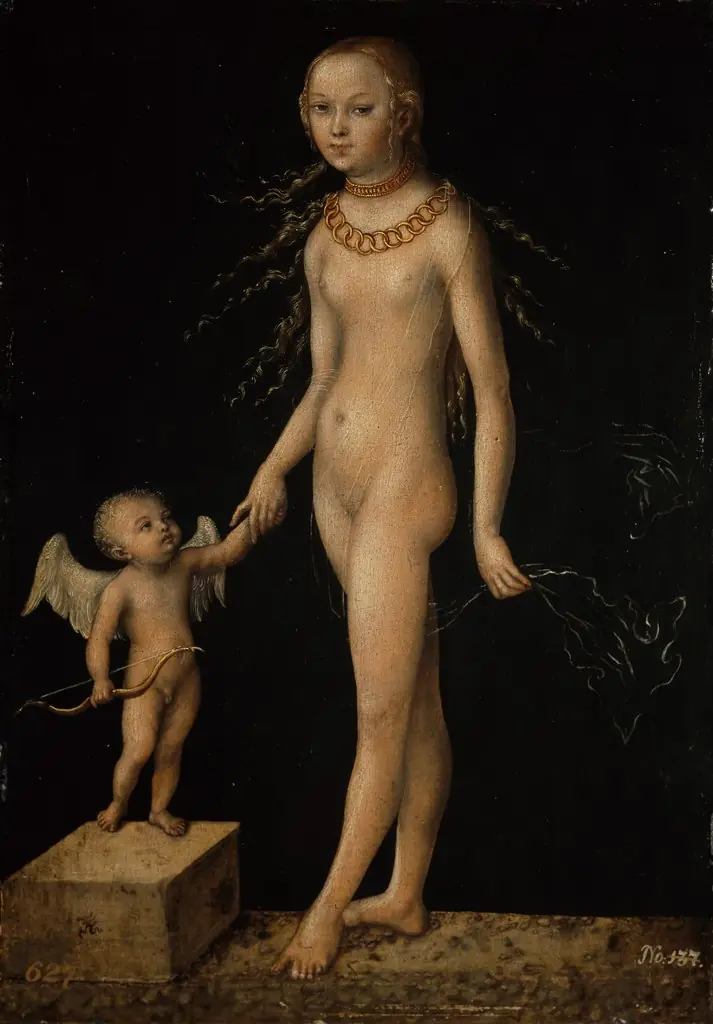
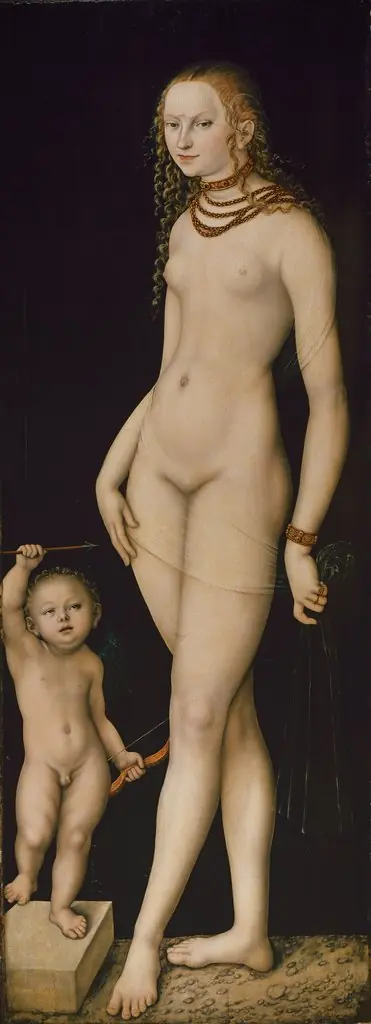
Painted in 1537 by Lucas Cranach the Elder, Venus with Cupid stealing honey depicts the goddess Venus and the infant Cupid in a mythological scene illustrating the theme of love's pain. The composition features a standing nude Venus with her left leg crossed over her right, her hair pulled back and adorned with a headband. She gazes downward as Cupid, a winged child, stands beside her holding a honeycomb. In this specific narrative, Cupid has stolen honey from a hive, and the bees sting him, causing him to cry out in pain. Venus points toward the stings, often interpreted as a moralizing gesture suggesting that the sweetness of love is inevitably accompanied by suffering. Executed in oil on panel, the work displays Cranach's characteristic style: elongated figures, smooth, pale skin tones, and a distinct lack of heavy modeling. The painting reflects the artist's mature period, where he frequently revisited classical mythology to explore allegorical themes of desire and consequence. This specific iconography, linking the sweetness of honey to the sting of love, was a popular motif in 16th-century German art, serving as a visual proverb on the dual nature of erotic passion.
Subject & Meaning
The scene draws on classical mythology, pairing the goddess Venus with her son Cupid. The child, identified by his wings and the honeycomb he clutches, appears to be engaged in a playful act of stealing honey, while Venus watches attentively, suggesting a moment of tender interaction between mother and child.
Technique & Style
Cranach employs his characteristic linear clarity and delicate modeling, using a limited palette that emphasizes the luminous flesh tones against the dark ground. The figure’s pose—one leg crossed over the other—and the precise rendering of the headband and hair reflect the artist’s Northern Renaissance attention to detail and compositional balance.
History & Provenance
Created during the later period of Cranach’s career, the painting entered the German national collection and is now housed in Berlin’s Gemäldegalerie. Its provenance traces back to the 16th‑century courtly circles that favored mythological subjects for private devotion and display.
Artist & collection
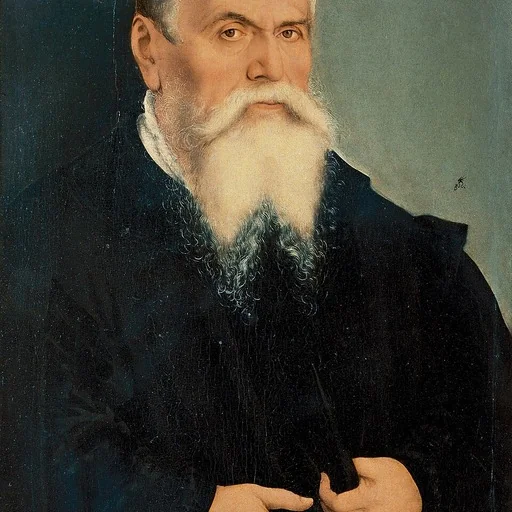
Artist
Lucas Cranach the Elder was a German Renaissance painter and printmaker in woodcut and engraving.