Artwork
The Rhine Gate and the Port of Arnhem
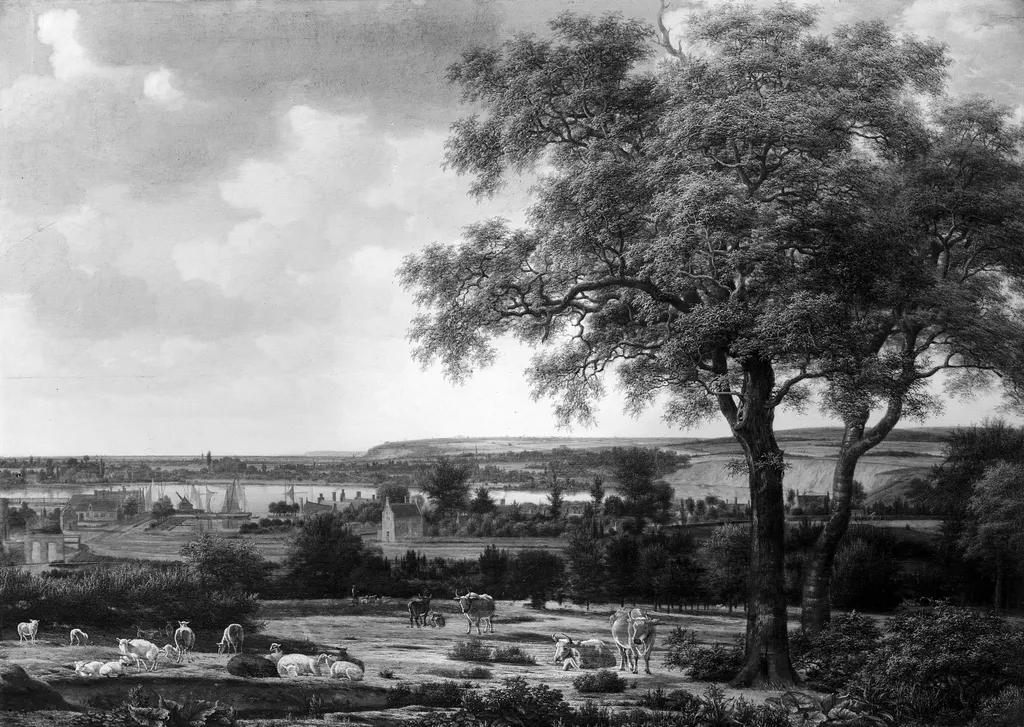
The Rhine Gate and the Port of Arnhem is an oil painting by the Dutch Golden Age artist Joris van der Haagen. It dates from 1649 and is held in the collection of the Gemäldegalerie Berlin.
About this work
Overview
It belongs to the Gemäldegalerie Berlin’s collection, where it remains a quiet testament to regional Dutch life in the mid-seventeenth century.
Painted in 1649 by Joris van der Haagen, this work captures a quiet riverside view of Arnhem’s Rhine Gate and its bustling port. Executed in oil on panel, the painting exemplifies the Dutch Golden Age’s interest in topographical accuracy and atmospheric nuance. It belongs to the Gemäldegalerie Berlin’s collection, where it remains a quiet testament to regional Dutch life in the mid-seventeenth century.
Subject & Meaning
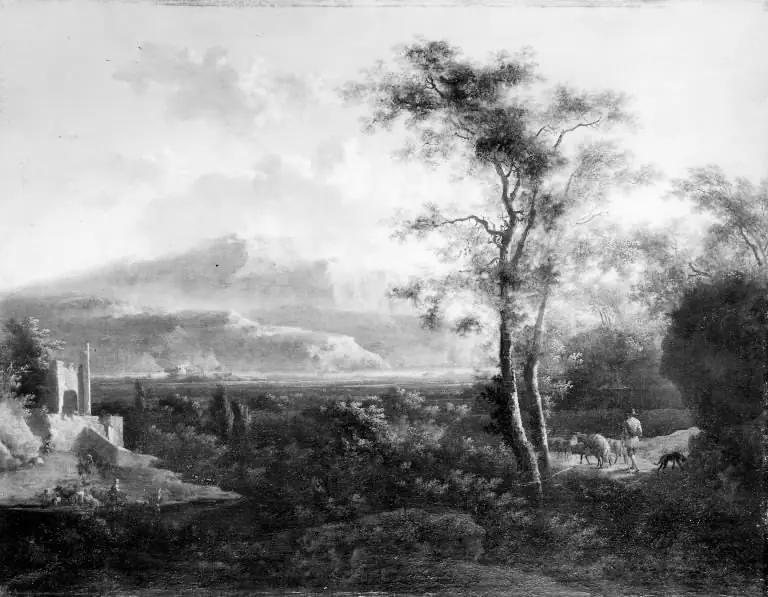
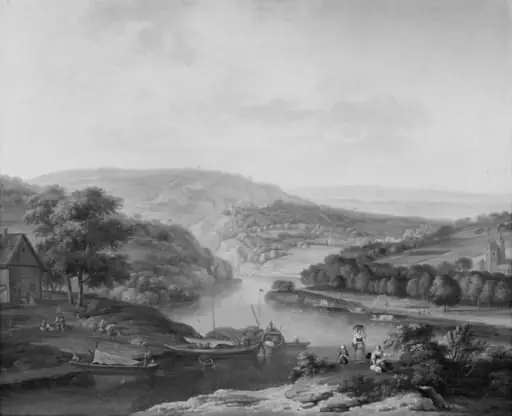
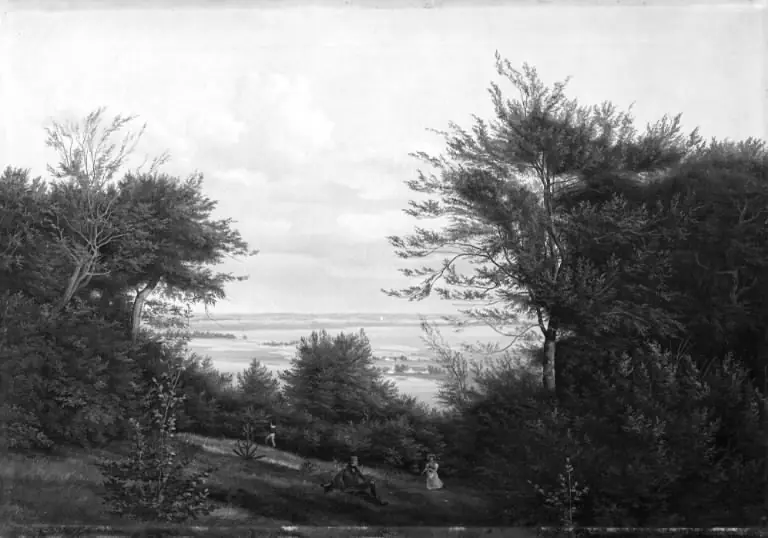
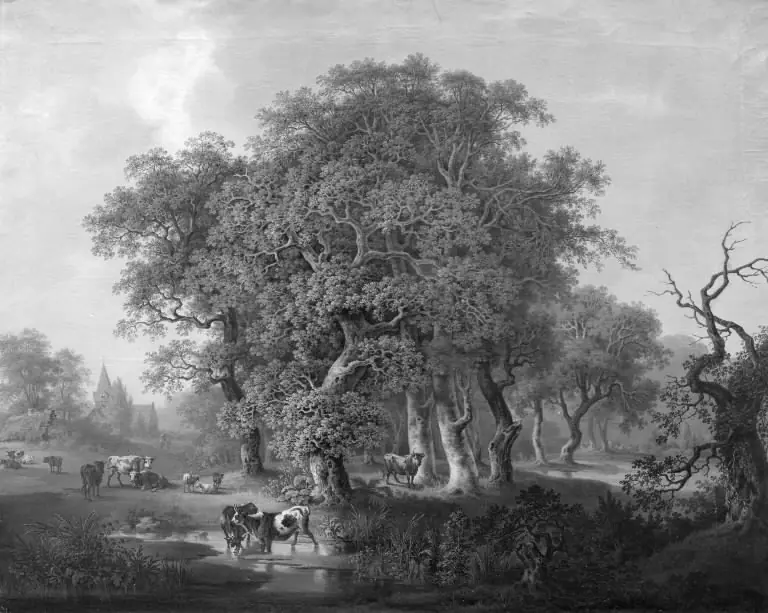
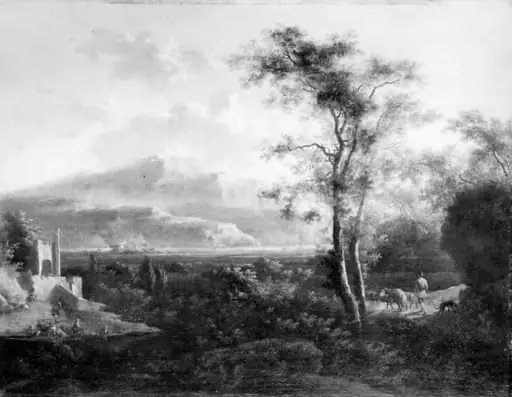
The scene centers on the Rhine Gate, a fortified entry point to the city, alongside active river traffic and modest waterfront structures. A large tree in the foreground anchors the composition, its limbs framing the distant architecture. The painting suggests neither grandeur nor conflict, but rather the steady rhythm of commerce and daily life along a vital waterway, reflecting civic pride without overt symbolism.
Technique & Style
Van der Haagen employs broad, deliberate brushwork to render foliage and clouds, creating texture without excessive detail. Light filters through a diffused sky, casting soft shadows that model the buildings and water’s surface. The composition uses the tree as a visual anchor, guiding the eye toward the river and gate, while maintaining a balanced, horizontal rhythm characteristic of Dutch landscape traditions.
History & Provenance
The painting was completed in 1649, during a period of relative stability in the Dutch Republic. It entered the Gemäldegalerie Berlin’s holdings in the nineteenth century, likely through acquisition from a private collection. Its preservation reflects early institutional interest in Dutch regional landscapes, though little is documented about its early ownership or exhibition history.
Context
Arnhem, situated along the Rhine, was a key trading hub in the Dutch Republic. Van der Haagen, active in Utrecht and later in Arnhem, painted local views that appealed to civic identity and commercial pride. This work aligns with a broader trend among Dutch artists to depict everyday landscapes not as idealized scenes, but as observed, lived-in environments grounded in local geography.
Legacy
Though not widely known outside specialist circles, van der Haagen’s work contributes to the understanding of regional Dutch painting beyond the major centers of Amsterdam and Haarlem. This painting remains a representative example of how smaller cities were visually documented during the Golden Age, preserving topographical and cultural details now lost to time.
Own this work as a print
Artist & collection
Artist
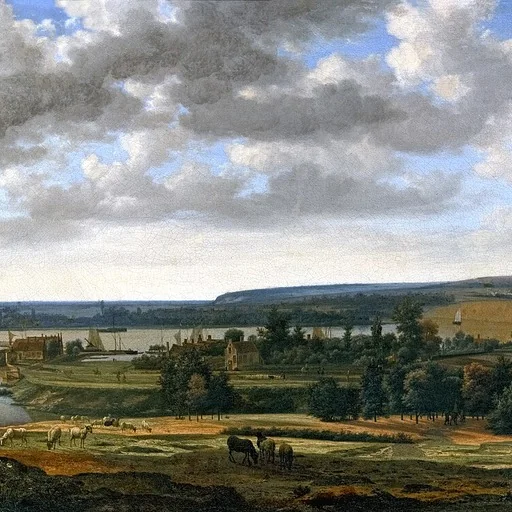
Joris Abrahamsz. van der Haagen (c. 1615 – 23 May 1669 (buried)) was a Dutch Golden Age painter specialized in landscapes.

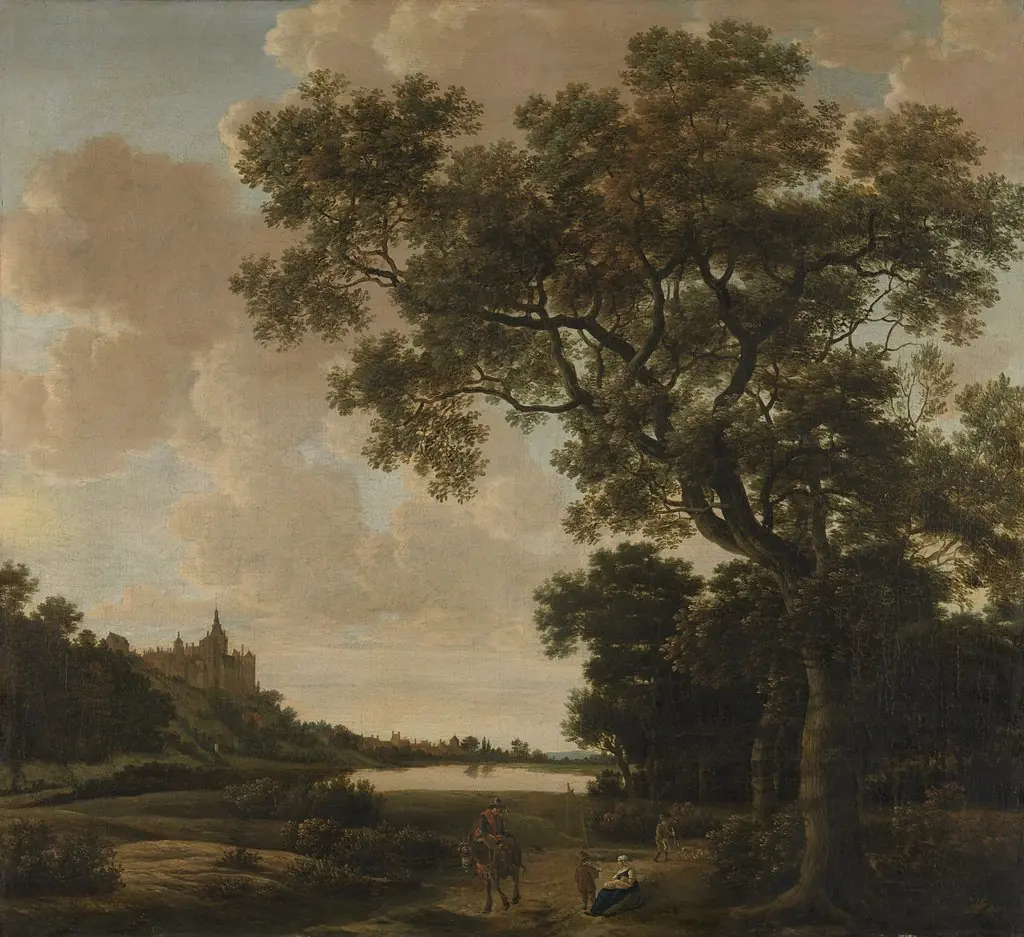 Landscape with the Schwanenturm, Kleve
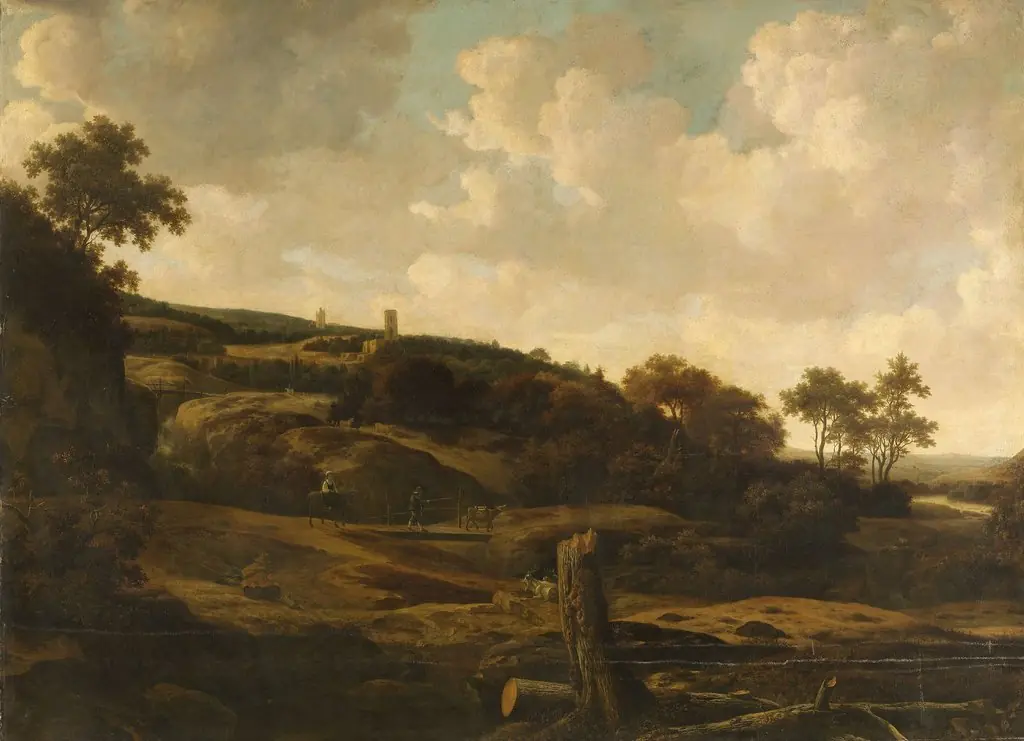 Mountainous landscape, possibly the St Pietersberg, with Lichtenberg castle, near Maastricht
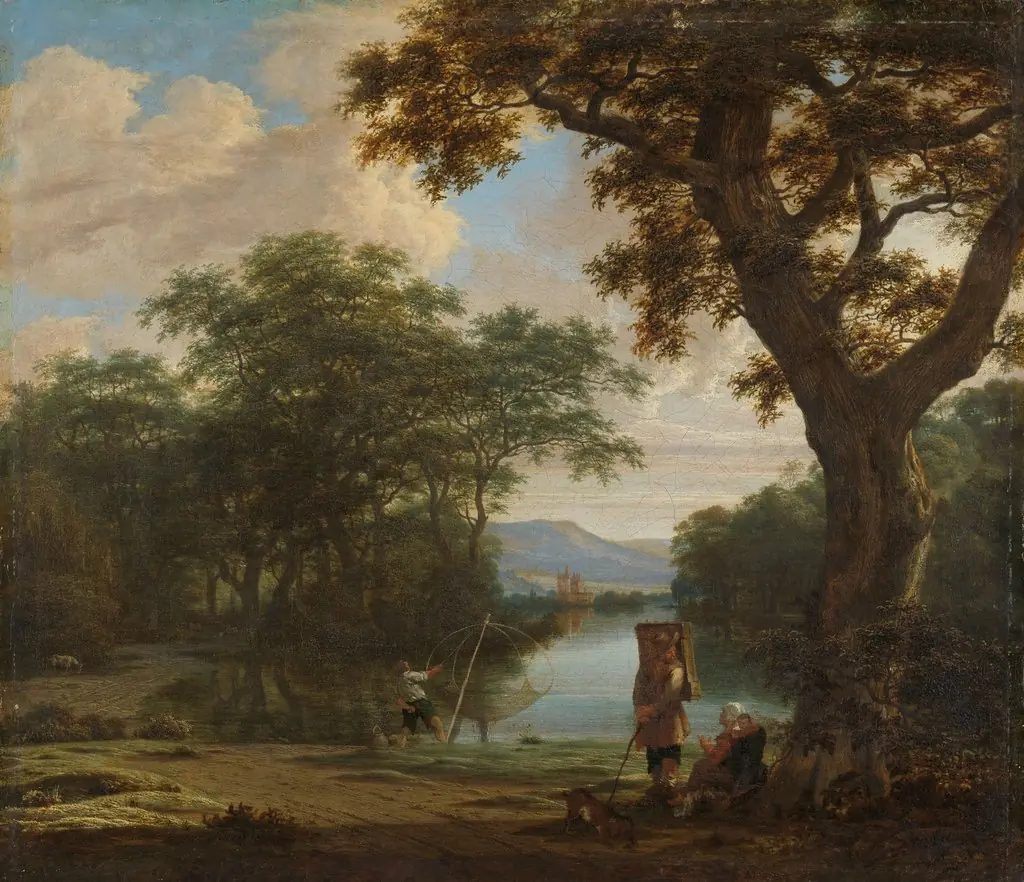 Landscape with fisherman with a square net
 Landscape with Fisherman with a square Net
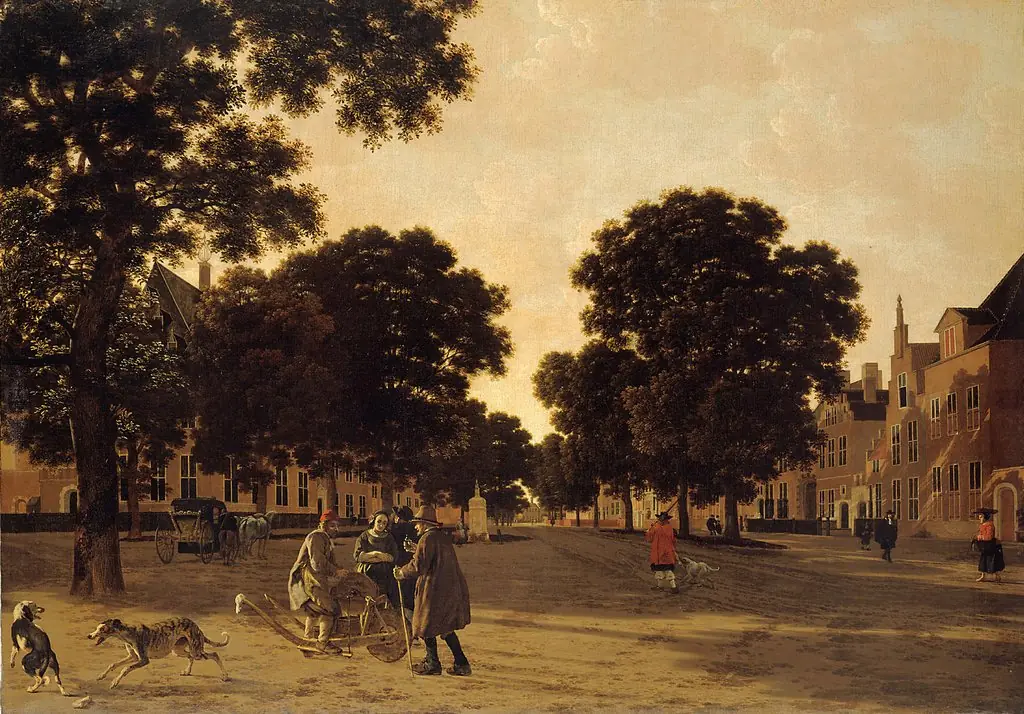 Ansicht des Kneuterdijk im Haag
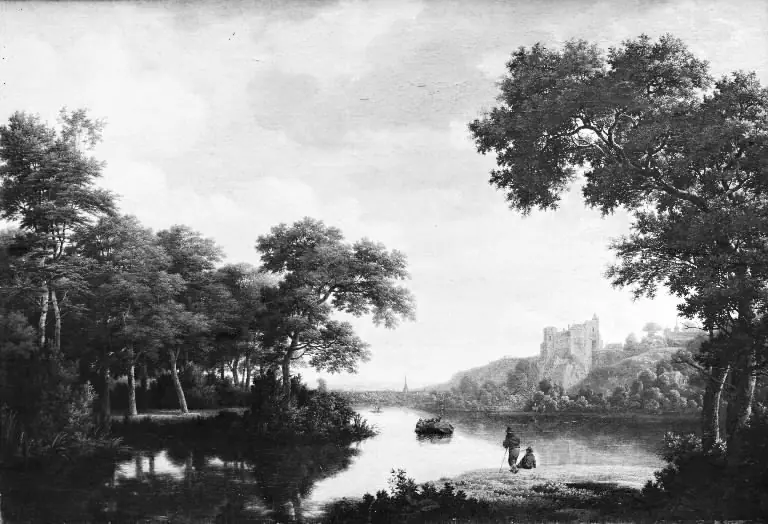 River Landscape
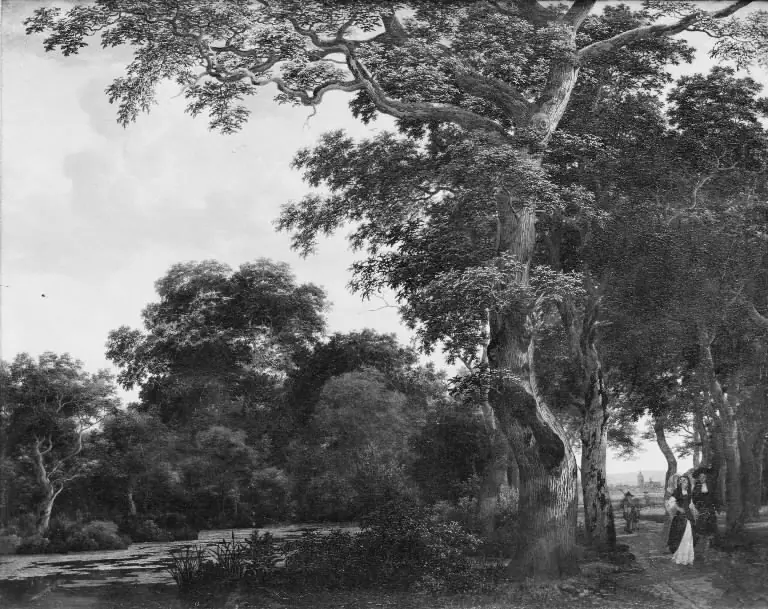 The Oak Avenue
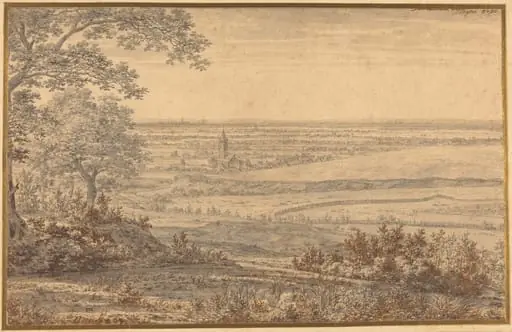 Extensive Landscape Seen from the Edge of a Forest