Artwork
Extensive Landscape Seen from the Edge of a Forest
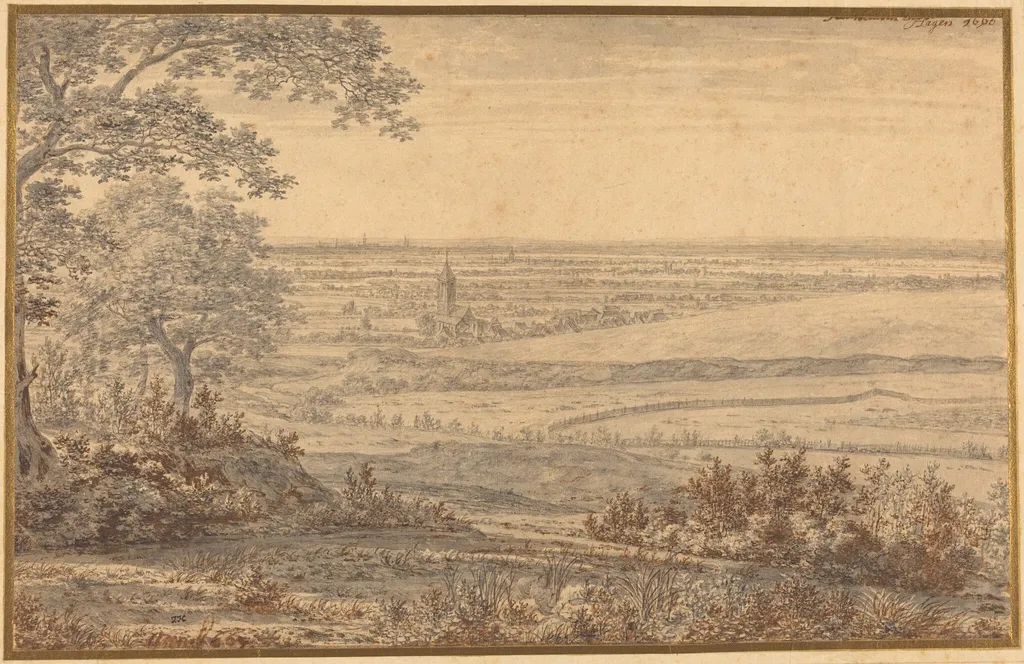
Extensive Landscape Seen from the Edge of a Forest is an ink drawing by the Baroque artist Joris van der Haagen. It dates from 1666 and is held in the collection of the National Gallery of Art. Created in 1666 by Joris Abrahamsz.
About this work
Overview
van der Haagen, this drawing captures a quiet expanse of Dutch countryside viewed from a forest’s edge.
Created in 1666 by Joris Abrahamsz. van der Haagen, this drawing captures a quiet expanse of Dutch countryside viewed from a forest’s edge. Executed in pen, gray and brown ink, and gray wash over black chalk on laid paper, it exemplifies the meticulous draftsmanship typical of mid-seventeenth-century Dutch landscape studies. The work’s restrained palette and layered technique convey depth without overt drama, aligning with the period’s preference for observed naturalism over idealization.
Subject & Meaning
The scene presents a tranquil transition from dense woodland to open farmland, with a lone bare tree anchoring the left foreground. In the distance, a church and scattered dwellings nestle beside a broad river, while fences and winding paths divide the land. These elements suggest human habitation in harmony with the land, reflecting a quiet appreciation for rural order rather than narrative or symbolic intent. The composition invites contemplation of place and scale, not event or allegory.
Technique & Style
Van der Haagen employed thin, controlled pen lines layered with soft gray washes over a foundation of black chalk to model form and atmosphere. Cross-hatching and subtle tonal gradations define distant hills, tree canopies, and the texture of the earth, creating a sense of recession without sharp contrast. The paper’s natural texture enhances the drawing’s muted, aged quality, reinforcing the quiet, observational tone of the work. The technique prioritizes atmospheric cohesion over fine detail.
History & Provenance
The drawing is dated to 1666, near the end of van der Haagen’s known career, and reflects his established focus on landscape studies. While specific early ownership records are sparse, its survival in good condition suggests it was valued as a preparatory or independent work within artistic circles. It remains a representative example of Dutch graphic practice from the period, preserved for its technical refinement rather than its association with major patrons.
Context
In mid-seventeenth-century Holland, landscape drawing flourished as both study and finished art, supported by a growing market for secular imagery. Artists like van der Haagen responded to public interest in the natural world by recording local topography with precision and restraint. This work aligns with a broader trend of valuing the ordinary—fields, paths, and modest architecture—as worthy subjects, distinct from the grand historical or mythological themes favored elsewhere in Europe.
Legacy
Though van der Haagen was not among the most widely recognized names of the Dutch Golden Age, this drawing contributes to the understanding of how landscape was systematically observed and rendered in ink. Its quiet composition and technical discipline influenced later generations of draftsmen who prioritized direct observation. Today, it stands as a quiet testament to the value placed on the everyday landscape in Dutch artistic culture.
Artist & collection
Artist
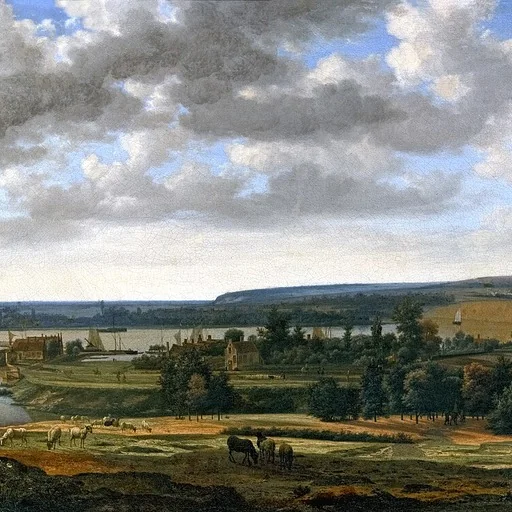
Joris Abrahamsz. van der Haagen (c. 1615 – 23 May 1669 (buried)) was a Dutch Golden Age painter specialized in landscapes.

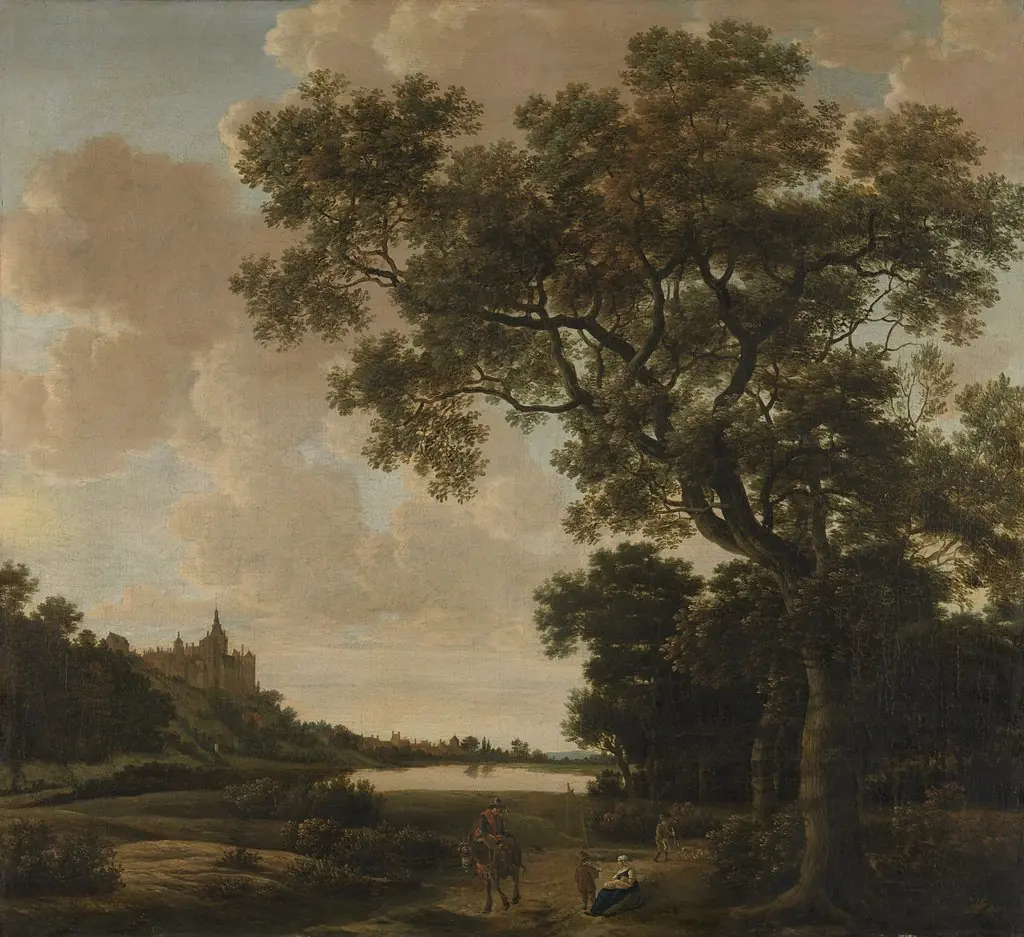 Landscape with the Schwanenturm, Kleve
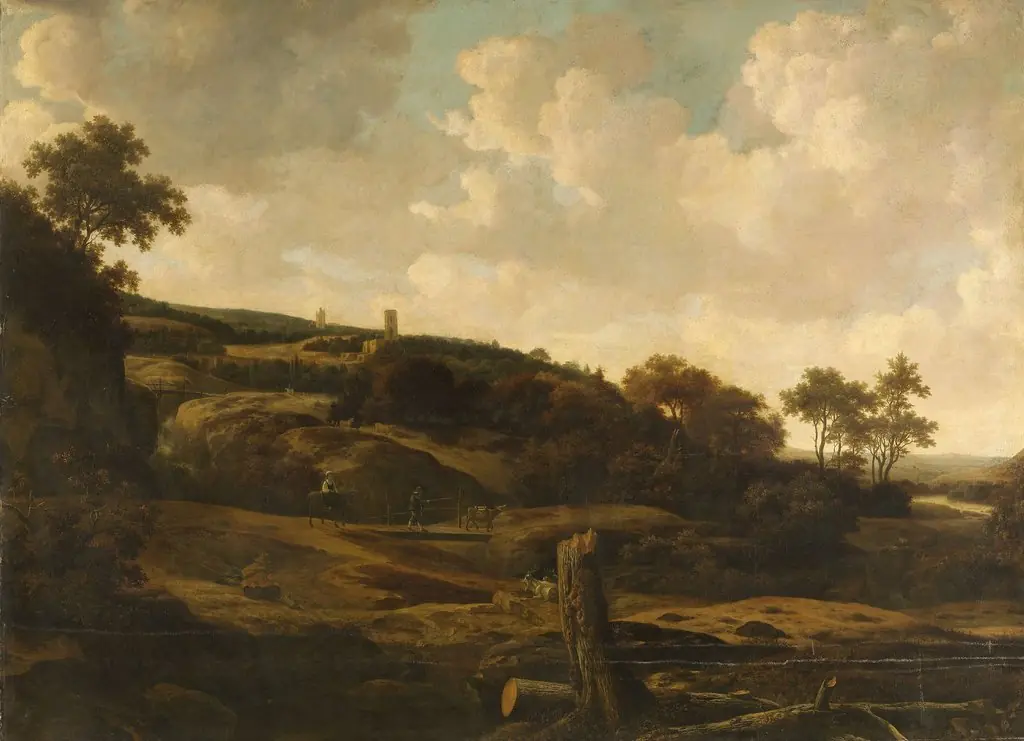 Mountainous landscape, possibly the St Pietersberg, with Lichtenberg castle, near Maastricht
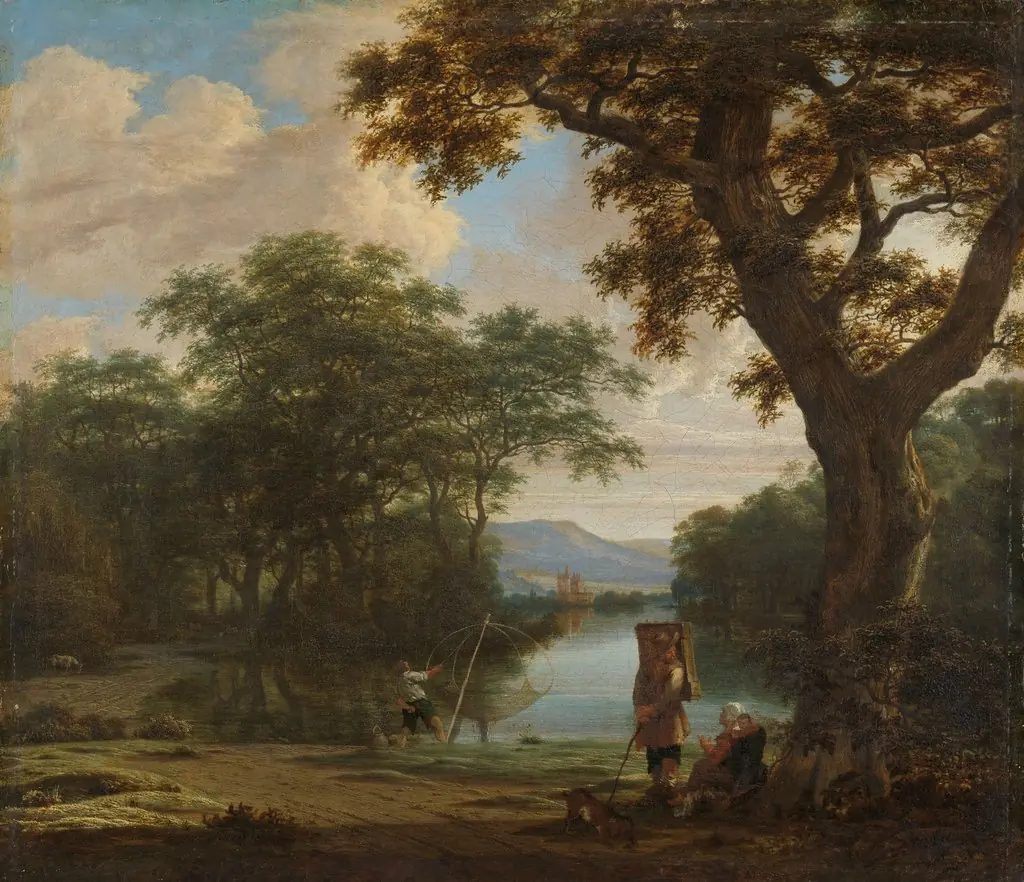 Landscape with fisherman with a square net
 Landscape with Fisherman with a square Net
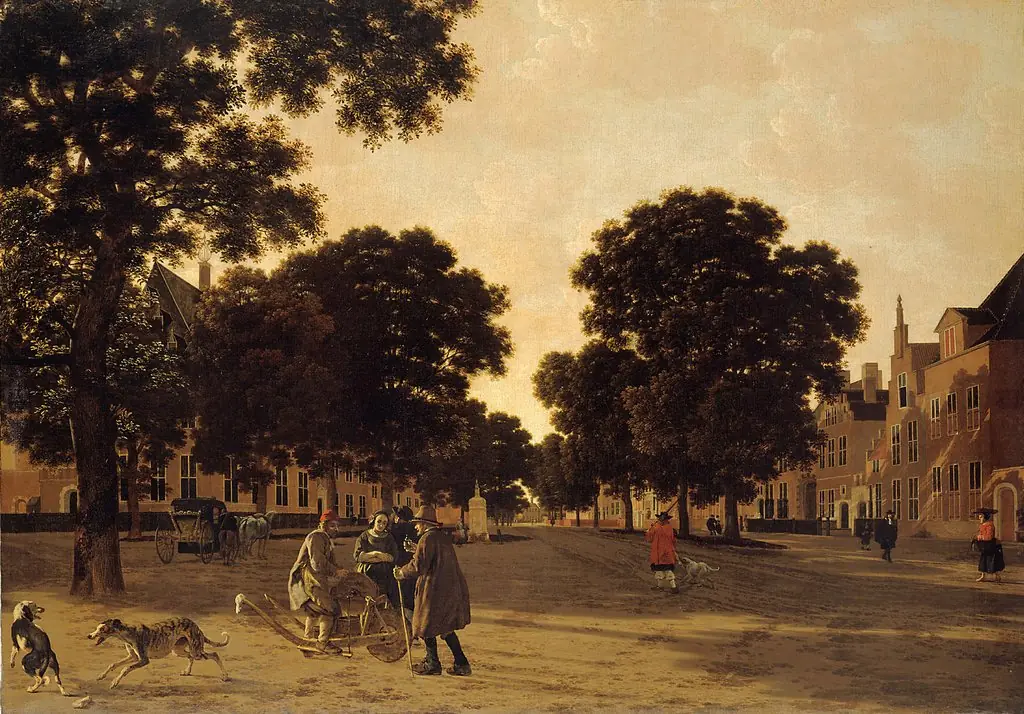 Ansicht des Kneuterdijk im Haag
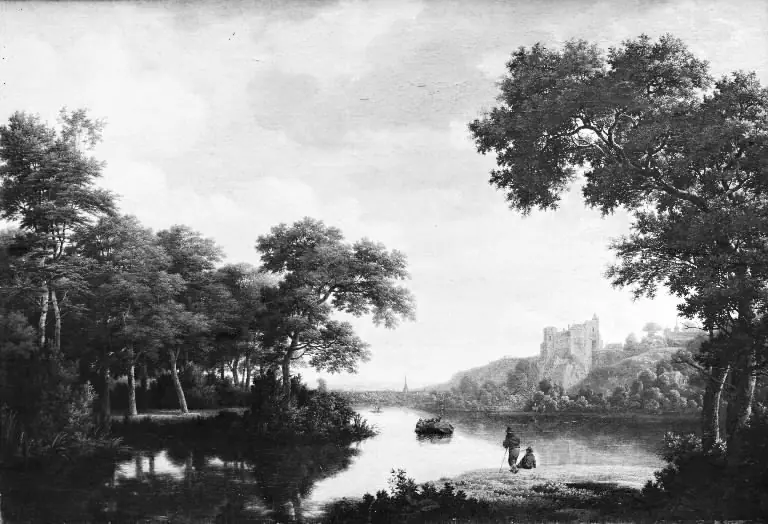 River Landscape
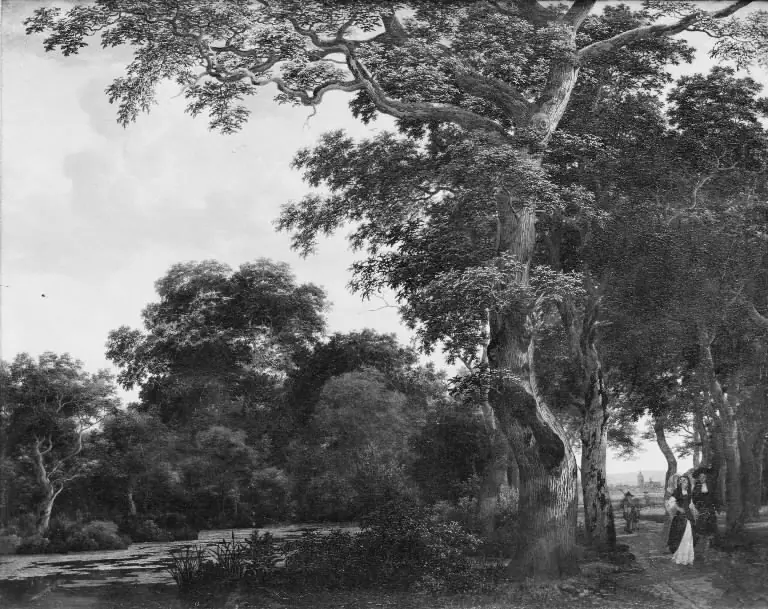 The Oak Avenue
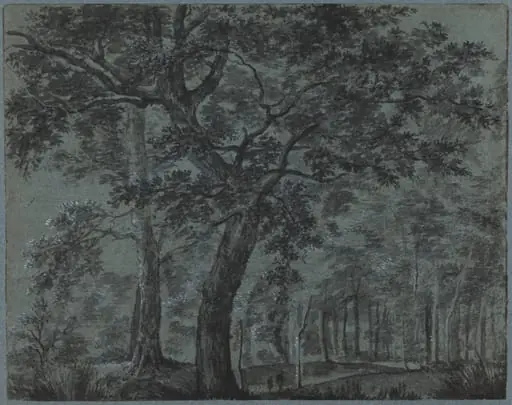 Woods at Night with Travelers
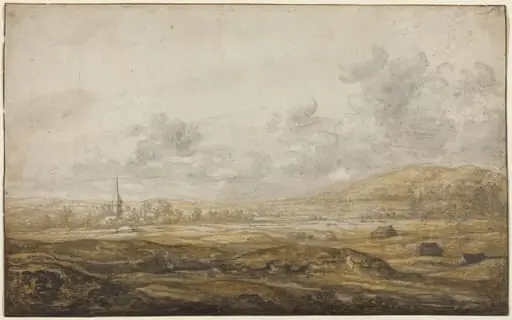 Panoramic Landscape along the Rhine
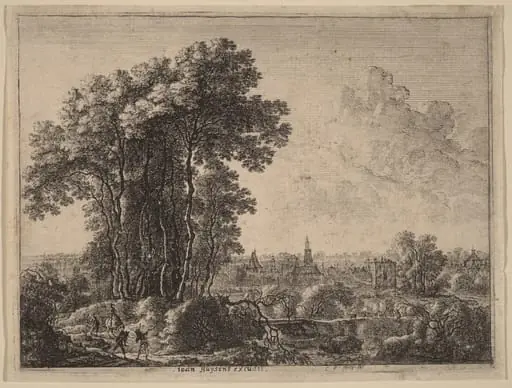 Landscape with Horseman and Three Travelers
 Hamlet in a Valley
 Landscape with a Stream
 The Narrow Stream
 Landscape with a Peasant Couple and Baby
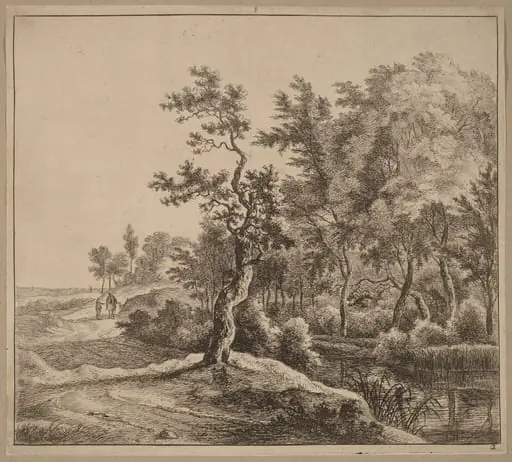 Landscape with a Winding Road
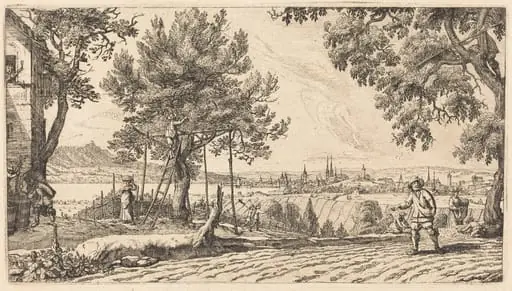 Autumn
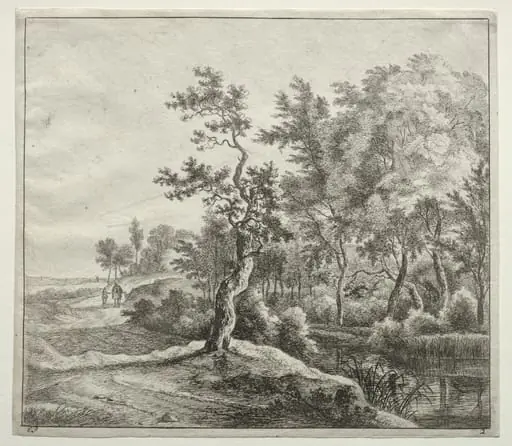 The Serpentine Road
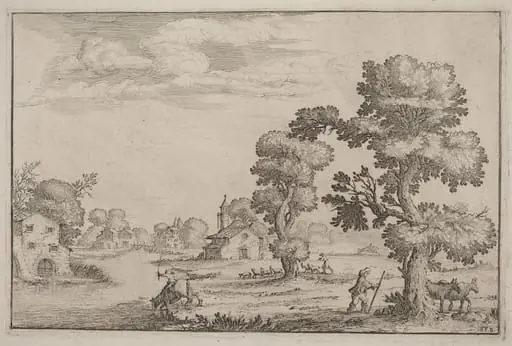 Lakeside Village with Herdsmen
 A Village on a Hill
 Traveler Passing Two Large Trees