Artwork
El año del hambre de Madrid
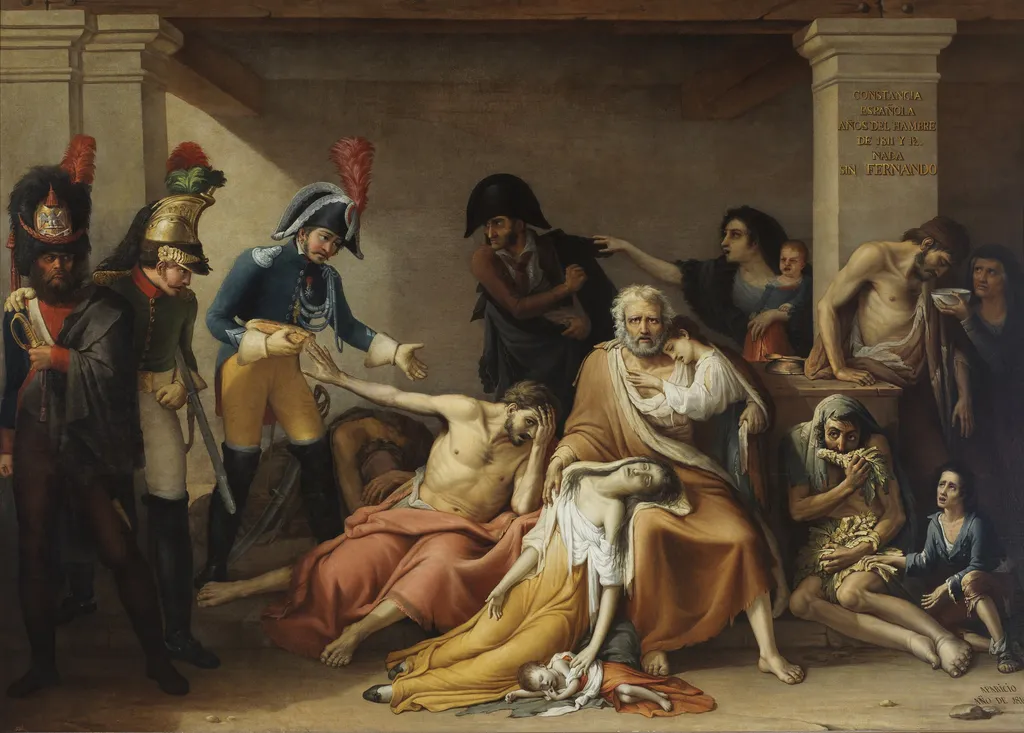
El año del hambre de Madrid is an oil painting by José Aparicio. It dates from 1818 and is held in the collection of the Museo del Prado.
About this work
Overview
Created in 1818 by José Aparicio, a Spanish painter associated with the Neoclassical movement and the court of Ferdinand VII, this oil on canvas records a moment of famine in Madrid. The work is part of the Museo del Prado’s permanent collection and presents a densely populated street scene marked by distress and military presence.
Subject & Meaning
The composition centers on a crowd of civilians and soldiers caught in a crisis of food scarcity. A man in a brown robe cradles a woman and child, while nearby figures appear gaunt, wounded, or collapsed. The juxtaposition of armed troops—distinguished by tall hats with red plumes—and the suffering populace underscores the social tension of the period.
Technique & Style
Aparicio employs a restrained Neoclassical palette, yet the brushwork conveys a palpable sense of turmoil. The rendering of uniforms, with their elaborate detailing, contrasts with the loosely modeled, almost skeletal bodies of the starving civilians, highlighting the disparity between authority and the afflicted.
History & Provenance
The painting was completed shortly after the Peninsular War, a time when Spain faced severe economic hardship. It entered the Prado’s holdings in the 19th century, where it has remained on display, serving as a visual record of the post‑war famine that afflicted Madrid’s residents.
Context
The work reflects the broader climate of scarcity that followed the Napoleonic occupation and the restoration of Ferdinand VII. Food shortages, compounded by war‑induced disruption, led to widespread hunger, a condition that Aparicio captures through the stark, crowded tableau of the capital’s streets.
Own this work as a print
Artist & collection
Artist
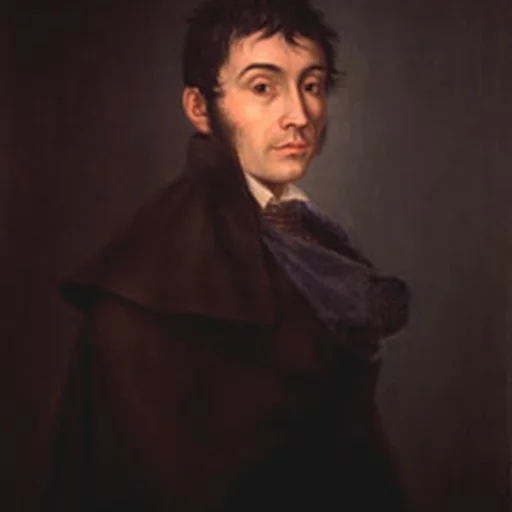
José Aparicio e Inglada (16 December 1773 – 10 May 1838) was a Spanish painter in the Neoclassical style; closely associated with the reign of King Ferdinand VII.