Artwork
Sancho III
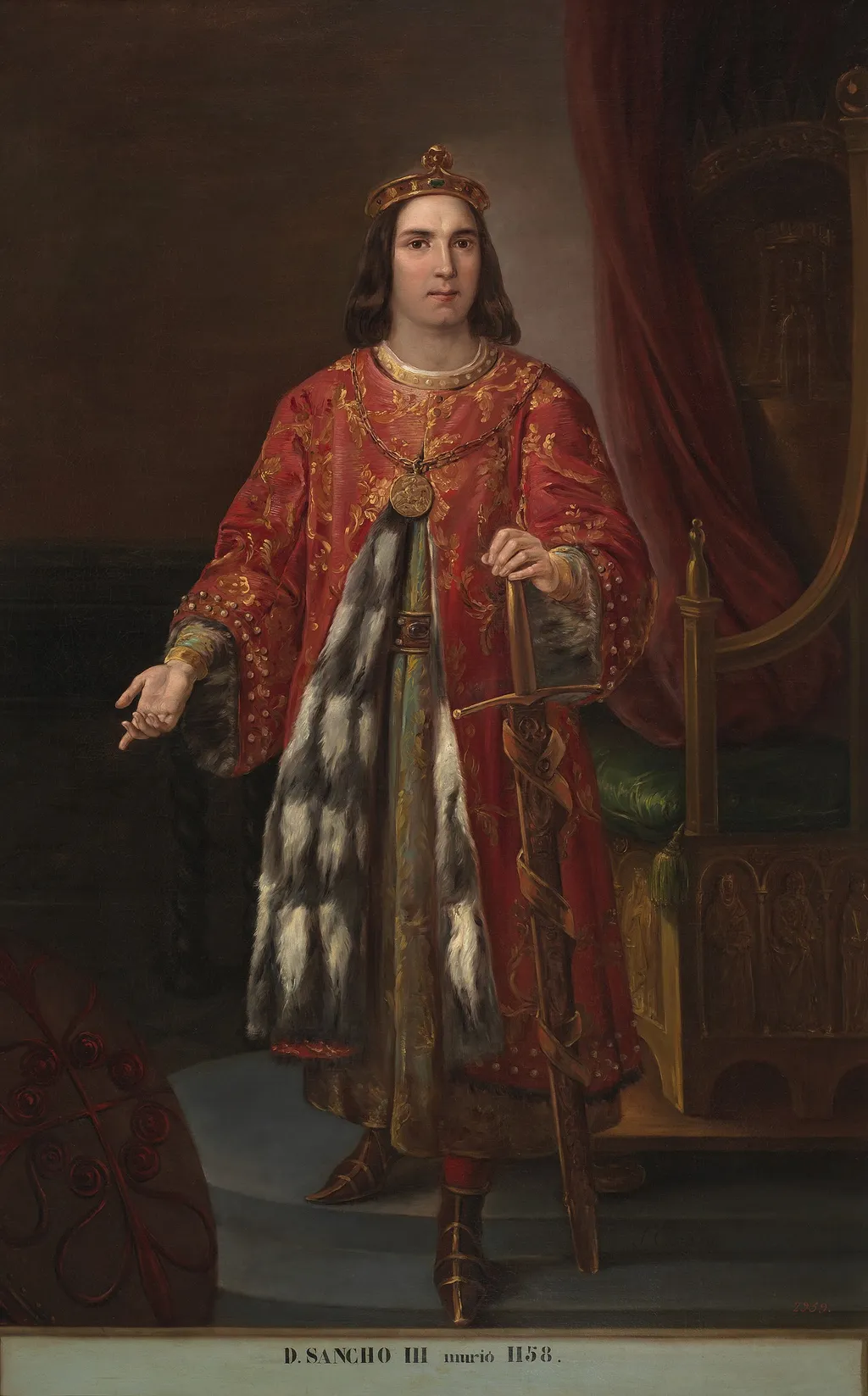
Sancho III is an oil painting by the Realist artist José Castelaro y Perea. It dates from 1851 and is held in the collection of the Museo del Prado.
About this work
He wears a crown, a necklace, and holds a sword in one hand while pointing with the other.
This painting shows a man in a long red robe with gold embroidery and a fur-lined cape. He wears a crown, a necklace, and holds a sword in one hand while pointing with the other. The background looks like a dark, richly decorated room with a throne or chair behind him.
The label at the bottom reads "D. Sancho III murió 1158," which means this is likely a portrait of Sancho III of Castile. The clothes and crown suggest he was a king or nobleman.
Next, look up Sancho III of Castile to learn more about who he was.
Overview
Created in 1851 by Spanish artist José Castelaro y Perea, this oil on canvas portrays a regal figure identified as Sancho III of Castile. The work is part of the collection at Madrid’s Museo del Prado and presents the monarch in an elaborate setting, emphasizing his status through costume and accoutrements.
Subject & Meaning
The central figure is dressed in a flowing red robe edged with gold embroidery, a fur‑trimmed mantle, and a jeweled crown, all hallmarks of medieval royalty. He holds a sword in one hand and gestures with the other, suggesting authority and martial prowess. An inscription noting Sancho III’s death in 1158 confirms the portrait’s historical focus on the 12th‑century Castilian king.
Technique & Style
Castelaro y Perea employs a rich, dark palette for the interior, allowing the vivid reds and metallic highlights of the costume to stand out. The oil medium renders the textures of fabric and metal with subtle brushwork, while the background—a dimly lit, ornamented chamber with a throne‑like seat—adds depth and a sense of solemnity.
History & Provenance
Since its completion in the mid‑19th century, the painting has remained in Spain, eventually entering the holdings of the Museo del Prado. Its attribution to Castelaro y Perea is well documented, and the work has been displayed as part of the museum’s holdings of historical portraiture, illustrating 19th‑century interest in medieval Spanish figures.
Artist & collection
