Artwork
Ferdinand VII of Spain on Horseback
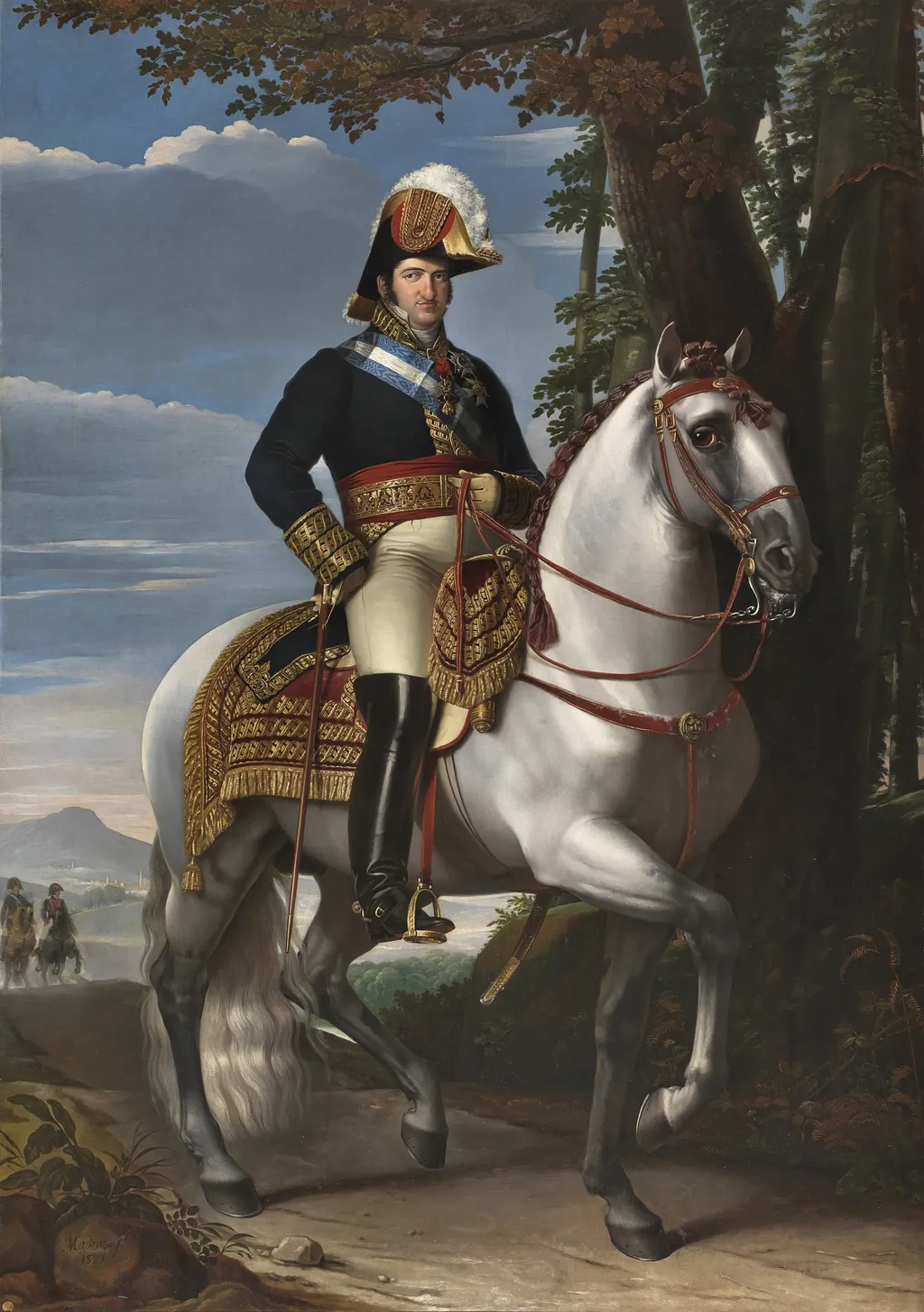
Ferdinand VII of Spain on Horseback is an oil painting by José de Madrazo y Agudo. It dates from 1821 and is held in the collection of the Museo del Prado.
About this work
Overview
Created in 1821 by José de Madrazo y Agudo, a prominent Spanish Neoclassical painter, the work portrays King Ferdinand VII mounted on a white horse. Executed in oil on canvas, the portrait is part of the Museo del Prado’s collection and exemplifies the period’s preference for clear composition and formal balance.
Subject & Meaning
The king is shown in full military dress, his uniform embellished with the insignia of the Order of the Golden Fleece and the Order of Charles III. The confident pose on a rearing horse, combined with regal accoutrements, underscores Ferdinand VII’s authority and his association with Spain’s historic chivalric orders.
Technique & Style
Madrazo employs a restrained Neoclassical palette, allowing the red sash, gold trim, and feathered hat to dominate against a muted landscape. Precise rendering of the uniform’s embroidery and the horse’s tack demonstrates meticulous attention to detail, while subtle chiaroscuro models the figures and creates spatial depth.
History & Provenance
The painting remained in royal possession before entering the national collection. It was acquired by the Museo del Prado, where it has been displayed as part of the museum’s holdings of early‑19th‑century Spanish portraiture.
Context
Produced shortly after Ferdinand VII’s restoration to the throne, the portrait reflects the political climate of post‑Napoleonic Spain, when the monarch sought to reaffirm his legitimacy through visual symbols of power and tradition. Madrazo’s Neoclassical approach aligns with contemporary expectations for official state portraiture.
Own this work as a print
Artist & collection
Artist
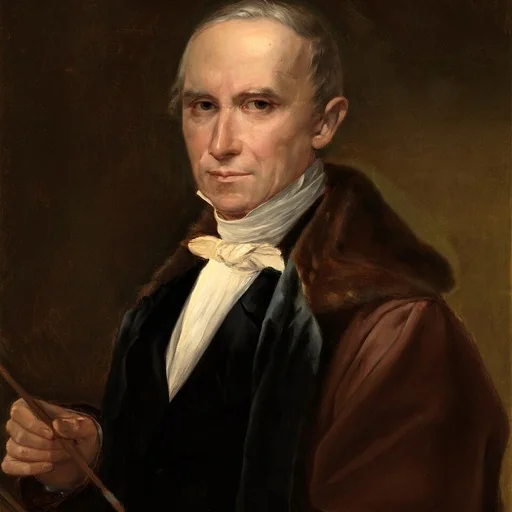
José de Madrazo y Agudo (22 April 1781 – 8 May 1859) was a Spanish painter and engraver; one of the primary exponents of the Neoclassical style in Spain.
