Artwork
Untitled
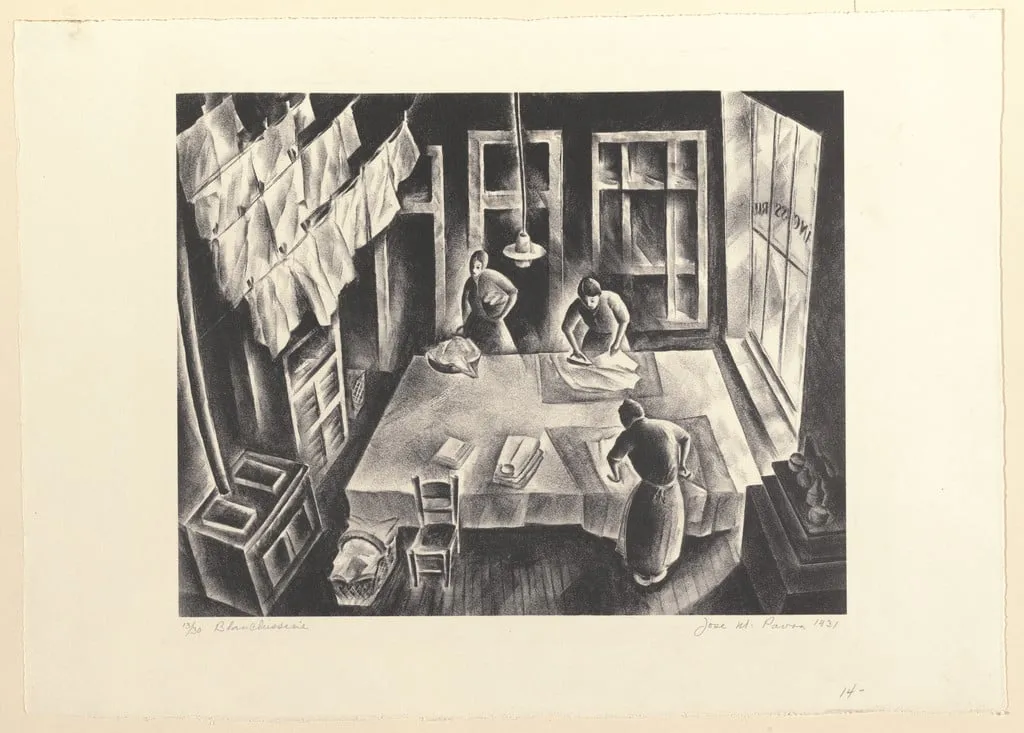
Untitled is an ink print by José Pavón. It dates from 1931 and is held in the collection of the Museum of Modern Art.
About this work
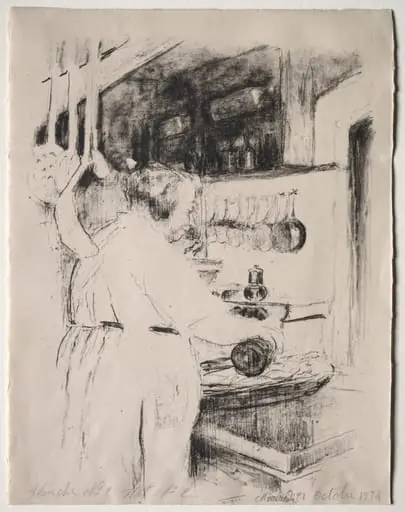
It’s not glamorous work, but the lines are so clean you can feel the weight of the iron and the heat of the room.
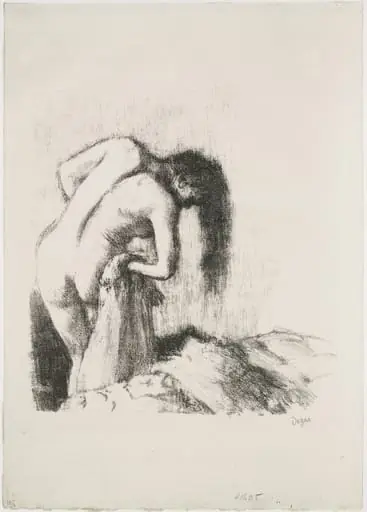
You see a black-and-white print of a woman ironing at a board, her back to us.
The iron is huge—almost as big as her head. It’s not glamorous work, but the lines are so clean you can feel the weight of the iron and the heat of the room. Pavón made this in 1931, when most Mexican prints were about revolution; here, he just shows everyday labor.
Look up lithography next to see how ink sticks to stone to make prints like this.
Overview
José Pavón created this black-and-white lithograph in 1931. It is part of the collection at The Museum of Modern Art. The work depicts a woman engaged in domestic labor, rendered with precise, minimal lines. Unlike many Mexican prints of the era that emphasized political themes, this piece focuses quietly on routine work, capturing a moment of unadorned daily life.
Subject & Meaning
The figure is a woman ironing, her back turned to the viewer, absorbed in her task. The iron is exaggerated in scale, dominating the composition and suggesting physical strain. There is no narrative drama or symbolism—only the quiet persistence of labor. The absence of facial features universalizes the figure, emphasizing the anonymity and endurance inherent in such work.
Technique & Style
Lithography allowed Pavón to achieve sharp, clean contours with tonal contrast. The ink was drawn directly onto a stone surface, then transferred to paper, preserving the precision of his hand. The stark black-and-white palette heightens the sense of weight and heat, while the economy of line conveys texture and form without detail, reinforcing the work’s restrained realism.
History & Provenance
Created in 1931, the print emerged during a period when Mexican printmaking was largely dominated by revolutionary imagery. Pavón’s choice to depict domestic labor was uncommon. The work entered MoMA’s collection as part of its early efforts to document global printmaking traditions, reflecting a growing interest in non-heroic, everyday subjects.
Context
While contemporaries like Rivera and Siqueiros illustrated grand social struggles, Pavón turned inward—to the private sphere of household labor. This shift aligned with a quieter current in Mexican art that valued observation over rhetoric. The lithograph reflects a moment when artists began to find significance in the ordinary, away from political spectacle.
Legacy
The print remains a quiet counterpoint to the dominant narratives of Mexican modernism. Its endurance in MoMA’s collection signals an appreciation for understated realism. It continues to invite reflection on how labor is represented—not as spectacle, but as presence, rendered with dignity through simplicity.
Artist & collection
Artist
José Alexander Pabón de la Cruz is an Ecuadorian footballer who plays as a defender for Técnico Universitario.He is the nephew of the historic Ecuadorian footballer Ulises de la Cruz.