Artwork
Untitled
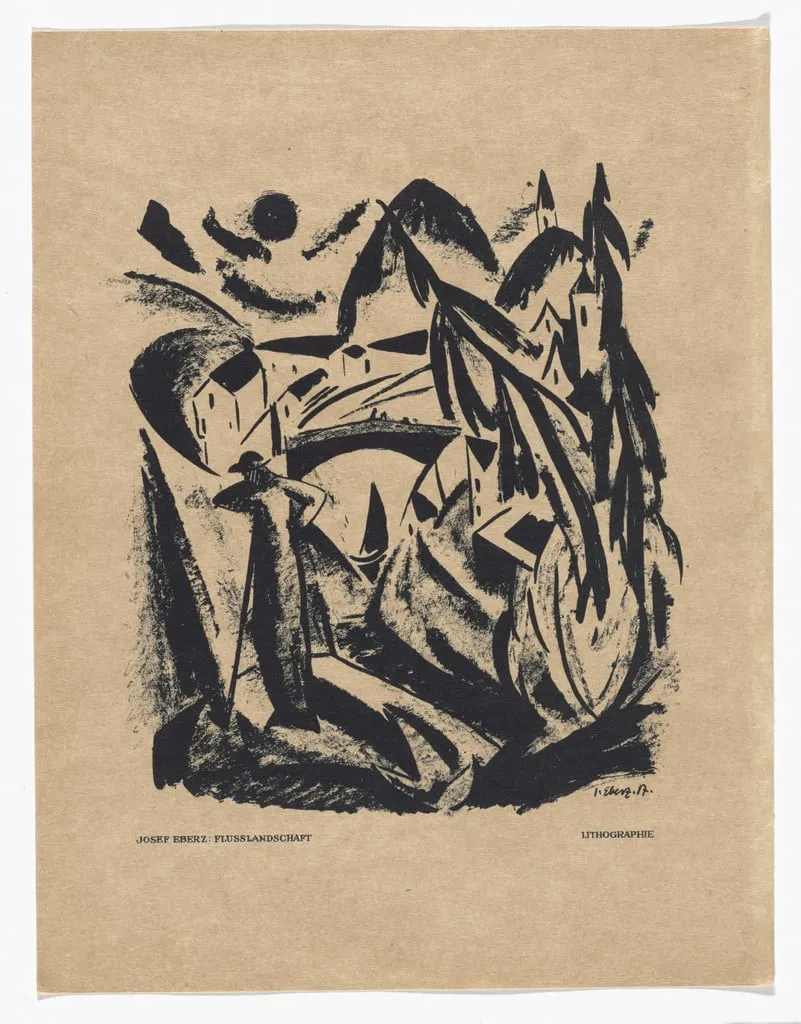
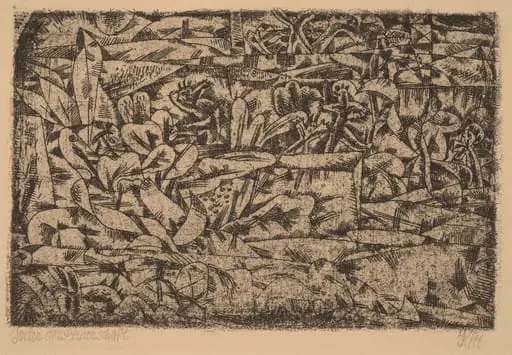
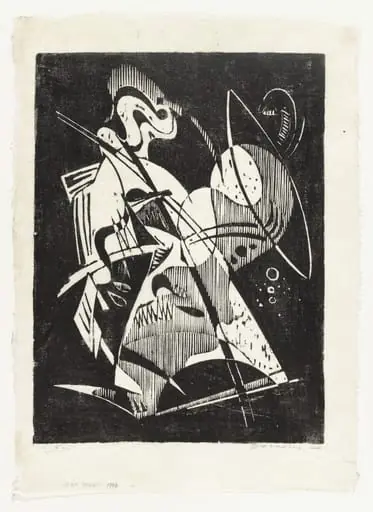
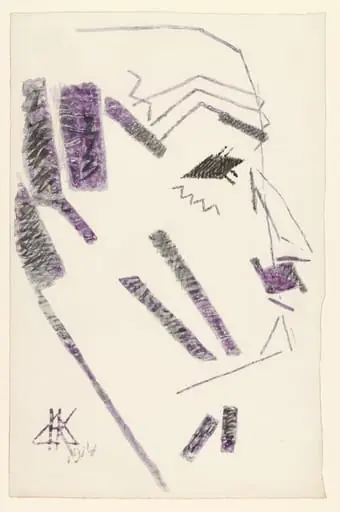
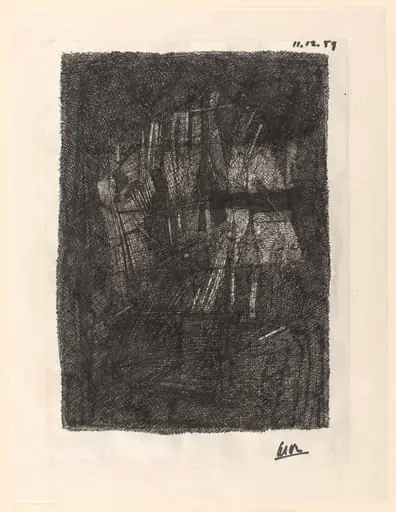
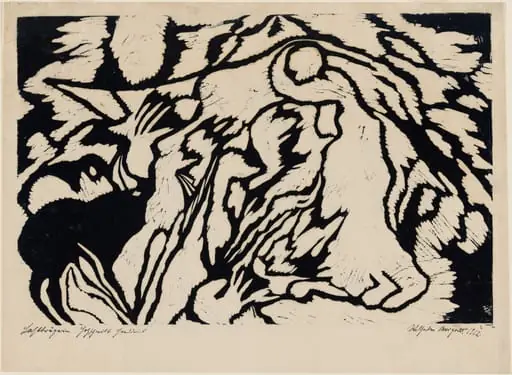
Untitled is an ink print by Josef Eberz. It dates from 1917 and is held in the collection of the Museum of Modern Art.
About this work
Overview
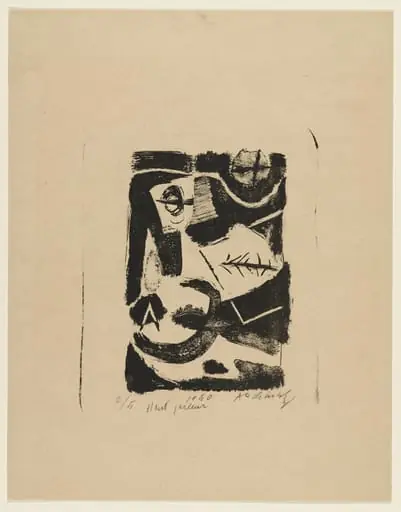
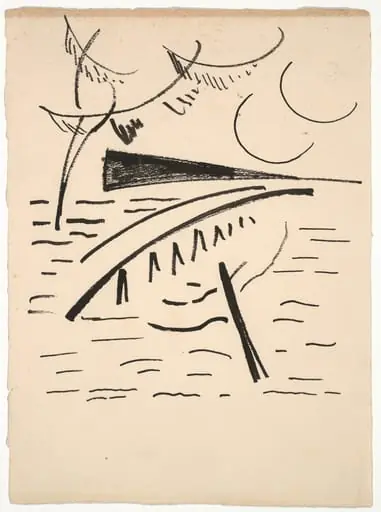
Created in 1917, this lithograph by Josef Eberz is part of The Museum of Modern Art’s collection. Though titled 'Flusslandschaft'—German for 'river landscape'—the work offers little literal depiction of water. Instead, it presents a stark, abstracted environment dominated by angular forms and dense shadows, conveying emotional tension over topographical accuracy.
Subject & Meaning
A solitary figure stands centrally, gripping a vertical staff that echoes the jagged contours of the surrounding terrain. The figure’s isolation and the oppressive architecture behind it suggest psychological unease rather than a literal scene. The title’s reference to a river may be symbolic, hinting at disruption or flow lost beneath layers of anxiety and fragmentation.
Technique & Style
Eberz employed rapid, expressive lithographic strokes to build contrast and movement. Heavy blacks and sharp, irregular lines define the composition, avoiding smooth transitions. The technique emphasizes immediacy and emotional intensity, characteristic of early 20th-century printmaking that prioritized inner experience over naturalistic representation.
History & Provenance
The work dates from 1917, a period of social and political upheaval in Europe. While specific ownership history prior to its acquisition by MoMA is not documented, its inclusion in the museum’s collection reflects its significance within modernist print traditions. It was likely produced during Eberz’s active years in Central European artistic circles.
Context
Created during World War I, the piece aligns with broader Expressionist tendencies in German-speaking regions, where artists used distorted forms to convey inner turmoil. The absence of clear water in a 'river landscape' underscores a departure from traditional genre expectations, reflecting a时代’s fractured perception of nature and stability.
Legacy
Eberz’s lithograph contributes to a broader dialogue in early modern printmaking about emotional expression through abstraction. Though not widely exhibited, its presence in MoMA’s holdings situates it within the institutional recognition of non-traditional, psychologically charged graphic works from the early 1900s.
Artist & collection