Artwork
Untitled
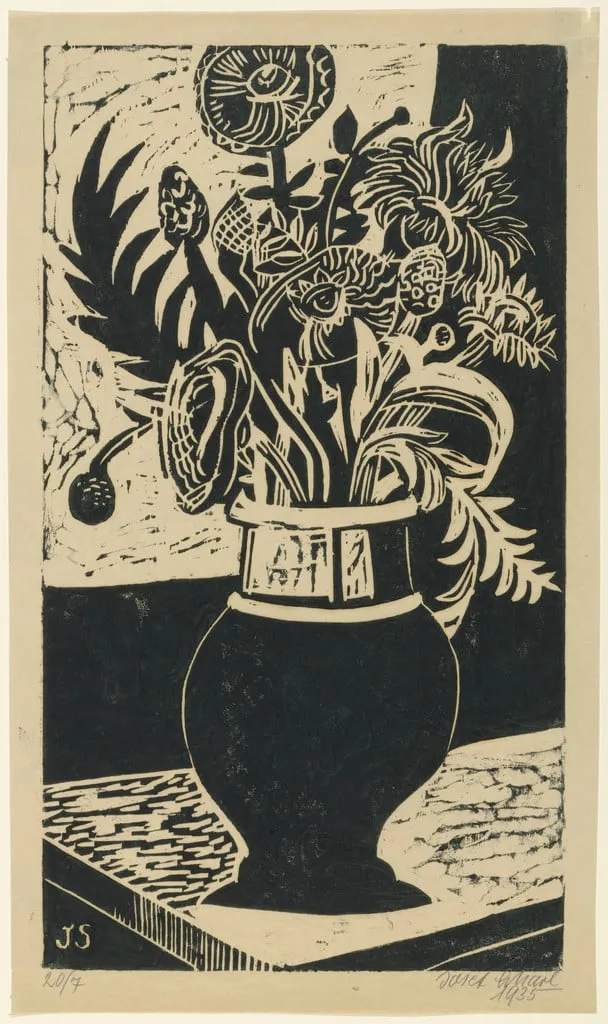
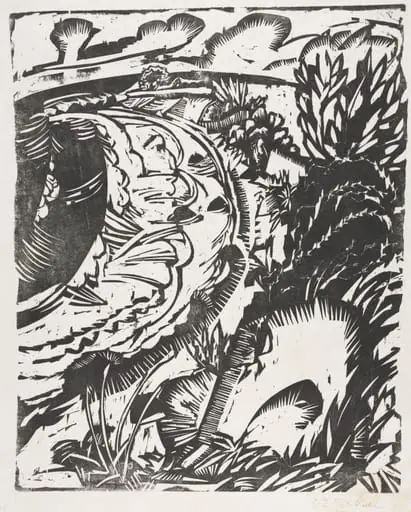
Untitled is an ink print by Josef Scharl. It dates from 1935 and is held in the collection of the Museum of Modern Art.
About this work
Overview
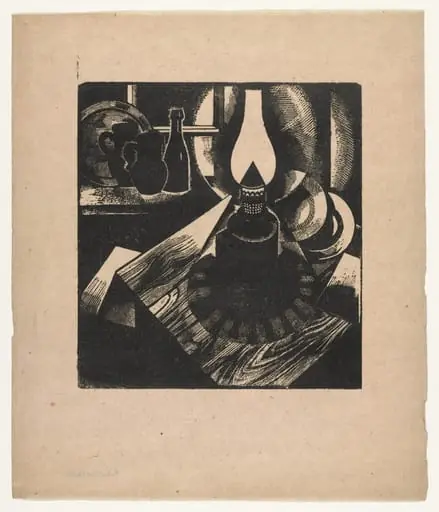
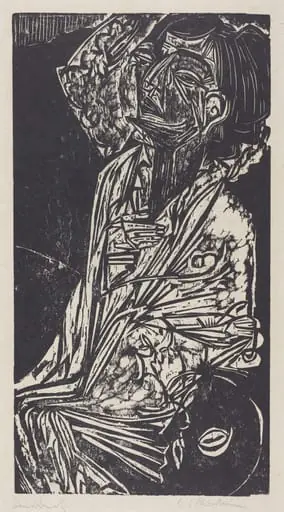
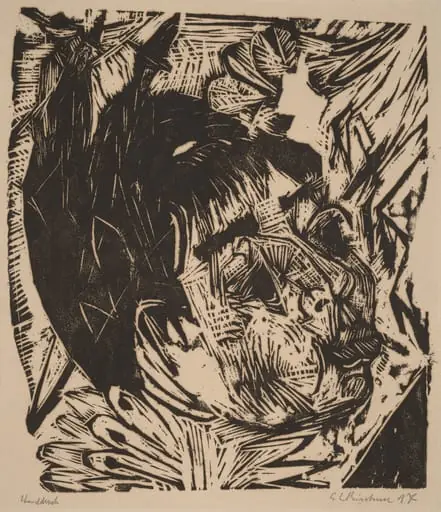
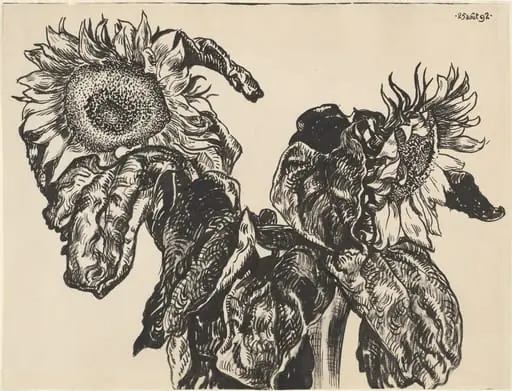
Created in 1935, this woodcut by Josef Scharl is part of The Museum of Modern Art’s collection. The work is a black-and-white print produced by carving an image into a wooden block, then inking and pressing it onto paper. Its stark contrasts and simplified forms reflect the expressive potential of the woodcut medium, emphasizing line and shape over realistic detail.
Subject & Meaning
A plain vase rests on a textured table, holding tall, abstracted flowers whose petals resemble angular stars.
A plain vase rests on a textured table, holding tall, abstracted flowers whose petals resemble angular stars. One bloom features a faint, mask-like face at its center, introducing an enigmatic, almost surreal quality. The dark background heightens the luminosity of the white lines, suggesting isolation or introspection. The composition avoids narrative clarity, inviting contemplation rather than interpretation.
Technique & Style
Scharl employed the woodcut technique, carving directly into the wood surface to create bold, incised lines. The resulting print features sharp, unblended edges and high contrast between black and white. Leaves and petals are rendered with exaggerated, almost jagged curves, while the table’s surface is suggested through rough, hatched marks. The style leans toward expressionist abstraction, prioritizing emotional resonance over naturalism.
History & Provenance
The work was made in 1935, during a period of rising political tension in Europe. Scharl, an Austrian artist, was active in modernist circles and later faced persecution under Nazi rule. The print entered MoMA’s collection through its early focus on European avant-garde prints. Its provenance remains tied to institutional acquisition rather than private ownership prior to museum acquisition.
Context
In the mid-1930s, many European artists turned to printmaking as a means of personal expression amid political instability. Woodcuts, with their directness and accessibility, became a favored medium for those seeking to break from academic traditions. Scharl’s work aligns with this trend, echoing the formal economy and emotional intensity found in German Expressionist prints of the era.
Legacy
Though not widely exhibited, this woodcut exemplifies Scharl’s contribution to interwar printmaking. Its restrained yet unsettling imagery reflects a broader shift in modern art toward psychological depth and formal experimentation. The piece remains a quiet but significant example of how traditional techniques were reimagined to convey inner states during a turbulent historical moment.
Artist & collection