Artwork
Waterside landscape
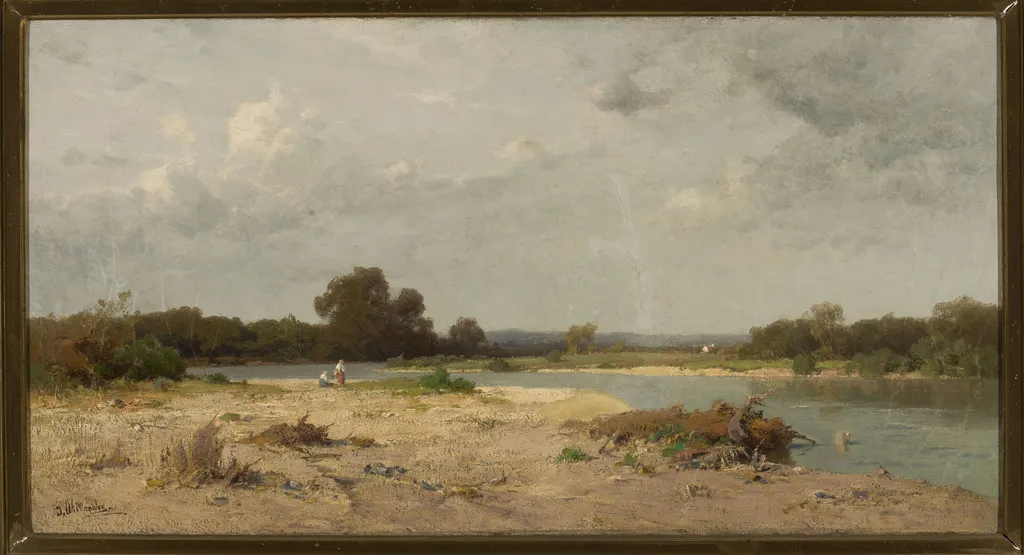
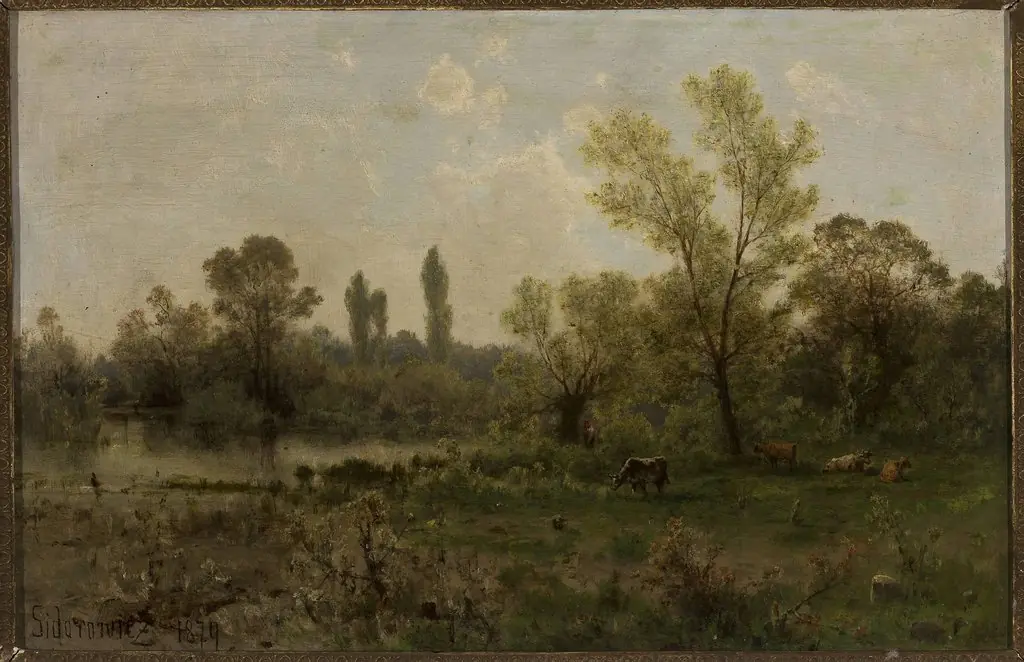
Waterside landscape is an oil painting by Josef Willroider. It dates from 1886 and is held in the collection of the National Museum in Warsaw.
About this work
Overview
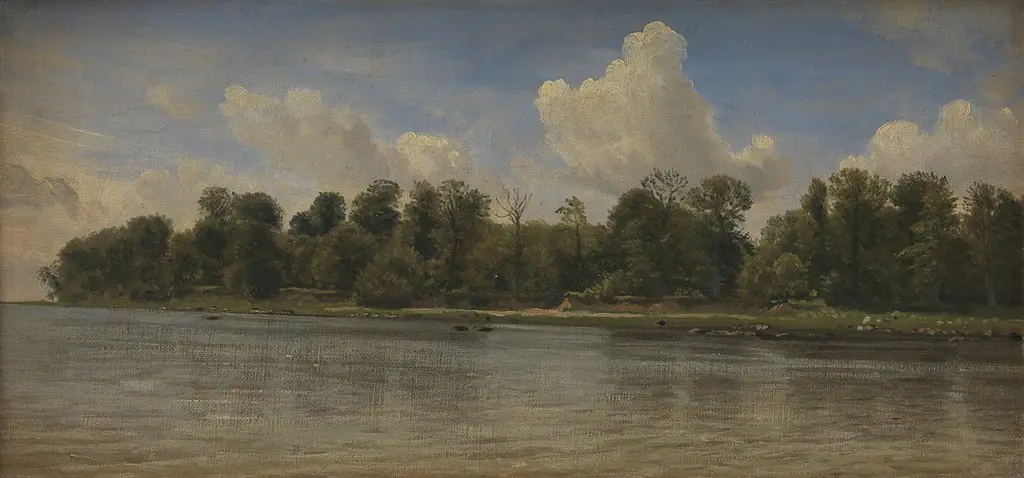
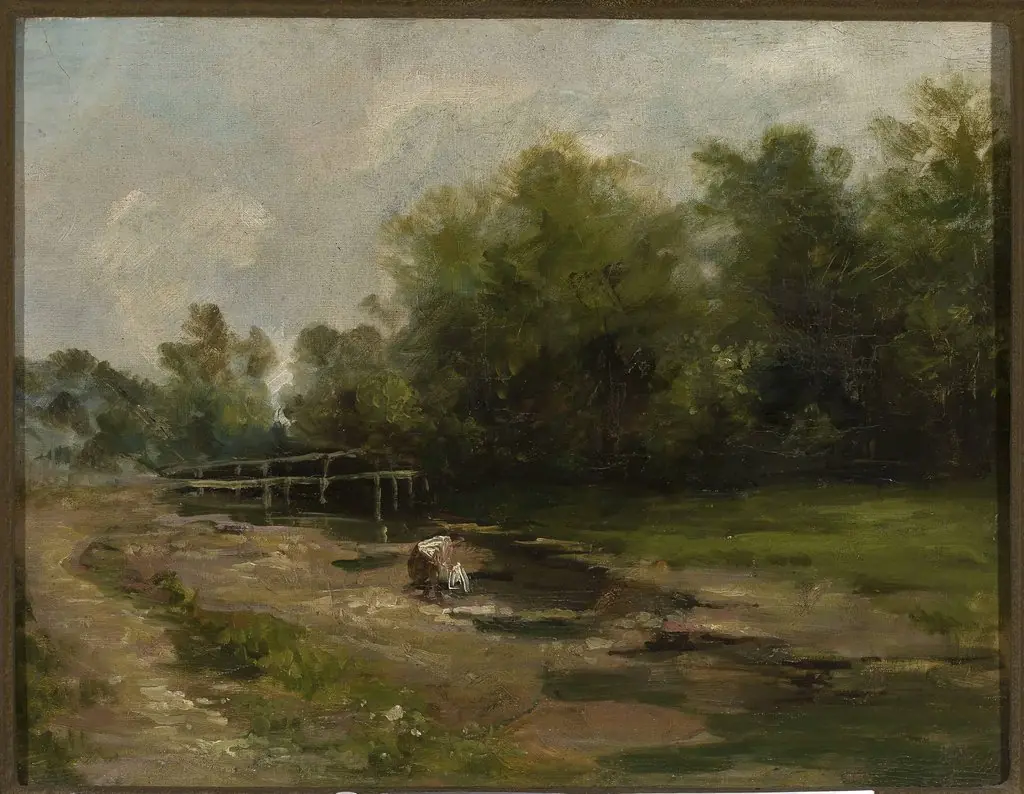
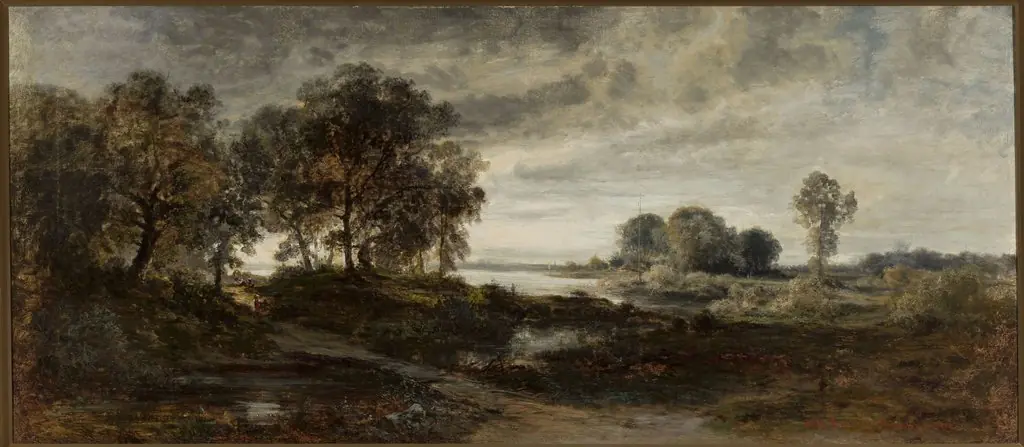
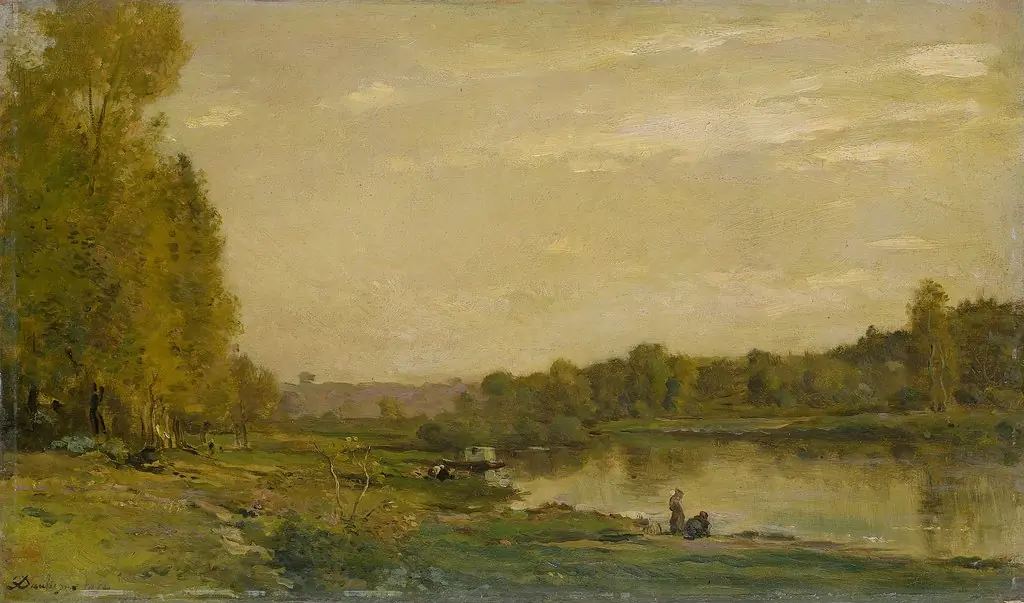
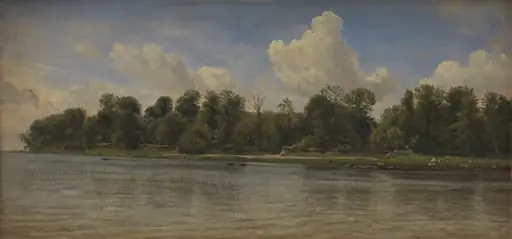
Waterside Landscape, executed in oil around 1886, presents a quiet riverbank scene. The composition leads the eye from a sandy shore dotted with modest vegetation and a fallen branch toward a calm water surface that mirrors the sky. Beyond the water, a modest line of trees and distant structures punctuate the horizon, establishing a sense of spaciousness.
Subject & Meaning
The work depicts a tranquil natural setting, emphasizing the interplay between land, water, and sky. The modest human presence, hinted at by the far‑off buildings, suggests a landscape largely untouched by activity, inviting contemplation of the quiet rhythms of a rural environment.
Technique & Style
Willroider employs oil paint with discernible brushwork that imparts texture to the sand, foliage, and water. A restrained palette of browns, muted greens, and soft blues creates a subdued atmosphere, while careful modulation of light and shadow enhances depth and guides the viewer’s gaze across the scene.
History & Provenance
Created circa 1886, the painting entered the collection of the National Museum in Warsaw, where it remains on display. Its acquisition reflects the museum’s interest in 19th‑century Central European landscape painting and contributes to the institution’s representation of regional artistic production.
Context
The piece aligns with late‑19th‑century European landscape traditions that favored realistic observation and atmospheric effects. Willroider’s focus on everyday scenery and his modest tonal approach echo contemporary trends toward naturalism, situating the work within broader movements that valued the depiction of ordinary, unembellished environments.
Artist & collection