Artwork
Landscape with Trees, Bridge and Figures
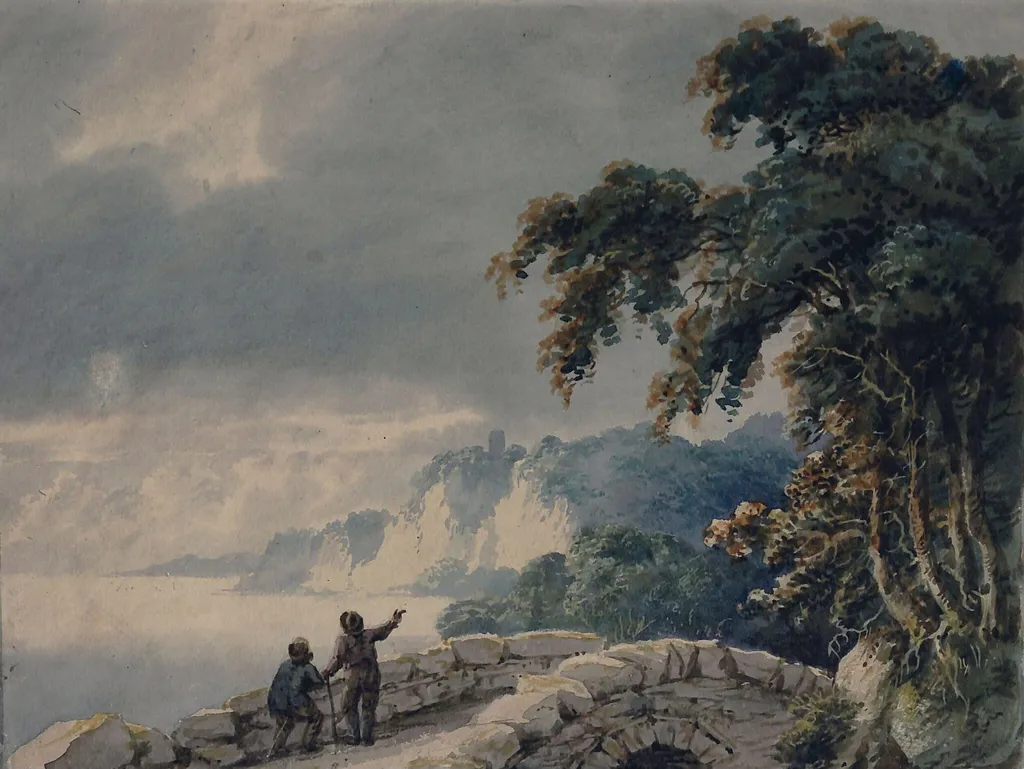
Landscape with Trees, Bridge and Figures is a watercolor work on paper by the Rococo painting artist Joseph Barber. It dates from 1780 and is held in the collection of the Victoria and Albert Museum.
About this work
Overview
Joseph Barber created this watercolour landscape with loose, fluid brushwork, emphasizing atmosphere over detail. The composition centers on a quiet natural setting where a bridge and distant hills recede into mist, framed by dense trees. Two small figures stand on a rocky outcrop, their presence underscoring the scale of the environment rather than dominating it.
Subject & Meaning
The scene depicts two individuals gazing toward a hazy horizon, one gesturing toward a barely visible bridge and rolling hills. Their minimal presence suggests contemplation, aligning with Romantic-era themes of human insignificance before nature’s vastness. The mist and soft light evoke solitude and quiet awe, inviting reflection rather than narrative.
Technique & Style
Barber employed transparent watercolour washes to build subtle gradations of tone, particularly in the sky and distant hills. Loose, sweeping strokes define foliage and water, while dry brushwork adds texture to rocks and tree bark. The lack of sharp detail enhances the sense of atmospheric depth and transient light.
History & Provenance
The work is attributed to Joseph Barber, an early 19th-century British artist known for topographical watercolours. It likely dates from the 1810s–1830s, a period when amateur and professional artists increasingly turned to landscape for personal expression. Its provenance remains unverified, but its style aligns with regional watercolour traditions of the time.
Context
Created during the height of Romanticism, the piece reflects a broader cultural shift toward nature as a source of emotional and spiritual resonance. Artists like Barber moved away from rigid topographical accuracy, favoring mood and suggestion. This work echoes contemporaries who used landscape to convey introspection and the sublime.
Legacy
Though not widely exhibited, Barber’s watercolours contribute to the understudied body of British amateur landscape art from the early 1800s. His use of atmospheric perspective and restrained palette influenced later regional watercolourists who prioritized emotional tone over topographical precision.
Artist & collection

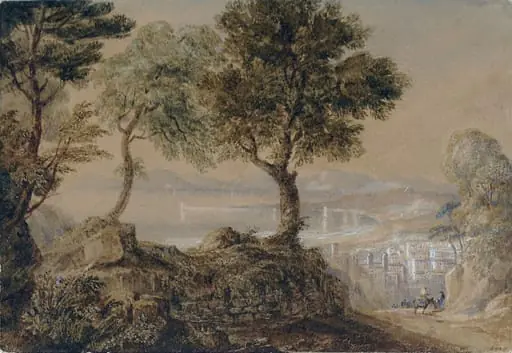 Bay of Spezia
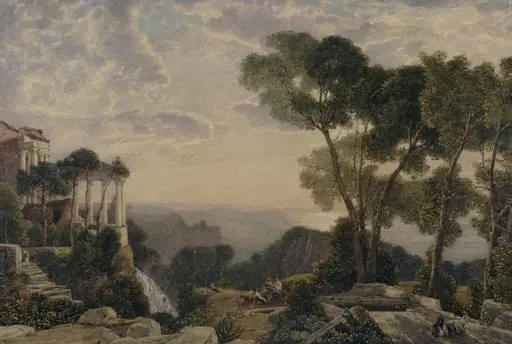 Landscape: A classical composition
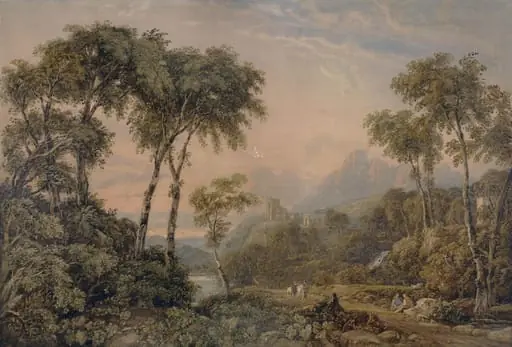 Landscape with Ruined Temple: Sunrise
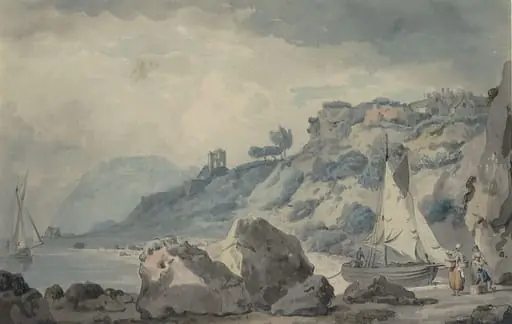 Howth, Ireland
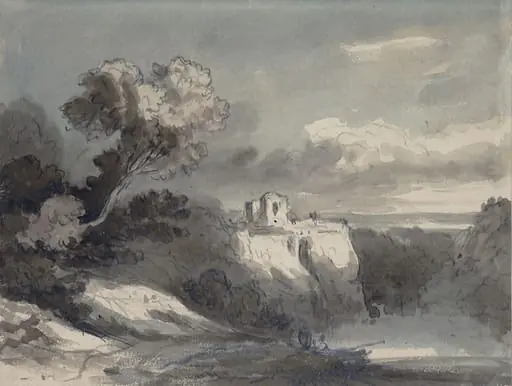 Landscape with Castle on a Cliff
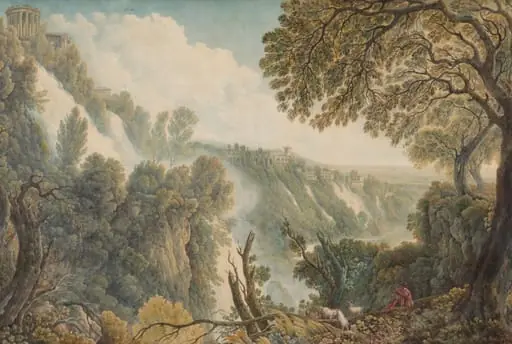 The Waterfalls at Tivoli
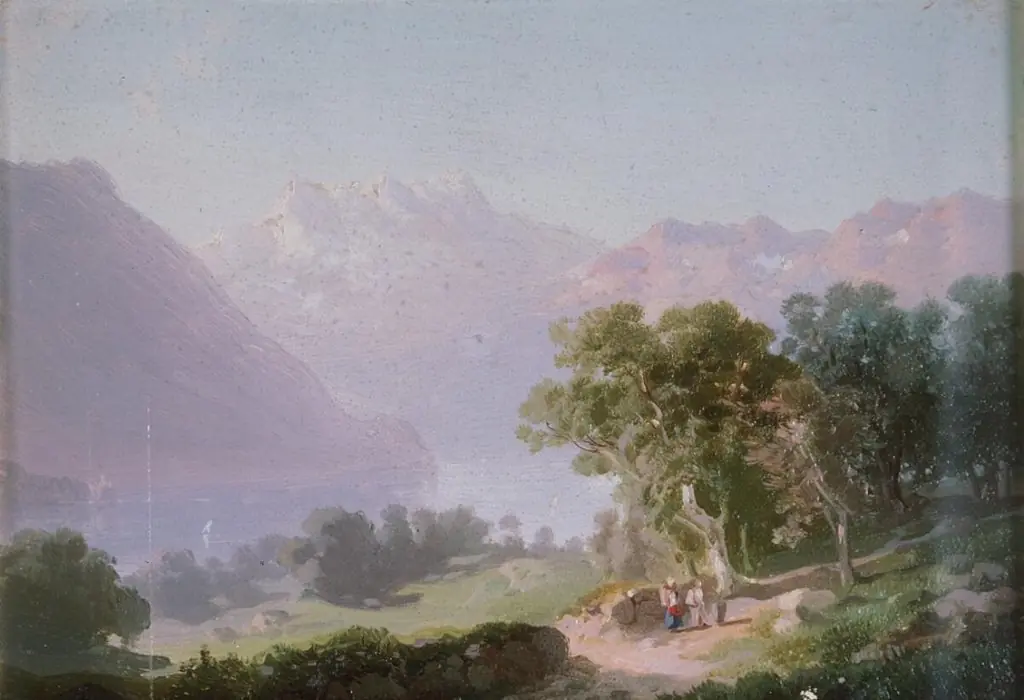 Mountain landscape II
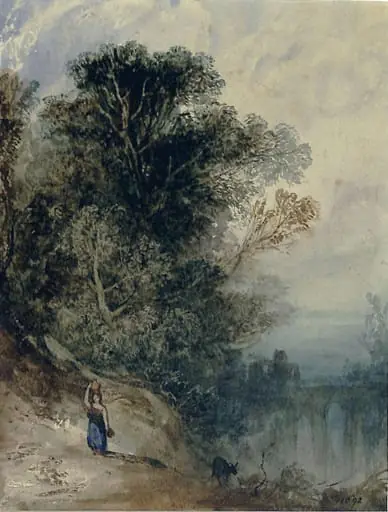 Landscape with peasant girl carrying a pitcher
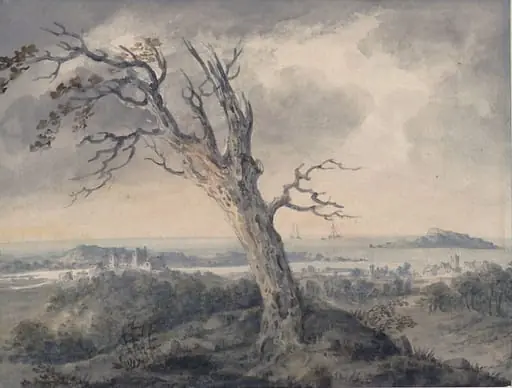 Coastal Scene, North Wales
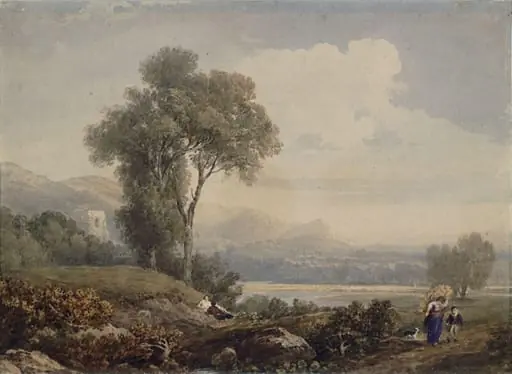 Landscape
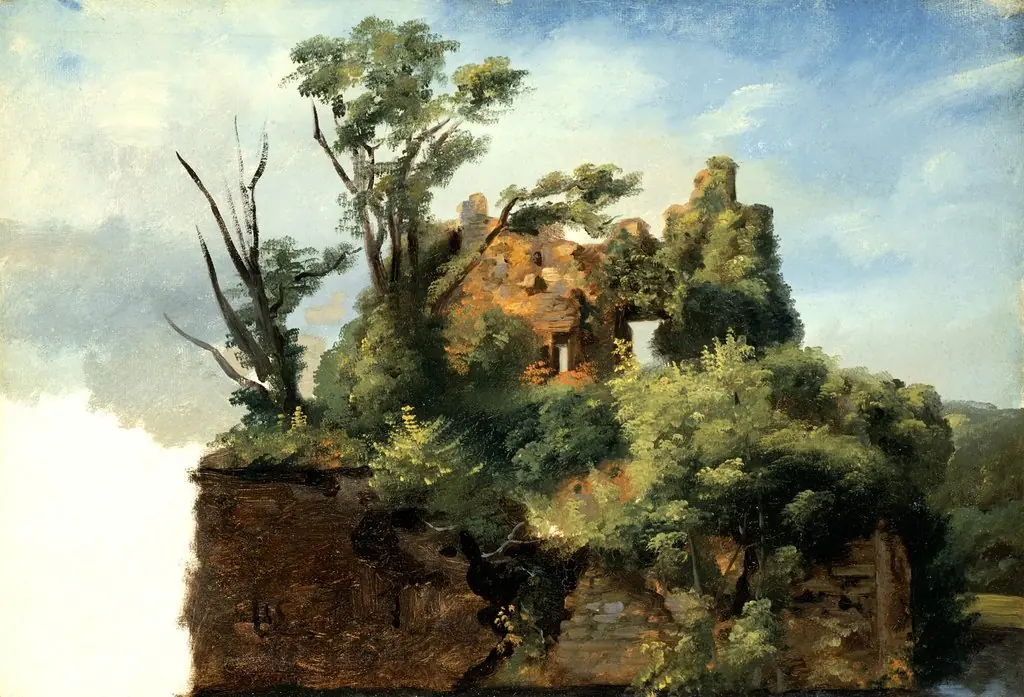 Landscape with Ruins
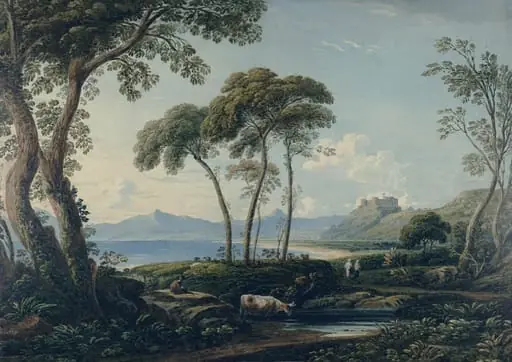 Landscape with Harlech Castle