Artwork
The North Arch of Llangollen Bridge
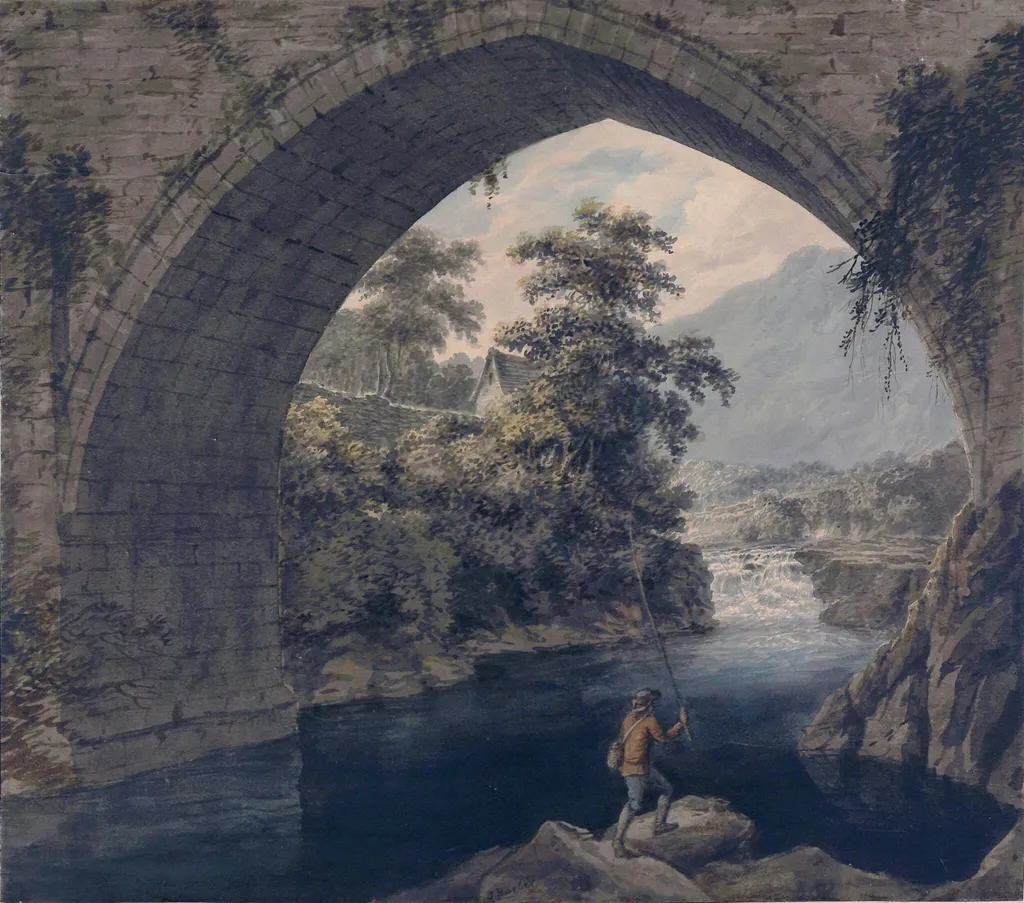
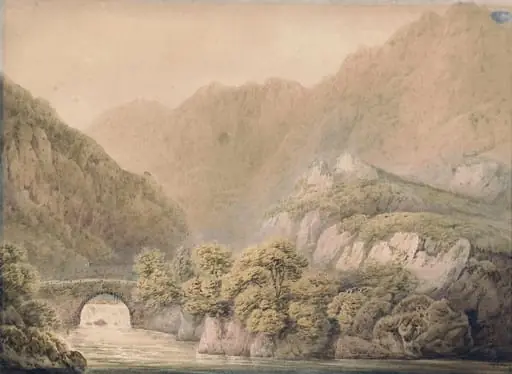
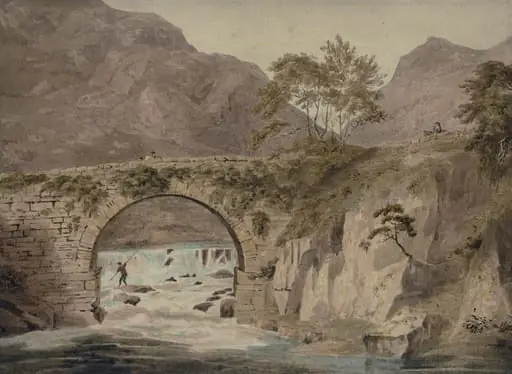
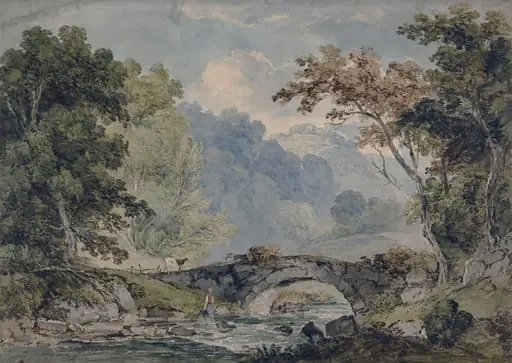
The North Arch of Llangollen Bridge is a watercolor work on paper by the Romanticist artist Joseph Barber. It dates from 1802 and is held in the collection of the Victoria and Albert Museum.
About this work
Overview
Joseph Barber’s 1802 watercolour depicts the north arch of Llangollen Bridge in Wales. The composition is anchored by a solitary figure on a rocky ledge, a long pole in hand, while the river flows beneath the bridge’s dominant arch. Distant hills and trees frame the scene under a clear sky, and Barber’s signature and date appear on the reverse of the sheet.
Subject & Meaning
The work captures a moment of human presence within a dramatic natural setting. The lone man, poised on the outcrop, suggests exploration or observation, while the sweeping arch of the stone bridge acts as a visual gateway, emphasizing the interplay between engineered structure and the surrounding landscape.
Technique & Style
Barber employs a restrained palette of muted greens, blues, and earth tones, allowing subtle gradations of light and shadow to model the water, stone, and foliage. Delicate washes create atmospheric depth, and the careful delineation of the bridge’s masonry contrasts with the softer, impressionistic treatment of sky and distant hills.
Context
Created at the height of the Romantic era, the painting reflects the period’s fascination with sublime scenery and the emotional resonance of nature. The emphasis on dramatic vistas, the solitary figure, and the use of light to heighten mood align the work with contemporary British landscape traditions.
History & Provenance
The watercolour bears Barber’s signature and the date 1802 on its reverse side, confirming its authorship. It has remained in private collections since its creation, serving as an early visual record of Llangollen Bridge and its surrounding landscape.
Artist & collection