Artwork
Jacob's Dream
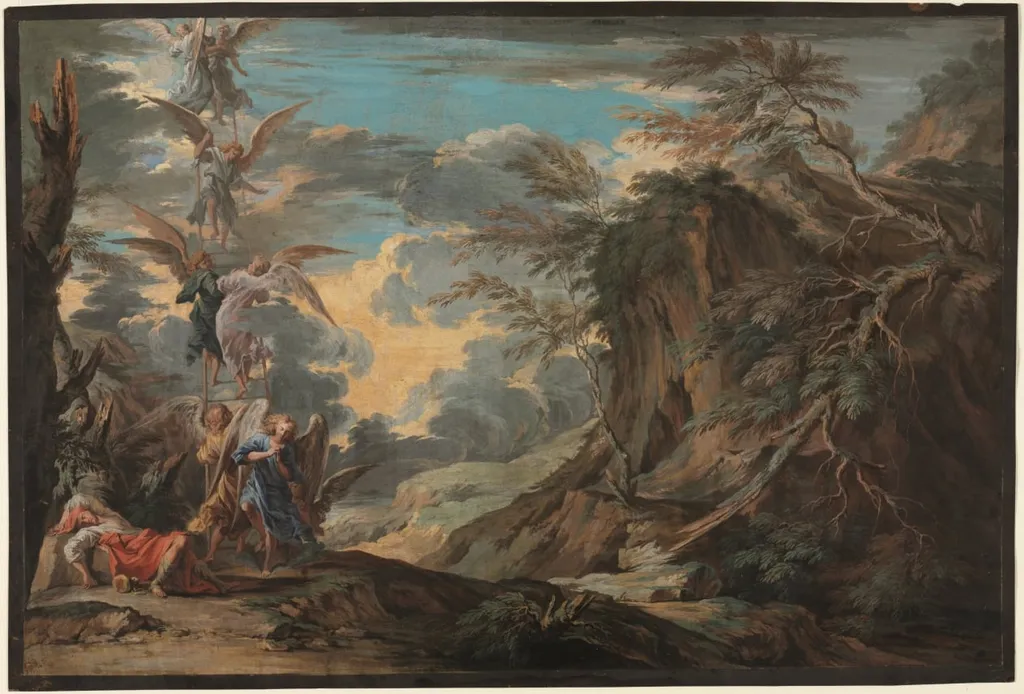
Jacob's Dream is a drawing by the Baroque artist Joseph Goupy. It dates from 1720 and is held in the collection of the Cleveland Museum of Art.
About this work
Look up the subject of *england, 18th century* to see how artists like Goupy brought Italian styles to Britain.
You see a dark sky split by a glowing ladder—angels climb up and down while Jacob sleeps on the ground.
This painting is a copy of an older work by Salvator Rosa. In the 1700s, artists often remade famous paintings to learn from them or to share them with new audiences. Goupy used soft, glowing colors that make the scene feel dreamy, not sharp.
Look up the subject of *england, 18th century* to see how artists like Goupy brought Italian styles to Britain.
Overview
Joseph Goupy created this drawing as a careful reproduction of Salvator Rosa’s oil painting of Jacob’s Dream, which belonged to the Devonshire Collection at Chatsworth. Executed in luminous gouache, the work reflects an 18th-century British practice of engaging with Italian Old Master compositions through replication. Goupy’s version was not merely an exercise but a refined interpretation, valued for its atmospheric quality and technical finesse.
Subject & Meaning
The scene depicts the biblical moment when Jacob, asleep at Bethel, dreams of a ladder connecting earth to heaven, with angels ascending and descending. Goupy’s rendition emphasizes the mystical quality of the vision through soft lighting and blurred edges, distinguishing it from more literal depictions. The dream symbolizes divine presence and covenant, a theme familiar to 18th-century audiences through religious and literary traditions.
Technique & Style
Goupy employed gouache to achieve a luminous, ethereal effect, contrasting with the heavier brushwork of Rosa’s original oil. His use of translucent layers and delicate tonal gradations creates a dreamlike atmosphere, softening the figures and landscape. This approach prioritized mood over detail, aligning with contemporary British tastes for poetic interpretation over strict fidelity to source material.
History & Provenance
The drawing stems from Goupy’s engagement with the Devonshire Collection, where Rosa’s painting was accessible to artists and patrons. As a known copyist and art dealer, Goupy produced multiple versions of Old Master compositions for private collectors. His gouaches were sought after for their refined aesthetics, often commanding prices above original portraits, reflecting their status as refined cultural artifacts rather than mere studies.
Context
In 18th-century Britain, copying Italian Renaissance and Baroque works was central to artistic education and connoisseurship. Goupy’s activity was part of a broader effort to introduce continental styles to a British audience lacking direct access to continental collections. His translations of Rosa’s dramatic compositions helped shape aesthetic preferences and expanded the visual vocabulary of British art circles.
Legacy
Goupy’s copies, including this one, contributed to the circulation of Italian artistic models in Britain, influencing how artists and collectors perceived narrative and atmosphere in painting. Though not original compositions, his works played a key role in bridging continental traditions and British taste, leaving a quiet but lasting imprint on the development of British art culture in the decades before the rise of Romanticism.
Artist & collection
Artist
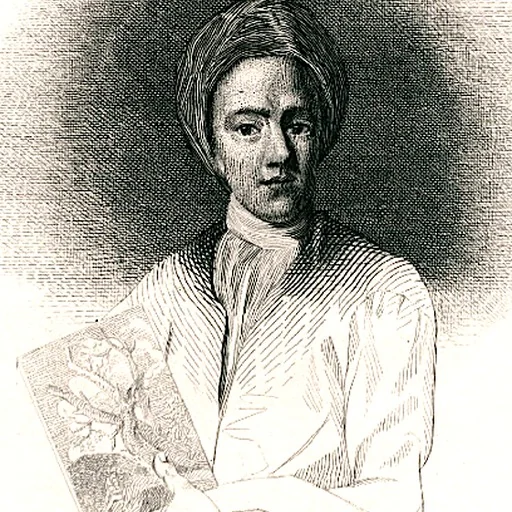
Joseph Goupy was an English engraver, painter, set designer and watercolourist. He was of French descent living and working in London from at least 1711.

 Gloria de santos
 Cristo y la samaritana en un paisaje
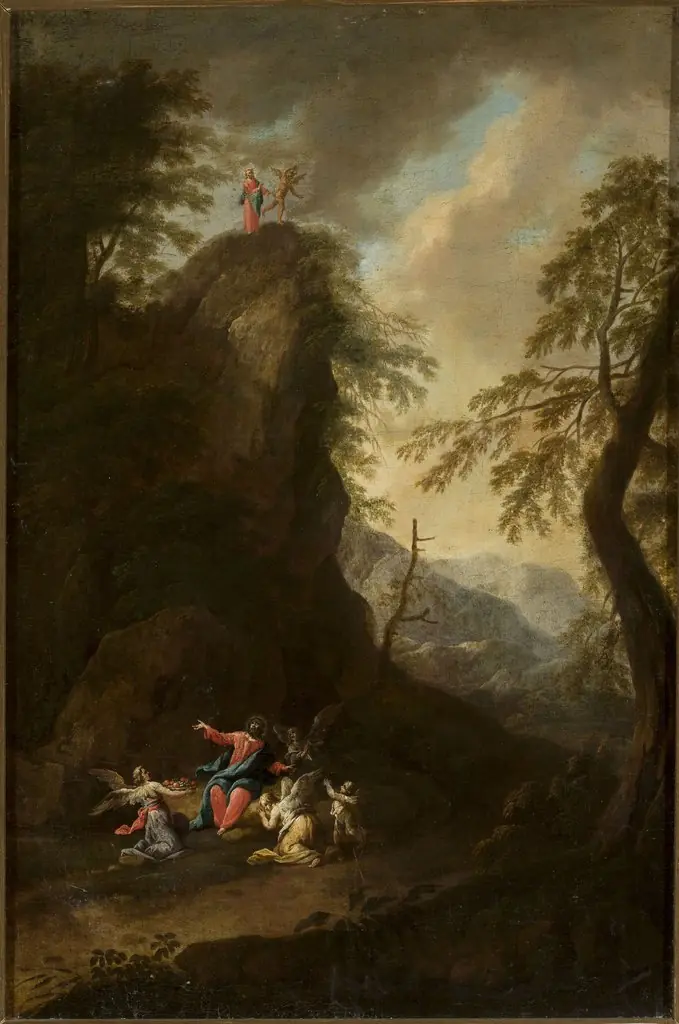 Temptation of Christ and attending angels
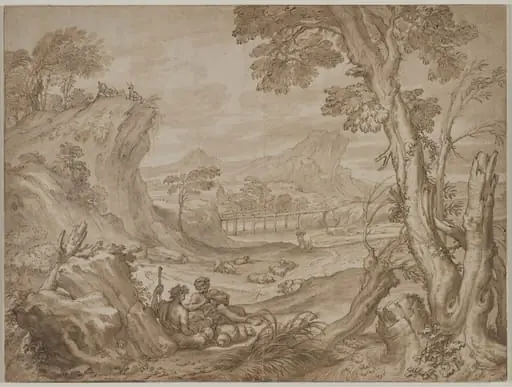 Landscape with Shepherds
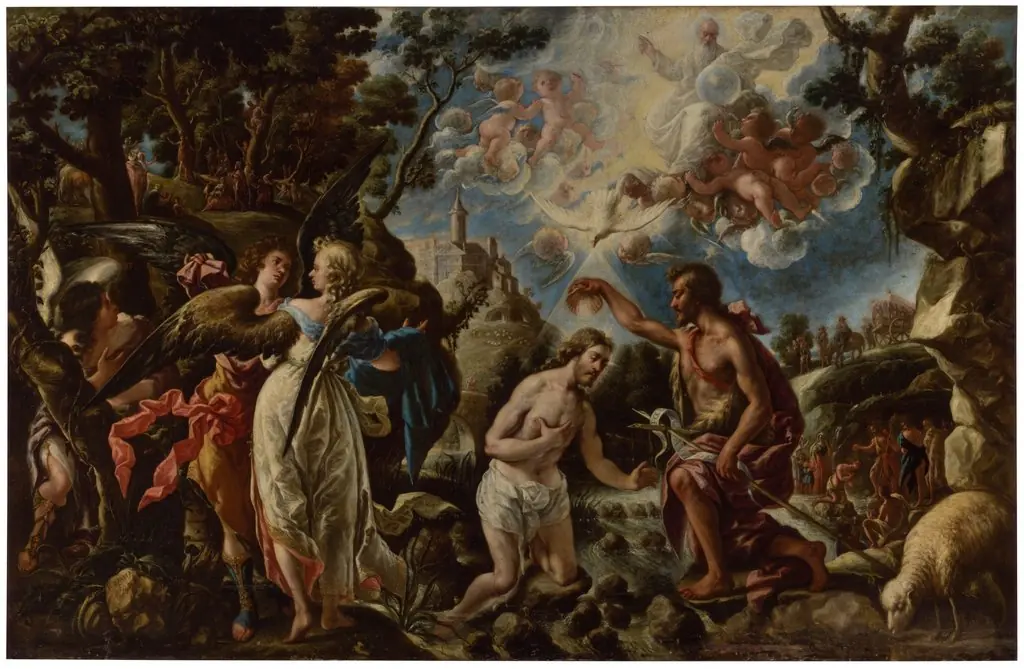 El Bautismo de Cristo
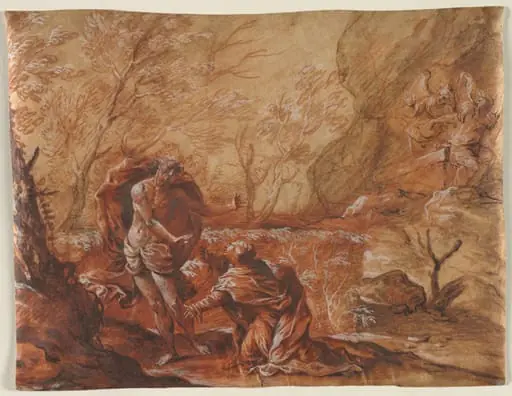 Noli Me Tangere
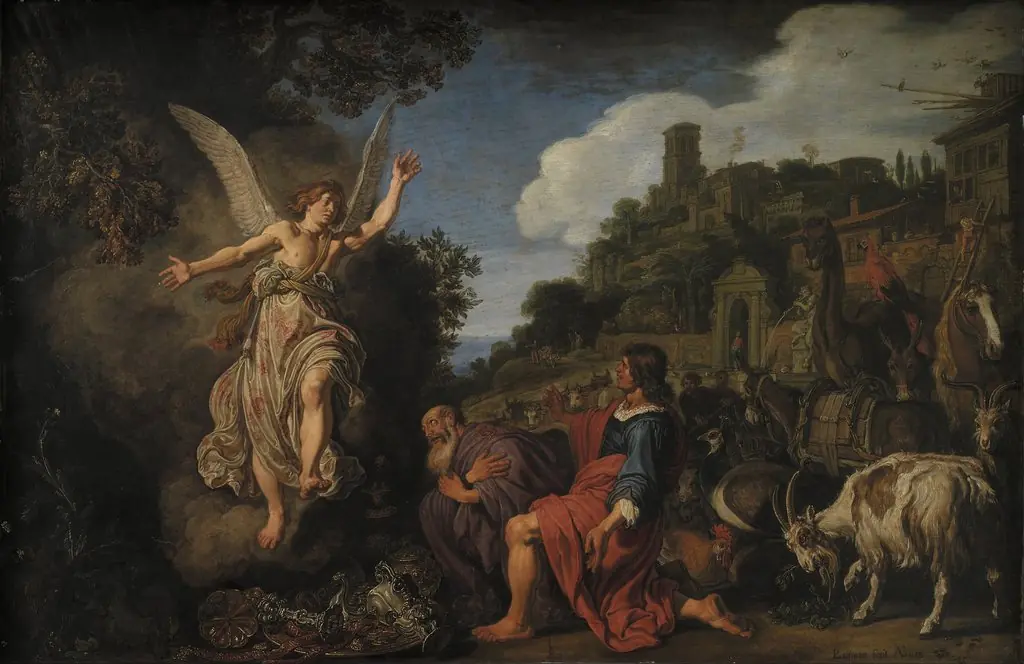 The Angel Raphael Takes Leave of Old Tobit and his Son Tobias
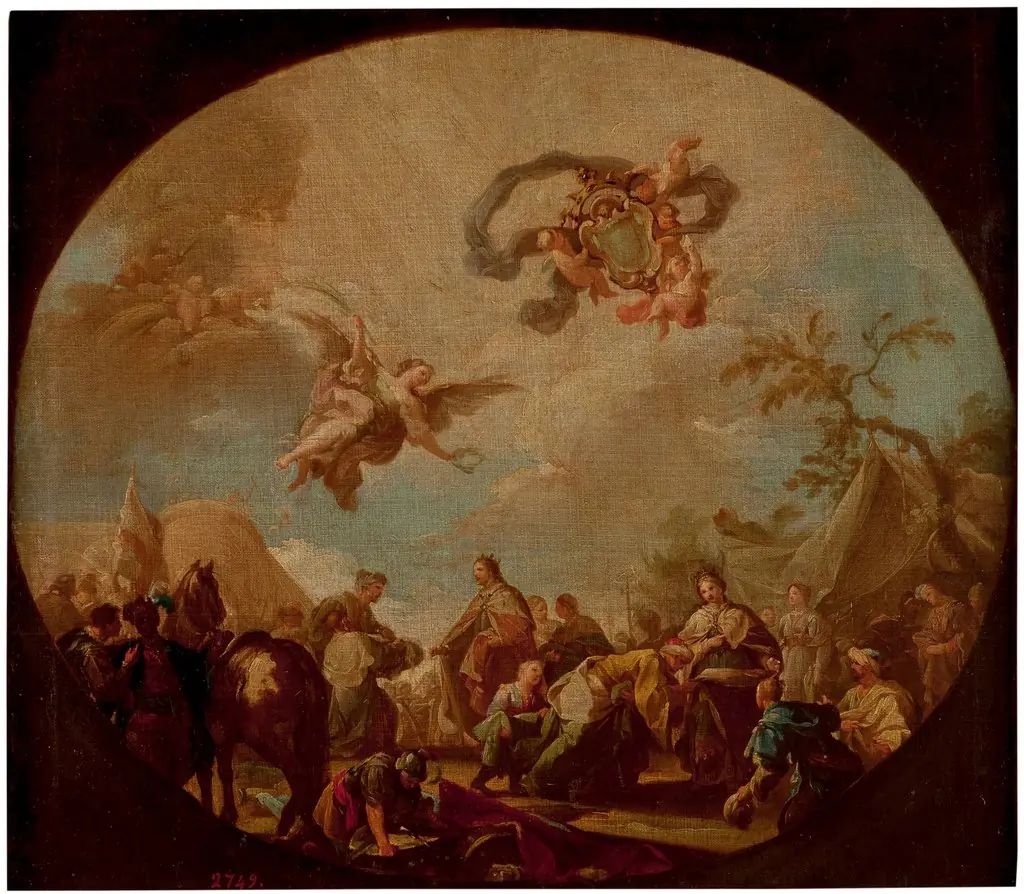 La Rendición de Granada
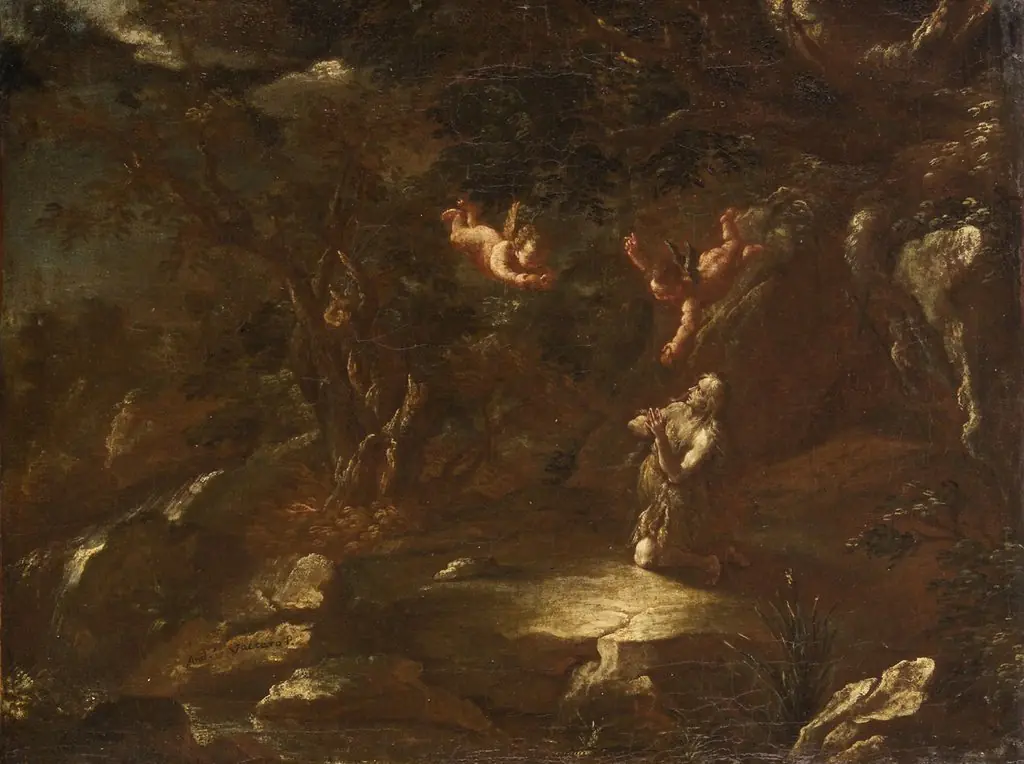 Hl. Maria Aegyptiaca
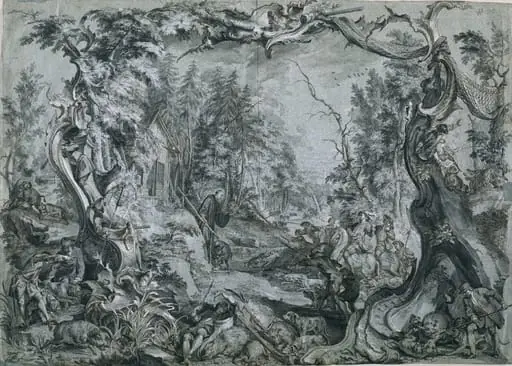 Saint Deicolus and the Boar
 The Hebrews collecting manna in the desert
 Tobias and the angel in a landscape