Artwork
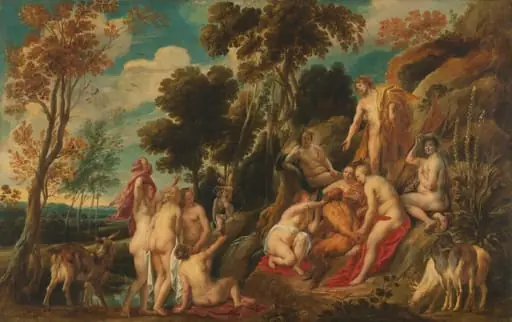
Satyrs and nymphs
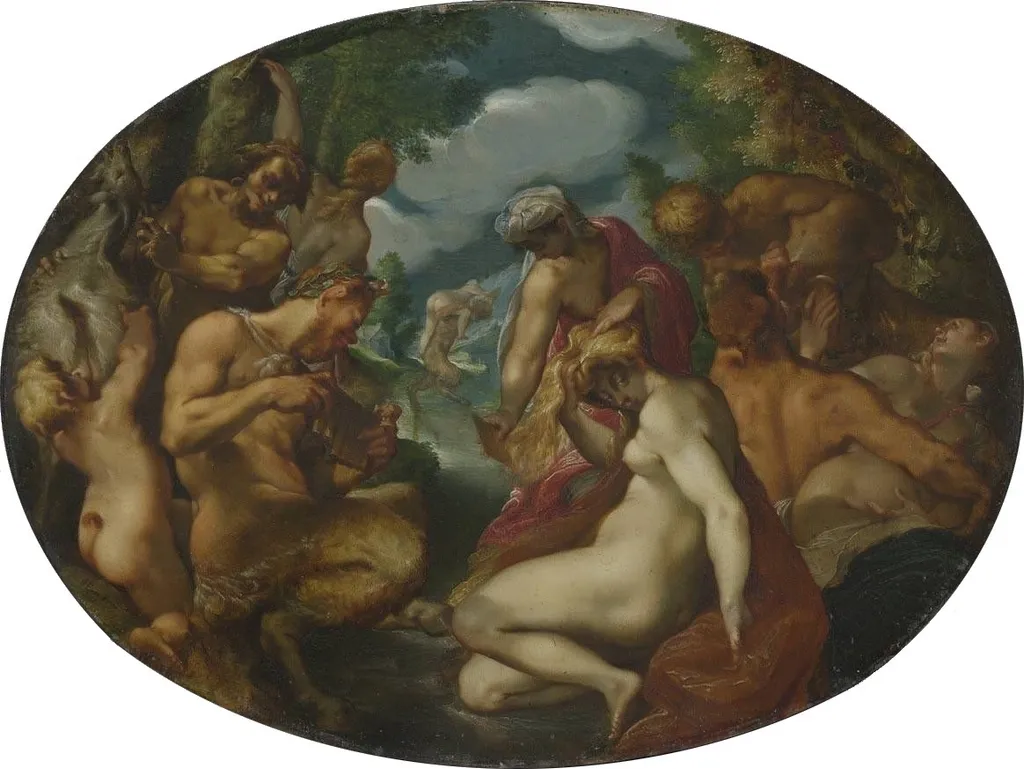
Satyrs and nymphs is an oil painting by the Early Baroque Italian artist Joseph Heintz the Elder. It dates from 1600 and is held in the collection of the Bavarian State Painting Collections.
About this work
Overview
Joseph Heintz the Elder’s work titled Satyrs and Nymphs, executed around 1600, is a copper painting that portrays a mythological encounter between a satyr and a nymph. The piece is part of the collection of the Alte Pinakothek in Munich, where it is displayed among other works of the early Baroque period.
Subject & Meaning
The composition gathers several nude figures within a wooded riverside setting. A central female figure reclines on a lion’s skin, while a satyr and other attendants occupy various poses—some seated, others standing or wading in the water. The scene evokes classical themes of nature, desire, and the interplay between the wild and the divine.
Technique & Style
Heintz employs a warm palette of reds, browns, and muted greens, punctuated by highlights of white and a glimpse of blue sky. Strong chiaroscuro creates dramatic contrasts, with illuminated flesh set against deep shadows to suggest volume and movement. The copper surface enhances the richness of the colors and the subtle sheen of the light.
History & Provenance
Created at the turn of the 17th century, the copper painting entered the Alte Pinakothek’s holdings through the museum’s early acquisitions of Southern German art. Its attribution to Heintz the Elder has been confirmed by stylistic analysis and documentation linking the work to his workshop in Augsburg.
Context
Heintz worked in a period when mythological subjects were popular among aristocratic patrons seeking allegorical decoration. The depiction of satyrs and nymphs reflects the influence of Italian Renaissance models while retaining the Northern European attention to detail and naturalistic rendering of foliage and water.
Artist & collection