Artwork
Nymphs and Satyrs
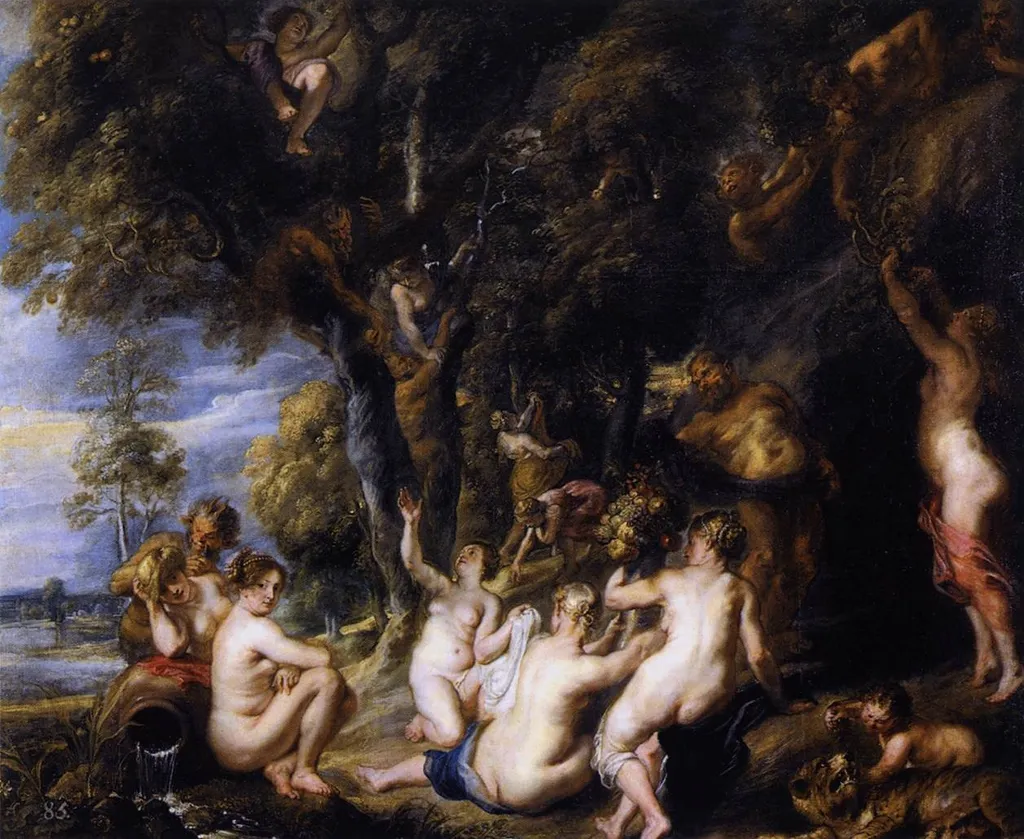
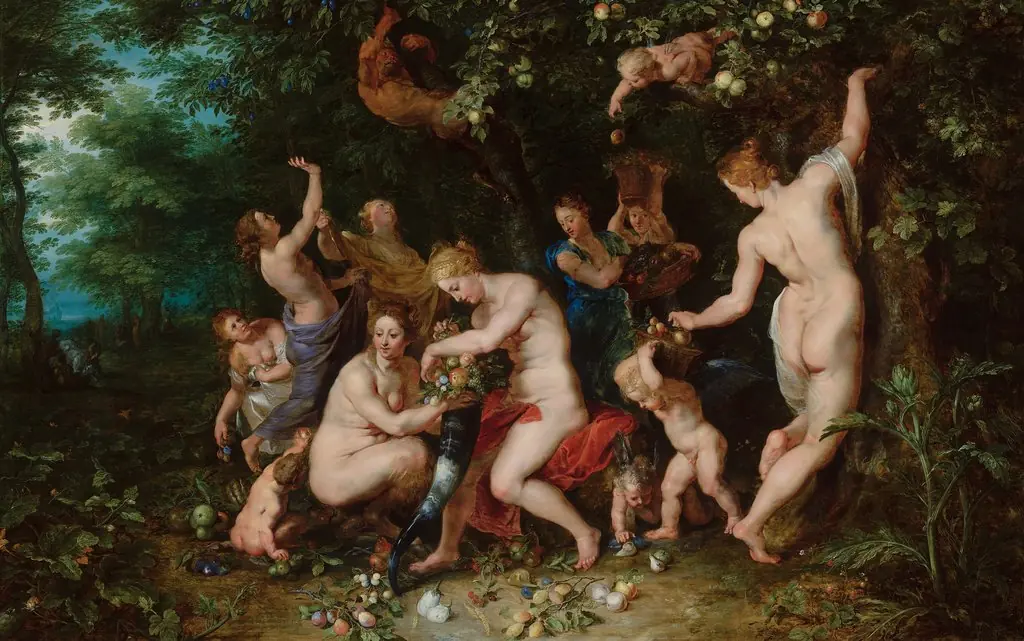
Nymphs and Satyrs is an oil painting by the Flemish Baroque painting artist Peter Paul Rubens. It dates from 1615 and is held in the collection of the Museo del Prado.
About this work
Overview
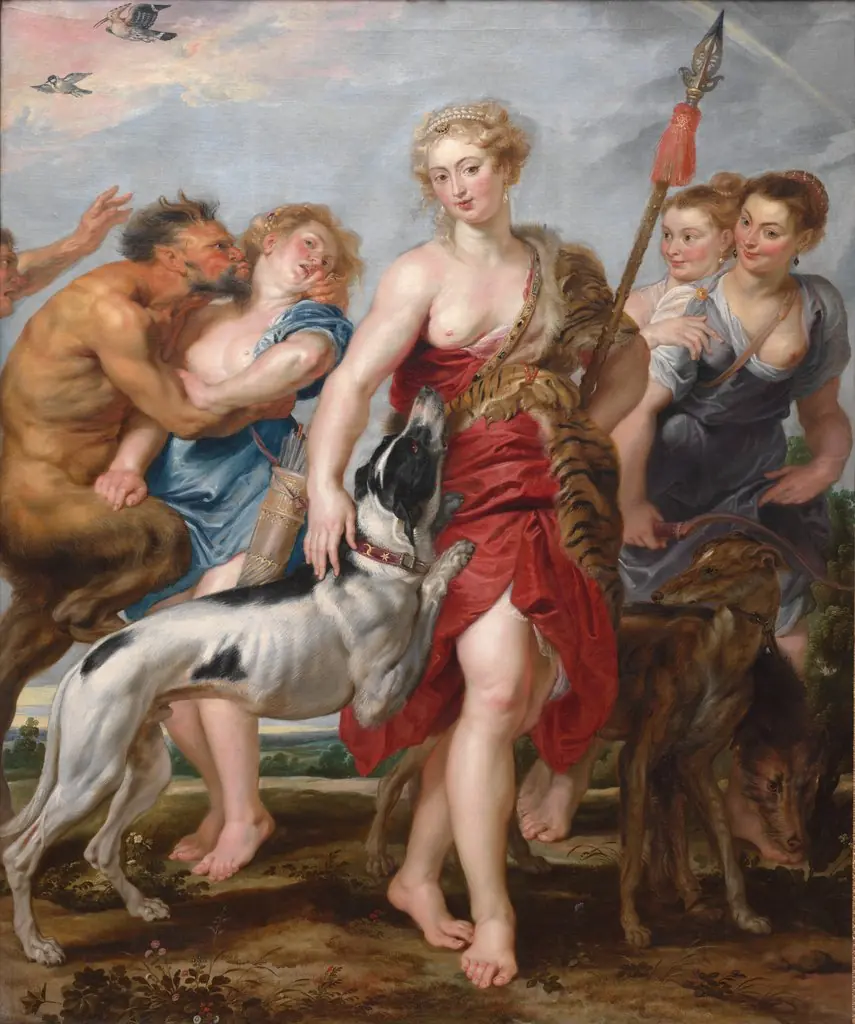
Created in 1615 by the Flemish painter Peter Paul Rubens, this oil work belongs to the Baroque period. It depicts a mythological gathering set in a wooded landscape, populated by nude figures engaged in music, dance, and intimate gestures. A central female figure holds a cornucopia spilling fruit and flowers, while a stream winds through the background, conveying a lively, celebratory atmosphere.
Subject & Meaning
The composition draws on classical mythology, pairing a nymph with a satyr amid a festive tableau. The cornucopia, a symbol of abundance, underscores themes of fertility and the pleasures of nature. The interaction of the figures—musicians, dancers, and lovers—reflects the era’s fascination with sensuality and the harmonious coexistence of the human and the divine.
Technique & Style
Rubens employs the dynamic brushwork and rich palette characteristic of Flemish Baroque painting. Vigorous chiaroscuro models the bodies, while luminous colors animate the foliage and the overflowing cornucopia. The fluid arrangement of forms creates a sense of motion, and the interplay of light and shadow enhances the scene’s three‑dimensionality and emotional intensity.
History & Provenance
Since its completion, the canvas has been part of several private collections before entering the Museo del Prado in Madrid, where it remains on display. Its acquisition by the Prado reflects the museum’s commitment to representing the breadth of Rubens’ output and the broader Baroque tradition within its holdings.
Context
Rubens’ career combined artistic production with diplomatic service, allowing him to travel widely and absorb diverse influences.
Rubens’ career combined artistic production with diplomatic service, allowing him to travel widely and absorb diverse influences. In the early 17th century, mythological subjects were popular among aristocratic patrons who valued allegorical content. This work exemplifies Rubens’ ability to merge classical narratives with the exuberant visual language of his time, catering to contemporary tastes for opulent, theatrical compositions.
Artist & collection
Artist
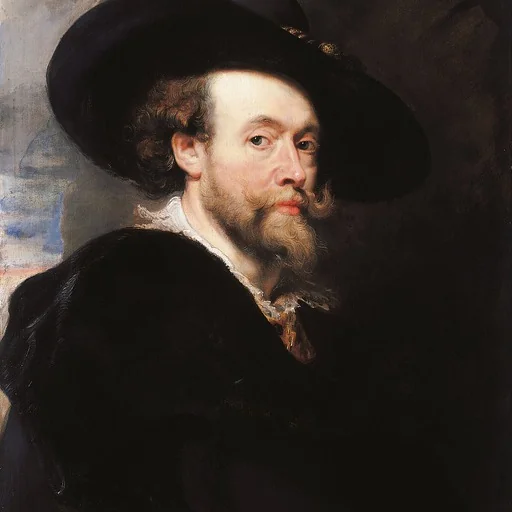
Sir Peter Paul Rubens ( ROO-bənz; Dutch: ; 28 June 1577 – 30 May 1640) was a Flemish artist and diplomat.