Artwork
Catherine de Médicis with the Head of Coligny
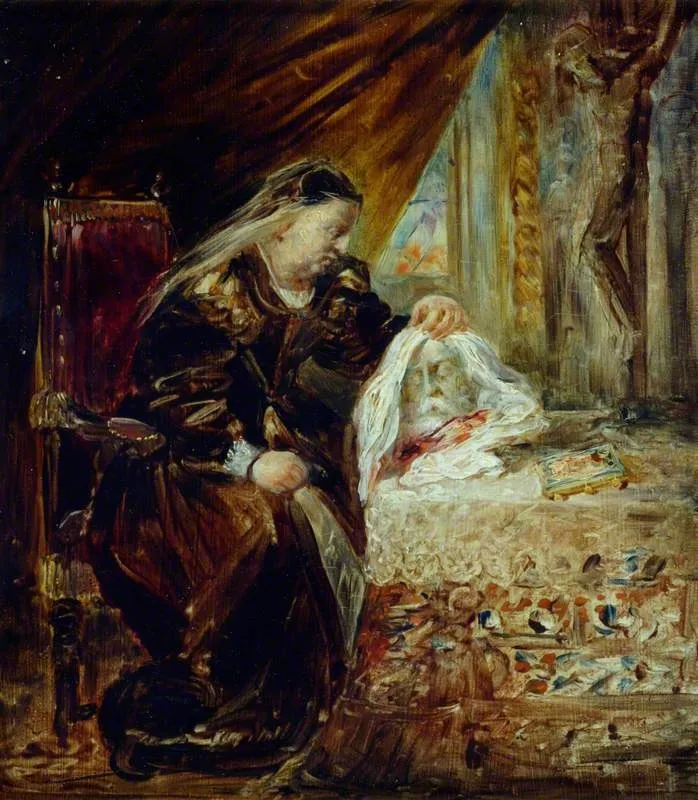
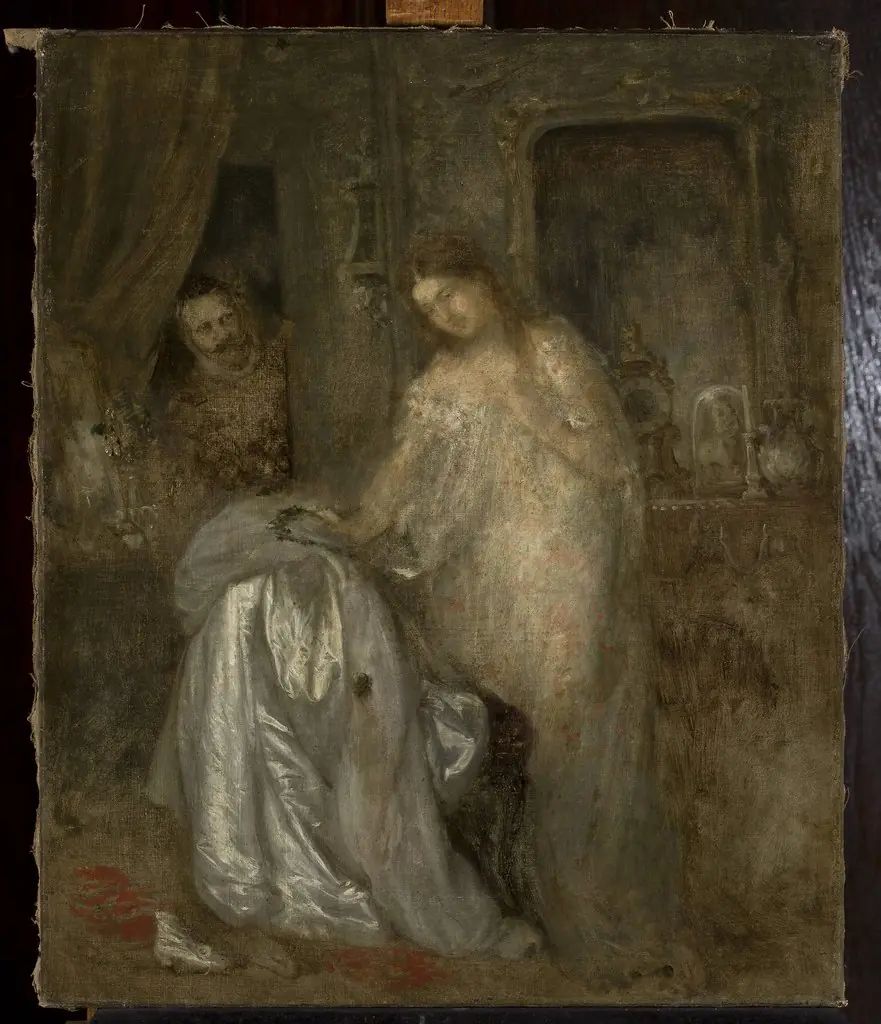
Catherine de Médicis with the Head of Coligny is an unspecified painting by Joseph Hornung. It dates from 1841 and is held in the collection of the Victoria and Albert Museum.
About this work
Overview
Painted around 1841 by Joseph Hornung, this work portrays Catherine de Médicis seated beside a table, cradling a bloodstained, cloth-wrapped head.
Painted around 1841 by Joseph Hornung, this work portrays Catherine de Médicis seated beside a table, cradling a bloodstained, cloth-wrapped head. The composition is dominated by deep shadows and muted tones, with a dimly lit window and drawn curtain suggesting an enclosed, private space. The figure’s face is intentionally softened, obscuring expression and heightening ambiguity. The painting belongs to the collection of the Victoria and Albert Museum.
Subject & Meaning
The scene references the aftermath of the St. Bartholomew’s Day Massacre in 1572, when Admiral Gaspard de Coligny, a Huguenot leader, was assassinated. By depicting Catherine holding his severed head, the image alludes to her alleged complicity in the violence. The blurred facial features avoid direct emotional interpretation, leaving the viewer to question her role—whether as remorseful ruler, calculating stateswoman, or symbolic figure of political brutality.
Technique & Style
Hornung employs chiaroscuro to model form through stark contrasts of light and shadow, isolating the head and figure against a near-black background. The texture of the bloodied cloth is rendered with restrained detail, while the woman’s face dissolves into softness, reducing individuality. The dark, heavy clothing and minimal furnishings reinforce a mood of solemnity. The style reflects 19th-century historical painting conventions, prioritizing dramatic atmosphere over precise historical accuracy.
History & Provenance
Created in 1841, the painting entered the Victoria and Albert Museum’s collection as part of its broader acquisition of 19th-century European art. Its subject matter aligns with the period’s fascination with Renaissance intrigue and violent political drama. No earlier provenance is documented, suggesting it was likely painted for private or academic circulation rather than public commission, reflecting Romantic-era interest in morally ambiguous historical figures.
Context
Hornung painted during a time when European artists revisited the French Wars of Religion as allegories for contemporary political tensions. The depiction of Catherine de Médicis resonated with Victorian audiences grappling with questions of power, gender, and state violence. While not a contemporary portrait, the work draws on longstanding iconographic traditions that cast Catherine as a scheming matriarch, reinforcing narratives shaped by Protestant propaganda centuries earlier.
Legacy
The painting remains a rare visual interpretation of Catherine de Médicis in the act of confronting Coligny’s death. It contributes to a broader 19th-century trend of using historical trauma to explore psychological depth in portraiture. Though not widely exhibited, it serves as a case study in how Romantic-era artists reimagined political violence through ambiguity, emotion, and controlled composition rather than overt narration.
Artist & collection