Artwork
Liber Studiorum: Vessels Unloading
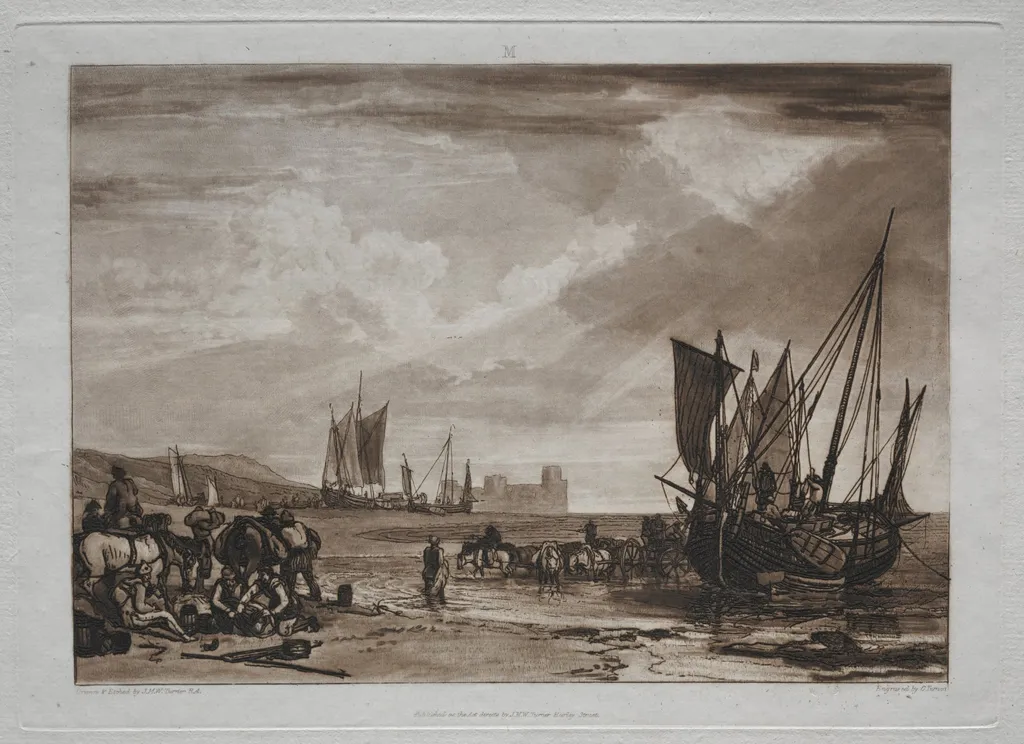
Liber Studiorum: Vessels Unloading is a print by Joseph Mallord William Turner. It dates from 1823 and is held in the collection of the Cleveland Museum of Art.
About this work
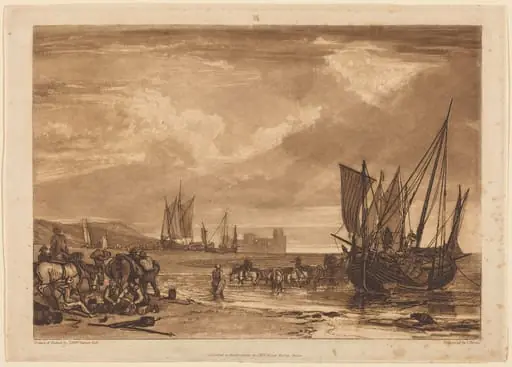
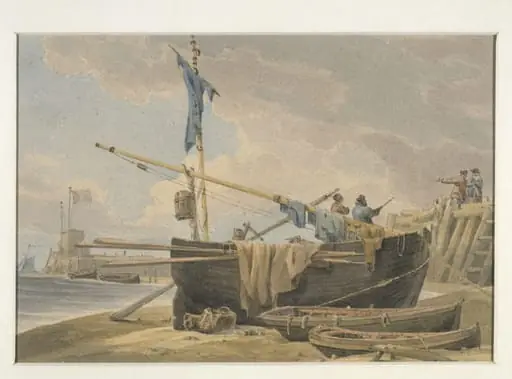
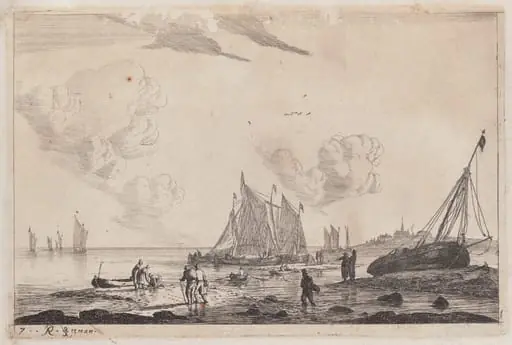
In the foreground, a group of individuals are gathered around a horse-drawn cart, while others are standing or sitting on the shore.
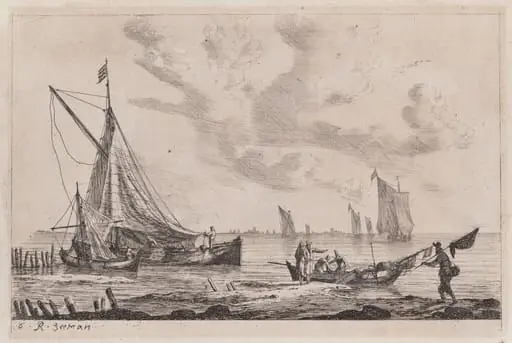
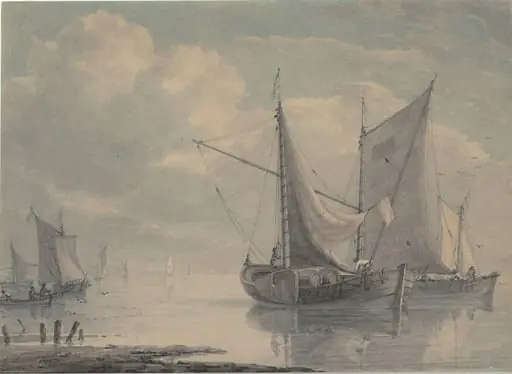
This painting depicts a serene scene of vessels unloading on a shore. The boats are moored in the water, with people on the shore engaged in various activities. In the foreground, a group of individuals are gathered around a horse-drawn cart, while others are standing or sitting on the shore. The sky above is cloudy, with a few wispy clouds scattered across the horizon.
The artist has used a range of colors to create a sense of depth and atmosphere in the painting. The blues and grays of the water and sky are complemented by the earthy tones of the shore and the figures. The overall effect is one of calmness and tranquility.
The painting is a beautiful example of the artist's skill in capturing the beauty of everyday scenes. For more information on the artist's work, look up Joseph Mallord William Turner (British, 1775–1851).
Overview
Created around 1823, *Vessels Unloading* is one of seventy prints in Joseph Mallord William Turner’s *Liber Studiorum*, a project intended to classify and elevate landscape art through thematic composition. Unlike traditional topographical views, Turner’s prints blend observation with poetic interpretation, positioning nature and human activity in balanced, atmospheric harmony. This work exemplifies his shift from detailed rendering toward evocative tonal modulation.
Subject & Meaning
The scene captures a quiet coastal moment: boats at rest, figures engaged in unloading goods, and a horse-drawn cart near the shoreline. No grand narrative is present; instead, Turner emphasizes the rhythm of daily labor against the subdued sky and water. The composition suggests quiet industry, not spectacle, aligning with his interest in the dignity of ordinary life within natural settings.
Technique & Style
Turner employed mezzotint and aquatint to achieve subtle gradations of light and atmosphere. Soft transitions between gray, blue, and earth tones define the water, sky, and shore, while minimal line work suggests figures and vessels without detailed rendering. The effect is one of atmospheric unity, where form dissolves into light—foreshadowing later developments in tonal painting and early modern abstraction.
History & Provenance
The *Liber Studiorum* series was published in parts between 1807 and 1819, with *Vessels Unloading* likely printed shortly after. Turner retained control over impressions, often reworking plates. The Cleveland Museum of Art acquired this print as part of its broader collection of British prints, preserving its original state and historical context within Turner’s printmaking practice.
Context
Turner developed the *Liber Studiorum* in response to the Royal Academy’s hierarchy of genres, seeking to elevate landscape to the status of history painting. Influenced by Claude Lorrain and Dutch marine painters, he reinterpreted their compositional principles through a distinctly personal, emotionally charged lens. This print reflects his belief that landscape could convey moral and poetic resonance without narrative.
Legacy
Though not widely recognized in his lifetime as revolutionary, Turner’s *Liber Studiorum* prints laid groundwork for later movements by prioritizing mood over detail and light over form. Artists such as the Impressionists and even early abstract painters drew from his willingness to dissolve boundaries between figure and environment, making this work a quiet but significant step toward modern visual language.
Artist & collection
Artist
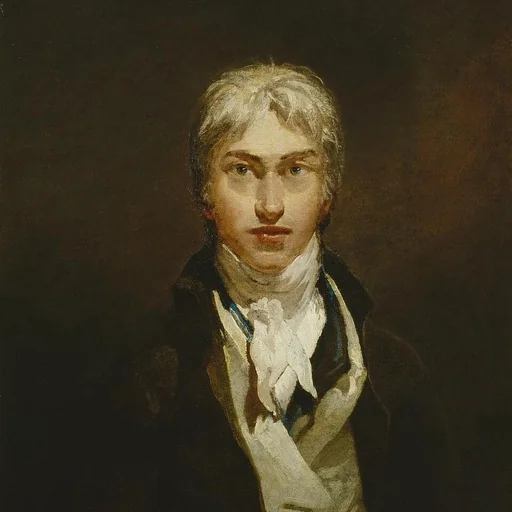
Joseph Mallord William Turner was born in 1775 at Maiden Lane, Covent Garden, where his father kept a barber and wig-making shop.