Artwork
Liber Studiorum: The Fifth Plague of Egypt
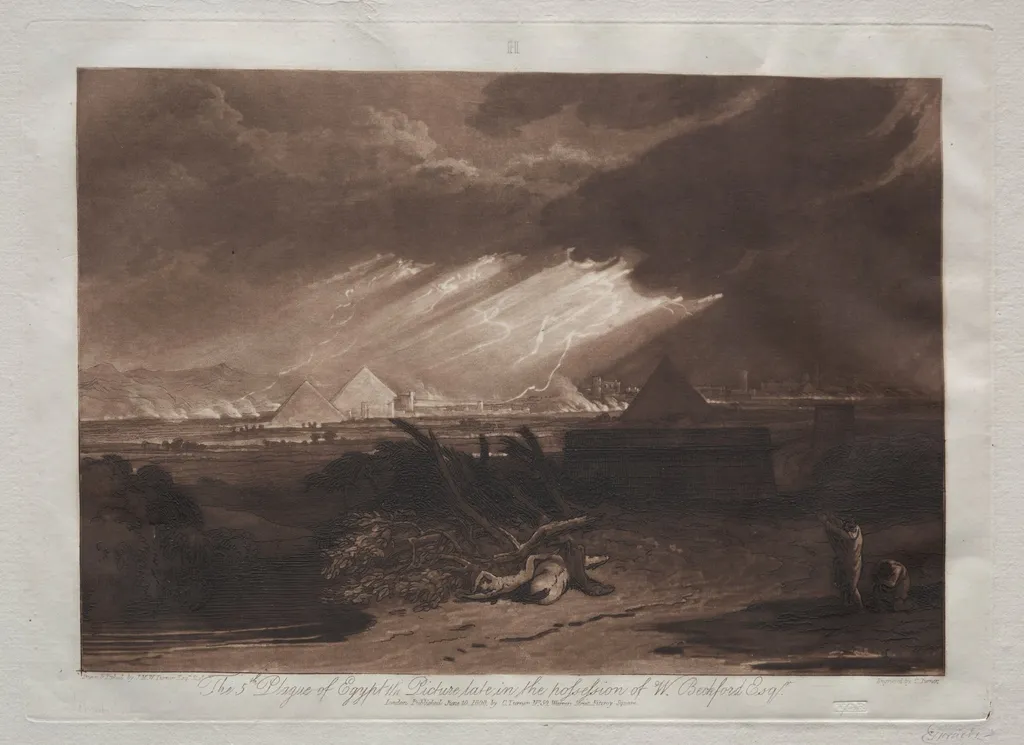
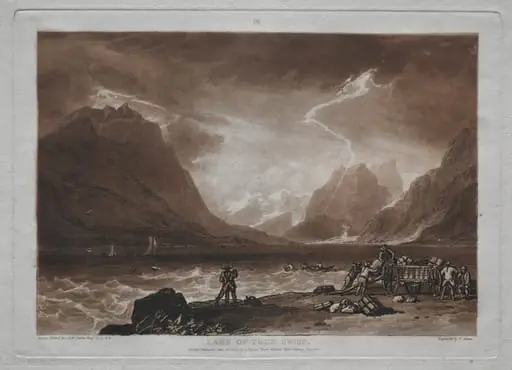
Liber Studiorum: The Fifth Plague of Egypt is a print by Joseph Mallord William Turner. It dates from 1823 and is held in the collection of the Cleveland Museum of Art.
About this work
Overview
Liber Studiorum: The Fifth Plague of Egypt is an etching and mezzotint print created by Joseph Mallord William Turner around 1823. It belongs to his Liber Studiorum series, a collection aimed at elevating landscape art to the prestige of historical painting.
Subject & Meaning
The print depicts a dramatic interpretation of the biblical Fifth Plague of Egypt. A starkly contrasted scene unfolds with a dark, turbulent sky illuminated by a intense beam of light. Figures in the foreground appear lifeless or in distress, set against a backdrop of an ancient Egyptian cityscape featuring pyramids.
Technique & Style
Turner employed chiaroscuro to dramatic effect, leveraging strong contrasts between light and dark to create depth and heightened emotional impact. This work reflects his Romantic emphasis on expressive and imaginative renderings of nature and dramatic subjects.
History & Provenance
Produced circa 1823, this print is part of Turner’s ambitious Liber Studiorum project. While specific provenance details for this piece are not provided, the series as a whole was conceived to demonstrate the artistic potency of landscape.
Context
Created during a period when Turner’s style was characterized by intense emotional and imaginative interpretations, this work sits within the broader context of early 19th-century Romanticism in England. It precedes the influences Turner would later have on Impressionist and Abstract movements.
Artist & collection
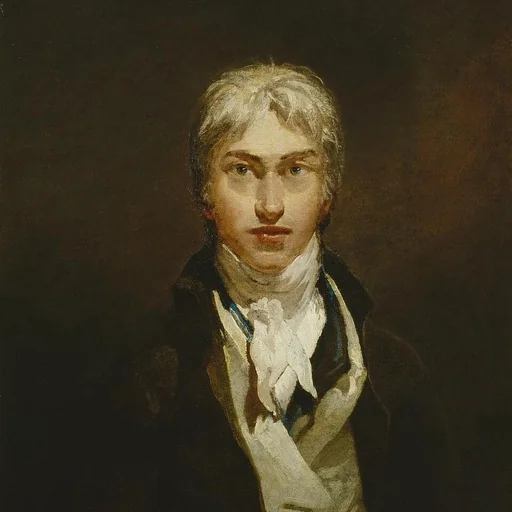
Artist
Joseph Mallord William Turner was born in 1775 at Maiden Lane, Covent Garden, where his father kept a barber and wig-making shop.