Artwork
Ehrenbreitstein
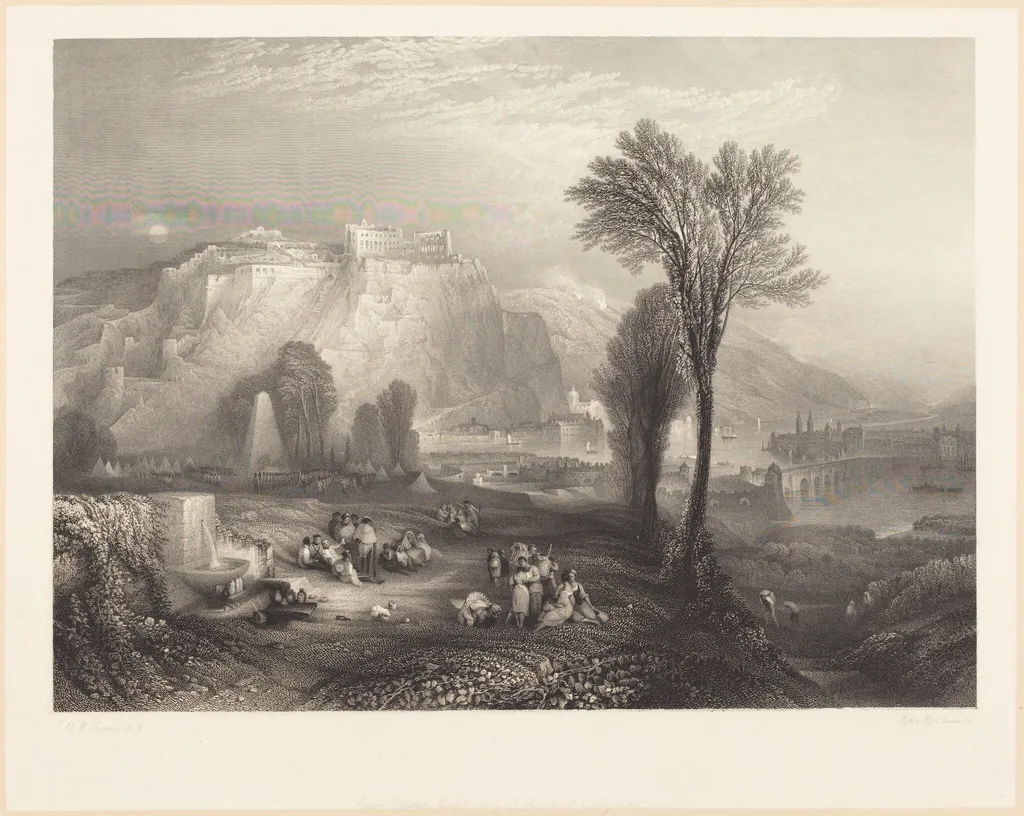
Ehrenbreitstein is an ink print by the Romanticist artist John Pye. It dates from 1845 and is held in the collection of the National Gallery of Art.
About this work
Overview
John Pye’s 1845 engraving titled “Ehrenbreitstein” is executed on chine collé, a paper‑mounted technique that enhances the surface texture of the print.
John Pye’s 1845 engraving titled “Ehrenbreitstein” is executed on chine collé, a paper‑mounted technique that enhances the surface texture of the print. The work portrays a tranquil village set against a steep cliff, crowned by a fortified structure with towers and battlements. A group of figures gathers beneath a large tree near a modest fountain, while distant hills and a faint rainbow complete the landscape.
Subject & Meaning
The composition juxtaposes human activity with imposing architecture, suggesting a harmonious coexistence of rural life and defensive strength. The presence of shepherds and livestock emphasizes the agrarian character of the settlement, while the castle on the hilltop conveys a sense of protection and authority overseeing the community below.
Technique & Style
Pye employs delicate, intersecting lines to model clouds, foliage, and stonework, creating a nuanced sense of depth across the scene. The fine hatching typical of mid‑nineteenth‑century British engraving is evident in the rendering of textures, from the bark of the tree to the distant hills, reflecting the period’s emphasis on detailed, reproducible imagery.
History & Provenance
Created in 1845, the print reflects Pye’s engagement with topographical subjects popular among Victorian audiences. While specific ownership records are scarce, the work has appeared in collections of 19th‑century British prints, illustrating the era’s fascination with continental landscapes and fortified sites.
Context
During the mid‑1800s, engravings served both artistic and documentary purposes, providing visual access to foreign locales for a growing middle‑class market. “Ehrenbreitstein” aligns with this trend, offering a picturesque yet accurate representation of a German fortress and its surrounding settlement, a subject of interest following increased travel and scholarly study of European architecture.
Artist & collection


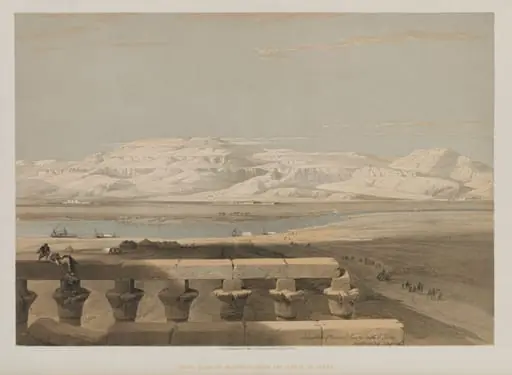 Egypt and Nubia, Volume I: Libyan Chain of Mountains, from the Temple of Luxor
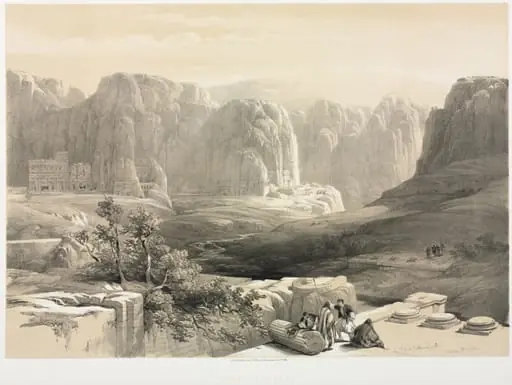 The Holy Land, Syria, Idumea, Arabia, Egypt & Nubia (Vol. III): Petra, Looking South
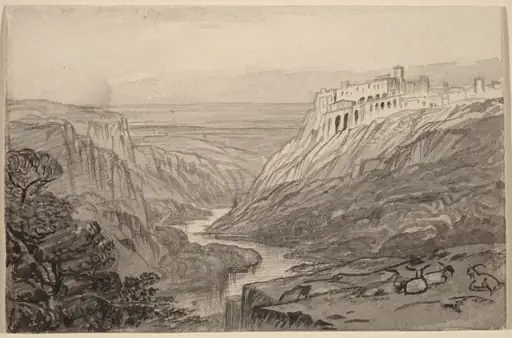 Goats Resting above a River Gorge (Narni, Italy)
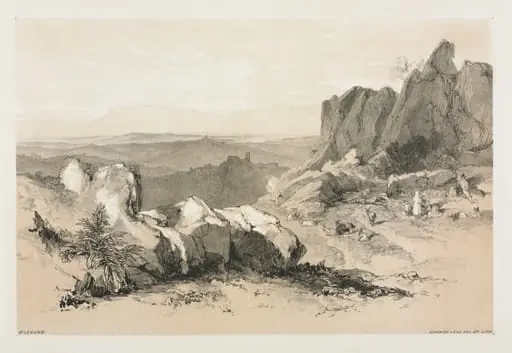 Olevano
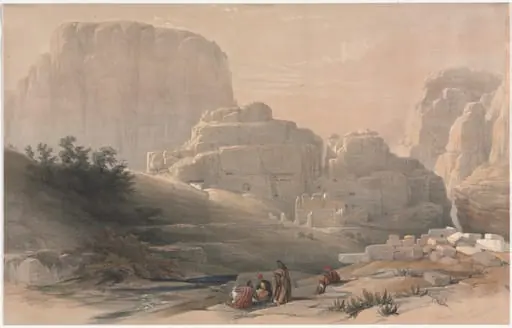 Petra, Lower End of the Valley, Viewing the Acropolis
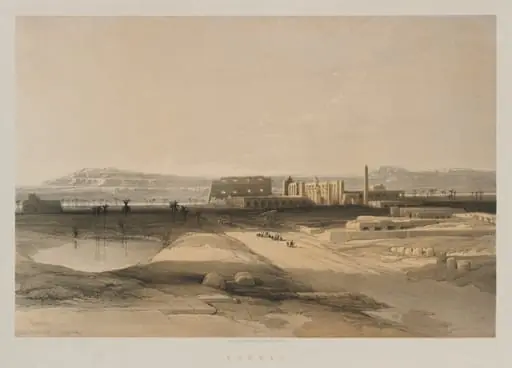 Egypt and Nubia, Volume II: Karnak
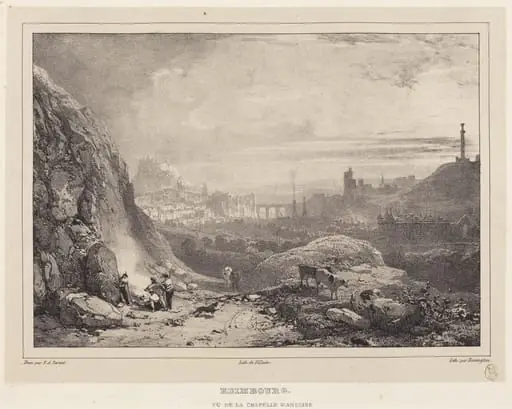 Edimbourg vu de la Chapelle Saint-Antoine
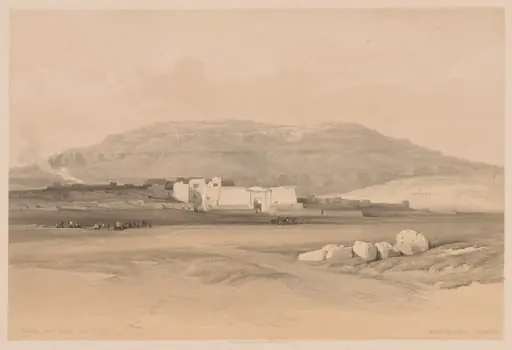 Egypt and Nubia: Volume II - No. 20, Medinet Abou, Thebes
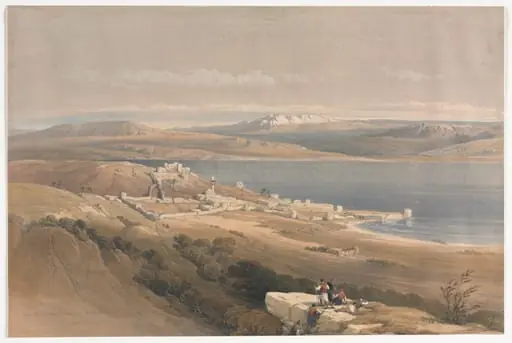 City of Tiberias on the Sea of Galilee, looking towards Hebron
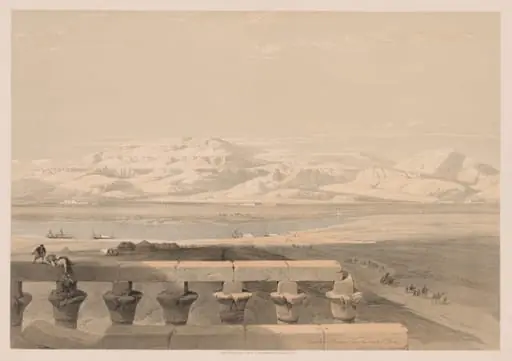 Egypt and Nubia: Volume I - No. 30, Lybian Chain of Mountains from the Temple of Luxor
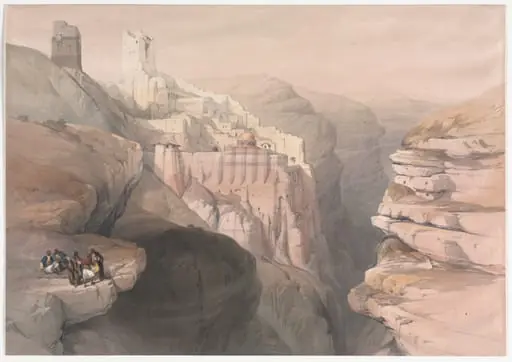 Convent of St. Saba
 Hierapolis - Natural Hot Spring. Phrygia