Artwork
Liber Studiorum: The Castle above the Meadows
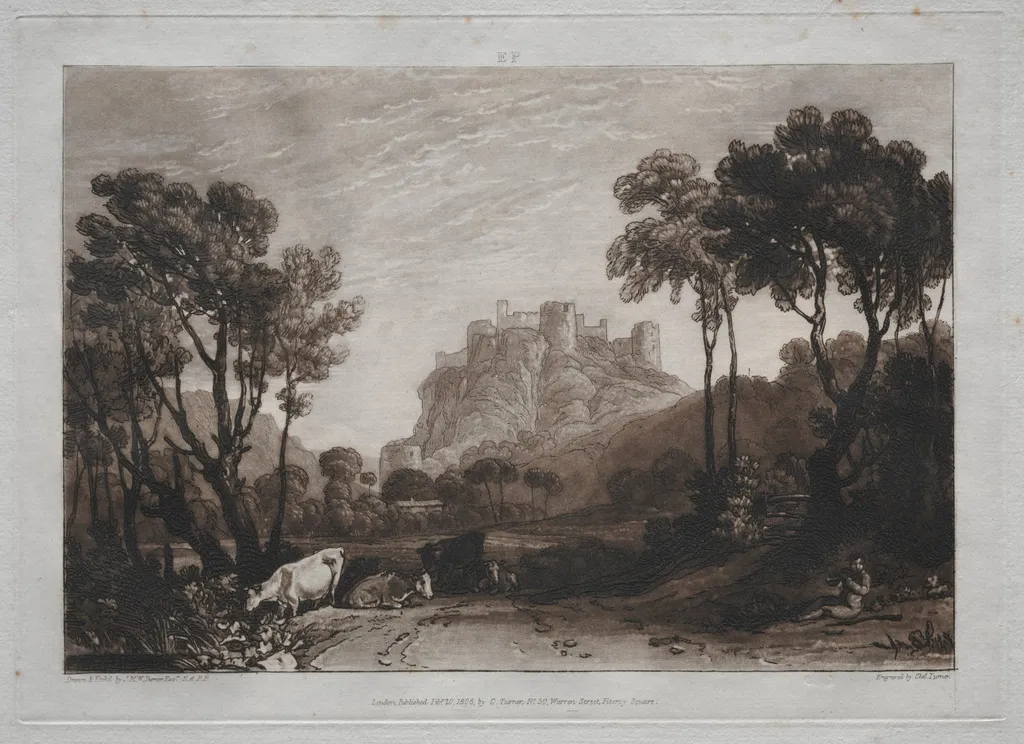
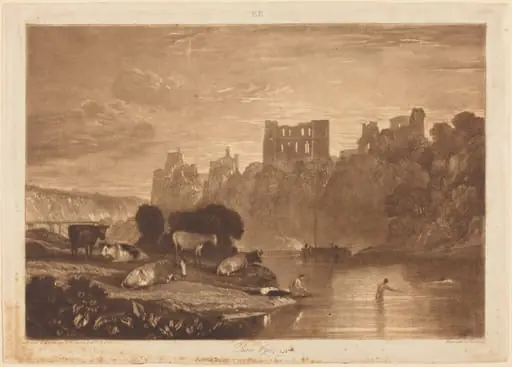
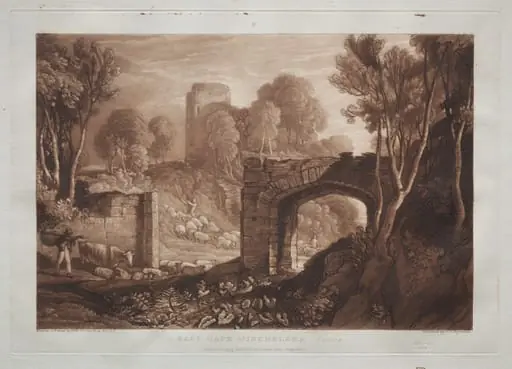
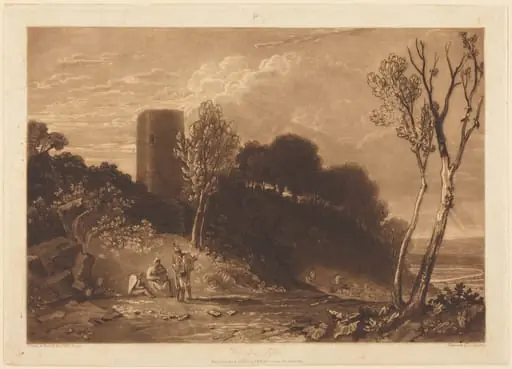
Liber Studiorum: The Castle above the Meadows is a print by Joseph Mallord William Turner. It dates from 1823 and is held in the collection of the Cleveland Museum of Art.
About this work
Overview
Executed in etching and mezzotint, the work exemplifies Turner’s ambition to treat landscape as a serious genre, distinct from historical or narrative painting.
Created around 1823, this print is part of Joseph Mallord William Turner’s *Liber Studiorum*, a series of seventy prints designed to classify and elevate landscape art through varied compositional types. Executed in etching and mezzotint, the work exemplifies Turner’s ambition to treat landscape as a serious genre, distinct from historical or narrative painting. The Cleveland Museum of Art holds this impression, one of many in the series that reflect his technical experimentation and philosophical approach to nature.
Subject & Meaning
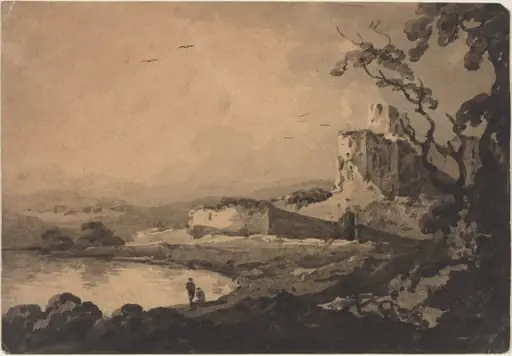
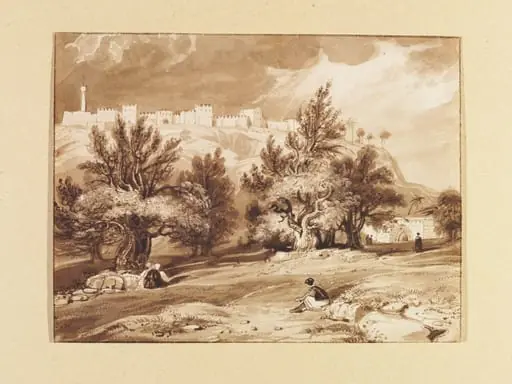
The scene depicts a tranquil rural landscape with a medieval-style castle perched on a distant hill, its silhouette softened by atmospheric haze. In the foreground, grazing cattle and a gentle stream anchor the composition in everyday life, while tall trees frame the view. The quietude of the image suggests contemplation rather than drama, aligning with Turner’s interest in the sublime as a quiet, enduring presence within nature rather than a force of chaos.
Technique & Style
Turner employed etching for fine linear detail and mezzotint for rich tonal gradations, blending precision with atmospheric depth. Subtle shifts in light and shadow—chiaroscuro—model the forms of trees, rock, and architecture, guiding the viewer’s eye through layers of space. The sky, rendered in soft, muted grays, unifies the scene without dominating it, demonstrating Turner’s mastery of tone over color in monochrome printmaking.
History & Provenance
The *Liber Studiorum* series was conceived by Turner as a printed counterpart to his paintings, intended to influence contemporary taste in landscape art. Published in parts between 1807 and 1819, with additional plates added later, this print was likely issued around 1823. The Cleveland Museum of Art acquired its copy through established collecting channels in the early 20th century, preserving its original state and impression quality.
Context
During the 1820s, Turner was refining his approach to landscape beyond topographical accuracy, seeking emotional and structural harmony. The *Liber Studiorum* responded to academic hierarchies that ranked history painting above landscape, asserting nature’s capacity for moral and aesthetic resonance. This print reflects broader European interests in the picturesque and the pastoral, yet distinguishes itself through its psychological stillness and technical innovation.
Legacy
Turner’s *Liber Studiorum* influenced later generations of printmakers and painters by demonstrating how tonal variation could convey mood and spatial depth without color. Its emphasis on atmosphere and light prefigured concerns central to Impressionism, while its abstracted forms and compositional economy resonated with 20th-century modernists. Though not widely known in his lifetime, the series became a touchstone for artists redefining landscape as a vehicle for perception rather than representation.
Artist & collection
Artist
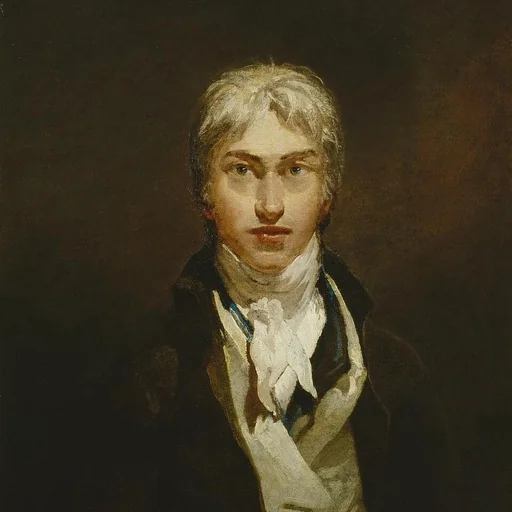
Joseph Mallord William Turner was born in 1775 at Maiden Lane, Covent Garden, where his father kept a barber and wig-making shop.