Artwork
Liber Veritatis
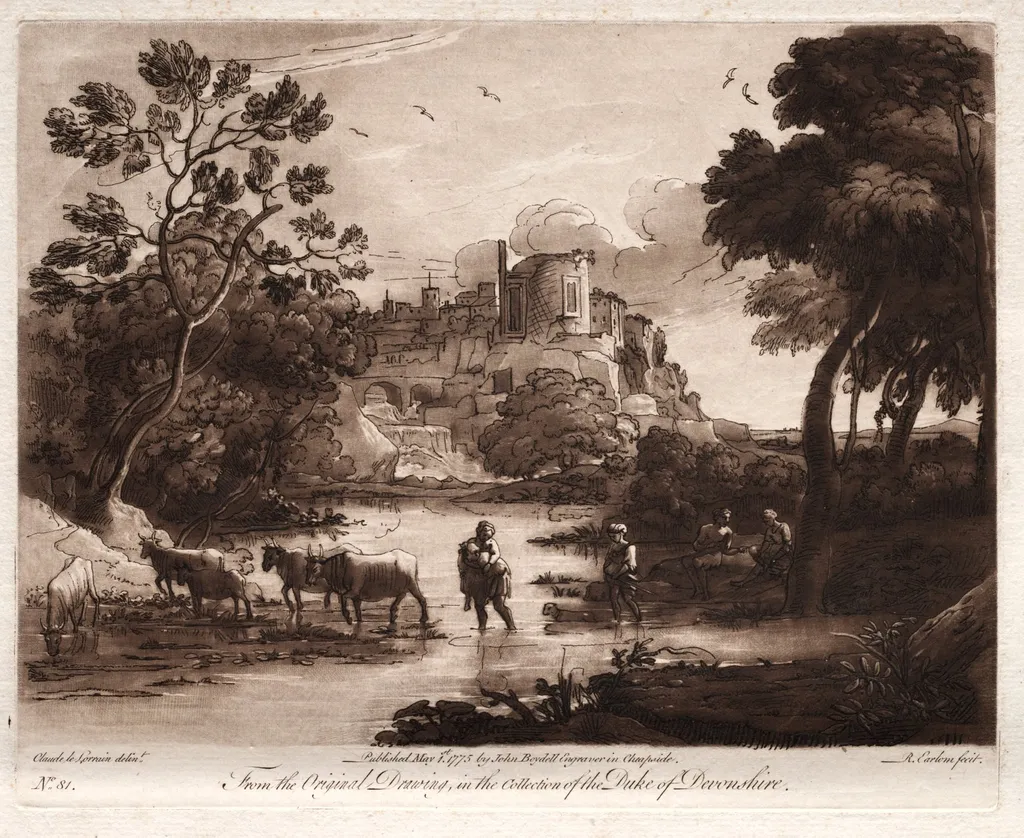
Liber Veritatis is a print by the Romanticist artist Richard Earlom. It dates from 1777 and is held in the collection of the Cleveland Museum of Art.
About this work
Overview
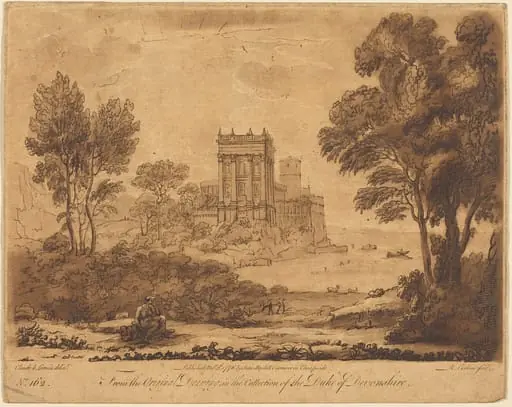
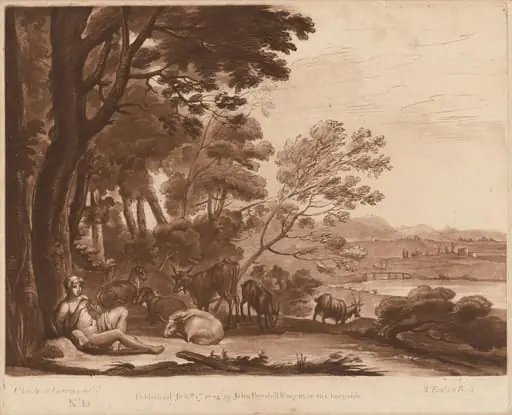
Liber Veritatis is a printed reproduction created by Richard Earlom in 1777, based on a drawing by Claude Lorrain. The print was produced as part of a larger project to document Claude’s landscape compositions. It is currently held in the collection of The Cleveland Museum of Art, where it serves as a record of 17th-century landscape aesthetics through 18th-century printmaking techniques.
Subject & Meaning
The scene depicts a tranquil rural landscape with a winding river, grazing cattle, and figures resting along its bank. Distant hills reveal a small settlement and ancient ruins, evoking a sense of timeless pastoral harmony. The composition reflects classical ideals of nature as orderly and serene, aligning with the Renaissance tradition of idealized landscape as a moral and aesthetic refuge.
Technique & Style
Earlom employed mezzotint to achieve subtle gradations of light and shadow, lending depth and atmosphere to the scene. His careful rendering of textures—water, foliage, stone—mimics the tonal richness of Claude’s original drawing. The technique avoids sharp lines, favoring soft transitions that enhance the quiet, contemplative mood of the landscape.
History & Provenance
The print derives from a drawing in the collection of the Duke of Devonshire, part of a series Claude compiled as a personal record of his works. Earlom was commissioned to translate these drawings into prints for wider circulation. This particular plate was included in the published Liber Veritatis volume, intended as both an artistic archive and a reference for collectors and artists.
Context
In the late 18th century, there was growing interest in Claude Lorrain’s landscapes among British collectors. Earlom’s prints responded to this demand, making accessible works previously confined to private collections. The project reflected broader Enlightenment-era efforts to systematize and disseminate artistic knowledge through reproduction.
Legacy
Liber Veritatis established a precedent for the systematic documentation of an artist’s oeuvre through prints. Earlom’s interpretations preserved the integrity of Claude’s compositions while adapting them to contemporary printmaking standards. The series remains a key resource for scholars studying the reception and transmission of landscape art in early modern Europe.
Artist & collection

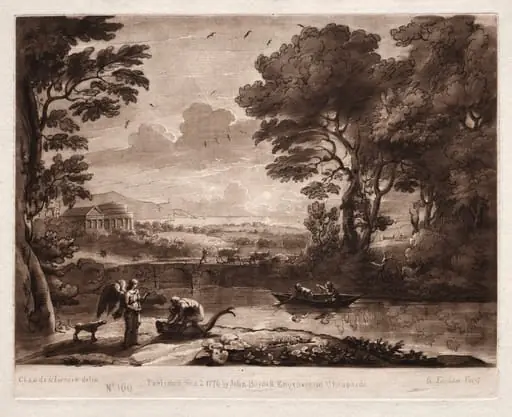 Liber Veritatis: No. 160, Tobias and the Angel
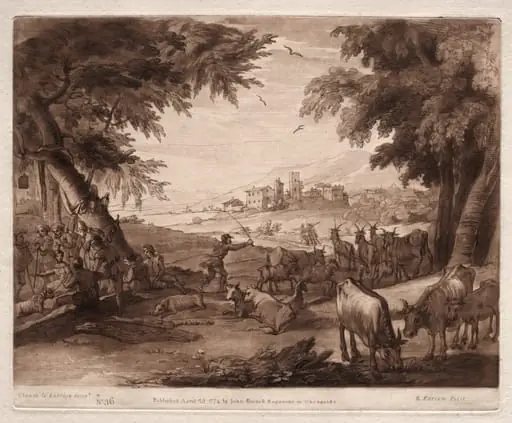 Liber Veritatis: No. 36, Pastoral Scene with Villagers and a Herd of Oxen and Goats
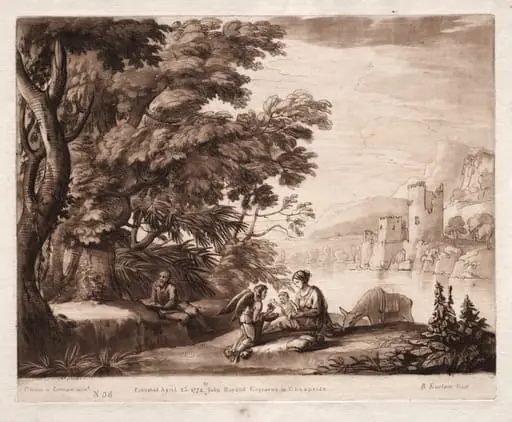 Liber Veritatis: No. 38, The Repose of the Holy Family along a River
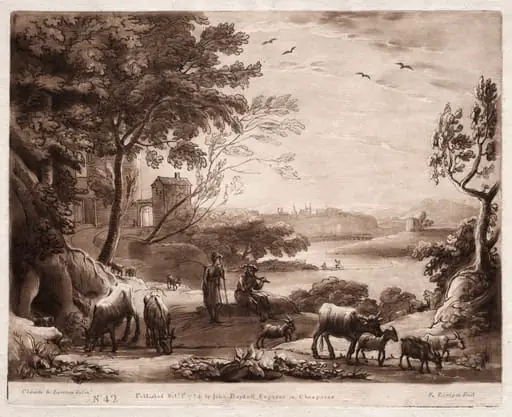 Liber Veritatis: No. 42, A River Landscape with a Shepherd and Shepherdess and a Herd of Cattle
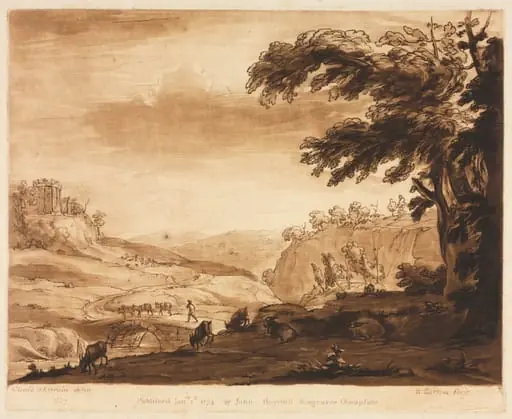 Liber Veritatis: No. 7, An Island Scene of a Mountainous Country with Cattle
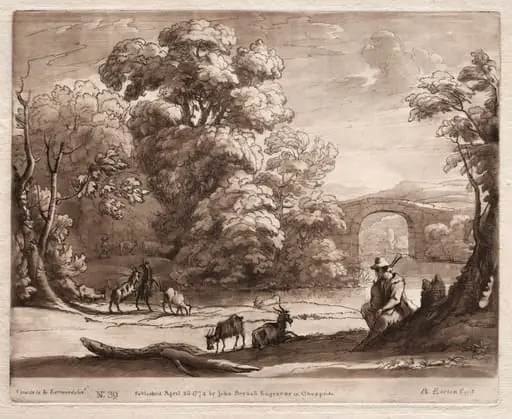 Liber Veritatis: No. 39, A Landscape with Herdsman Playing a Bagpipe and Goats Browsing
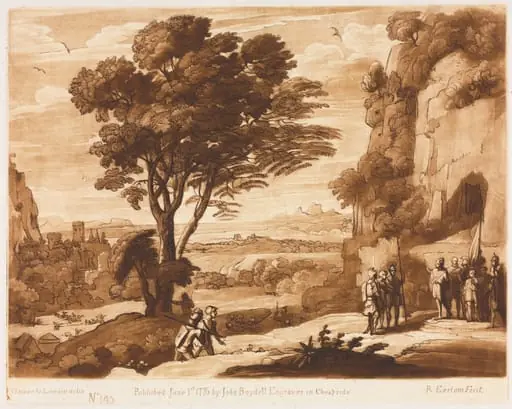 Liber Veritatis: No. 145, A Landscape, with Figures, Simon brought before Priam
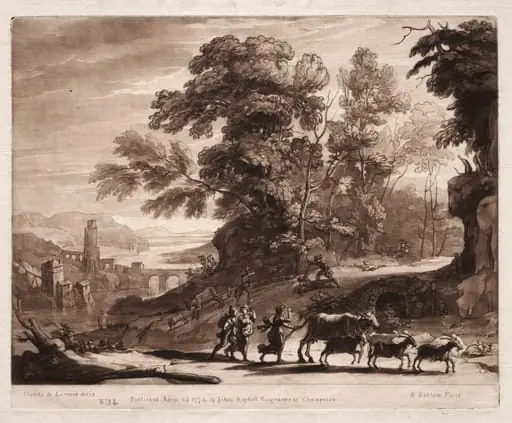 Liber Veritatis: No. 34, Peasants with Cattle attacked by Bandits
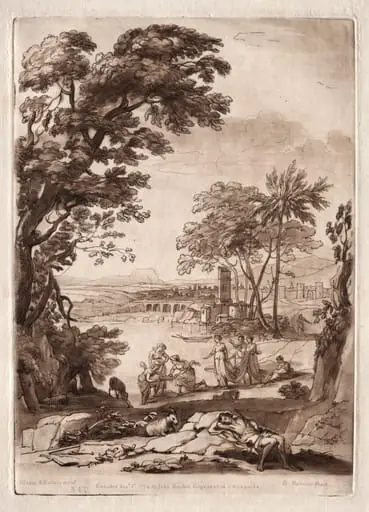 Liber Veritatis: No. 47, A River Scene with the Finding of Moses
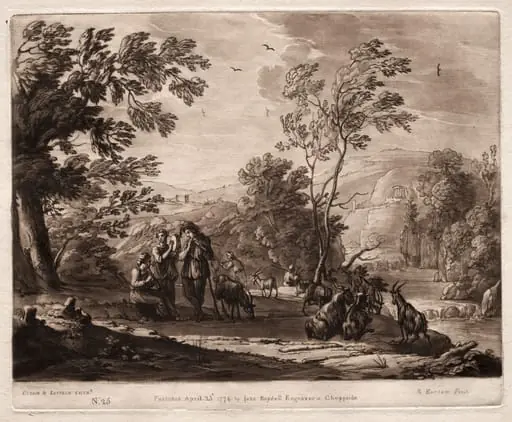 Liber Veritatis: No. 25, A Mountainous and Wooded Landscape with Shepherds Playing and Goats Browsing
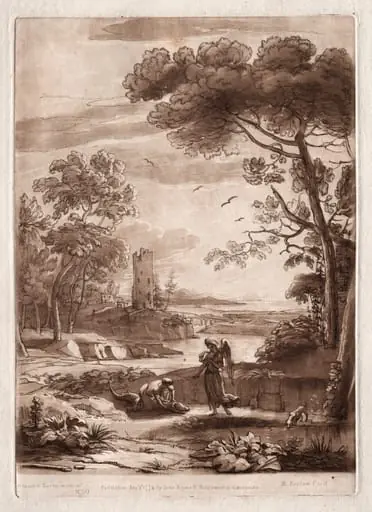 Liber Veritatis: No. 50, A River Scene with Tobias and the Angel