Artwork
Ein Kümmerer (Hirsch)
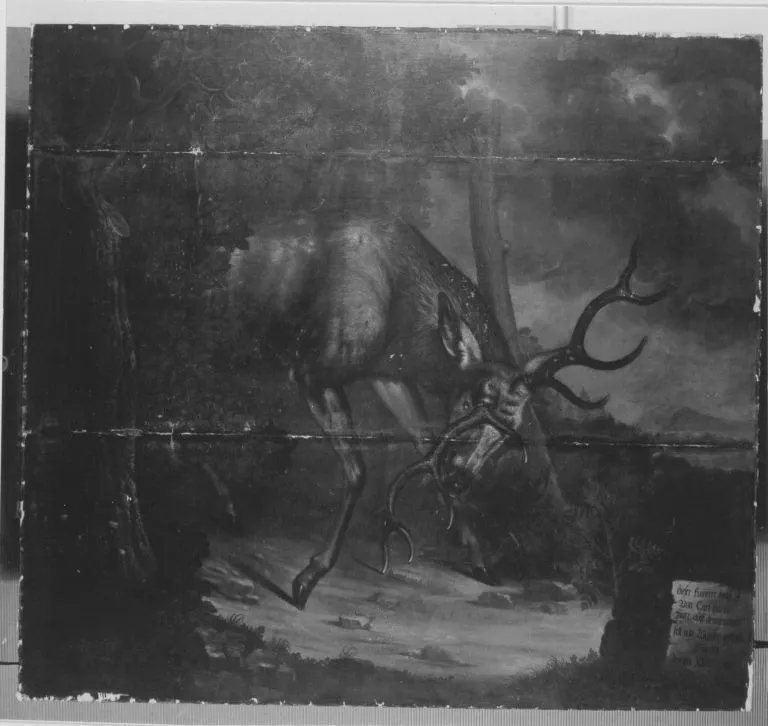
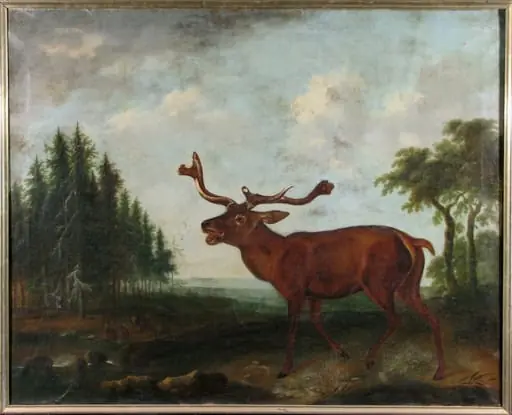
Ein Kümmerer (Hirsch) is an unspecified painting by the Rococo painting artist Joseph Marquard Treu. It dates from 1754 and is held in the collection of the Bavarian State Painting Collections.
About this work
Overview
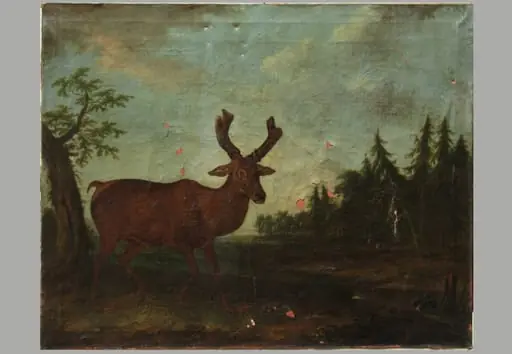
Painted in 1754 by Joseph Marquard Treu, Ein Kümmerer (Hirsch) is a portrait of a stag in a quiet woodland setting.
Painted in 1754 by Joseph Marquard Treu, Ein Kümmerer (Hirsch) is a portrait of a stag in a quiet woodland setting. The work resides in the Alte Pinakothek in Munich, where it is noted for its detailed observation of natural form. Unlike mythological or allegorical animal depictions common in the period, this painting presents the deer without symbolic embellishment, focusing instead on its physical presence within a natural environment.
Subject & Meaning
The central subject is a mature male deer, its large antlers raised and body turned slightly to the right, as if pausing in the forest. The title, meaning 'a caretaker' or 'one who tends,' may allude to the animal’s dignified stillness rather than any human role. There is no narrative or allegory; the meaning lies in the quiet dignity of the creature, observed with impartial attention and rendered as a solitary being in its habitat.
Technique & Style
Treu employed fine brushwork to render the deer’s fur in layered tones of brown and white, capturing subtle variations in texture. The antlers are painted in darker, matte hues, contrasting with the lighter body. The background features soft, atmospheric trees and a hazy sky, suggesting depth without dramatic perspective. The forest floor, littered with leaves and stones, is rendered with careful attention to natural detail, reinforcing the painting’s observational realism.
History & Provenance
The painting entered the collection of the Alte Pinakothek in Munich, likely through the Bavarian royal holdings, which systematically acquired works of naturalistic art in the 18th and 19th centuries. Its attribution to Treu is well documented in museum records. No significant alterations or restorations are recorded, and it has remained in stable condition since its acquisition, preserving the artist’s original intent and execution.
Context
In mid-18th-century Germany, depictions of wildlife were increasingly valued for their scientific and aesthetic precision, reflecting Enlightenment interests in natural history. Treu’s work aligns with this trend, standing apart from ornamental or symbolic animal paintings. While not part of a formal scientific study, the painting contributes to a growing tradition of observational art that treated nature as worthy of quiet, unembellished study.
Legacy
Ein Kümmerer (Hirsch) remains a quiet example of 18th-century German naturalism. It has not influenced broader artistic movements but endures as a testament to the growing appreciation for the individual character of wild animals in art. Its preservation in a major public collection ensures continued access for study and reflection, offering a restrained counterpoint to more theatrical depictions of nature from the same era.
Artist & collection