Artwork
Portrait of William I, King of the Netherlands
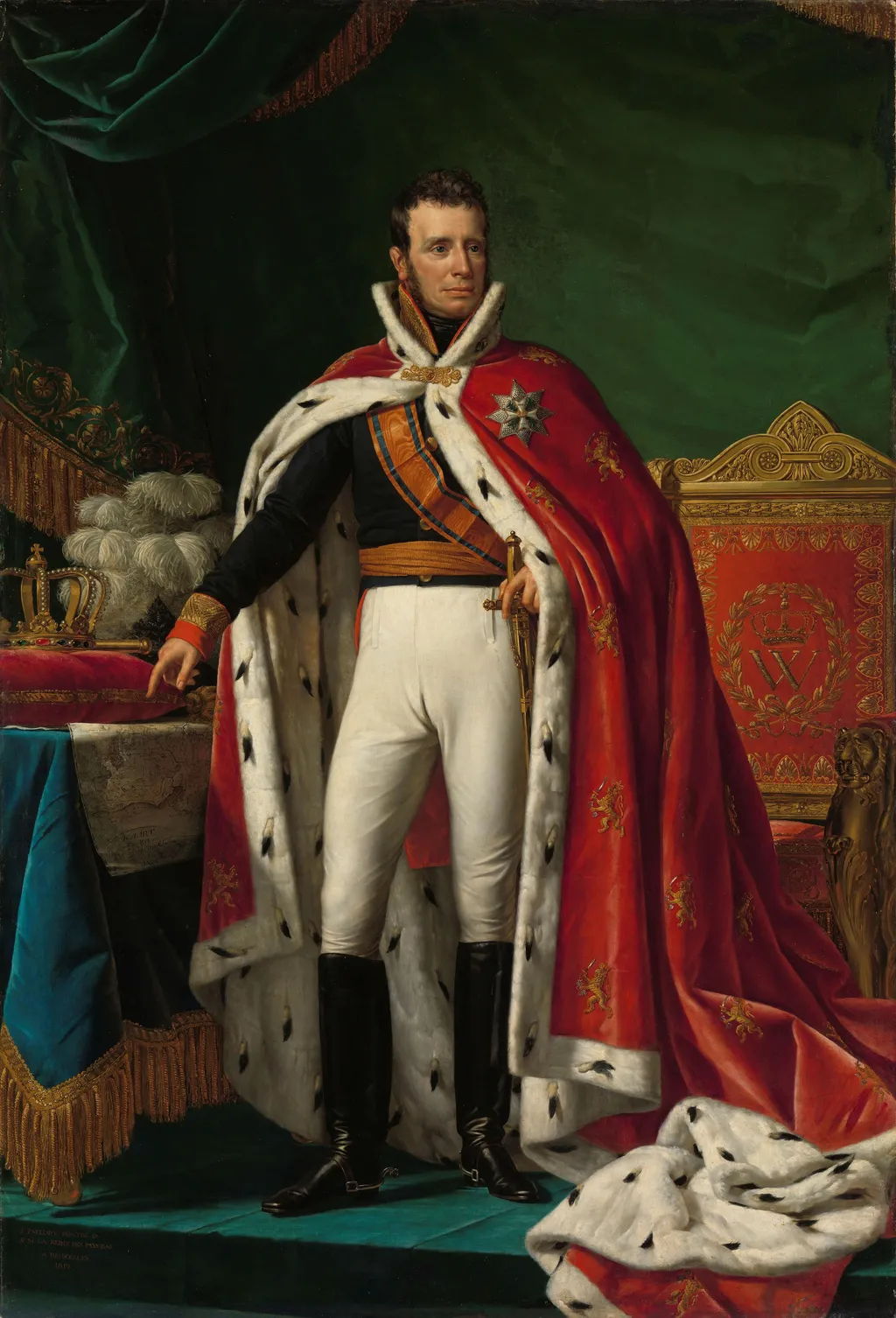
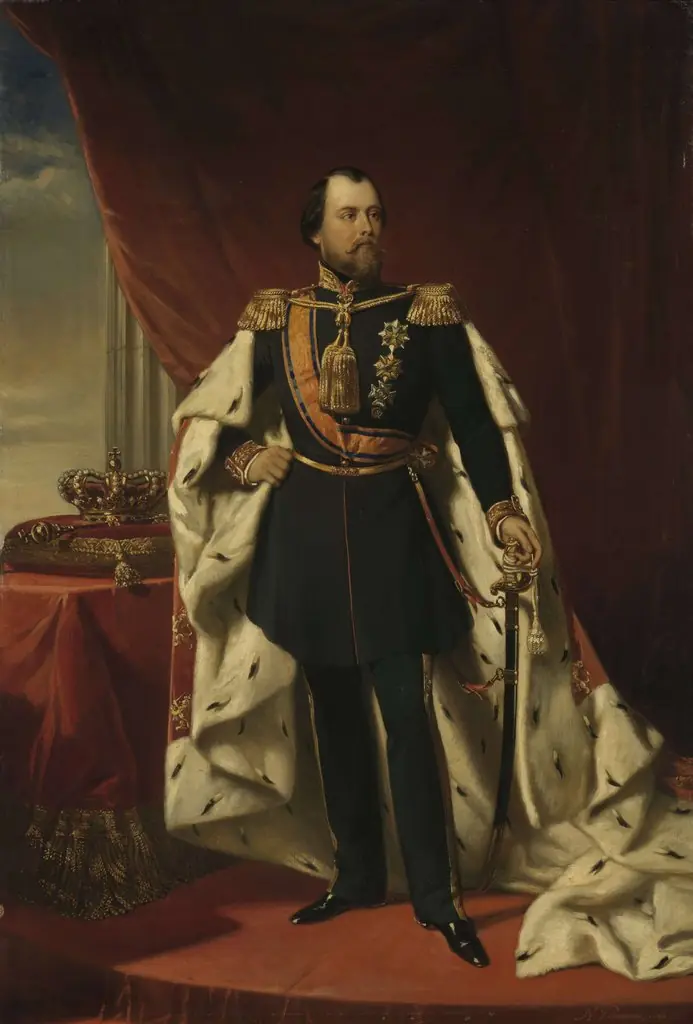
Portrait of William I, King of the Netherlands is an oil painting by the Neoclassicist artist Joseph Paelinck. It dates from 1819 and is held in the collection of the Rijksmuseum.
About this work
Overview
Joseph Paelinck’s 1819 oil portrait presents William I, monarch of the United Kingdom of the Netherlands, in a full‑length pose. Executed in Brussels, the work now belongs to the Rijksmuseum in Amsterdam. It captures the king in military dress, emphasizing his authority during a period when his realm encompassed present‑day Netherlands, Belgium and Luxembourg.
Subject & Meaning
The sitter, William I, is shown in the uniform of a general, his arm extended toward a map of Java, then a Dutch East Indies colony. The inclusion of the colonial map underscores the king’s imperial interests, while the Military Order of William and ermine‑trimmed robe highlight his sovereign and chivalric status.
Technique & Style
Paelinck, trained under Jacques‑Louis David, employs a realistic, finely detailed approach typical of early‑19th‑century academic painting. The figure stands against a muted green backdrop; his red and white cape, gold clasp, and polished sword are rendered with precise brushwork that accentuates texture and material.
History & Provenance
After its creation, the portrait was displayed in the Governor’s Palace on Java from 1821, reflecting the colonial connection depicted in the work. The painting later entered the Dutch national collection and is presently housed in Amsterdam’s Rijksmuseum.
Context
The portrait was produced shortly after William I’s restoration to the throne following the Napoleonic Wars and before the 1830 Belgian Revolution, which would split his kingdom. Paelinck had earlier painted the king in 1817, a work now held by the Rhode Island School of Design Museum, indicating an ongoing artistic relationship with the monarch.
Own this work as a print
Artist & collection