Artwork
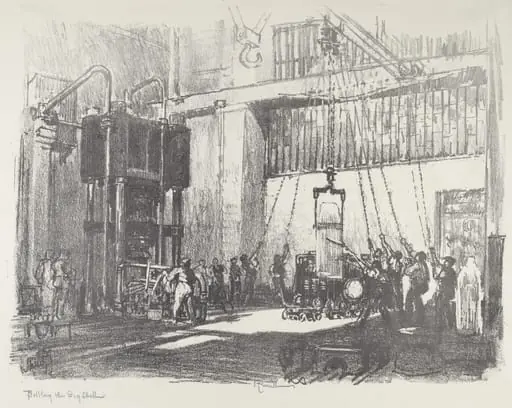
English War Work: Bottling the Big Shell
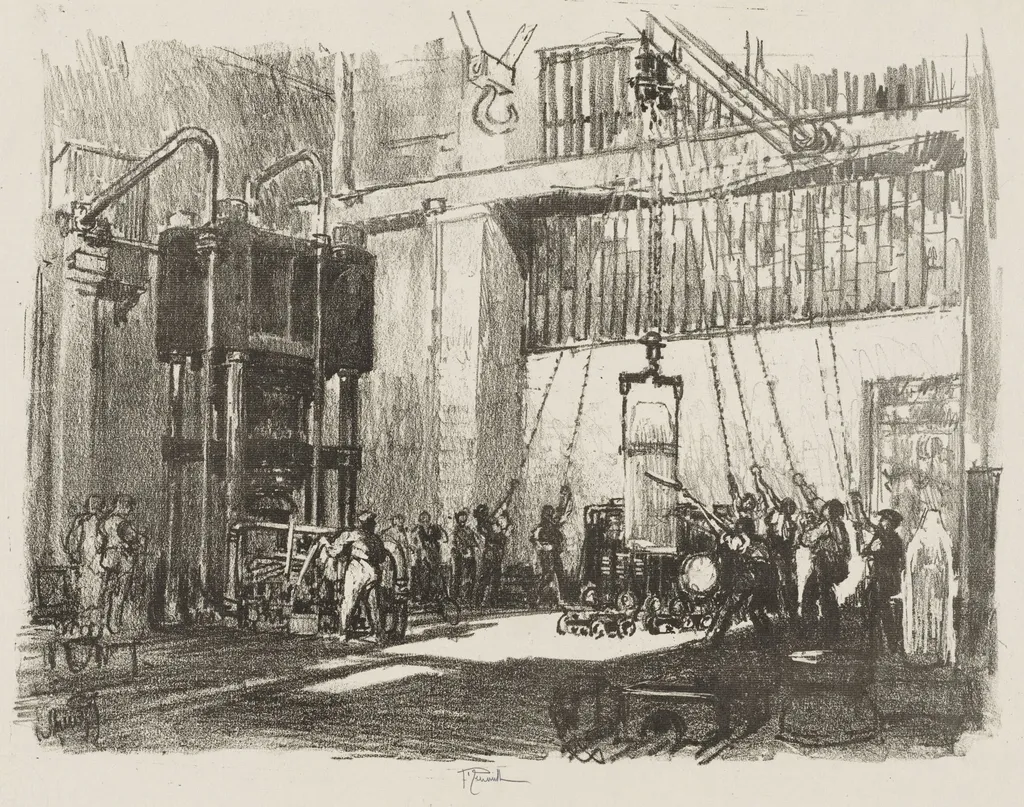
English War Work: Bottling the Big Shell is a print by Joseph Pennell. It dates from 1916 and is held in the collection of the Cleveland Museum of Art.
About this work
The artist focused on the messy, industrial side of war—no fancy details, just the gritty reality of the job.
This sketch shows a busy factory floor where workers load large shells into metal crates. The scene is filled with pulleys, ropes, and heavy machinery, all drawn in quick, rough lines. People in work clothes stand around, some watching while others handle the equipment.
The artist focused on the messy, industrial side of war—no fancy details, just the gritty reality of the job. The drawing feels urgent, like it was made fast to capture the moment.
Next, check out Joseph Pennell (American, 1857–1926) to see more of his bold, direct style.
Overview
Joseph Pennell, an American artist known for his graphic work in etching and lithography, produced *English War Work: Bottling the Big Shell* in 1916. The piece captures a moment in a British munitions factory during the First World War. Pennell, who spent much of his career in Europe, was drawn to industrial subjects and documented wartime production with immediacy. The work is part of The Cleveland Museum of Art’s collection and reflects his commitment to recording modern labor under duress.
Subject & Meaning
The scene depicts workers handling large artillery shells in a factory setting, loading them into wooden crates with the aid of pulleys and ropes. There is no glorification of war; instead, the focus is on the physical, repetitive labor required to sustain the military effort. Figures are shown in ordinary work attire, engaged in tasks that are urgent but unremarkable. The image underscores the quiet, essential role of industrial labor in total war.
Technique & Style
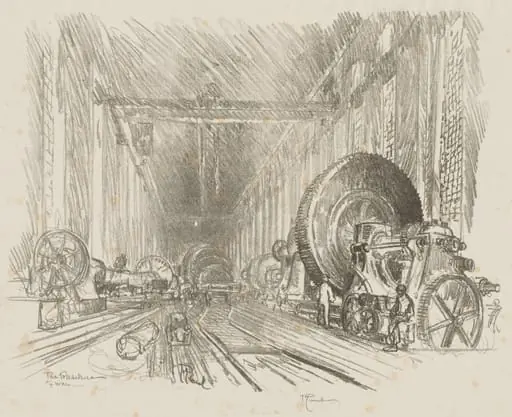
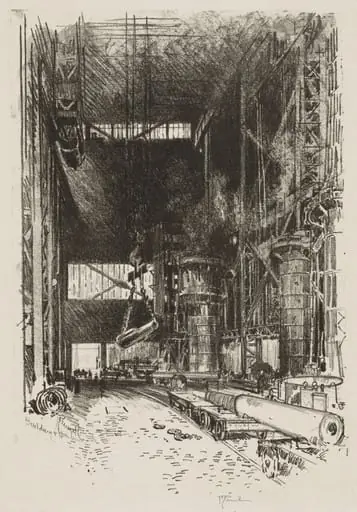
Pennell rendered the scene with rapid, energetic lines typical of his draftsmanship. The drawing avoids polished detail, favoring loose, gestural strokes that convey motion and texture. Heavy machinery and tangled ropes are suggested rather than meticulously defined, emphasizing the chaotic energy of the workspace. The use of ink and wash creates contrast and depth without embellishment, reinforcing the work’s documentary character.
History & Provenance
Created during Pennell’s time in Britain as a war artist, the work was produced as part of a broader effort to record wartime industry. He was commissioned to document British production efforts, and this piece emerged from direct observation. The drawing entered The Cleveland Museum of Art’s collection through its established holdings of American graphic art, where it remains as a record of early 20th-century industrial mobilization.
Context
In 1916, Britain’s war economy was fully engaged, with factories operating around the clock to supply the front. Artists like Pennell were enlisted to visually archive this transformation. His work stands apart from official propaganda by avoiding heroism, instead highlighting the mundane, physically demanding labor that kept the war machine running. This approach aligned with a growing interest in realism among illustrators of the era.
Legacy
Pennell’s drawings from this period contributed to a shift in how industrial labor was represented in art—moving away from idealization toward unvarnished observation. His technique influenced later documentary artists and photojournalists who sought to capture the realities of work and war. Though not widely exhibited today, his wartime sketches remain important records of civilian contribution during global conflict.
Own this work as a print
Artist & collection
Artist
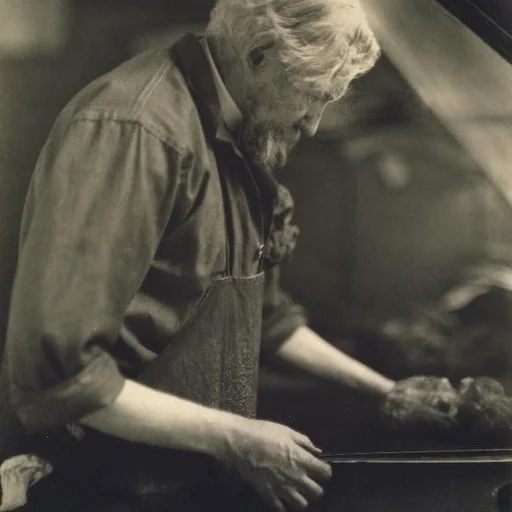
Joseph Pennell (July 4, 1857 – April 23, 1926) was an American draftsman, etcher, lithographer, and illustrator for books and magazines.

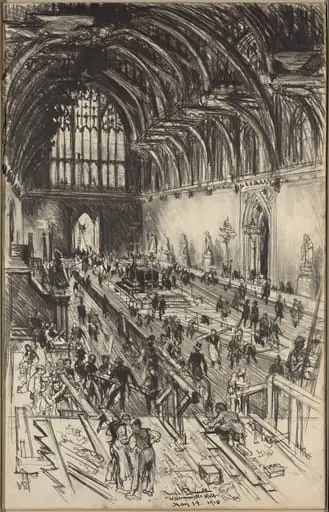
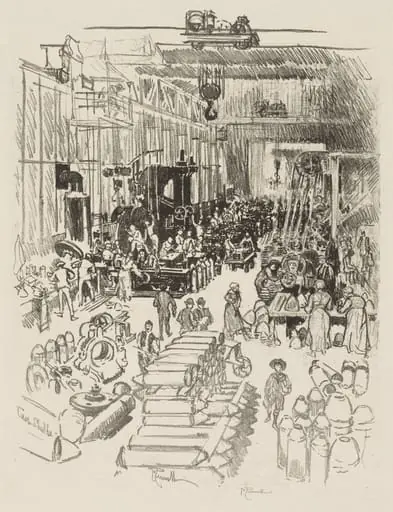 English War Work: Finishing Shells
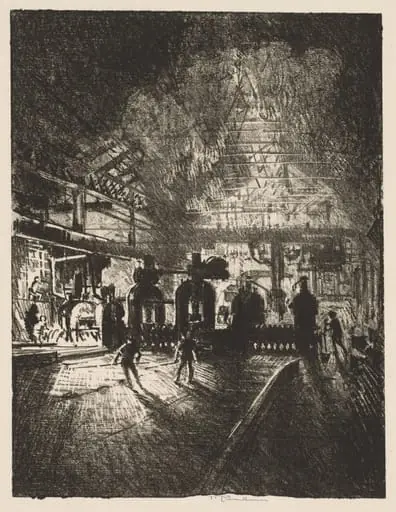 English War Work: In the Jaws of Death, Rolling Bars for Shells
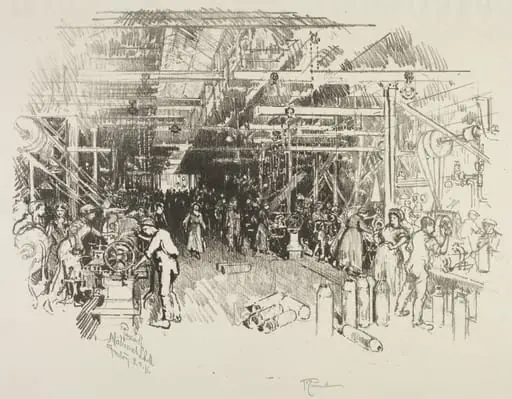 English War Work: The Shell Factory
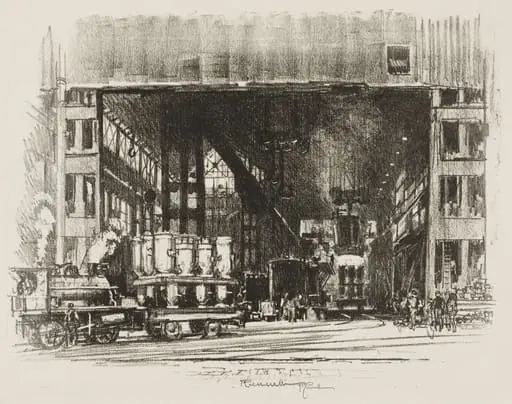 English War Work: The Urns, Casting Big Shells
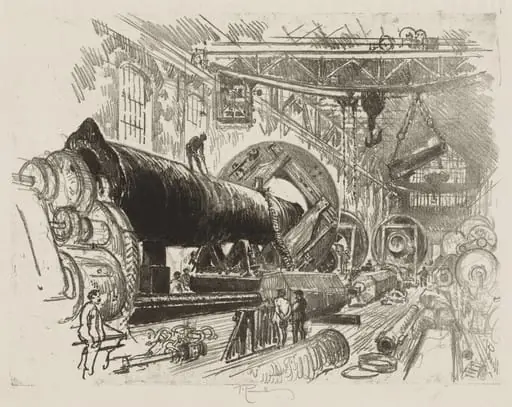 English War Work: Cutting and Turning a Big Gun
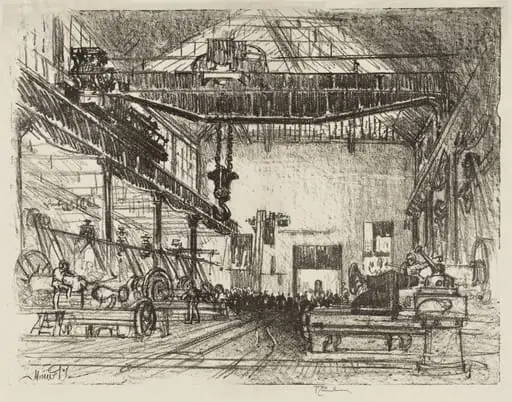 English War Work: Planing Big Shells
 Bottling the Big Shell
 English War Work: The Great Hammer
 English War Work: Building the Great Turret
 English War Work: The Presses
 English War Work: The Basilica of War
 English War Work: The New Gun Pit