Artwork
English War Work: The Balloon-Shed
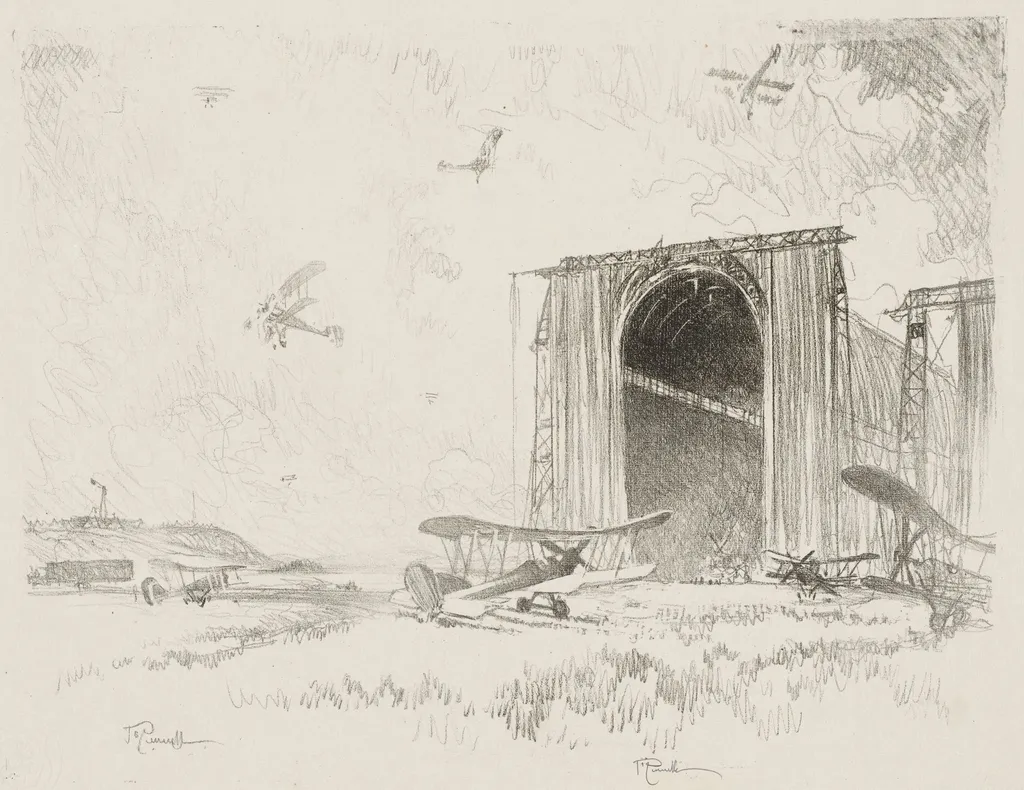
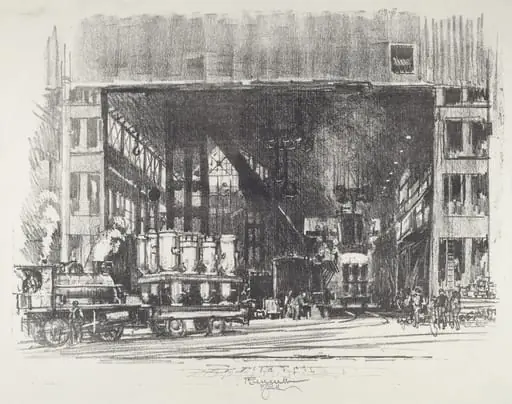
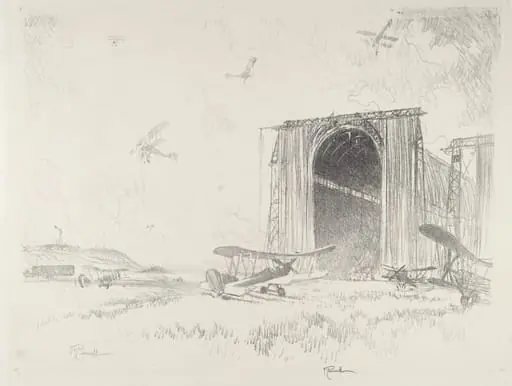
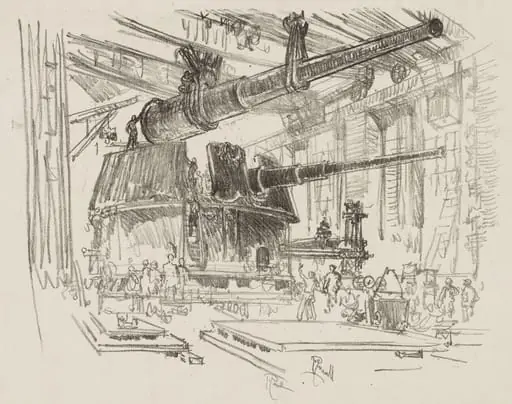
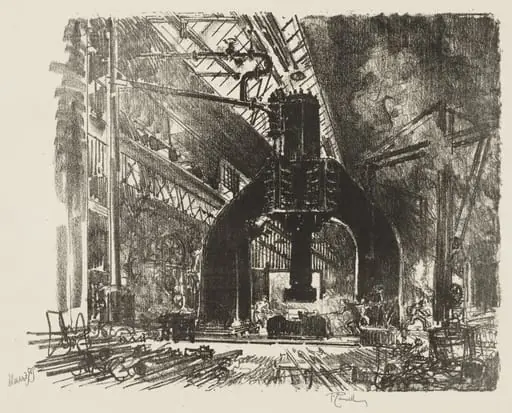
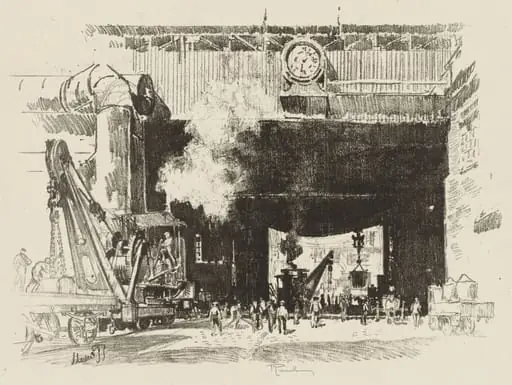
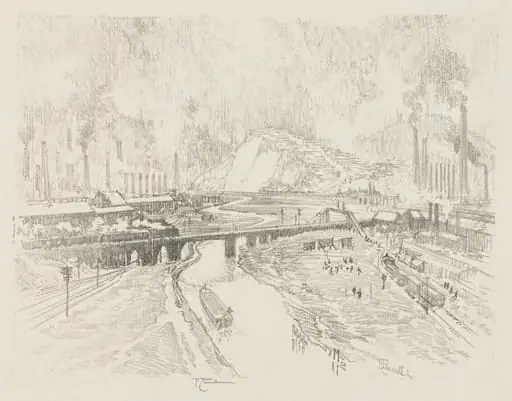
English War Work: The Balloon-Shed is a print by Joseph Pennell. It dates from 1916 and is held in the collection of the Cleveland Museum of Art.
About this work
Overview
The work reflects his commitment to recording modern industrial life with clarity and restraint.
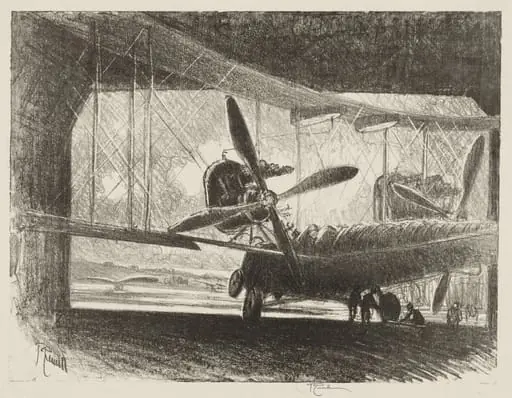
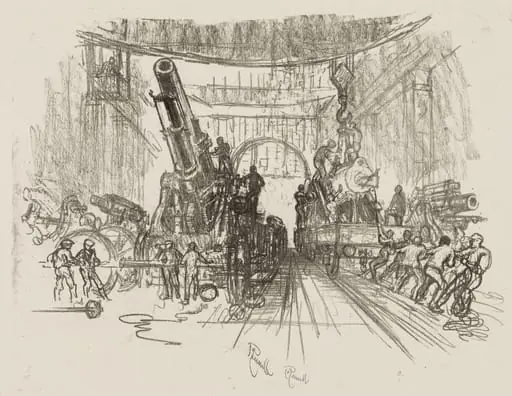
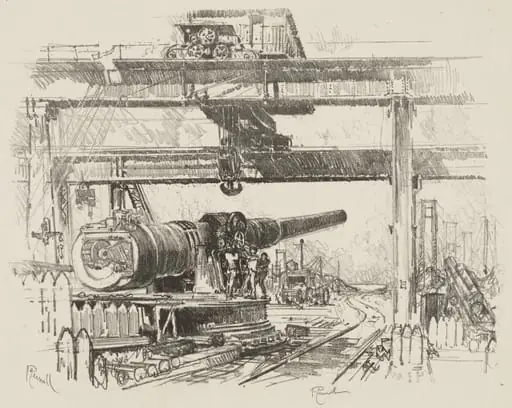
Created in 1916, *English War Work: The Balloon-Shed* is a print by American artist Joseph Pennell, part of a series documenting Britain’s wartime industrial efforts during World War I. Pennell, known for his precise renderings of architecture and labor, captured this scene as a commissioned observer, emphasizing the scale and quiet activity of military infrastructure rather than combat. The work reflects his commitment to recording modern industrial life with clarity and restraint.
Subject & Meaning
The print depicts a large, open-air shed housing a military observation balloon, surrounded by modest equipment and aircraft. The absence of human figures directs attention to the machinery and structure itself, suggesting the quiet, methodical nature of wartime preparation. Pennell’s focus on infrastructure over action conveys the logistical backbone of war, transforming ordinary industrial spaces into subjects of historical significance.
Technique & Style
Pennell employed etching and drypoint to achieve fine linear detail and tonal variation. His use of muted grays and soft blues for the shed and sky creates a subdued atmosphere, while precise contours define the balloon’s form and the shed’s timber frame. Influenced by Whistler’s tonal harmony and Eakins’ observational rigor, Pennell avoided dramatic contrasts, favoring a restrained palette that enhances the scene’s stillness and authenticity.
History & Provenance
Commissioned by the British government during World War I, the print was produced as part of a propaganda effort to document Allied industrial capacity. Pennell traveled to England in 1916 to observe and record war-related sites. The work entered the collection of the Cleveland Museum of Art in the 20th century, where it remains as part of a larger group of his wartime prints, preserved for their documentary value and artistic merit.
Context
In 1916, aerial reconnaissance was emerging as a critical military function, and observation balloons were vital for artillery spotting. Pennell’s choice to depict a balloon shed—rather than a battlefield—reflects a broader cultural shift toward recognizing industrial and technical contributions to war. His work aligned with contemporary efforts to visualize modern warfare’s hidden systems, distinguishing his approach from traditional battle imagery.
Legacy
Pennell’s *English War Work* series helped establish the aesthetic of industrial documentation in 20th-century printmaking. His ability to find visual gravity in utilitarian structures influenced later artists and historians documenting wartime labor. The work endures not as a heroic narrative, but as a quiet testament to the unseen mechanisms that sustained modern conflict, valued for its honesty and compositional discipline.
Artist & collection
Artist
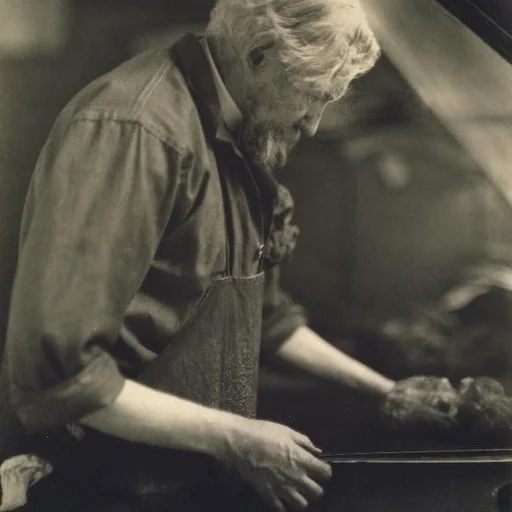
Joseph Pennell (July 4, 1857 – April 23, 1926) was an American draftsman, etcher, lithographer, and illustrator for books and magazines.