Artwork
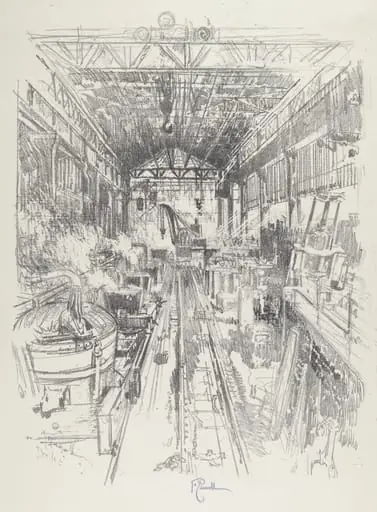
English War Work: The Cauldrons
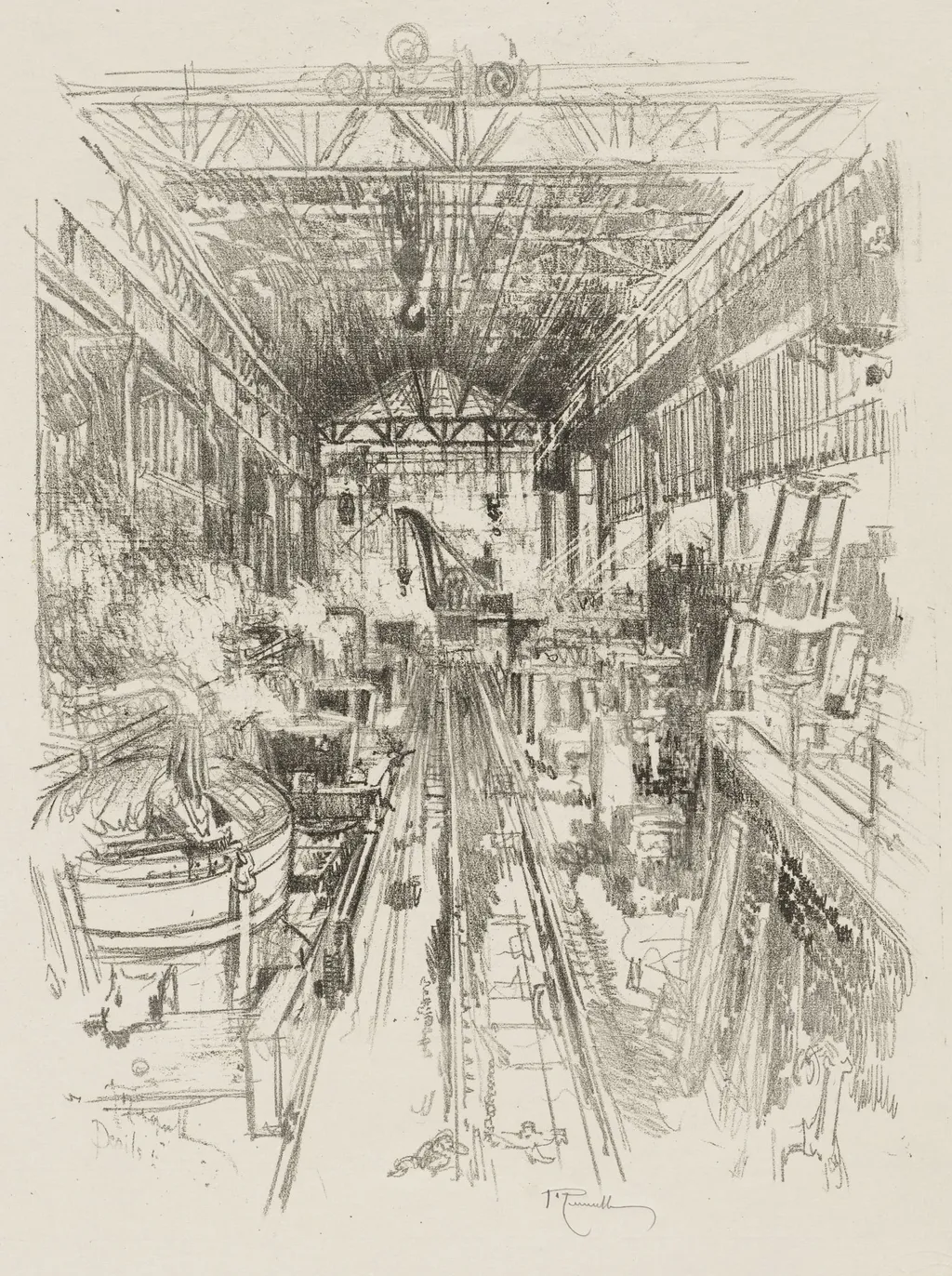
English War Work: The Cauldrons is a print by Joseph Pennell. It dates from 1916 and is held in the collection of the Cleveland Museum of Art.
About this work
This sketch shows a long, dim factory floor with rows of giant metal cauldrons lined up on both sides.
This sketch shows a long, dim factory floor with rows of giant metal cauldrons lined up on both sides. A train track runs down the middle, leading into the distance. The lines are rough and dark, with quick, sketchy strokes—no smooth shapes or clean edges.
The artist focused on the heavy machinery and the way light fades into shadow. The drawing feels hurried, like a quick study of a busy workplace.
Next, check out Joseph Pennell (American, 1857–1926) to see more of his industrial sketches.
Overview
Created in 1916, *English War Work: The Cauldrons* is a lithograph by American artist Joseph Pennell, documenting industrial activity in Britain during the First World War. Part of a series commissioned to record wartime production, the work captures the scale and intensity of munitions manufacturing. Pennell, known for his detailed depictions of urban and industrial environments, rendered this scene with urgency and precision, reflecting his interest in modern labor and infrastructure.
Subject & Meaning
The image portrays a vast factory interior lined with massive metal cauldrons used in the production of explosives. A central rail line suggests the movement of materials and finished goods, emphasizing the mechanized rhythm of war production. The absence of human figures heightens the sense of impersonal industry, underscoring the scale of mobilization. Pennell’s focus on machinery over people conveys the dominance of industrial systems in wartime society.
Technique & Style
Pennell employed rapid, expressive linework typical of his sketch-based approach, using dark, angular strokes to define the cauldrons and structural elements. The composition lacks polished finishes, favoring a raw, observational quality that mimics on-site drawing. Light is suggested through contrast rather than gradation, with deep shadows swallowing the peripheries. This method prioritizes immediacy and atmosphere over detail, aligning with his belief in the expressive power of direct observation.
History & Provenance
Commissioned by the British government during World War I, the print was part of a broader effort to document industrial contributions to the war effort. Pennell, already established for his European travels and industrial subjects, was invited to record British factories. The work entered The Cleveland Museum of Art’s collection through its long-standing interest in American printmaking and early 20th-century documentary art, where it remains part of a significant holding of Pennell’s wartime works.
Context
In 1916, Britain’s industrial capacity was central to sustaining its military campaign. Artists like Pennell were enlisted to visually archive this transformation, blending journalism with art. His work aligned with contemporary efforts to legitimize industrial labor as a national endeavor. Unlike romanticized war imagery, Pennell’s focus on factories offered a sober, unembellished view of modern conflict, reflecting a shift in artistic priorities toward realism and social documentation.
Legacy
Pennell’s *English War Work* series contributed to the recognition of industrial subjects as legitimate themes in fine art. His direct, unadorned style influenced later documentary artists and photographers documenting labor and industry. Though less celebrated than his urban landscapes, these wartime prints remain important records of how art was mobilized to reflect national effort, preserving a visual record of wartime production that continues to inform historical understanding.
Artist & collection
Artist
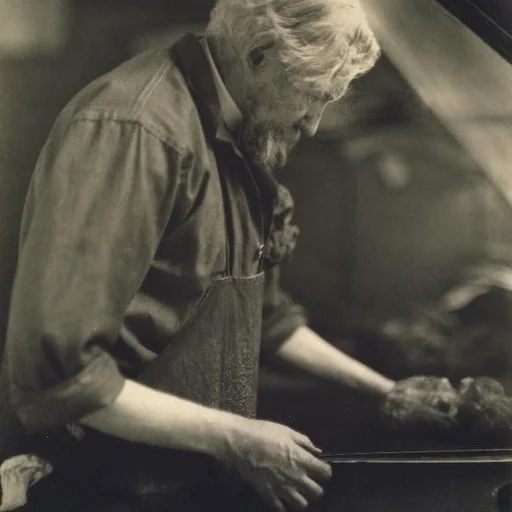
Joseph Pennell (July 4, 1857 – April 23, 1926) was an American draftsman, etcher, lithographer, and illustrator for books and magazines.

 The Cauldrons
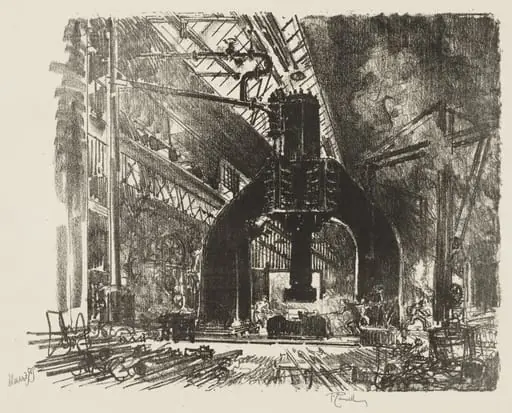 English War Work: The Great Hammer
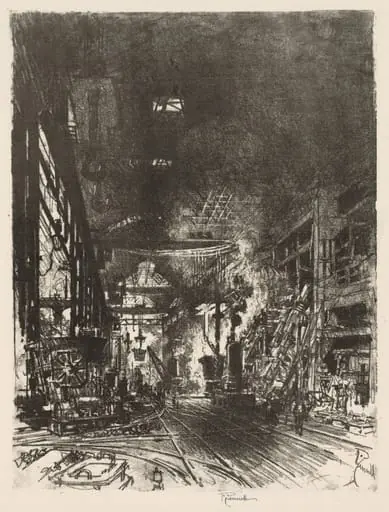 English War Work: Within the Furnaces
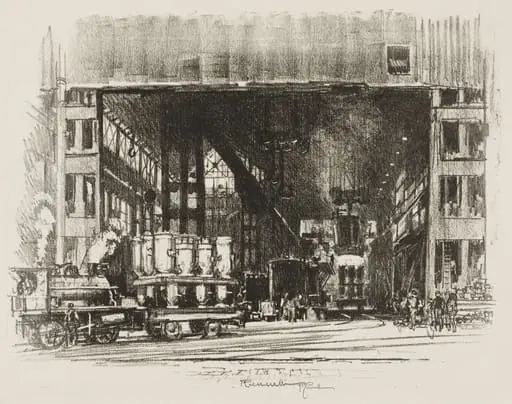 English War Work: The Urns, Casting Big Shells
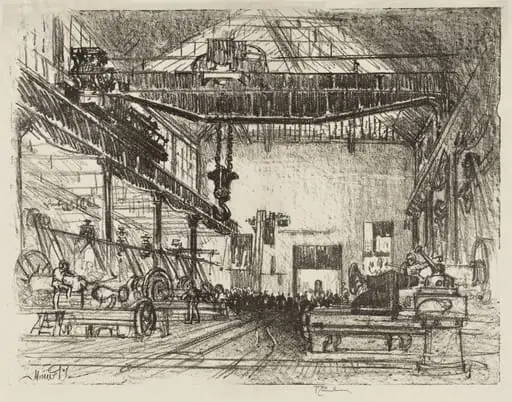 English War Work: Planing Big Shells
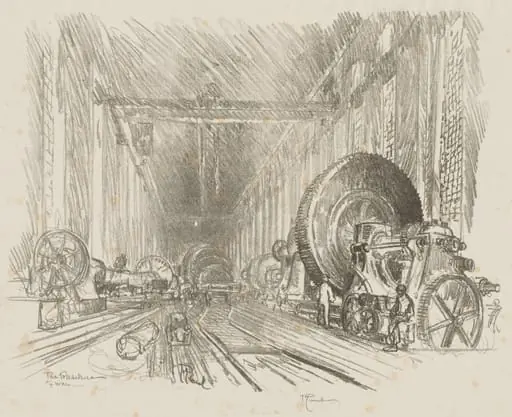 English War Work: The Basilica of War
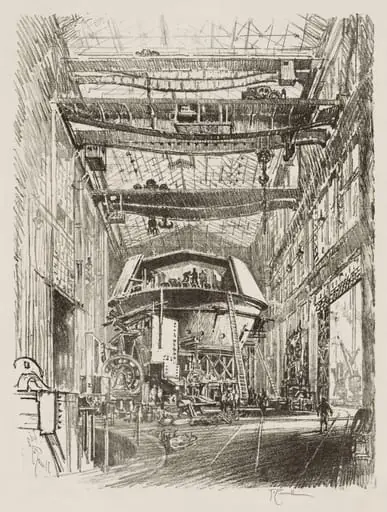 English War Work: Building the Great Turret
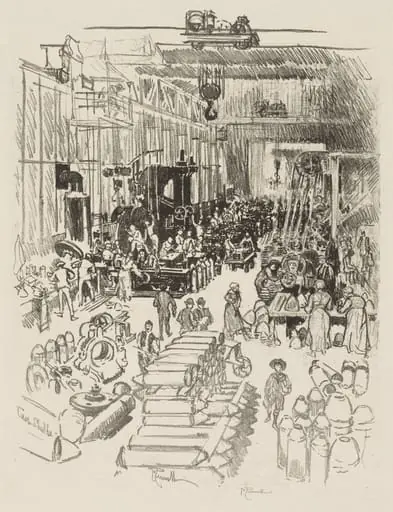 English War Work: Finishing Shells
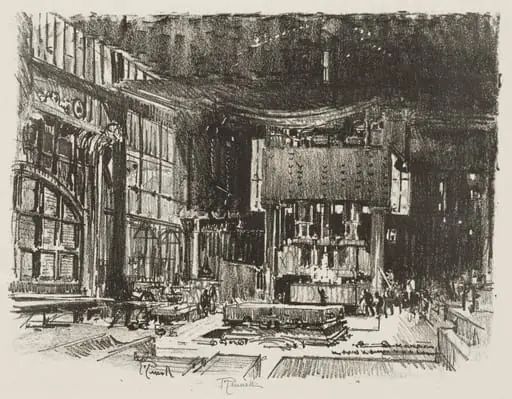 English War Work: The Acolytes Preparing the Altar of the War God
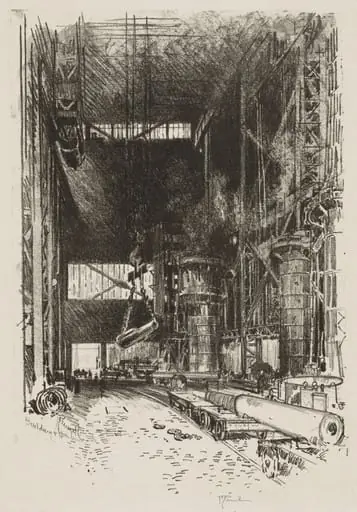 English War Work: The New Gun Pit
 English War Work: In the Jaws of Death, Rolling Bars for Shells
 English War Work: Cutting and Turning a Big Gun