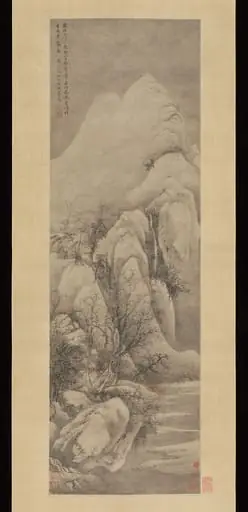
Artwork
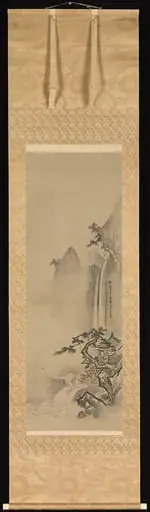
明 居節 石泉圖 軸|Recluse gazing at a waterfall
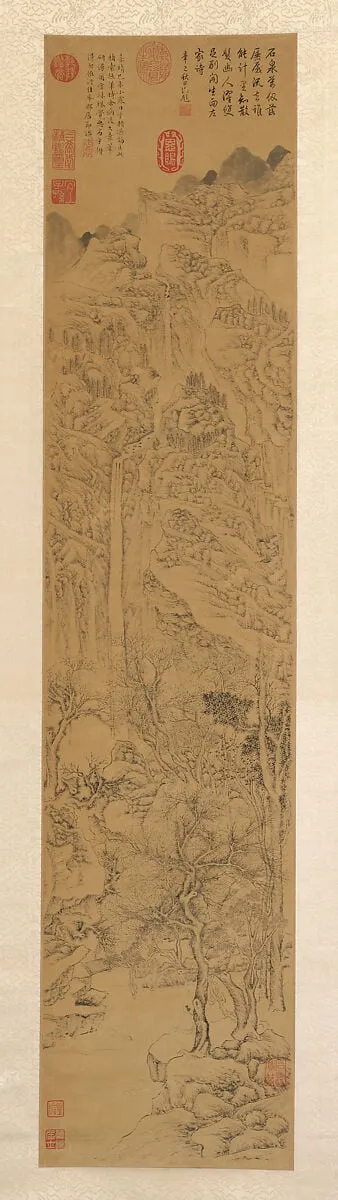
明 居節 石泉圖 軸|Recluse gazing at a waterfall is an ink painting by the Ming dynasty painting artist Ju Jie. It dates from 1559 and is held in the collection of the Metropolitan Museum of Art.
About this work
Overview
Created in 1559 by the Ming‑period painter Ju Jie, this hanging scroll presents a monochrome ink landscape. A solitary figure stands on a craggy ledge, his gaze fixed on a cascade that plunges down a sheer cliff. The composition is rendered entirely in ink on paper, emphasizing line and wash rather than colour.
Subject & Meaning
The lone recluse embodies the scholarly ideal of withdrawing from worldly affairs to contemplate nature. His still posture and attentive stare suggest a meditation on the transience of life, with the ever‑flowing water serving as a visual metaphor for change and the passage of time.
Technique & Style
Ju Jie employs swift, light brushstrokes that echo the movement of water, while the surrounding rocks are suggested with minimal, controlled lines. The use of varying ink tones creates depth and atmosphere, allowing the waterfall to appear both tangible and ethereal within the limited medium.
Context
During the Ming dynasty, many literati turned to landscape painting as a refuge from political turbulence. This work reflects that cultural tendency, portraying a hermit‑like figure immersed in a natural setting as an expression of personal and philosophical retreat.
Legacy
Waterfall scenes remain a recurring motif in Chinese ink painting, each iteration offering a distinct narrative. Ju Jie’s rendition contributes to this tradition by coupling a solitary observer with a dynamic natural element, reinforcing the enduring dialogue between humanity and the environment.
Artist & collection