Artwork
Annunciation
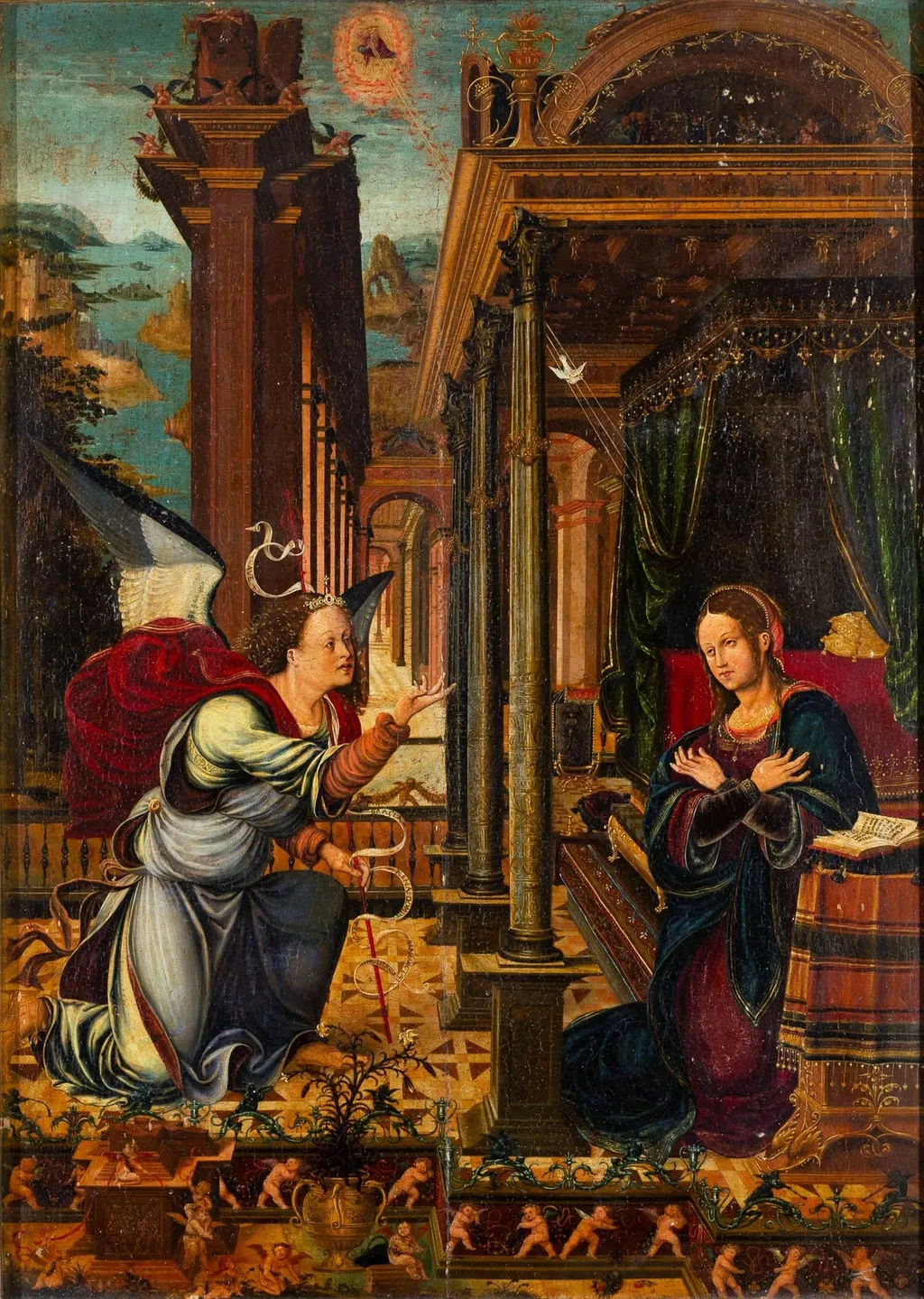
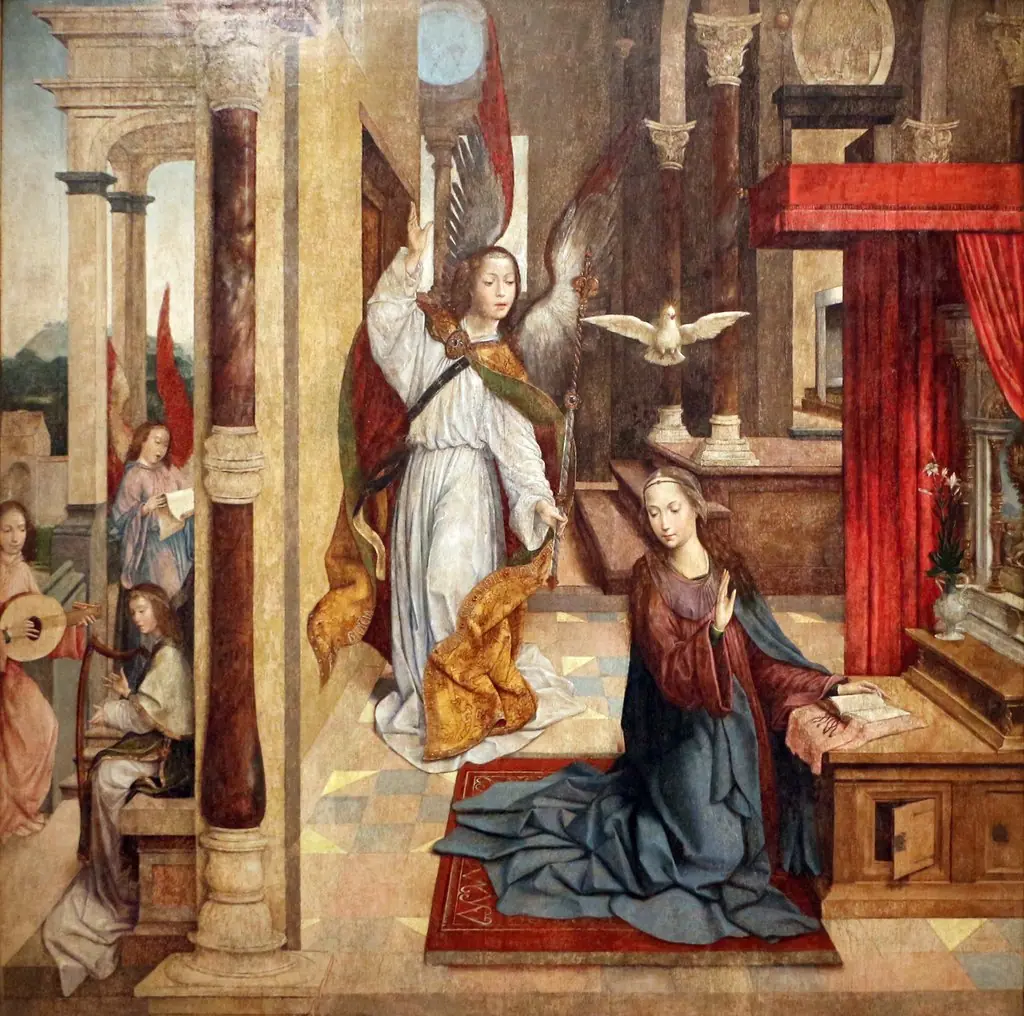
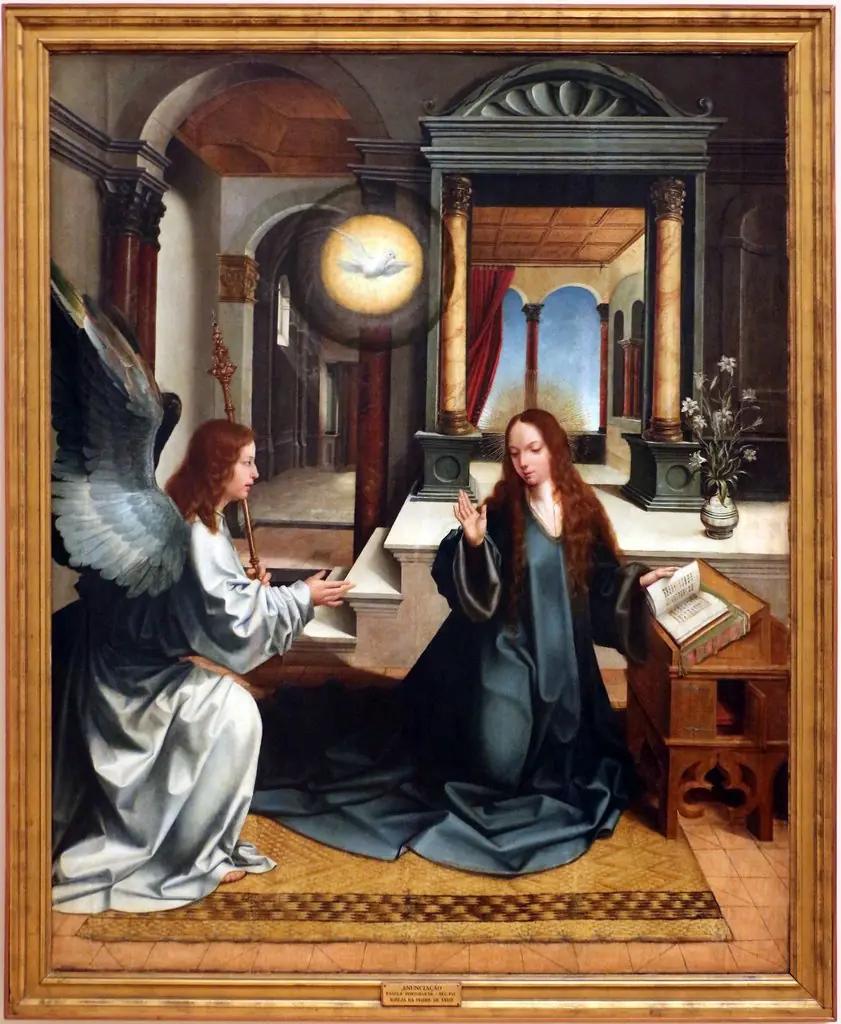
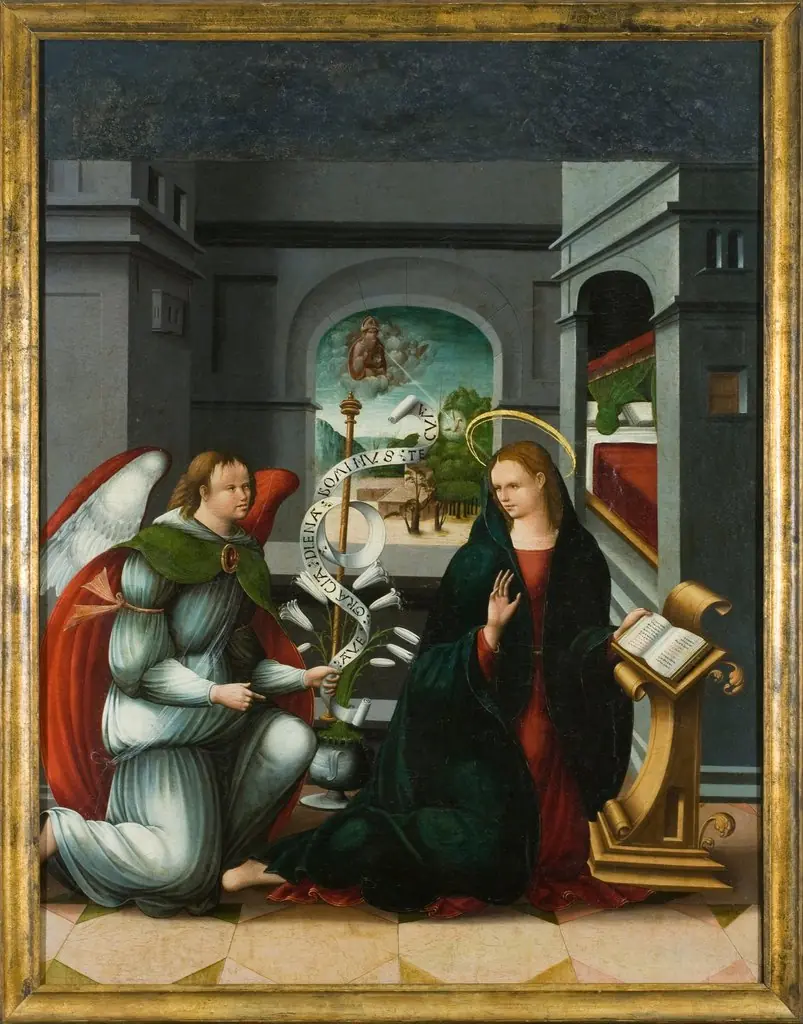
Annunciation is an oil painting by the High Renaissance artist Juan de Borgoña. It dates from 1517 and is held in the collection of the Museu Nacional d'Art de Catalunya.
About this work
Overview
It resides today in the Museu Nacional d'Art de Catalunya, where its refined composition and luminous palette continue to draw scholarly attention.
Painted in 1517, this oil-on-panel work by Juan de Borgoña presents the biblical Annunciation, a moment when the angel Gabriel announces to Mary that she will bear the Son of God. Executed during Borgoña’s active years in Spain, the painting reflects his training in Italian Renaissance methods, adapted to the devotional needs of Spanish religious patrons. It resides today in the Museu Nacional d'Art de Catalunya, where its refined composition and luminous palette continue to draw scholarly attention.
Subject & Meaning
The scene captures Gabriel, clad in white and crimson, offering a lily and staff as symbols of purity and divine authority, while Mary, dressed in blue and red, responds with quiet reverence, her hands folded in prayer. The setting—a grand interior with a window opening to a distant landscape—frames the sacred encounter as both intimate and cosmic. The lily underscores Mary’s virginity, and the architectural space suggests a transition between earthly and divine realms, reinforcing the theological weight of the moment.
Technique & Style
Borgoña employed oil paint to achieve rich color saturation and fine detail, particularly in fabrics and architectural elements. Chiaroscuro modeling lends volume to the figures, grounding them in a tangible space despite the ornate setting. The textures of silk, stone, and landscape are rendered with precision, showing familiarity with Flemish and Italian approaches to realism. The composition is symmetrical and calm, avoiding dramatic motion in favor of solemn stillness, characteristic of High Renaissance ideals adapted to Iberian sensibilities.
History & Provenance
Created during Borgoña’s tenure in Spain, where he contributed to major ecclesiastical projects, the painting likely originated in a monastic or cathedral context. It entered the collection of the Museu Nacional d'Art de Catalunya through institutional acquisitions in the 19th or early 20th century, possibly from a Catalan religious house. Its survival in good condition reflects careful preservation, and its attribution to Borgoña is supported by stylistic parallels with his documented altarpieces from the same period.
Context
In early 16th-century Spain, Italian Renaissance styles were being absorbed by local artists through travel, prints, and the presence of foreign craftsmen. Borgoña, originally from Burgundy, helped bridge northern European and Italian traditions in Spanish religious art. His work emerged amid a broader cultural shift, where devotional imagery became more naturalistic and spatially coherent, aligning with Counter-Reformation ideals that emphasized clarity and emotional restraint in sacred narratives.
Legacy
Though not widely known outside Spain, Borgoña’s *Annunciation* exemplifies the quiet synthesis of Italian compositional harmony and northern European detail that defined regional Renaissance painting. It influenced later Spanish artists seeking to elevate religious imagery through refined technique and dignified expression. The painting remains a key reference for understanding how foreign artistic currents were localized in Iberia during a period of profound spiritual and cultural transformation.
Own this work as a print
Artist & collection
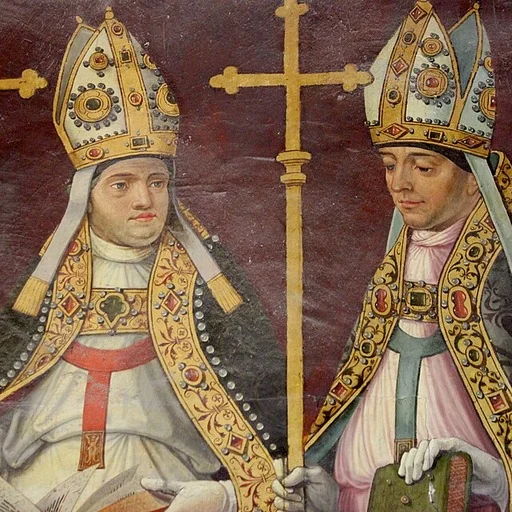
Artist
Juan de Borgoña (c. 1470–1536), was a High Renaissance painter who was born in the Duchy of Burgundy, probably just before it ceased to exist as an independent state, and was active in Spain from about 1495 to 1536. His…